10% Off
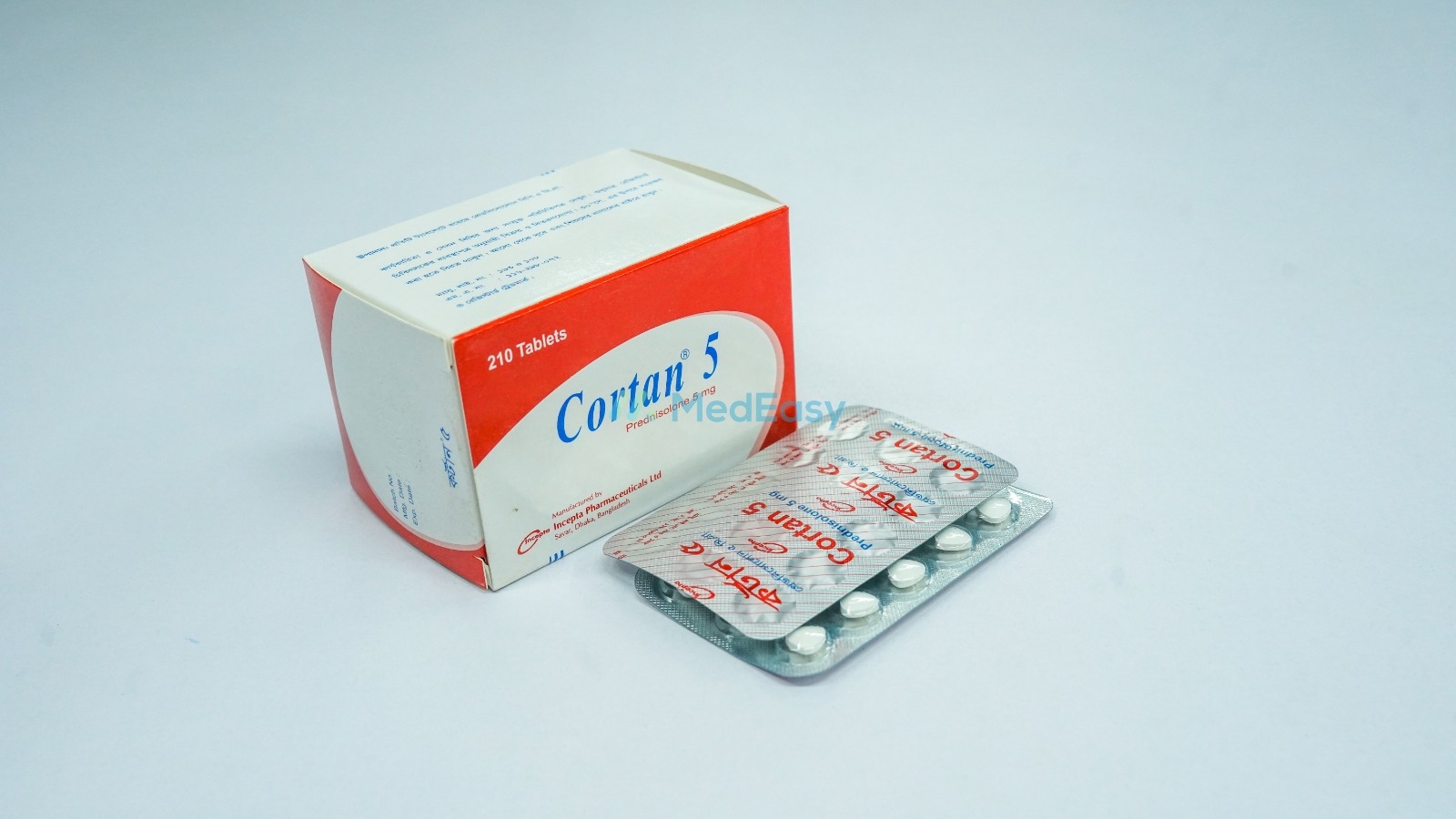
Cortan5 mg
Incepta Pharmaceuticals Ltd.
৳21.66
Add to cart

Adam 5 5 mg Tablet is available on MedEasy for ৳15.92 per 10's Strip, with home delivery anywhere in Bangladesh. It is manufactured by Nuvista Pharma Ltd. Its generic name is Prednisolone.

Adam 5 is a synthetic corticosteroid (glucocorticoid) used to treat a wide range of inflammatory, allergic, and autoimmune conditions. Its uses can be classified by strength of evidence as follows:
Used as adjunct/palliative therapy in certain leukemias and lymphomas, and in combination with other disease-modifying or chemotherapeutic agents in autoimmune and malignant conditions.
Adam 5 is also commonly used off-label for conditions such as sarcoidosis-related organ involvement, autoimmune hepatitis, and short-course management of severe croup or acute gout flares, based on clinical judgment and specialist guidance.
Adam 5 is not an antibiotic and has no role in treating infections themselves.
Each tablet of Prednisolone commonly contains Prednisolone 5 mg, 10 mg, or 20 mg. Prednisolone is also available as an oral solution/syrup (approximately 5 mg/5 mL) for pediatric or patients who cannot swallow tablets. Strength and dosage form availability may vary by manufacturer and market.
Adam 5 is a synthetic glucocorticoid corticosteroid, the active metabolite of prednisone, used for its potent anti-inflammatory and immunosuppressive effects. It is used across many specialties to control inflammation and abnormal immune activity in a wide range of allergic, rheumatologic, dermatologic, respiratory, hematologic, and endocrine conditions.
Adam 5 works by suppressing the migration of inflammatory cells and reversing increased capillary permeability, and by modifying the body's immune response to various stimuli. It has minimal mineralocorticoid activity compared to hydrocortisone, making it useful for conditions requiring anti-inflammatory effect without significant salt/water retention (though this can still occur at higher doses).
Corticosteroid (Glucocorticoid) — Systemic. Adam 5 belongs to this therapeutic class.
Prednisolone diffuses across cell membranes and binds to cytoplasmic glucocorticoid receptors. The activated receptor-steroid complex translocates into the cell nucleus, binds to DNA (glucocorticoid response elements), and modulates gene transcription — inducing synthesis of anti-inflammatory proteins (e.g. lipocortin-1, which inhibits phospholipase A2) and suppressing pro-inflammatory mediators (prostaglandins, leukotrienes, cytokines). This produces potent anti-inflammatory, immunosuppressive, anti-allergic, and antipruritic effects.
Dosage of Adam 5 is highly individualized based on the disease being treated, severity, and patient response, rather than fixed by body weight alone (except in specific pediatric indications).
| Indication | Typical Adult Dose | Typical Pediatric Dose |
|---|---|---|
| Acute asthma exacerbation | 40-60 mg/day (single or divided) for 5-7 days | 1-2 mg/kg/day (max ~40 mg/day) for 3-5 days |
| Anti-inflammatory / immunosuppressive (general) | 5-60 mg/day, adjusted to response | 0.1-2 mg/kg/day depending on indication |
| Nephrotic syndrome | Individualized; often higher initial doses with gradual taper under specialist care | Initially about 2 mg/kg/day (max 60-80 mg/day), then tapered per protocol |
| Rheumatoid arthritis / SLE | 5-20 mg/day maintenance, higher during flares | Specialist-guided, weight-based |
| Severe allergic reaction / angioedema | 20-60 mg/day short course (3-7 days) | Specialist-guided, weight-based |
No fixed dose adjustment is well-established, but Adam 5 should be used cautiously and at the lowest effective dose in significant hepatic impairment (reduced conversion from prednisone favors direct use of Adam 5) and in renal impairment, with close clinical monitoring.
After more than a few weeks of therapy, Adam 5 must not be stopped abruptly; the dose should be gradually tapered under medical supervision to allow recovery of adrenal function (see Precautions and Warnings).
| Interacting Drug/Class | Effect / Mechanism | Clinical Consequence |
|---|---|---|
| NSAIDs (e.g. ibuprofen, aspirin) | Additive gastric mucosal damage | Increased risk of GI ulceration/bleeding |
| CYP3A4 inducers (rifampin, phenytoin, carbamazepine) | Increased hepatic metabolism of Adam 5 | Reduced corticosteroid effect; may need dose increase |
| CYP3A4 inhibitors (ketoconazole, ritonavir, clarithromycin) | Decreased metabolism of Adam 5 | Increased corticosteroid effect/toxicity |
| Live/live-attenuated vaccines | Immunosuppression blunts vaccine response | Increased risk of disseminated vaccine-strain infection; avoid during high-dose therapy |
| Potassium-depleting diuretics (furosemide, thiazides) | Additive potassium loss | Increased risk of hypokalemia |
| Oral anticoagulants (warfarin) | Variable effect on anticoagulant response | Requires closer INR monitoring |
| Antidiabetic agents (insulin, oral hypoglycemics) | Adam 5 raises blood glucose | Reduced antidiabetic efficacy; dose adjustment may be needed |
| Cyclosporine | Mutual inhibition of metabolism | Increased levels of both drugs; increased seizure risk reported |
Prednisolone is contraindicated in:
Other conditions (e.g. active untreated serious infection, uncontrolled diabetes, peptic ulcer disease) are important cautions rather than absolute contraindications — see Precautions and Warnings.
Side effects of Adam 5 are generally dose- and duration-dependent.
Pregnancy: Adam 5 should be used during pregnancy only if clearly needed and the potential benefit to the mother justifies the potential risk to the fetus. Corticosteroids readily cross the placenta; animal studies have shown reproductive risks (e.g. cleft palate) with corticosteroids, though controlled human data are limited. Infants born to mothers who received substantial doses of Adam 5 during pregnancy should be monitored for signs of hypoadrenalism. Use only under specialist guidance for serious maternal conditions where benefit outweighs risk.
Lactation: Adam 5 is excreted in small amounts in breast milk. Low to moderate doses are generally considered compatible with breastfeeding by many specialists, but a physician should be consulted, especially for higher or prolonged doses, and the infant should be monitored for growth and adrenal function if maternal dose is high or prolonged.
Acute overdose of Adam 5 is unlikely to be immediately life-threatening, but chronic overdosage or very high single doses can worsen known corticosteroid adverse effects (e.g. marked fluid retention, hypertension, hyperglycemia, mood changes, GI bleeding). There is no specific antidote.
If an overdose is suspected, seek immediate medical attention or contact a poison control center/emergency services. Treatment is supportive and symptomatic; do not attempt unsupervised home treatment.
Store at room temperature (below 30°C), away from light and moisture. Keep out of reach of children.
Duration of Adam 5 therapy depends entirely on the condition being treated. Short courses (a few days to 1-2 weeks, e.g. for asthma exacerbations or acute allergic reactions) generally do not require tapering. Longer courses (several weeks to months or longer, e.g. for autoimmune or rheumatologic disease) require gradual dose tapering under medical supervision to avoid adrenal insufficiency and disease flare. The lowest effective dose for the shortest duration necessary should always be the goal.
Corticosteroids (Glucocorticoids); Systemic anti-inflammatory/immunosuppressive agents
Prednisolone binds to intracellular glucocorticoid receptors, and the resulting complex regulates gene transcription in target cells. This leads to increased synthesis of anti-inflammatory mediators (such as lipocortin-1, which inhibits phospholipase A2 and thereby reduces arachidonic acid-derived inflammatory mediators like prostaglandins and leukotrienes) and decreased synthesis of pro-inflammatory cytokines (IL-1, IL-2, IL-6, TNF-alpha). It also reduces the number and activity of circulating lymphocytes, monocytes, and eosinophils, and stabilizes lysosomal and capillary membranes, together producing potent anti-inflammatory and immunosuppressive effects.
C
Adam 5 is used in children for indications such as nephrotic syndrome, acute asthma exacerbations, croup, certain autoimmune and rheumatologic conditions, and as part of chemotherapy regimens for certain childhood leukemias/lymphomas, always under pediatric specialist guidance.
Q: What is Adam 5 5 mg Tablet used for?
A: Adam 5 5 mg Tablet is a corticosteroid used to reduce inflammation and suppress an overactive immune response in conditions such as asthma, severe allergic reactions, rheumatoid arthritis, lupus, certain skin diseases, and nephrotic syndrome, among others.
Q: Can I stop taking Adam 5 5 mg Tablet suddenly?
A: No. If you have taken Adam 5 5 mg Tablet for more than a few weeks, stopping suddenly can cause adrenal insufficiency because your body's own cortisol production may be suppressed. Always follow your physician's tapering schedule to reduce the dose gradually.
Q: Is Adam 5 5 mg Tablet safe during pregnancy?
A: Adam 5 5 mg Tablet should be used in pregnancy only if clearly needed, when the potential benefit to the mother justifies the potential risk to the fetus, and under a physician's guidance. It is not considered routinely safe for casual use in pregnancy.
Q: What are the main side effects of Adam 5 5 mg Tablet?
A: Common side effects include increased appetite, weight gain, mood changes, and indigestion. With longer use, more serious effects can occur, including increased infection risk, high blood sugar, weakened bones, stomach ulcers, and eye problems such as cataracts or glaucoma.
Q: Can I take Adam 5 5 mg Tablet with painkillers like ibuprofen?
A: Combining Adam 5 5 mg Tablet with NSAIDs such as ibuprofen or aspirin increases the risk of stomach ulcers and gastrointestinal bleeding. Use such combinations only under medical advice, and consider stomach-protective medication if long-term combination therapy is necessary.
Q: What should I do if I miss a dose or take too much Adam 5 5 mg Tablet?
A: If you miss a dose, take it as soon as you remember unless it is almost time for the next dose. If you suspect you have taken too much Adam 5 5 mg Tablet, seek immediate medical attention or contact a poison control center, especially with prolonged high doses, as this can worsen known corticosteroid side effects such as fluid retention, high blood sugar, and mood changes.
Disclaimer
The information provided is accurate to the best of our knowledge, but it does not replace professional medical advice. We cannot guarantee its completeness or accuracy, and the absence of specific information about a drug should not be taken as an endorsement. We are not responsible for any consequences arising from this information, so please consult a healthcare professional for any concerns or questions.