8% Off
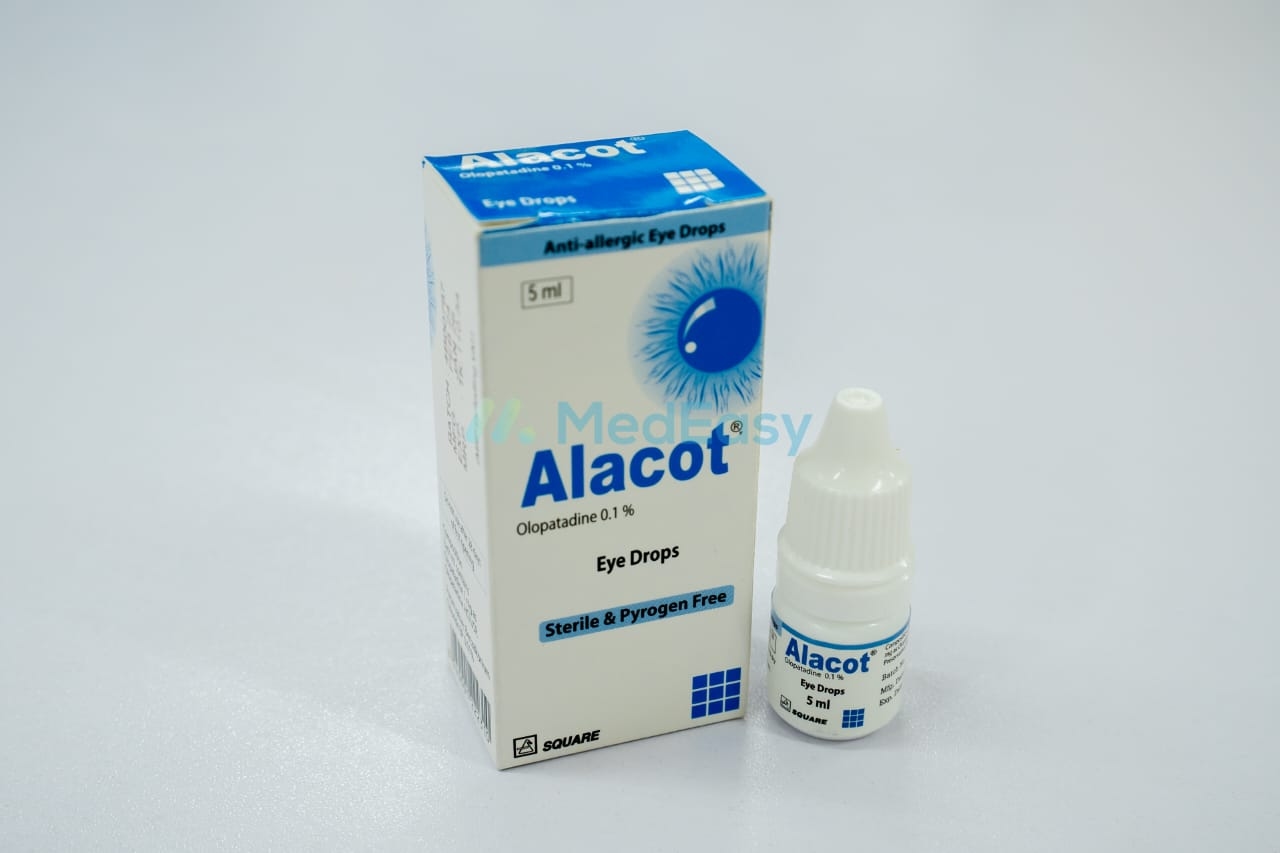
Alacot0.1%
Square Pharmaceuticals PLC.
৳101.51
Add to cart

Alercon 0.1% Ophthalmic Solution is available on MedEasy for ৳94.50 per 5 ml drop, with home delivery anywhere in Bangladesh. It is manufactured by ACME Laboratories Ltd. Its generic name is Olopatadine Hydrochloride.

Alercon is an antihistamine with additional mast cell-stabilizing activity, formulated as ophthalmic (eye) drops, a nasal spray, and oral tablets. Its approved and commonly used indications differ by formulation and by regulatory setting:
Oral Alercon tablets are not approved by the US FDA; this oral use reflects regional labeling and clinical practice rather than US/global regulatory approval. Alercon is not effective for red eye that is not accompanied by itching, and it is not an antibiotic — it does not treat bacterial, viral, or fungal infections.
Olopatadine Hydrochloride is available in Bangladesh in multiple formulations:
Each formulation of Olopatadine Hydrochloride also contains standard pharmaceutical excipients appropriate to the dosage form, including preservatives and buffering agents in the ophthalmic and nasal formulations.
Alercon is a selective histamine H1-receptor antagonist that also stabilizes mast cell membranes, reducing the release of histamine and other inflammatory mediators involved in allergic reactions. It is used topically in the eye and nose to relieve allergic itching, redness, and congestion, and orally in some markets to manage systemic allergic symptoms such as allergic rhinitis and urticaria. Alercon has a rapid onset of action and a low sedation profile compared with older, first-generation antihistamines.
Alercon belongs to the class of antihistamines (selective H1-receptor antagonists) with additional mast cell-stabilizing activity. Depending on formulation, it is classified as:
Olopatadine Hydrochloride selectively blocks histamine H1-receptors, preventing histamine from binding and producing the itching, redness, and vascular permeability changes characteristic of allergic reactions. In addition to H1-receptor antagonism, Olopatadine Hydrochloride inhibits the release of histamine and other pro-inflammatory mediators, such as tryptase, from mast cells, giving it a dual mechanism of action. It has minimal activity at other receptor types (e.g., alpha-adrenergic, dopaminergic, muscarinic) at therapeutic concentrations, contributing to its favorable tolerability profile. When applied topically to the eye or nose, systemic absorption of Olopatadine Hydrochloride is low; when taken orally, it is absorbed and undergoes limited hepatic metabolism, with elimination mainly via the kidneys.
Dosing of Alercon depends on the formulation and the indication being treated. Always follow the product label or a physician's instructions.
| Formulation | Indication | Adult Dose | Pediatric Dose |
|---|---|---|---|
| Ophthalmic solution 0.1% | Allergic conjunctivitis (itching) | 1 drop in each affected eye, twice daily, about 6–8 hours apart | Approved from age 3 years; same dose |
| Ophthalmic solution 0.2% / 0.7% | Allergic conjunctivitis (itching) | 1 drop in each affected eye, once daily | 0.2%: from age 3 years; 0.7%: from age 2 years; same dose |
| Nasal spray (665 mcg/spray) | Seasonal allergic rhinitis | 2 sprays per nostril, twice daily | Age 6–11 years: 1 spray per nostril twice daily; age 12+: adult dose |
| Oral tablet (2.5 mg / 5 mg) | Allergic rhinitis, chronic urticaria, allergic pruritus (regional use) | 5 mg by mouth, twice daily | Not well established; use only under medical supervision if prescribed |
For eye drops: wash hands, tilt the head back, and instill the drop into the lower eyelid pouch without touching the dropper tip to the eye or eyelid. For nasal spray: shake gently, clear the nose if needed, and spray into each nostril while breathing in gently. For oral tablets: swallow with a glass of water, with or without food. Do not exceed the prescribed dose or frequency of Alercon. See Precautions and Warnings for contact lens advice.
Eye drops: Wash hands before use. Tilt the head back, pull down the lower eyelid, and instil the drop into the pouch formed, avoiding contact between the dropper tip and the eye, eyelid, or any surface. Remove contact lenses before instillation and wait at least 10 minutes before reinserting them.
Nasal spray: Blow the nose gently to clear nasal passages and shake the bottle before use (prime it if using for the first time). Insert the nozzle into one nostril, close the other nostril, and spray while breathing in gently; repeat in the other nostril as directed.
Oral tablet: Swallow whole with water; may be taken with or without food, at evenly spaced intervals as prescribed. See Dosage and Administration for exact amounts of Alercon.
Because ophthalmic and intranasal Alercon are absorbed systemically only to a minor extent, clinically significant drug interactions with these formulations are unlikely, and no major interaction concerns have been well established. For oral Alercon tablets:
No clinically significant interactions with common drug classes (e.g., antibiotics, antihypertensives) have been well established for Alercon. Inform the physician or pharmacist of all medicines being used before starting Alercon.
Olopatadine Hydrochloride is contraindicated in patients with known hypersensitivity to olopatadine or to any component of the specific formulation being used. There are no other well-established absolute contraindications to Olopatadine Hydrochloride.
Side effects of Alercon vary by formulation.
Serious allergic reactions to Alercon (e.g., swelling of the face, lips, or tongue, severe rash, difficulty breathing) are rare; seek immediate medical attention if these occur.
Data on the use of Alercon in human pregnancy are limited. Animal reproduction studies have not shown teratogenic effects, but this does not guarantee safety in humans. Systemic absorption is minimal with ophthalmic and nasal use, but oral tablets result in greater systemic exposure. Alercon should be used during pregnancy only if clearly needed and if the potential benefit justifies the potential risk to the fetus; a physician should be consulted before use.
Olopatadine passes into animal milk in small amounts; it is not known whether clinically relevant amounts pass into human milk. Caution is advised when Alercon is used by a breastfeeding mother, and a physician should be consulted, weighing the benefits of treatment against potential risk to the infant.
Before using Alercon, inform the physician of any known allergies, current medications, and other eye/nasal conditions.
See Contraindications for hypersensitivity and Pregnancy and Lactation for use during pregnancy or breastfeeding.
Ophthalmic or intranasal overdose of Alercon is unlikely to cause serious toxicity due to low systemic absorption, but accidental oral ingestion of eye drops or nasal spray, or an oral tablet overdose, could cause exaggerated side effects such as marked drowsiness, dizziness, or dry mouth. In case of suspected overdose of Alercon, or if a child swallows the product, seek immediate medical attention or contact a poison control center or emergency services rather than attempting home treatment. Do not induce vomiting unless directed by a medical professional.
Store Alercon at room temperature (below 30°C), away from light and moisture. Do not freeze eye drops or nasal spray. Keep the container tightly closed when not in use, and keep all forms of Alercon out of reach of children. Discard opened eye drop bottles per the product label, typically within 4 weeks of opening, even if solution remains.
Renal/hepatic impairment: Specific dose adjustments for renal or hepatic impairment have not been well established for Alercon; use with caution and physician supervision in patients with significant renal or hepatic disease, especially with oral tablets.
Elderly: No overall differences in safety or effectiveness have been observed between elderly and younger adults using Alercon; standard adult dosing is generally used.
Pediatric: See Pediatric Uses for age-specific approval status of each formulation of Alercon.
Pregnancy and lactation: See Pregnancy and Lactation.
The duration of Alercon therapy depends on the underlying condition. For seasonal allergic conjunctivitis or rhinitis, it is typically used for the duration of the allergy season or as long as allergen exposure and symptoms persist, as directed by a physician. For chronic conditions such as perennial allergic rhinitis or chronic urticaria, Alercon may be used for longer periods under medical supervision, with periodic reassessment of the need for continued treatment. Do not use Alercon for longer than recommended without consulting a physician.
Olopatadine Hydrochloride is classified under: antihistamines; selective H1-receptor antagonists; mast cell stabilizers (dual-acting antiallergic agents); ophthalmic antiallergic agents; and intranasal antihistamines.
Olopatadine Hydrochloride works mainly through two complementary mechanisms: (1) selectively blocking histamine H1-receptors to prevent histamine-mediated itching, redness, and swelling, and (2) stabilizing mast cell membranes to reduce further release of histamine and inflammatory mediators. This dual action makes Olopatadine Hydrochloride effective both in relieving existing allergic symptoms and in limiting further allergic mediator release.
C
Approved pediatric use of Alercon varies by formulation:
Alercon is not recommended below the youngest approved age for a given formulation.
Q: What is Alercon 0.1% Ophthalmic Solution used for?
A: Alercon 0.1% Ophthalmic Solution eye drops treat itching from allergic conjunctivitis, the nasal spray relieves seasonal allergic rhinitis symptoms, and in some markets oral tablets are used for allergic rhinitis, chronic urticaria, and allergic itching of the skin.
Q: How quickly does Alercon 0.1% Ophthalmic Solution work?
A: Alercon 0.1% Ophthalmic Solution eye drops and nasal spray typically start relieving itching within minutes, with effects lasting up to 24 hours depending on the strength used; oral tablets generally begin working within 1–2 hours.
Q: Can I wear contact lenses while using Alercon 0.1% Ophthalmic Solution eye drops?
A: Remove contact lenses before instilling Alercon 0.1% Ophthalmic Solution eye drops and wait at least 10 minutes before reinserting them, since the preservative may be absorbed by soft lenses. Do not wear lenses if the eye is red.
Q: Is Alercon 0.1% Ophthalmic Solution safe during pregnancy or breastfeeding?
A: Data are limited. Alercon 0.1% Ophthalmic Solution should be used in pregnancy only if clearly needed and if the benefit justifies the potential risk to the fetus, and with caution while breastfeeding; a physician should be consulted before use in either situation.
Q: What should I do if I miss a dose of Alercon 0.1% Ophthalmic Solution?
A: Use the missed dose of Alercon 0.1% Ophthalmic Solution as soon as remembered; if it is almost time for the next dose, skip the missed one and continue the regular schedule. Do not double the dose.
Q: What if someone accidentally swallows Alercon 0.1% Ophthalmic Solution eye drops or nasal spray?
A: Seek immediate medical attention or contact a poison control center or emergency services right away; do not attempt home treatment for accidental ingestion of Alercon 0.1% Ophthalmic Solution.
Disclaimer
The information provided is accurate to the best of our knowledge, but it does not replace professional medical advice. We cannot guarantee its completeness or accuracy, and the absence of specific information about a drug should not be taken as an endorsement. We are not responsible for any consequences arising from this information, so please consult a healthcare professional for any concerns or questions.