10% Off
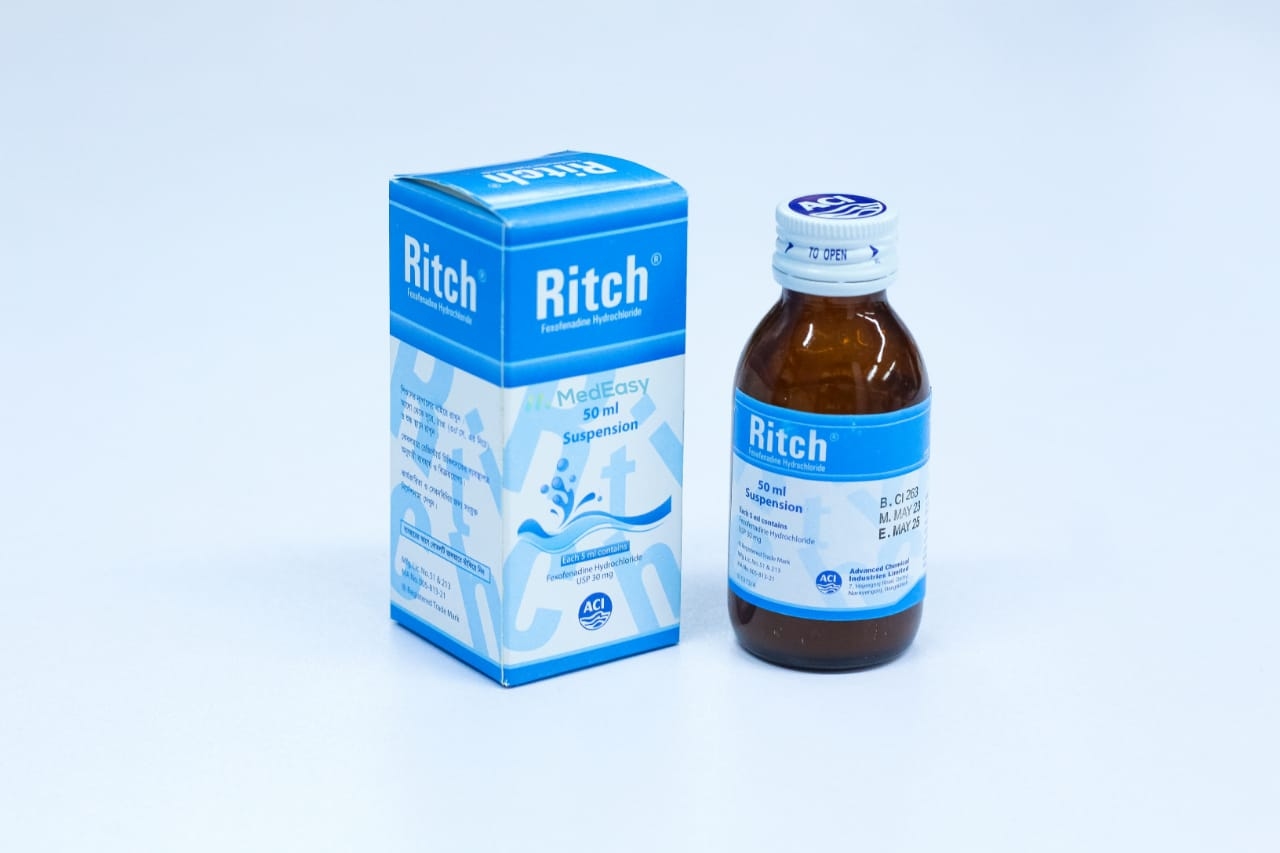
Fexomin30 mg/5 ml
Ibn-Sina Pharmaceuticals Ltd.
৳43.20
Add to cart


Alerfast is a second-generation (non-sedating) antihistamine indicated for the relief of symptoms associated with the following conditions:
Alerfast treats the symptoms of these allergic conditions; it does not cure the underlying allergic tendency and does not prevent anaphylaxis.
Each tablet/capsule contains Fexofenadine Hydrochloride INN as the active ingredient, typically available in strengths of 30 mg, 60 mg, 120 mg, and 180 mg. An oral suspension containing Fexofenadine Hydrochloride 30 mg/5 mL is also available, along with pharmaceutically acceptable excipients.
Alerfast is a selective, peripherally-acting histamine H1-receptor antagonist. It is the active carboxylic acid metabolite of terfenadine and belongs to the second-generation (non-sedating) class of antihistamines.
Unlike first-generation antihistamines, Alerfast does not readily cross the blood-brain barrier, which accounts for its low potential to cause sedation and anticholinergic side effects at recommended doses. It is widely used for symptomatic relief of seasonal allergic rhinitis and chronic idiopathic urticaria.
Second-generation (non-sedating) antihistamine; selective peripheral histamine H1-receptor antagonist. Alerfast belongs to this drug class.
Fexofenadine Hydrochloride is a selective H1-receptor antagonist. It competitively blocks the action of histamine at peripheral H1-receptors, thereby inhibiting histamine-mediated symptoms such as vasodilation, increased vascular permeability, and stimulation of sensory nerve endings that cause itching and sneezing.
Because it has low lipophilicity and is a substrate for P-glycoprotein efflux transporters at the blood-brain barrier, Fexofenadine Hydrochloride has minimal penetration into the central nervous system, resulting in a low incidence of sedation compared with first-generation antihistamines. It has no clinically significant anticholinergic (antimuscarinic) activity.
Pharmacokinetics: Peak plasma concentrations of Fexofenadine Hydrochloride are reached approximately 1-3 hours after oral administration. It is approximately 60-70% bound to plasma proteins, undergoes minimal hepatic metabolism (less than 5%), and is eliminated primarily unchanged in feces and urine (approximately 10%). The elimination half-life is approximately 14 hours in healthy adults.
Dosage of Alerfast should be individualized based on age, indication, and renal function.
| Indication | Age Group | Recommended Dose |
|---|---|---|
| Seasonal Allergic Rhinitis | Adults and children ≥12 years | 60 mg twice daily, or 180 mg once daily |
| Seasonal Allergic Rhinitis | Children 6-11 years | 30 mg twice daily |
| Seasonal Allergic Rhinitis | Children 2-5 years | 30 mg (oral suspension) twice daily |
| Chronic Idiopathic Urticaria | Adults and children ≥12 years | 60 mg twice daily, or 180 mg once daily |
| Chronic Idiopathic Urticaria | Children 6-11 years | 30 mg twice daily |
| Chronic Idiopathic Urticaria | Children 6 months-11 years | 15-30 mg (oral suspension) twice daily, per prescriber guidance |
Renal impairment: In patients with reduced renal function, a lower starting dose of Alerfast is recommended (e.g., 60 mg once daily in adults) because peak plasma concentration and elimination half-life are increased; dose should be individualized by the physician (see Use in Special Populations).
Administration: Tablets should be swallowed whole with water. The oral suspension should be shaken well before each use and measured with an accurate dosing device. Alerfast should be taken with water; avoid taking with fruit juices (see Interactions).
Alerfast tablets should be swallowed whole with a glass of water, with or without food. The oral suspension should be shaken well before use and administered using the provided measuring device. Doses of Alerfast should be taken with water only; avoid administering with fruit juices (apple, orange, or grapefruit juice) as these may reduce absorption.
Alerfast has clinically significant interactions with the following:
Fexofenadine Hydrochloride is contraindicated in patients with known hypersensitivity to Fexofenadine Hydrochloride or any component of the formulation.
Alerfast is generally well tolerated. Reported side effects include:
Patients taking Alerfast should seek medical attention if signs of a severe allergic reaction (swelling of the face/throat, difficulty breathing) occur.
Pregnancy: Data on the use of Alerfast in pregnant women are limited. As with most medications, Alerfast should be used during pregnancy only if clearly needed and if the potential benefit justifies the potential risk to the fetus. Second-generation antihistamines are generally preferred over first-generation agents when antihistamine therapy is required during pregnancy, but a physician should always be consulted before use.
Lactation: It is not known whether Alerfast is excreted in human breast milk in significant amounts. Caution is advised, and use during breastfeeding should only occur under medical supervision, weighing benefits against potential risk to the infant.
Use Alerfast with caution in the following situations:
Alerfast causes minimal sedation at recommended doses compared to first-generation antihistamines, but individual responses may vary; patients should assess their own response before driving or operating machinery.
Reported symptoms following overdose of Alerfast have included dizziness, drowsiness, and dry mouth. In case of suspected overdose, seek immediate medical attention or contact a poison control center. Treatment is supportive; standard measures to remove unabsorbed drug may be considered under medical supervision. There is no specific antidote for Alerfast, and it is not effectively removed by hemodialysis.
Store at room temperature (below 30°C), away from light and moisture. Keep out of reach of children.
Pediatric use: The safety and efficacy of Alerfast for allergic rhinitis have been established in children 2 years and older, and for chronic idiopathic urticaria in children 6 months and older, using age-appropriate doses (see Dosage and Administration). Safety and efficacy in children below these age thresholds have not been established.
Geriatric use: Clinical studies of Alerfast did not identify differences in response between elderly and younger patients, but greater sensitivity in some older individuals cannot be ruled out; renal function should be considered when dosing.
Renal impairment: Reduced clearance of Alerfast is observed; dose reduction is recommended (see Dosage and Administration).
Hepatic impairment: No specific dose adjustment is established, as Alerfast undergoes minimal hepatic metabolism; however, caution is advised.
Duration of treatment with Alerfast depends on the condition being treated: seasonal allergic rhinitis is typically treated for the duration of allergen exposure or symptom season, while chronic idiopathic urticaria may require longer-term daily use as directed by a physician, with periodic reassessment of the need for continued therapy.
Antihistamines (second-generation, non-sedating, selective H1-receptor antagonists)
Fexofenadine Hydrochloride selectively and competitively blocks peripheral histamine H1-receptors, preventing histamine from binding and triggering allergic symptoms such as itching, sneezing, rhinorrhea, and wheal/flare responses. It has minimal ability to cross the blood-brain barrier, so it produces little to no sedative or anticholinergic effect at recommended doses, distinguishing Fexofenadine Hydrochloride from first-generation antihistamines.
C
Alerfast is approved for allergic rhinitis in children 2 years of age and older, and for chronic idiopathic urticaria in children 6 months of age and older, using the oral suspension or age-appropriate tablet dose. Safety and efficacy of Alerfast have not been established in infants below these age limits. Dosing should always follow the age-based schedule and a physician's guidance (see Dosage and Administration).
Q: What is Alerfast 30 mg/5 ml Oral Suspension used for?
A: Alerfast 30 mg/5 ml Oral Suspension is used to relieve symptoms of seasonal allergic rhinitis (such as sneezing, runny nose, and itchy eyes) and chronic idiopathic urticaria (hives) in adults and children.
Q: Does Alerfast 30 mg/5 ml Oral Suspension cause drowsiness?
A: Alerfast 30 mg/5 ml Oral Suspension is a non-sedating (second-generation) antihistamine and causes minimal to no drowsiness in most people at recommended doses, unlike older first-generation antihistamines. However, individual responses vary, so caution is advised the first time you take it.
Q: Can I take Alerfast 30 mg/5 ml Oral Suspension with fruit juice?
A: It is best to avoid taking Alerfast 30 mg/5 ml Oral Suspension with apple, orange, or grapefruit juice, as these can reduce its absorption and effectiveness. Take Alerfast 30 mg/5 ml Oral Suspension with plain water instead.
Q: Is Alerfast 30 mg/5 ml Oral Suspension safe during pregnancy?
A: Data on Alerfast 30 mg/5 ml Oral Suspension use in pregnancy are limited. It should only be used during pregnancy if clearly needed and if a physician determines the potential benefit outweighs the potential risk to the fetus. Always consult your doctor before using Alerfast 30 mg/5 ml Oral Suspension during pregnancy or breastfeeding.
Q: What should I do if I miss a dose of Alerfast 30 mg/5 ml Oral Suspension?
A: Take the missed dose of Alerfast 30 mg/5 ml Oral Suspension as soon as you remember. If it is almost time for your next dose, skip the missed dose and continue your regular schedule; do not double the dose.
Q: What happens if someone takes too much Alerfast 30 mg/5 ml Oral Suspension?
A: Overdose of Alerfast 30 mg/5 ml Oral Suspension may cause dizziness, drowsiness, or dry mouth. If an overdose is suspected, seek immediate medical attention or contact a poison control center right away.
Disclaimer
The information provided is accurate to the best of our knowledge, but it does not replace professional medical advice. We cannot guarantee its completeness or accuracy, and the absence of specific information about a drug should not be taken as an endorsement. We are not responsible for any consequences arising from this information, so please consult a healthcare professional for any concerns or questions.