10% Off
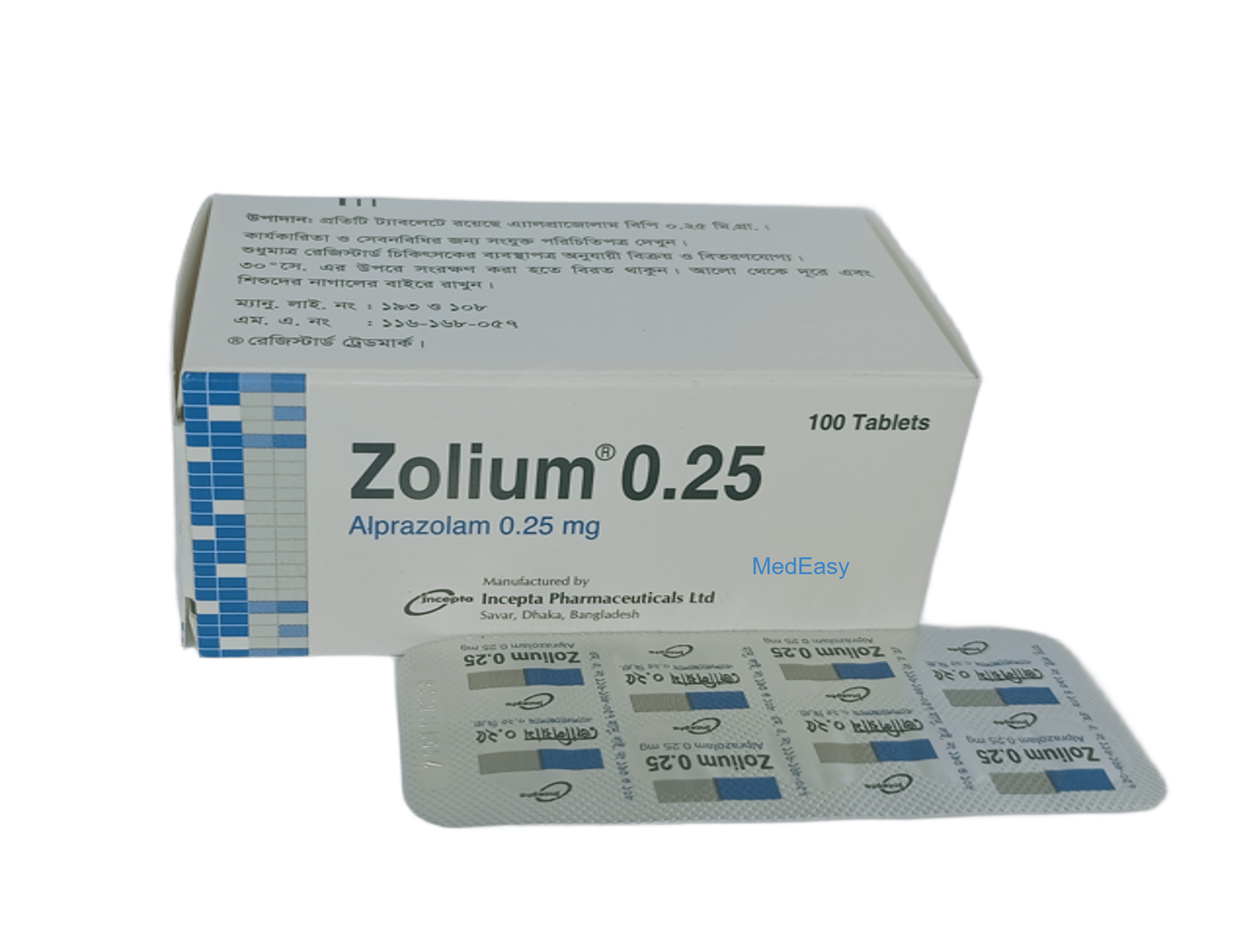
Zolium0.25 mg
Incepta Pharmaceuticals Ltd.
৳18.00
Add to cart

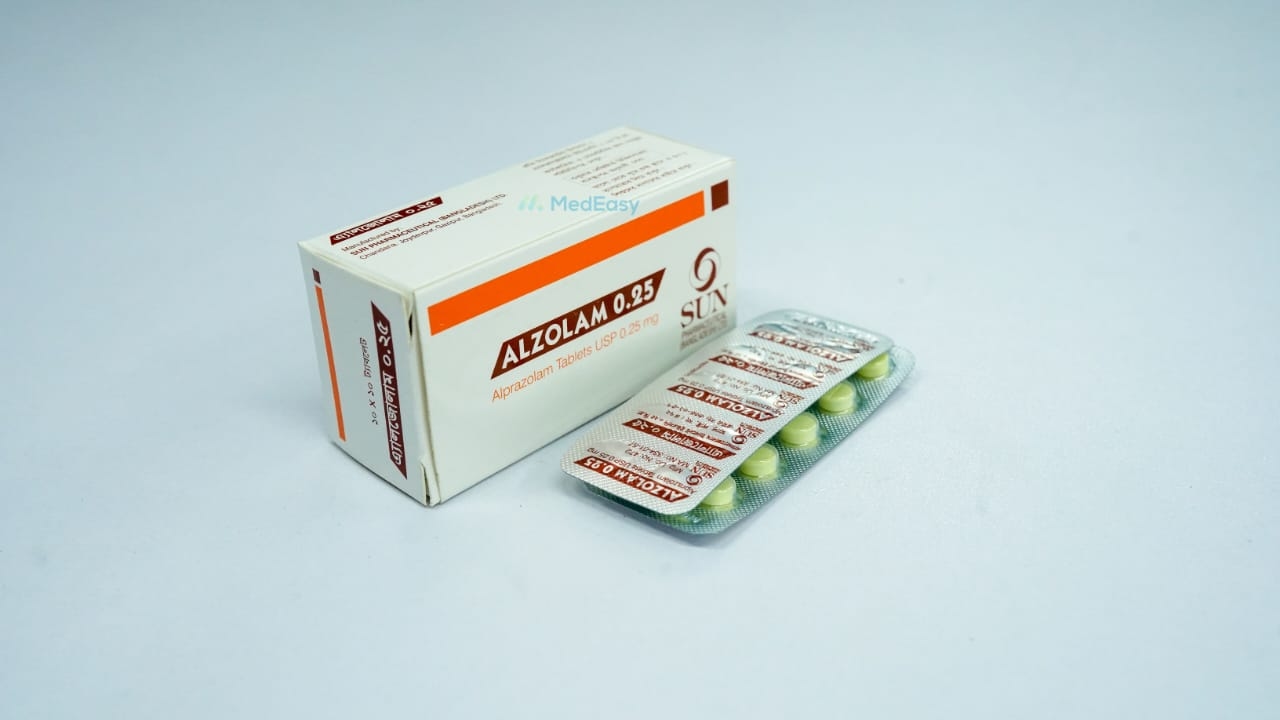
Alprax 0.25 mg Tablet is available on MedEasy for ৳13.80 per 10's Strip, with home delivery anywhere in Bangladesh. It is manufactured by Opsonin Pharma Ltd. Its generic name is Alprazolam.

Alprax is a short-acting benzodiazepine indicated for the following conditions:
Alprax is not indicated for the routine treatment of stress or anxiety of everyday life, and is generally not recommended as a first-line or long-term treatment given its potential for dependence.
Each tablet of Alprazolam contains Alprazolam USP as the active ingredient. It is commonly available as immediate-release tablets (typical strengths 0.25 mg, 0.5 mg, 1 mg) and, in some markets, extended-release tablets and orally disintegrating tablets. Excipient content varies by manufacturer and formulation.
Alprax is a triazolo-benzodiazepine, a class of drugs that act on the central nervous system. It is one of the most commonly prescribed short-acting benzodiazepines for anxiety and panic disorders. Alprax has a relatively rapid onset of action and a short to intermediate elimination half-life compared with other benzodiazepines, which contributes to both its therapeutic usefulness and its recognized potential for misuse, tolerance, and physical dependence.
Benzodiazepine (Anxiolytic / Sedative-Hypnotic agent); Schedule IV controlled substance in most jurisdictions.
Alprazolam exerts its pharmacologic effects by binding to specific sites on the GABA-A receptor complex in the central nervous system, enhancing the inhibitory effect of gamma-aminobutyric acid (GABA), the principal inhibitory neurotransmitter in the brain. This increases chloride ion influx through the GABA-gated chloride channel, producing neuronal hyperpolarization and reduced neuronal excitability. This mechanism underlies the anxiolytic, sedative, muscle-relaxant, and anticonvulsant properties of Alprazolam.
Pharmacokinetics: Alprazolam is well absorbed after oral administration, with peak plasma concentrations reached in 1-2 hours (immediate-release). It is extensively metabolized in the liver primarily by the CYP3A4 enzyme system to active and inactive metabolites, and is excreted mainly in urine. The elimination half-life is approximately 11-16 hours in healthy adults, which may be prolonged in the elderly, in obesity, and in hepatic impairment.
| Population | Dose |
|---|---|
| Adults | Initial 0.25-0.5 mg three times daily; may be titrated based on response and tolerability, generally up to a maximum of 4 mg/day in divided doses. |
| Elderly or debilitated patients | Initial 0.25 mg two to three times daily, increased gradually and cautiously if needed. |
| Population | Dose |
|---|---|
| Adults | Initial 0.5 mg three times daily; dose may be increased in increments of no more than 1 mg every 3-4 days as needed and tolerated. Total daily doses of up to 10 mg have been used in clinical trials, but higher doses substantially increase sedation and dependence risk. |
Use a lower starting dose and titrate cautiously; clearance of Alprax is reduced in liver disease.
Alprax must never be stopped abruptly after regular use. Discontinuation must be achieved by a gradual dose taper under medical supervision (see Precautions and Warnings) to reduce the risk of withdrawal symptoms, including seizures.
Alprax is taken orally, with or without food, generally in divided doses two to three times daily due to its short duration of action. Tablets should be swallowed whole (or as directed for orally disintegrating formulations, placed on the tongue without water). Doses should be taken at consistent times each day. Do not increase the dose or frequency of Alprax on your own, and do not stop taking it suddenly without consulting a physician, as this can precipitate withdrawal.
Alprazolam is contraindicated in:
Pregnancy: Alprax should be used during pregnancy only if clearly needed and the potential benefit justifies the potential risk to the fetus; a physician must always be consulted before use in pregnancy. Benzodiazepine use, particularly in the third trimester or near delivery, has been associated with neonatal sedation, hypotonia, feeding difficulties (floppy infant syndrome), and neonatal withdrawal symptoms. Some data suggest a possible small increase in risk of congenital malformations with first-trimester exposure, though evidence is not conclusive. Alprax should not be discontinued abruptly in a pregnant patient who is dependent on it, as this can be harmful to both mother and fetus; any change should be supervised by a physician.
Lactation: Alprax is excreted into breast milk and may cause sedation, poor feeding, or weight loss in a breastfed infant. Use during breastfeeding is generally not recommended; if considered necessary, it should be under close medical supervision with monitoring of the infant.
Risks from concomitant use with opioids: Concomitant use of Alprax and opioids may result in profound sedation, respiratory depression, coma, and death. Reserve concomitant prescribing for patients for whom alternative treatment options are inadequate; limit dosages and durations to the minimum required; monitor patients for signs of respiratory depression and sedation.
Abuse, misuse, and addiction: The use of Alprax, even at recommended doses, exposes users to risks of abuse, misuse, and addiction, which can lead to overdose or death. Assess each patient's risk before prescribing and monitor for signs of these behaviors during treatment.
Dependence and withdrawal reactions: Continued use of Alprax may lead to clinically significant physical dependence. Abrupt discontinuation or rapid dosage reduction may precipitate acute withdrawal reactions, including seizures, which can be life-threatening. A gradual, medically supervised taper schedule is required to discontinue Alprax or reduce the dosage; never stop taking it suddenly on your own.
Overdose of Alprax can cause somnolence, confusion, impaired coordination, slurred speech, and in severe cases, profound CNS and respiratory depression, coma, and death - particularly when combined with alcohol or other CNS depressants such as opioids. Suspected overdose is a medical emergency: seek immediate medical attention or contact emergency services / a poison control center. Treatment is generally supportive (airway management, monitoring of vital signs); a specific benzodiazepine antagonist may be used by medical professionals in a controlled setting in select cases, but carries its own risks and must not be attempted outside a hospital setting. Do not attempt to manage a suspected overdose at home.
Store at room temperature (below 30°C), away from light and moisture. Keep in a secure place out of reach of children and away from anyone for whom it was not prescribed, given its potential for misuse.
Elderly: Increased sensitivity to sedative and psychomotor effects; use lower starting doses and titrate cautiously (see Precautions and Warnings).
Pediatric: Safety and efficacy of Alprax have not been established in patients under 18 years of age (see Pediatric Uses).
Hepatic impairment: Reduced metabolism; use lower doses with caution.
Renal impairment: Use with caution; clinical experience is limited but dose adjustment may be warranted in significant impairment.
Pregnancy and lactation: See Pregnancy and Lactation section.
History of substance use disorder: Use with heightened caution and close monitoring given elevated risk of misuse and dependence with Alprax.
Alprax is generally intended for short-term or intermittent use. Treatment duration and the need for continued therapy should be periodically reassessed by the prescribing physician. Long-term continuous use increases the risk of tolerance, physical dependence, and withdrawal difficulty, and should only be undertaken with careful medical judgment and follow-up. Any discontinuation after prolonged use must follow a gradual taper (see Precautions and Warnings).
Benzodiazepines; Anxiolytics; Sedative-hypnotics
Alprazolam potentiates the effect of GABA at the GABA-A receptor in the central nervous system, increasing chloride channel opening frequency and producing central nervous system depression, which underlies its anxiolytic and sedative effects.
D
The safety and effectiveness of Alprax have not been established in pediatric patients (under 18 years of age). Alprax is not recommended for use in children. If anxiety-related treatment is required in a child or adolescent, alternative approaches and specialist evaluation should be considered, and any use of Alprax in this population should only occur under close specialist supervision when no suitable alternative exists.
Q: What is Alprax 0.25 mg Tablet used for?
A: Alprax 0.25 mg Tablet is primarily used for the short-term treatment of generalized anxiety disorder and for panic disorder, with or without agoraphobia. It is not intended for everyday stress.
Q: Can I stop taking Alprax 0.25 mg Tablet suddenly if I feel better?
A: No. Alprax 0.25 mg Tablet should never be stopped abruptly after regular use, as this can cause serious withdrawal symptoms, including seizures. Any discontinuation must be done gradually under a physician's supervision.
Q: Is Alprax 0.25 mg Tablet addictive?
A: Yes. Alprax 0.25 mg Tablet carries a boxed warning for risk of abuse, misuse, and addiction, even when taken at prescribed doses. It should be used only as directed and for the shortest duration necessary.
Q: Can I drink alcohol or take opioid painkillers while on Alprax 0.25 mg Tablet?
A: No. Combining Alprax 0.25 mg Tablet with alcohol, opioids, or other central nervous system depressants can cause profound sedation, dangerously slowed breathing, coma, and death. Avoid this combination and inform your doctor of all medicines you take.
Q: Is Alprax 0.25 mg Tablet safe during pregnancy?
A: Alprax 0.25 mg Tablet should be used in pregnancy only if clearly necessary and if the benefit outweighs the potential risk to the baby, and always under a physician's guidance, as it may cause neonatal sedation, feeding problems, or withdrawal symptoms in the newborn if used near delivery.
Q: What should I do if I miss a dose or suspect an overdose?
A: If you miss a dose, take it as soon as remembered unless it is close to the next dose; do not double up. If overdose is suspected (extreme drowsiness, confusion, breathing difficulty), seek emergency medical attention immediately or contact a poison control center - do not wait or attempt home treatment.
Disclaimer
The information provided is accurate to the best of our knowledge, but it does not replace professional medical advice. We cannot guarantee its completeness or accuracy, and the absence of specific information about a drug should not be taken as an endorsement. We are not responsible for any consequences arising from this information, so please consult a healthcare professional for any concerns or questions.