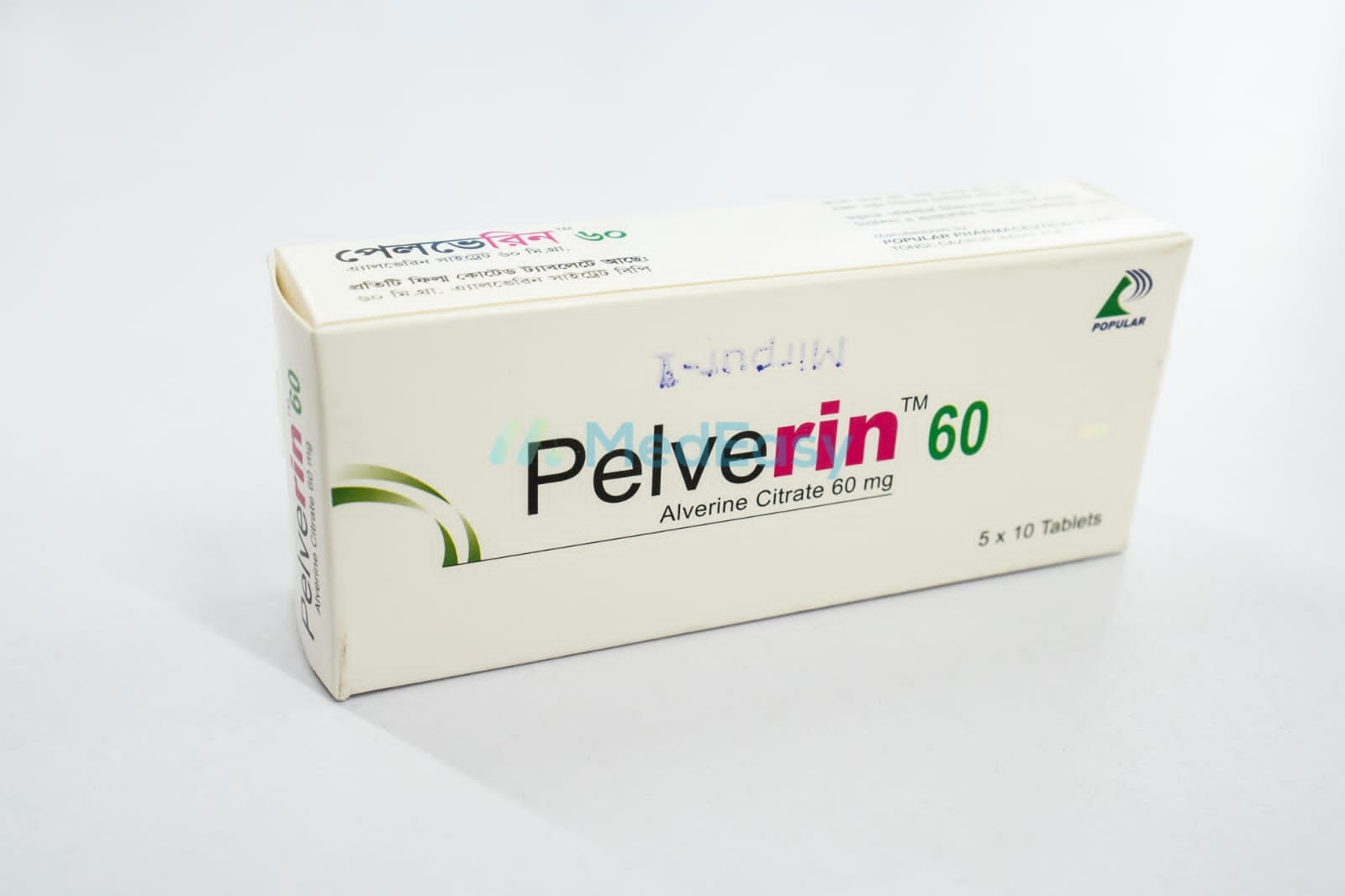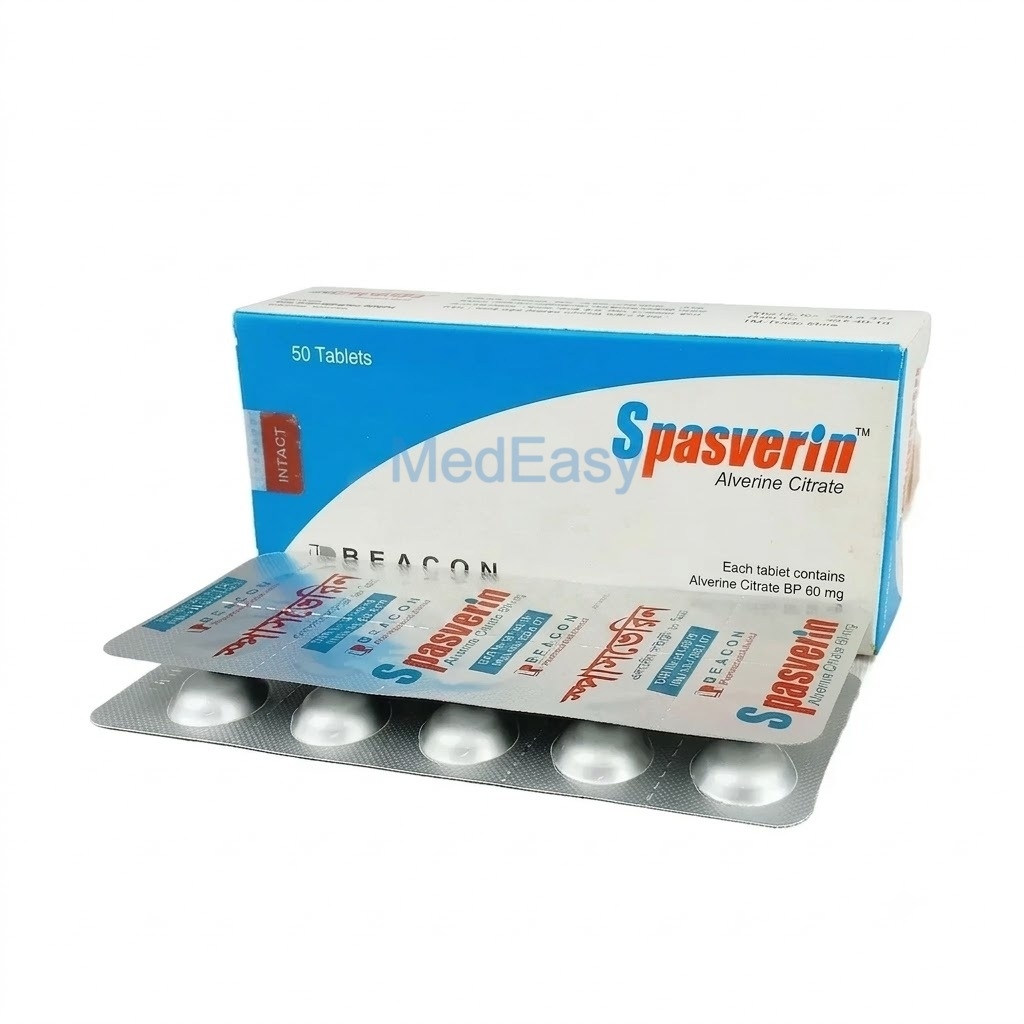
8% Off
Spasverin60 mg
Beacon Pharmaceuticals PLC
৳46.18
Add to cart
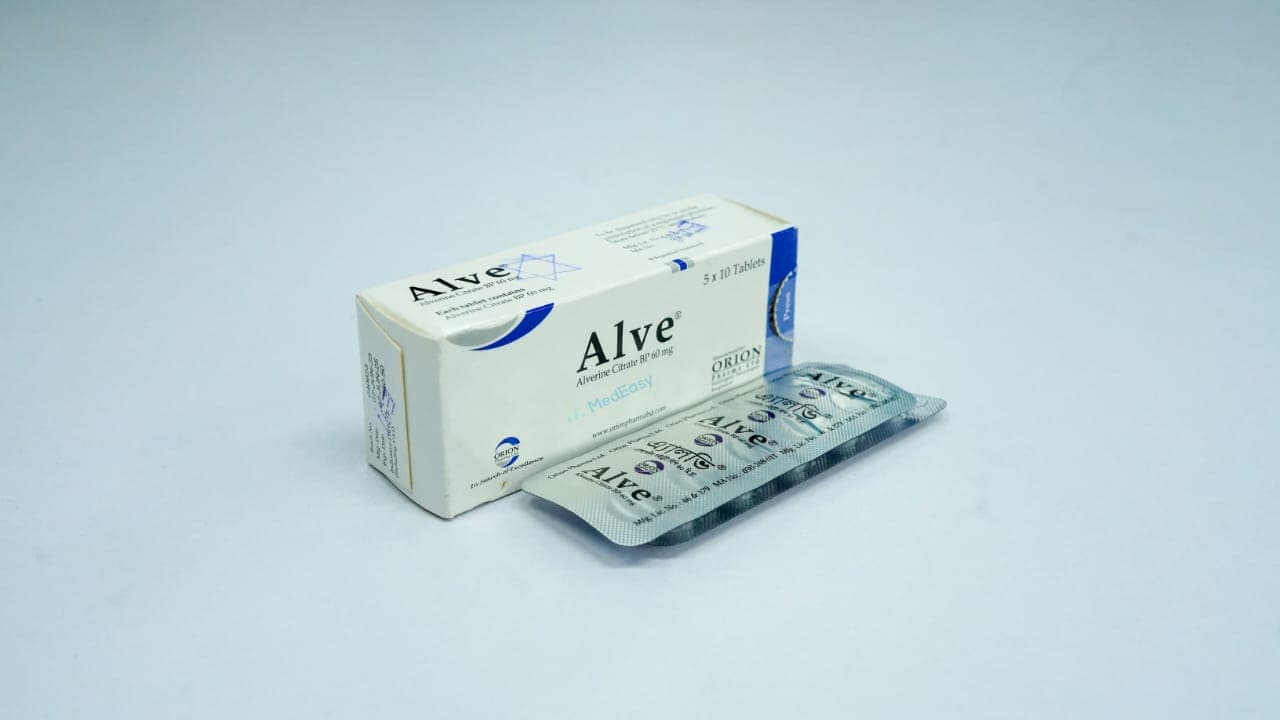
Alve 60 mg Tablet is available on MedEasy for ৳46.09 per 10's Strip, with home delivery anywhere in Bangladesh. It is manufactured by Orion Pharma Ltd. Its generic name is Alverine Citrate.

Alve is an antispasmodic used for the symptomatic relief of pain and spasm associated with the following conditions:
Alve provides symptomatic relief of smooth muscle spasm only; it does not treat the underlying cause of abdominal or pelvic pain. Persistent, severe, or atypical symptoms (especially new-onset symptoms in patients over 40 years, or symptoms accompanied by rectal bleeding, unexplained weight loss, anaemia, fever, or a change in bowel habit) require prompt medical evaluation to exclude more serious underlying pathology before or during use of Alve.
Each tablet/capsule of Alverine Citrate available in Bangladesh typically contains Alverine Citrate 60 mg as the active ingredient. Some international formulations are also available as 120 mg capsules, or in combination with simeticone for additional relief of flatulence. Excipients vary by manufacturer.
Alve is a musculotropic (direct-acting) smooth muscle relaxant belonging to the antispasmodic class of medicines. Unlike anticholinergic antispasmodics, it acts directly on the smooth muscle of the gastrointestinal tract and uterus rather than through blockade of muscarinic receptors, which gives it a relatively favourable side-effect profile with minimal anticholinergic (dry mouth, blurred vision) effects at therapeutic doses.
Alve is widely marketed in Bangladesh as an oral tablet (commonly 60 mg strength) for symptomatic relief of gastrointestinal and uterine smooth muscle spasm.
Alverine Citrate exerts a direct musculotropic (papaverine-like) spasmolytic effect on the smooth muscle of the gastrointestinal tract and uterus. It is believed to act, at least in part, by modulating calcium ion movement across the smooth muscle cell membrane, thereby reducing hypermotility, spasm, and colonic/uterine muscle contraction. At therapeutic doses, Alverine Citrate has little to no clinically significant effect on cardiac or vascular smooth muscle, and it lacks significant anticholinergic or antihistaminic activity.
Alverine Citrate is absorbed from the gastrointestinal tract after oral administration and is metabolised in the body with subsequent elimination, predominantly renal, of its metabolites. Detailed pharmacokinetic data (e.g., precise bioavailability, protein binding, half-life) are not extensively characterised in the public literature.
| Indication | Adult Dose | Notes |
|---|---|---|
| Irritable bowel syndrome | 60-120 mg, 1 to 3 times daily | Preferably taken before meals |
| Painful diverticular disease of the colon | 60-120 mg, 1 to 3 times daily | Preferably taken before meals |
| Primary dysmenorrhoea | 60-120 mg, 1 to 3 times daily as needed during painful episodes | Use only after exclusion of other gynaecological causes of pain |
Use of Alve is not recommended in children under 12 years, as safety and efficacy have not been established in this age group.
No specific dose adjustment is established for elderly patients; the standard adult dose is generally used.
No well-established dose adjustment data are available for renal or hepatic impairment; Alve should be used with caution in patients with significant hepatic impairment, as rare cases of hepatitis have been reported (see Side Effects).
No well-established, clinically significant drug interactions have been documented for Alve in the available literature. However, as with any medicine, patients should inform their physician or pharmacist of all other medicines (prescription, over-the-counter, and herbal) they are taking before starting Alve, particularly other antispasmodic or centrally-acting agents, so that the physician can monitor for any unexpected additive effects.
Alverine Citrate is contraindicated in:
Alve is generally well tolerated. Reported adverse effects include:
Patients should seek immediate medical attention if signs of a severe allergic reaction (facial/throat swelling, severe rash, difficulty breathing) occur after taking Alve.
Safety data for Alve in human pregnancy and lactation are limited. Use of Alve during pregnancy is generally not recommended, and it should be used only if clearly needed and the potential benefit justifies the potential risk to the fetus, under medical supervision.
Similarly, use of Alve during breastfeeding is not recommended in the absence of adequate safety data; a physician should be consulted before use in breastfeeding mothers.
Alve provides symptomatic relief only and does not treat the underlying cause of abdominal or pelvic pain. Medical evaluation is advised before starting Alve, or promptly during treatment, in patients who:
These features may indicate a more serious underlying condition (e.g., inflammatory bowel disease, colorectal disease, or gynaecological pathology) that requires specific diagnosis and treatment rather than symptomatic therapy with Alve alone.
Overdose with Alve may cause hypotension (low blood pressure) and atropine-like toxic effects. Very high doses have rarely been associated with fatal outcomes in reported cases.
There is no specific antidote for Alve overdose. In case of suspected overdose, seek immediate medical attention or contact the nearest emergency department/poison control service. Treatment is supportive and symptomatic, based on clinical assessment.
Store at room temperature (below 30°C), away from light and moisture. Keep out of reach of children.
Pediatric: Use of Alve is not recommended in children below 12 years of age, as safety and efficacy have not been established in this age group.
Elderly: No specific dose adjustment is required; standard adult dosing is generally used, with routine clinical monitoring.
Renal impairment: No well-established dose-adjustment data exist; use with routine caution.
Hepatic impairment: Use with caution given rare reports of hepatitis; monitor for signs of liver dysfunction.
Pregnancy and lactation: See Pregnancy and Lactation section above.
Q: What is Alve 60 mg Tablet used for?
A: Alve 60 mg Tablet is used for the symptomatic relief of pain and cramping caused by smooth muscle spasm, such as in irritable bowel syndrome (IBS), painful diverticular disease of the colon, and primary dysmenorrhoea (menstrual cramps). It relieves symptoms but does not cure the underlying condition.
Q: How should I take Alve 60 mg Tablet?
A: Take Alve 60 mg Tablet exactly as prescribed by your physician, usually 60-120 mg, 1 to 3 times daily, swallowed whole with water, preferably before meals. Do not exceed the recommended dose.
Q: Can I take Alve 60 mg Tablet during pregnancy or while breastfeeding?
A: Safety data for Alve 60 mg Tablet in pregnancy and breastfeeding are limited, so it is generally not recommended. It should be used only if clearly needed and your physician judges that the potential benefit outweighs the potential risk to the baby. Always consult your doctor before taking Alve 60 mg Tablet if you are pregnant or breastfeeding.
Q: What are the common side effects of Alve 60 mg Tablet?
A: Alve 60 mg Tablet is generally well tolerated. The most commonly reported side effects include nausea, headache, dizziness, itching, and skin rash. Rarely, allergic reactions, breathing difficulty, or liver problems (jaundice) have been reported; seek medical attention promptly if these occur.
Q: Who should not take Alve 60 mg Tablet?
A: Alve 60 mg Tablet should not be taken by patients with paralytic ileus or intestinal obstruction, or by anyone with a known hypersensitivity (allergy) to Alve 60 mg Tablet or any ingredient in the product.
Q: What should I do if I miss a dose or think I overdosed on Alve 60 mg Tablet?
A: If you miss a dose of Alve 60 mg Tablet, take it as soon as you remember, but skip it if it is nearly time for the next dose - do not double up. If you suspect an overdose of Alve 60 mg Tablet (symptoms may include low blood pressure or atropine-like effects), seek immediate medical attention or contact emergency/poison control services right away.
Disclaimer
The information provided is accurate to the best of our knowledge, but it does not replace professional medical advice. We cannot guarantee its completeness or accuracy, and the absence of specific information about a drug should not be taken as an endorsement. We are not responsible for any consequences arising from this information, so please consult a healthcare professional for any concerns or questions.