8% Off
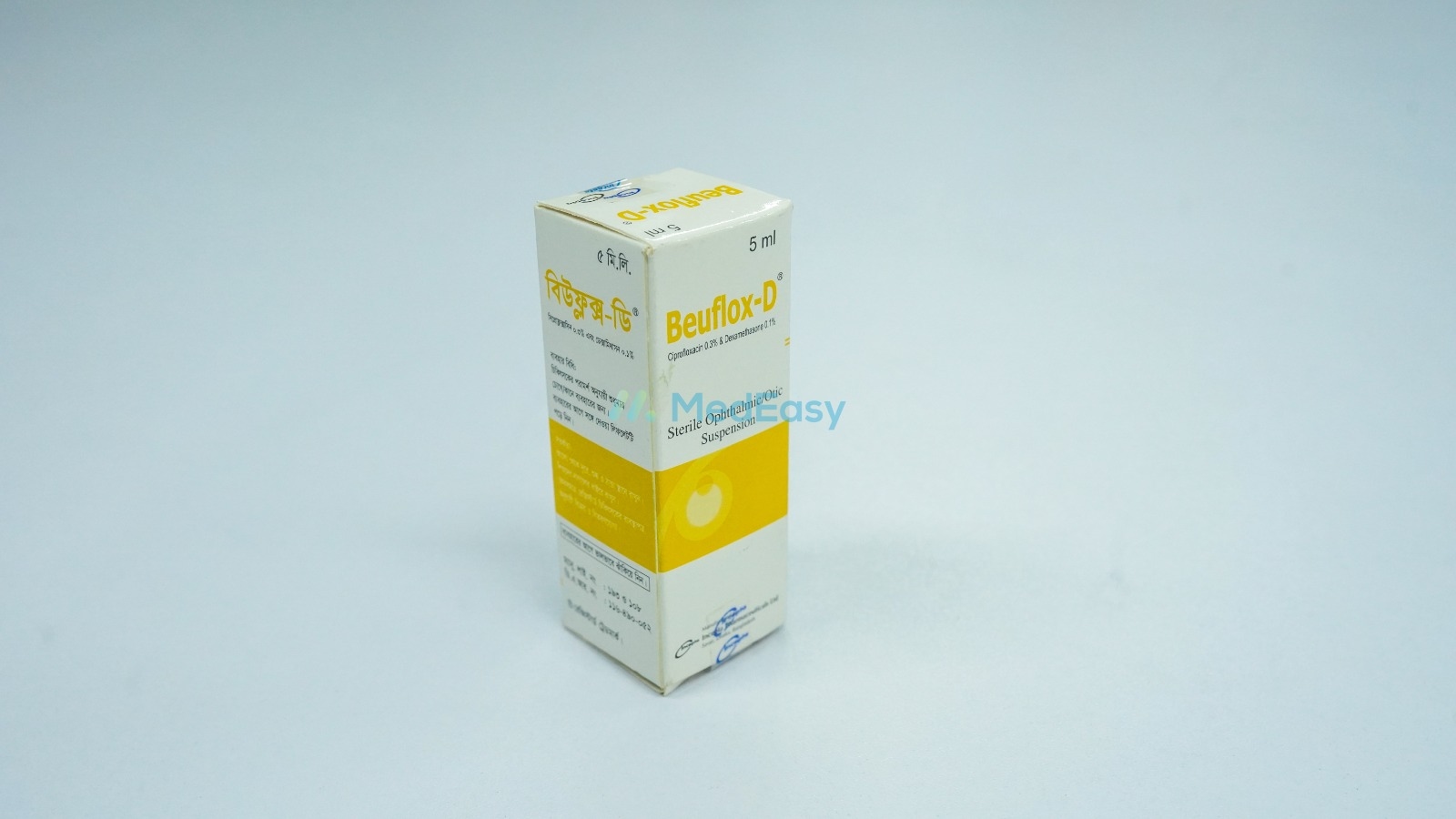
Beuflox-D0.3%+0.1%
Incepta Pharmaceuticals Ltd.
৳69.00
Add to cart
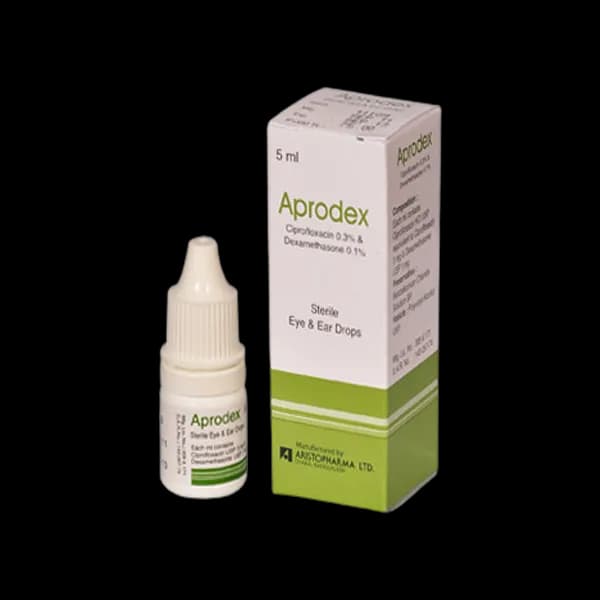

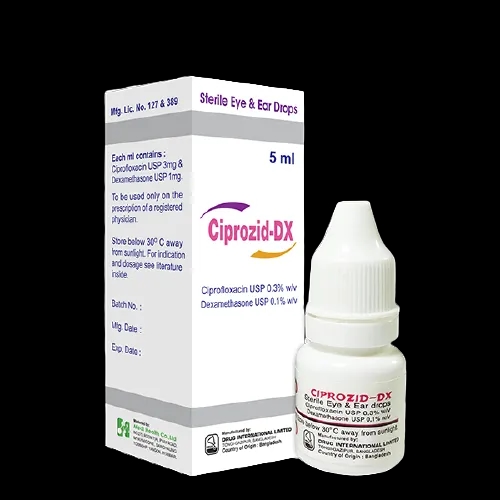
Aprodex is a fixed-dose combination of a fluoroquinolone antibiotic (ciprofloxacin) and a corticosteroid (dexamethasone), formulated as an ophthalmic (eye) preparation in Bangladesh.
In some other countries, a Aprodex combination is also marketed as an otic (ear) suspension for acute otitis externa and for acute otitis media in children with tympanostomy tubes. In Bangladesh, Aprodex is available only as an eye drop; it should not be used in the ear unless a product specifically labeled for otic use is prescribed.
Use of Aprodex should always be guided by a physician's assessment, as inappropriate steroid use in undiagnosed "red eye" can worsen certain infections.
Each mL of Ciprofloxacin + Dexamethasone ophthalmic solution contains:
Along with sterile ophthalmic-grade excipients and a preservative to maintain sterility of the multi-dose bottle.
Aprodex is a sterile, topical ophthalmic combination product that pairs a broad-spectrum fluoroquinolone antibiotic with a potent corticosteroid in a single formulation. It is used when an eye specialist judges that both anti-inflammatory and antibacterial action are needed at the same time, such as after certain infections or eye surgery, rather than using two separate products.
The antibiotic component (ciprofloxacin) helps treat or prevent bacterial infection, while the corticosteroid component (dexamethasone) reduces the pain, redness, and swelling caused by inflammation. Because the corticosteroid component can worsen certain untreated infections (particularly viral and fungal), Aprodex is intended for short, physician-directed courses only, and not for undiagnosed or chronic eye redness.
Ciprofloxacin + Dexamethasone combines two agents with complementary mechanisms:
Ciprofloxacin is a fluoroquinolone that acts by inhibiting bacterial DNA gyrase (topoisomerase II) and topoisomerase IV, enzymes required for bacterial DNA replication, transcription, and repair. This produces a bactericidal effect against a broad range of Gram-positive and Gram-negative organisms commonly implicated in ocular surface infections.
Dexamethasone is a synthetic glucocorticoid that suppresses inflammation by inhibiting phospholipase A2, reducing production of prostaglandins and other inflammatory mediators, decreasing capillary permeability, and reducing infiltration of inflammatory cells (e.g., neutrophils) into ocular tissue. This reduces the redness, swelling, and discomfort associated with ocular inflammation.
When used together in Ciprofloxacin + Dexamethasone, the antibiotic component provides antibacterial cover while the corticosteroid component controls the inflammatory response, which is why the combination is reserved for situations where both effects are clinically warranted, under medical supervision.
| Indication | Adult dose | Pediatric dose |
|---|---|---|
| Steroid-responsive inflammatory ocular conditions with bacterial infection/risk | Instill 1–2 drops into the affected eye(s) every 4–6 hours; may be increased to every 2 hours during the initial 24–48 hours in more severe cases, then tapered as inflammation subsides, per physician's advice | Safety and efficacy not established in children below 1 year of age; use in older children only under a physician's direction, generally following adult dosing adjusted by clinical judgment |
| Post-operative ocular inflammation | As directed by the operating ophthalmologist, typically several times daily for a limited, physician-defined course | As directed by pediatric ophthalmologist |
Renal/hepatic impairment: Because ocular application results in minimal systemic absorption, no specific dose adjustment is established for renal or hepatic impairment; however, patients with significant hepatic/renal disease should still use Aprodex only under medical supervision.
Route: For topical ophthalmic (eye) use only. Aprodex must not be injected, taken by mouth, or applied to the ear unless a product specifically labeled for ear (otic) use has been prescribed.
Antibiotic stewardship: Take/use Aprodex exactly as prescribed by your physician; do not stop, extend, skip doses, or share this medicine with others without medical advice, even if symptoms improve early, to reduce the risk of antibiotic resistance and incomplete treatment.
Because Aprodex is applied topically to the eye, systemic absorption and clinically significant drug interactions are uncommon; however, the following points are clinically relevant:
Always inform your physician or pharmacist about all other eye drops or medicines being used while on Aprodex.
Ciprofloxacin + Dexamethasone is contraindicated in the following situations:
Most side effects of Aprodex are local, mild, and transient. Report persistent or severe symptoms to your physician.
Pregnancy: There are no adequate and well-controlled studies of Aprodex in pregnant women. Aprodex should be used during pregnancy only if clearly needed and the potential benefit justifies the potential risk to the fetus; use only under medical supervision.
Lactation: It is not known whether topically applied ciprofloxacin or dexamethasone from Aprodex is excreted in human breast milk in clinically significant amounts. Because systemically administered corticosteroids can appear in breast milk, caution is advised; a physician should be consulted before using Aprodex while breastfeeding.
Ocular overdose with Aprodex (e.g., excessive drops) may cause increased local irritation, tearing, or transient blurred vision, which usually resolves; the eye can be flushed with lukewarm water if excess solution is instilled.
If Aprodex is accidentally swallowed or a large amount is ingested by a child, seek immediate medical attention or contact your nearest emergency department or a poison control center rather than attempting home treatment, as clinical judgment and monitoring may be needed.
Store at room temperature (below 30°C), protected from light and moisture; do not freeze. Keep the bottle tightly closed and out of reach and sight of children. Discard any unused solution after completing the prescribed course, or after the in-use period stated on the label, whichever comes first.
Renal impairment: No specific dose adjustment is established for Aprodex given its minimal systemic absorption when used as an eye drop; use with medical guidance in patients with significant renal disease.
Hepatic impairment: No specific dose adjustment is established; use with medical guidance in patients with significant hepatic disease.
Elderly: No specific dose adjustment is required; general precautions regarding intraocular pressure monitoring with prolonged use apply as in adults.
Pediatric: See Pediatric Uses.
Pregnancy and lactation: See Pregnancy and Lactation section.
Treatment with Aprodex is generally continued for 7–14 days depending on the indication and clinical response, and should not be used for longer than prescribed. Because of the risk of steroid-related complications (raised intraocular pressure, cataract, delayed healing, secondary infection), the physician should reassess the patient if improvement is not seen within about a week, and treatment should not be continued indefinitely or restarted without medical review.
Ciprofloxacin + Dexamethasone works through two complementary actions: ciprofloxacin kills susceptible bacteria by blocking the DNA gyrase and topoisomerase IV enzymes bacteria need to replicate their DNA, while dexamethasone reduces inflammation by inhibiting phospholipase A2 and downstream inflammatory mediators (e.g., prostaglandins), decreasing capillary permeability and inflammatory cell infiltration in ocular tissue.
C
Safety and efficacy of Aprodex ophthalmic solution have not been formally established in children below 1 year of age. In older children, it should be used only under a physician's direction, with careful attention to correct instillation technique and the same precautions regarding prolonged corticosteroid exposure (intraocular pressure, cataract, growth of resistant organisms) that apply to adults. Parents/caregivers should not use Aprodex in a child without a physician's diagnosis and prescription, since undiagnosed viral or fungal eye infections can be worsened by the corticosteroid component.
Q: What is Aprodex 0.3%+0.1% Eye/Ear Drop used for?
A: Aprodex 0.3%+0.1% Eye/Ear Drop eye drop is used to treat inflammatory eye conditions where there is an existing bacterial infection or a risk of one, such as certain cases of conjunctivitis, keratitis, blepharitis, or inflammation after eye surgery. It combines an antibiotic to fight bacteria with a corticosteroid to reduce redness, swelling, and discomfort, and should be used only when prescribed by a doctor for a specific diagnosed condition.
Q: How should I use Aprodex 0.3%+0.1% Eye/Ear Drop eye drops?
A: Wash your hands, tilt your head back, gently pull down the lower eyelid, and instill the prescribed number of drops of Aprodex 0.3%+0.1% Eye/Ear Drop into the affected eye without touching the dropper tip to the eye or any surface. The usual dose is 1–2 drops every 4–6 hours (more frequently at first in severe cases), for about 7–14 days, exactly as directed by your physician. Do not stop, extend, or skip doses on your own.
Q: Can I use Aprodex 0.3%+0.1% Eye/Ear Drop for a red or irritated eye without seeing a doctor?
A: No. Aprodex 0.3%+0.1% Eye/Ear Drop should not be used for undiagnosed red or irritated eyes. It contains a corticosteroid that can worsen certain untreated viral infections (such as herpes simplex keratitis) and fungal eye infections, and it is contraindicated in these conditions. Always have a doctor examine and diagnose the eye problem before using Aprodex 0.3%+0.1% Eye/Ear Drop.
Q: Is Aprodex 0.3%+0.1% Eye/Ear Drop safe during pregnancy or breastfeeding?
A: There are no adequate, well-controlled studies of Aprodex 0.3%+0.1% Eye/Ear Drop in pregnant women, so it should be used in pregnancy only if clearly needed and the expected benefit outweighs the potential risk to the baby, and only under medical supervision. It is also not known whether clinically significant amounts pass into breast milk after topical use, so a doctor should be consulted before using Aprodex 0.3%+0.1% Eye/Ear Drop while breastfeeding.
Q: Can Aprodex 0.3%+0.1% Eye/Ear Drop be used in children?
A: Safety and efficacy of Aprodex 0.3%+0.1% Eye/Ear Drop have not been formally established in children below 1 year of age. In older children, it should be used only under a physician's direction and diagnosis, following the prescribed dose and duration carefully, because prolonged corticosteroid exposure carries the same risks (raised eye pressure, cataract, secondary infection) in children as in adults.
Q: What are the risks of using Aprodex 0.3%+0.1% Eye/Ear Drop for too long?
A: Using Aprodex 0.3%+0.1% Eye/Ear Drop for longer than prescribed increases the risk of raised intraocular pressure and glaucoma, cataract formation, delayed healing of the eye surface, and secondary infections (including fungal infections) because the corticosteroid component can suppress the eye's normal defenses. If symptoms do not improve within about a week, or if they worsen, contact your physician rather than continuing treatment on your own.
Disclaimer
The information provided is accurate to the best of our knowledge, but it does not replace professional medical advice. We cannot guarantee its completeness or accuracy, and the absence of specific information about a drug should not be taken as an endorsement. We are not responsible for any consequences arising from this information, so please consult a healthcare professional for any concerns or questions.