5% Off
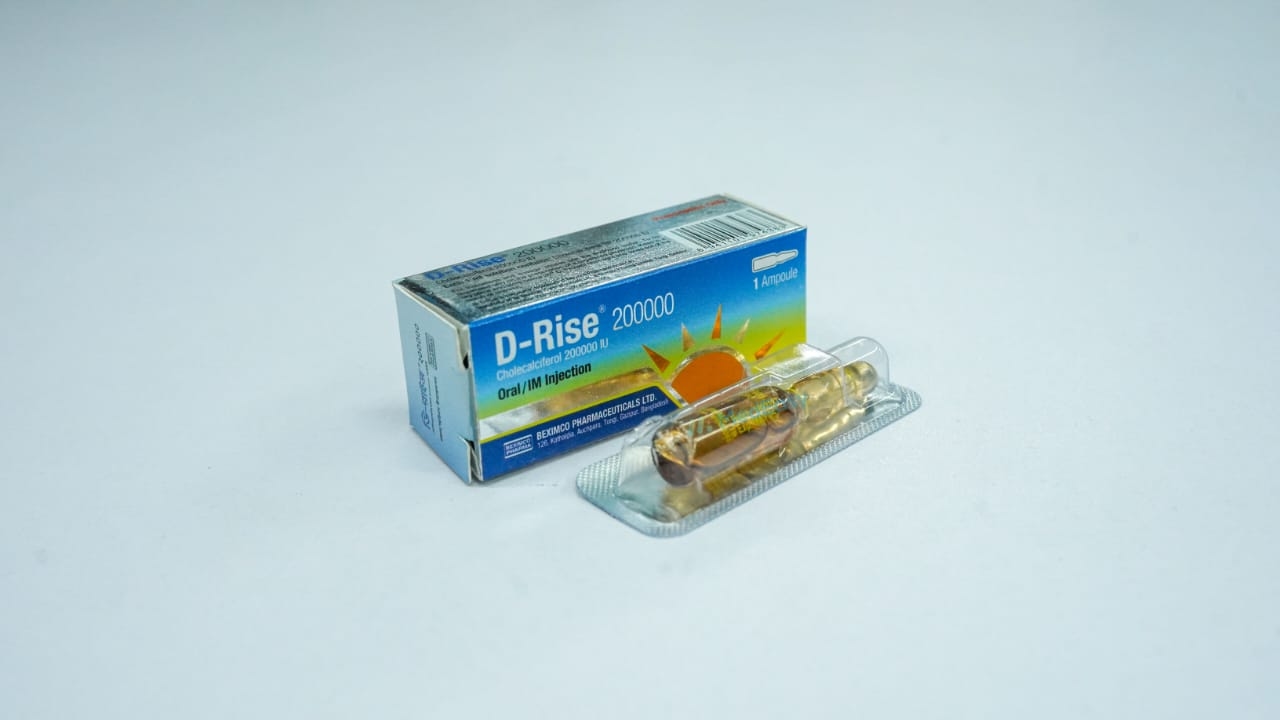
D-Rise200000 IU/
Beximco Pharmaceuticals Ltd.
৳114.00
Add to cart
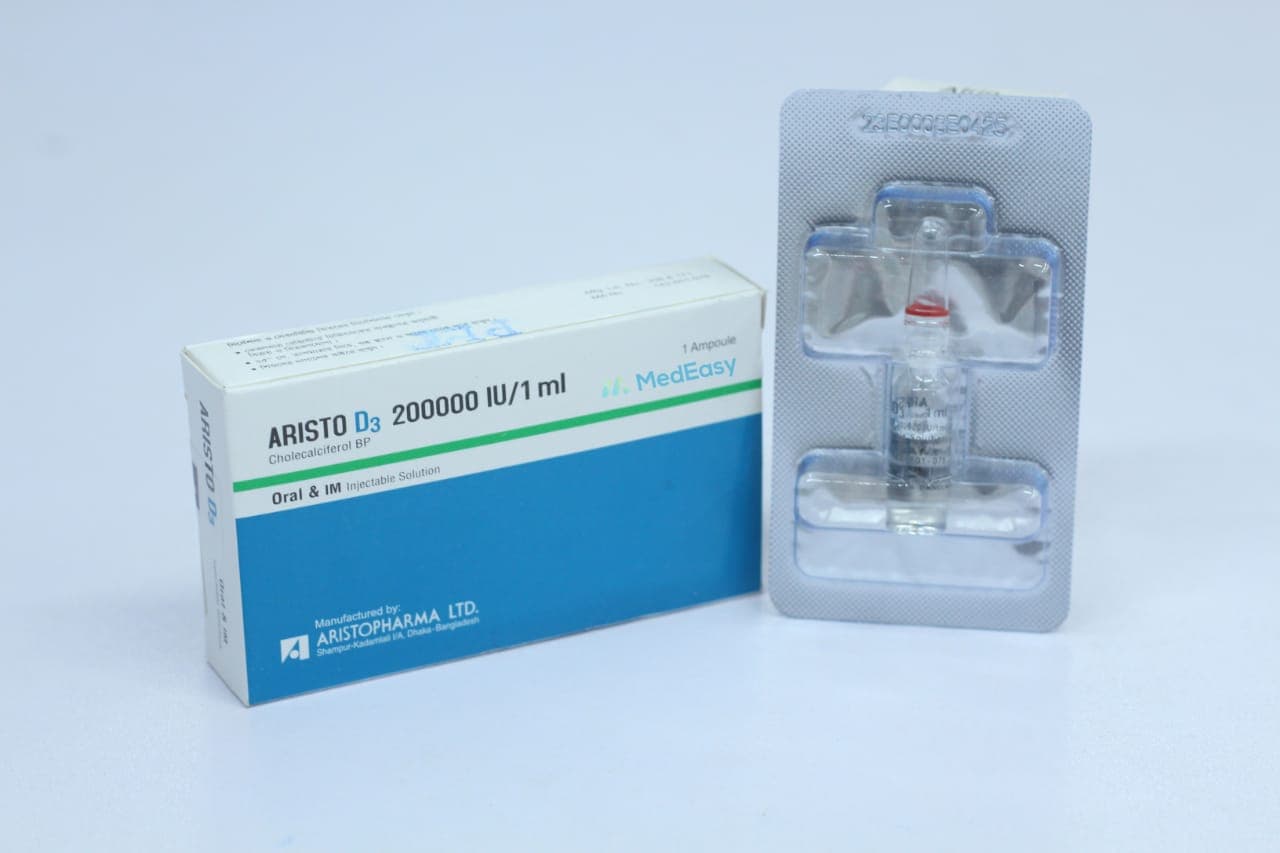
Aristo D3 200000 IU/ml IM Injection is available on MedEasy for ৳108.00 per 1 ml ampoule, with home delivery anywhere in Bangladesh. It is manufactured by Aristopharma Ltd. Its generic name is Colecalciferol [Vitamin D3].

Aristo D3 is a fat-soluble vitamin (vitamin D3) supplement used for the following indications:
Aristo D3 is not an antibiotic and has no role in treating infections.
Colecalciferol [Vitamin D3] contains cholecalciferol (vitamin D3) as the active ingredient. It is available locally in several dosage forms and strengths, including tablets, capsules (including high-strength weekly/monthly capsules), oral solution/drops, and an injectable (oral/IM) solution, so the exact strength should be confirmed on the product label.
Aristo D3 is the naturally occurring form of vitamin D, a fat-soluble secosteroid that is synthesized in the skin on exposure to ultraviolet-B sunlight and is also obtained from the diet and supplements. It is metabolized in the liver to 25-hydroxyvitamin D and then in the kidney to the active hormone calcitriol (1,25-dihydroxyvitamin D), which regulates calcium and phosphate homeostasis.
Aristo D3 is used clinically to prevent and correct vitamin D deficiency, support bone mineralization, and reduce the risk of metabolic bone disease when dietary intake or sunlight exposure is insufficient.
Fat-soluble vitamin; Vitamin D and its analogues (Aristo D3)
Colecalciferol [Vitamin D3] (cholecalciferol) is biologically inactive until it undergoes two sequential hydroxylation steps: first in the liver to 25-hydroxyvitamin D (calcifediol), and then in the kidney to the active metabolite 1,25-dihydroxyvitamin D (calcitriol).
Calcitriol acts on vitamin D receptors in the intestine, bone, kidney, and parathyroid glands to:
Vitamin D receptors are also present in immune and other tissues, and Colecalciferol [Vitamin D3] contributes to normal immune and muscular function, though these effects are secondary to its established role in calcium/phosphate and bone metabolism.
Dosing of Aristo D3 varies widely by indication, age, baseline vitamin D status, and product strength (which ranges from low-dose daily tablets/drops to high-dose weekly or monthly capsules and injections). Always follow the specific product's labeled strength and the prescriber's instructions.
| Indication | Typical adult dose | Typical pediatric dose |
|---|---|---|
| Vitamin D deficiency (treatment) | e.g. 40,000-50,000 IU once weekly for 6-8 weeks, then reassess; or as prescribed based on serum 25(OH)D level | Weight/age-based regimens under specialist guidance, e.g. 20,000 IU every 2 weeks for children 12-18 years, or lower-strength drops in infants/young children |
| Maintenance / prevention of deficiency | 400-2,000 IU daily, or 20,000 IU every 4-6 weeks depending on product | 400 IU daily in infants; 600 IU daily in older children, per pediatric guidance |
| Osteoporosis (adjunct with calcium) | 800-2,000 IU daily, or a higher-strength monthly dose as directed | Not applicable |
| Rickets/osteomalacia (treatment) | As directed by physician, often higher-dose regimens with monitoring | As directed by pediatrician, weight-based |
See Dosage and Administration sub-fields for a quick dose summary and route-specific instructions. See Contraindications and Precautions and Warnings before starting high-dose regimens.
Aristo D3 tablets and capsules should be swallowed with a glass of water, preferably with a meal containing some fat to enhance absorption, since vitamin D is fat-soluble. Oral solution/drops should be measured using the dropper or measuring device provided and can be given directly or mixed with food/formula for infants. The injectable form of Aristo D3 is administered by a healthcare professional (oral or intramuscular route as labeled) and should not be self-administered.
Do not take more than the prescribed dose or frequency of Aristo D3, especially with high-strength weekly or monthly products, as doses are cumulative.
Colecalciferol [Vitamin D3] is contraindicated in:
At recommended doses, Aristo D3 is generally well tolerated. Reported adverse effects include:
With excessive or prolonged high-dose use, hypercalcemia can occur (see Overdose Effects and Precautions and Warnings for details and symptoms) — this is a dose-related toxicity rather than a typical side effect at recommended intake.
Aristo D3 at doses that do not exceed the recommended dietary allowance is generally considered safe in pregnancy and is often recommended to maintain adequate maternal vitamin D status. At doses above the recommended allowance, safety data are more limited, so Aristo D3 should be used in pregnancy only as directed by a physician, with the dose individualized to actual need; avoid unsupervised high-dose regimens.
Vitamin D and its metabolites are excreted in breast milk in proportion to maternal vitamin D status. Aristo D3 taken by a breastfeeding mother at recommended doses is generally considered compatible with breastfeeding; a physician should be consulted regarding the mother's dose and whether the breastfed infant also needs separate vitamin D supplementation.
Use Aristo D3 with caution and periodic monitoring of serum calcium (and, where relevant, 25-hydroxyvitamin D) in the following situations:
Do not exceed the recommended dose of Aristo D3 without medical advice, and do not combine multiple vitamin D-containing products without checking cumulative daily intake.
Overdose or prolonged excessive intake of Aristo D3 can cause vitamin D toxicity with hypercalcemia. Early symptoms may include weakness, fatigue, headache, dry mouth, metallic taste, nausea, vomiting, constipation, and muscle or bone pain. More severe or prolonged toxicity can cause polyuria, polydipsia, dehydration, confusion, cardiac arrhythmias, and impaired kidney function, including nephrocalcinosis.
If overdose of Aristo D3 is suspected, discontinue the product and seek immediate medical attention or contact a poison control center/emergency services; treatment (which may include stopping supplemental calcium and vitamin D, IV fluids, and other supportive measures) should be managed by a physician. Do not attempt to treat suspected overdose at home.
Store at room temperature (below 30°C), away from light and moisture. Keep out of reach of children.
Renal impairment: Patients with chronic kidney disease have reduced capacity to convert Aristo D3 to its active metabolite and are at higher risk of disturbed calcium/phosphate balance; dosing should be individualized and calcium/phosphate monitored, generally under specialist (nephrology) supervision.
Hepatic impairment: Hepatic hydroxylation of Aristo D3 may be reduced; monitor response and consider alternative activated vitamin D analogues if clinically indicated.
Elderly: Commonly used for deficiency prevention/treatment and osteoporosis prevention; no specific dose reduction is generally required, but calcium levels should be monitored with high-dose regimens, especially with concurrent thiazides or digoxin.
Obesity: Vitamin D is sequestered in body fat, and obese patients may require higher doses of Aristo D3 to achieve and maintain adequate serum 25(OH)D levels.
Malabsorption syndromes: Patients with fat malabsorption (e.g. celiac disease, cystic fibrosis, post-bariatric surgery, inflammatory bowel disease) may require higher or parenteral doses of Aristo D3 due to reduced enteral absorption.
Duration of Aristo D3 therapy depends on the indication: deficiency-treatment regimens are typically given for a defined course (commonly 6-8 weeks) followed by reassessment of serum 25-hydroxyvitamin D and, if needed, a switch to a lower maintenance dose. Maintenance or preventive supplementation, and use as an adjunct in osteoporosis, is generally continued long-term/indefinitely under periodic medical review, particularly if risk factors for deficiency persist.
Vitamin D analogues / Fat-soluble vitamins (Colecalciferol [Vitamin D3])
Colecalciferol [Vitamin D3] (cholecalciferol) is hydroxylated in the liver to 25-hydroxyvitamin D and then in the kidney to the active hormone calcitriol (1,25-dihydroxyvitamin D). Calcitriol binds nuclear vitamin D receptors to increase intestinal calcium and phosphate absorption, promote renal calcium reabsorption, and regulate bone remodeling, thereby correcting deficiency states and supporting normal bone mineralization.
Category A (at doses not exceeding the recommended dietary allowance); Category C at doses exceeding the recommended dietary allowance (FDA legacy pregnancy category system).
Aristo D3 is widely used in infants and children for prevention and treatment of vitamin D deficiency and rickets. The American Academy of Pediatrics recommends 400 IU/day of vitamin D for exclusively and partially breastfed infants beginning in the first days of life, continued until the infant is weaned to at least 1 liter/day of vitamin D-fortified formula or milk, and 600 IU/day for older children and adolescents who do not obtain adequate intake from diet.
Higher-strength weekly or monthly Aristo D3 capsules used for adult deficiency treatment are generally not appropriate for infants and young children; low-strength drops/oral solution dosed by a healthcare provider should be used instead. Safety and efficacy of specific high-dose products in neonates and infants have not been separately established, and dosing in this age group should always be individualized by a pediatrician.
Q: What is Aristo D3 200000 IU/ml IM Injection used for?
A: Aristo D3 200000 IU/ml IM Injection is used to prevent and treat vitamin D deficiency and insufficiency, to prevent and treat rickets in children and osteomalacia in adults, and as an adjunct with calcium in the prevention and management of osteoporosis.
Q: Can I take Aristo D3 200000 IU/ml IM Injection every day, or only weekly?
A: It depends on the product strength and your doctor's instructions. Some Aristo D3 200000 IU/ml IM Injection products are low-strength tablets or drops meant to be taken daily, while others are high-strength capsules meant to be taken once weekly or once monthly for deficiency treatment. Always follow the specific dosing schedule on your prescription or product label.
Q: Is Aristo D3 200000 IU/ml IM Injection safe during pregnancy and breastfeeding?
A: At recommended dietary allowance doses, Aristo D3 200000 IU/ml IM Injection is generally considered safe in pregnancy and breastfeeding and is often recommended. Doses above the recommended allowance should only be used if clearly needed and as directed by a physician, since safety data at higher doses are more limited.
Q: What happens if I take too much Aristo D3 200000 IU/ml IM Injection?
A: Taking too much Aristo D3 200000 IU/ml IM Injection, especially over a prolonged period, can cause vitamin D toxicity with hypercalcemia (high blood calcium), leading to symptoms such as nausea, vomiting, weakness, confusion, excessive thirst/urination, and kidney problems. If overdose is suspected, stop the product and seek immediate medical attention or contact a poison control center.
Q: Who should not take Aristo D3 200000 IU/ml IM Injection?
A: Aristo D3 200000 IU/ml IM Injection should not be used by people with known hypersensitivity to cholecalciferol, existing hypercalcemia, or evidence of vitamin D toxicity. It should also be used with caution and medical supervision in people with granulomatous diseases (like sarcoidosis or tuberculosis), certain lymphomas, or kidney disease, due to increased risk of hypercalcemia.
Q: Does Aristo D3 200000 IU/ml IM Injection interact with other medicines?
A: Yes. Aristo D3 200000 IU/ml IM Injection can interact with thiazide diuretics and digoxin (increased risk of high calcium and, with digoxin, arrhythmia), with certain anticonvulsants and corticosteroids (reduced effectiveness), and with cholestyramine, orlistat, or mineral oil (reduced absorption). Tell your doctor about all medicines you take before starting Aristo D3 200000 IU/ml IM Injection.
Disclaimer
The information provided is accurate to the best of our knowledge, but it does not replace professional medical advice. We cannot guarantee its completeness or accuracy, and the absence of specific information about a drug should not be taken as an endorsement. We are not responsible for any consequences arising from this information, so please consult a healthcare professional for any concerns or questions.