10% Off
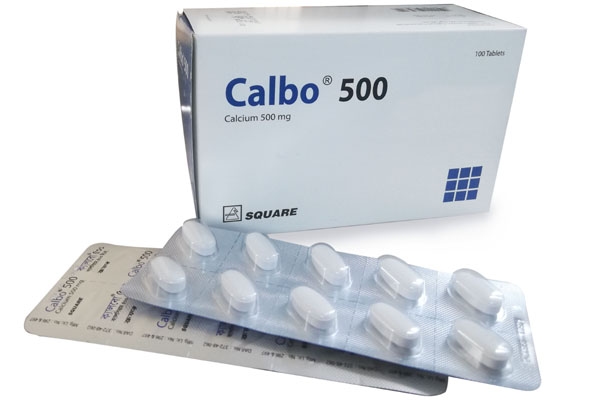
Calbo500 mg
Square Pharmaceuticals PLC.
৳45.00
Add to cart


Aristocal is used for the following indications, classified by strength of evidence:
Aristocal is not an antibiotic and has no role in treating infections.
Formulations of Calcium Carbonate are commonly available in strengths such as 500 mg, 600 mg, 750 mg, and 1,250 mg of Calcium Carbonate, corresponding to roughly 200-500 mg of elemental calcium depending on strength. Calcium Carbonate is also formulated in combination with vitamin D3 and other minerals in some products. Exact strength and excipients vary by manufacturer and brand.
Aristocal is an inorganic calcium salt widely used as a dietary calcium supplement and as an antacid. Aristocal (CaCO3) is one of the most concentrated sources of elemental calcium, providing approximately 40% elemental calcium by weight, which makes it a common first-line calcium supplement. Aristocal is available over-the-counter in tablet, chewable tablet, and oral suspension forms, alone or combined with vitamin D3.
Aristocal belongs to the therapeutic classes of Antacids and Calcium Supplements/Minerals. In certain clinical settings, Aristocal is also used as a phosphate binder.
Calcium Carbonate provides elemental calcium, an essential mineral required for bone mineralization, neuromuscular function, cardiac conduction, blood coagulation, and cell signaling. When ingested, Calcium Carbonate reacts with gastric hydrochloric acid to form soluble calcium chloride, which is absorbed in the small intestine, a process enhanced by vitamin D and an acidic gastric environment, and reduced in patients with achlorhydria or those taking acid-suppressing medications.
At antacid doses, Calcium Carbonate acts locally in the stomach, neutralizing gastric acid and raising gastric pH to relieve heartburn and acid indigestion within minutes. As a phosphate binder, Calcium Carbonate binds dietary phosphate in the gut to form insoluble calcium phosphate, which is excreted in the stool, thereby lowering serum phosphate levels.
| Population | Typical Dose |
|---|---|
| Adults | 500-1,000 mg elemental calcium (as Aristocal) per day, in divided doses, taken with meals |
| Children | Dose individualized by age/weight; see Use in Special Populations |
Chew 1-2 tablets of Aristocal (strength per product labeling) as symptoms occur; do not exceed the maximum daily dose stated on the product label for Aristocal, and do not use for more than 2 weeks without medical advice.
1,000-1,200 mg elemental calcium daily (as Aristocal, in divided doses), combined with adequate vitamin D intake, as directed by a physician.
Dose of Aristocal is individualized based on serum phosphate levels, under nephrology supervision.
Renal impairment: use of Aristocal for general supplementation requires caution and specialist guidance in significant renal impairment (see Precautions and Warnings and Contraindications).
Chewable tablets of Aristocal should be chewed thoroughly before swallowing. Non-chewable tablets of Aristocal should be swallowed whole with a full glass of water. For optimal absorption, Aristocal should be taken with food, since it requires gastric acid for dissolution. If more than 500 mg of elemental calcium is needed per day, doses of Aristocal should be divided and spaced through the day rather than taken all at once. Aristocal should be separated by at least 2-4 hours from certain other medications (see Interactions).
Aristocal can reduce the absorption of several other medications by forming insoluble complexes or by altering gastric pH. Clinically significant interactions include:
Because Aristocal raises gastric pH, it may also reduce absorption of iron salts and certain antifungal or antiviral drugs that require an acidic environment for dissolution; spacing doses from Aristocal is advised.
Calcium Carbonate is contraindicated in patients with:
Common side effects of Aristocal include:
Less common but more serious effects, generally associated with excessive or prolonged high-dose use of Aristocal, include hypercalcemia (fatigue, confusion, muscle weakness, increased thirst/urination), milk-alkali syndrome, and kidney stones. Rebound acid hypersecretion may occur with long-term antacid use of Aristocal. Seek medical attention if severe or persistent symptoms occur.
Aristocal supplementation at recommended dietary allowance doses is commonly used and generally considered beneficial during pregnancy and lactation to support maternal bone health and fetal/infant development, when dietary calcium intake alone is insufficient. However, Aristocal should be used only as directed, and total calcium intake from diet plus supplements should not exceed recommended upper limits, as excessive intake may pose risks. Pregnant and breastfeeding women should consult a physician before starting or adjusting Aristocal supplementation, particularly at doses above typical dietary supplementation levels.
Aristocal requires gastric acid for optimal absorption and should generally be taken with food. Prolonged use of high doses of Aristocal, especially in combination with vitamin D or thiazide diuretics, or in patients with renal impairment, may lead to hypercalcemia or milk-alkali syndrome (hypercalcemia, metabolic alkalosis, and renal insufficiency) — see Contraindications for absolute limits. Patients with a history of kidney stones should use Aristocal only under medical supervision. Aristocal can interfere with absorption of certain other medications (see Interactions); dosing should be separated accordingly. Total daily elemental calcium intake from all sources, including Aristocal, diet, and other supplements, should not exceed recommended upper limits. Aristocal is not an antibiotic and carries no antimicrobial stewardship requirements.
Overdose of Aristocal can cause hypercalcemia, with symptoms such as nausea, vomiting, constipation, confusion, muscle weakness, excessive thirst, frequent urination, and, in severe cases, cardiac arrhythmias, kidney impairment, or milk-alkali syndrome. If overdose of Aristocal is suspected, seek immediate medical attention or contact a poison control center; do not attempt to manage a suspected overdose at home without professional guidance.
Store Aristocal at room temperature (below 30°C), away from light and moisture. Keep out of reach of children.
Aristocal may be used in children for calcium supplementation when dietary intake is inadequate, with dosing individualized by age and weight according to recommended dietary allowances; consult a pediatrician before use, especially for indications beyond basic dietary supplementation.
Elderly patients may have reduced gastric acid production (achlorhydria), which can reduce absorption of Aristocal; taking it with food helps maintain effectiveness. Elderly patients are also at increased risk of hypercalcemia and renal impairment, warranting monitoring with prolonged use of Aristocal.
Use of Aristocal for general supplementation is contraindicated in severe renal impairment (see Contraindications). In chronic kidney disease, Aristocal may be used specifically as a phosphate binder only under nephrology supervision, with regular monitoring of serum calcium and phosphate.
No specific dose adjustment of Aristocal is established for hepatic impairment, as calcium metabolism is not primarily hepatic; use with routine precautions.
Duration of Aristocal use varies by indication: antacid use is intended for short-term, as-needed symptom relief (if symptoms persist beyond 2 weeks, medical evaluation is advised), whereas calcium supplementation for deficiency prevention or osteoporosis management with Aristocal is typically long-term and ongoing, guided by periodic reassessment of calcium intake and, where relevant, bone density and serum calcium levels by a physician.
Calcium Carbonate is classified under: Antacids; Calcium Supplements (Minerals/Electrolytes); and, in specific clinical contexts, Phosphate Binders.
Calcium Carbonate acts through two principal mechanisms depending on use: as a calcium supplement, Calcium Carbonate dissociates in gastric acid to release calcium ions that are absorbed in the intestine to support bone mineralization, muscle contraction, nerve transmission, and blood clotting; as an antacid, Calcium Carbonate directly neutralizes hydrochloric acid in the stomach, forming calcium chloride, water, and carbon dioxide, thereby raising gastric pH and relieving acid-related symptoms.
Aristocal is used in pediatric patients for prevention and treatment of dietary calcium deficiency, with dosing individualized by age and weight according to recommended dietary allowances for calcium. Safety and efficacy of Aristocal for indications beyond basic dietary calcium supplementation, such as use as a phosphate binder, have not been well established in children, and such use should occur only under specialist supervision. Chewable formulations of Aristocal should be used with caution in young children due to choking risk, and should be kept out of reach of children given the risk of accidental overdose.
Q: What is Aristocal 500 mg Tablet used for?
A: Aristocal 500 mg Tablet is used to prevent and treat calcium deficiency, as an adjunct in osteoporosis prevention and management, and as an antacid for fast relief of heartburn, acid indigestion, and upset stomach.
Q: How should I take Aristocal 500 mg Tablet for best absorption?
A: Aristocal 500 mg Tablet should be taken with food, since it needs stomach acid to dissolve properly. If you need more than 500 mg of elemental calcium a day, split the doses of Aristocal 500 mg Tablet throughout the day rather than taking it all at once.
Q: Can I take Aristocal 500 mg Tablet with other medications?
A: Aristocal 500 mg Tablet can reduce the absorption of certain medicines, including tetracycline and fluoroquinolone antibiotics, bisphosphonates, and levothyroxine. Separate these medications from Aristocal 500 mg Tablet by at least 2-4 hours, or as advised by your physician or pharmacist.
Q: Is Aristocal 500 mg Tablet safe during pregnancy?
A: Aristocal 500 mg Tablet at recommended doses is commonly used and considered beneficial during pregnancy to support maternal and fetal bone health, but it should be taken only as directed, and pregnant women should consult a physician before starting or adjusting Aristocal 500 mg Tablet supplementation.
Q: What happens if I take too much Aristocal 500 mg Tablet?
A: Taking too much Aristocal 500 mg Tablet can cause hypercalcemia, with symptoms such as nausea, vomiting, constipation, confusion, and muscle weakness, and in severe cases can affect the heart and kidneys. If you suspect an overdose of Aristocal 500 mg Tablet, seek immediate medical attention or contact a poison control center.
Q: Who should not take Aristocal 500 mg Tablet?
A: Aristocal 500 mg Tablet should not be used by people with hypercalcemia, hypervitaminosis D, severe renal impairment, or known hypersensitivity to Aristocal 500 mg Tablet. People with a history of kidney stones should use Aristocal 500 mg Tablet only under medical supervision.
Disclaimer
The information provided is accurate to the best of our knowledge, but it does not replace professional medical advice. We cannot guarantee its completeness or accuracy, and the absence of specific information about a drug should not be taken as an endorsement. We are not responsible for any consequences arising from this information, so please consult a healthcare professional for any concerns or questions.