
10% Off
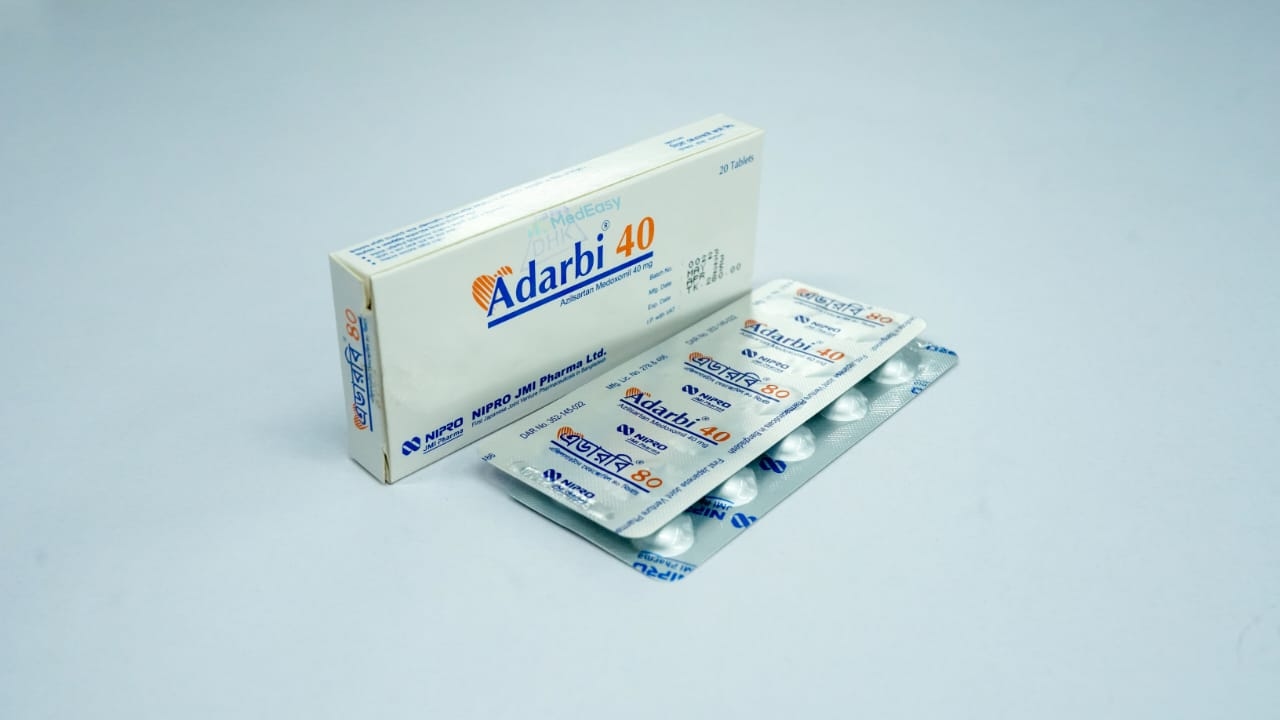
Adarbi40 mg
NIPRO JMI Pharma Ltd.
৳126.00
Add to cart
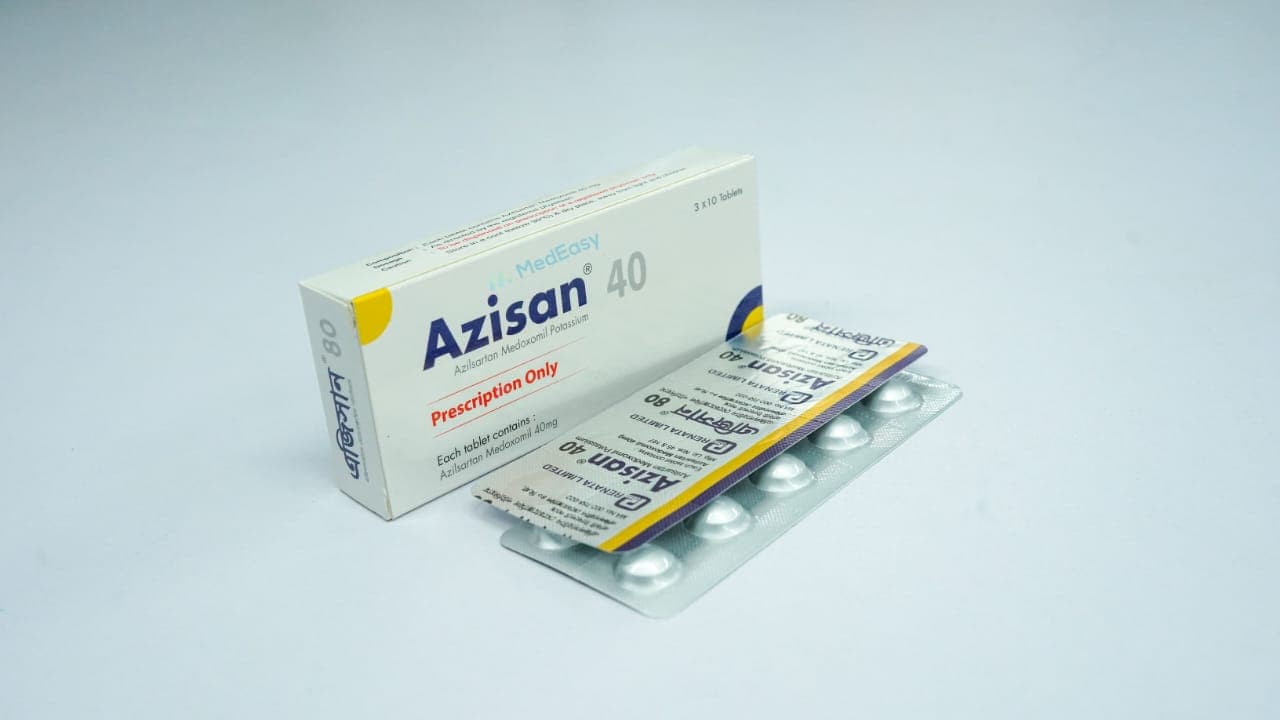

Azisan is an angiotensin II receptor blocker (ARB) that is FDA-approved for the following use:
Azisan is not approved for use in children, and it is not indicated for heart failure or diabetic nephropathy, although other drugs in the ARB class are used for those conditions.
Azisan is a prodrug that is rapidly converted to its active form, azilsartan, during absorption from the gastrointestinal tract. It belongs to the angiotensin II receptor blocker (ARB) class of antihypertensive medicines. Azisan works by selectively blocking the binding of angiotensin II to the AT1 receptor found in vascular smooth muscle and other tissues, which prevents the vasoconstriction and aldosterone-releasing effects of angiotensin II, resulting in lowered blood pressure.
Azisan is used as a once-daily oral tablet for long-term management of hypertension and is generally well tolerated, with a lower incidence of dry cough compared to ACE inhibitors.
Azisan belongs to the therapeutic class of Angiotensin II Receptor Blockers (ARBs), a group of antihypertensive agents also known as "sartans". This class works by blocking the angiotensin II type 1 (AT1) receptor rather than inhibiting the angiotensin-converting enzyme (ACE), which distinguishes Azisan and related ARBs from ACE inhibitors.
Azilsartan Medoxomil is a prodrug that is hydrolyzed during gastrointestinal absorption to azilsartan, the pharmacologically active moiety. Azilsartan selectively and competitively blocks the binding of angiotensin II to the AT1 receptor in vascular smooth muscle and the adrenal gland, blocking the vasoconstrictive and aldosterone-secreting effects of angiotensin II.
The onset of blood pressure-lowering effect with Azilsartan Medoxomil occurs within 2 weeks, with maximal effect typically seen by 4 weeks of continued therapy.
| Indication | Recommended Dose |
|---|---|
| Hypertension - standard starting dose | 80 mg orally once daily |
| Patients with intravascular volume depletion (e.g., on diuretics) | Start at 40 mg once daily |
| Maximum dose | 80 mg once daily |
Safety and efficacy of Azisan have not been established in patients under 18 years of age; it is not recommended for pediatric use.
No initial dosage adjustment of Azisan is required for mild-to-moderate renal impairment; monitor renal function periodically. Use in patients with severe renal impairment or on dialysis has not been well studied and requires caution.
Limited data are available in hepatic impairment; use Azisan with caution and monitor blood pressure in patients with moderate to severe hepatic impairment.
Azisan tablets may be taken with or without food, at approximately the same time each day, and may be combined with other antihypertensive drugs if additional blood pressure control is needed.
Azisan has the following clinically significant drug interactions:
Azilsartan Medoxomil is contraindicated in the following situations:
Most patients tolerate Azisan well. Reported side effects include:
Azisan is associated with a low incidence of dry cough compared with ACE inhibitors.
Azisan is contraindicated in pregnancy. Drugs that act directly on the renin-angiotensin system, including Azisan, can cause fetal injury and death when used during the second and third trimesters, including oligohydramnios, fetal lung and skeletal abnormalities, hypotension, and neonatal renal failure. If pregnancy is detected, Azisan should be discontinued as soon as possible, and an alternative antihypertensive should be used under physician guidance.
It is not known whether Azisan is excreted in human breast milk, but it has been detected in the milk of lactating rats. Because of the potential for serious adverse effects in a nursing infant, a decision should be made to discontinue breastfeeding or discontinue Azisan, taking into account the importance of the drug to the mother; consult a physician before use while breastfeeding.
Important warnings for Azisan:
Limited human data are available on overdose with Azisan. The most likely manifestation of overdose is hypotension; bradycardia may also occur from parasympathetic (vagal) stimulation. If an overdose of Azisan is suspected, seek immediate medical attention or contact a poison control center/emergency services. Treatment is supportive, and may include intravenous fluid replacement and close monitoring of blood pressure and vital signs. It is not known whether Azisan can be removed by hemodialysis.
Safety and efficacy of Azisan in patients younger than 18 years have not been established; it is not recommended for use in children.
No overall differences in safety or effectiveness of Azisan have been observed between elderly and younger patients, but greater sensitivity in some older individuals cannot be ruled out; monitor renal function periodically, particularly in patients aged 75 years and older.
No initial dose adjustment of Azisan is required in mild-to-moderate renal impairment; use with caution and monitor renal function in patients with severe renal impairment.
Use Azisan with caution in patients with moderate-to-severe hepatic impairment, as clinical experience is limited.
See Pregnancy and Lactation section - Azisan is contraindicated in pregnancy.
Angiotensin II Receptor Blocker (ARB); Antihypertensive agent.
Azilsartan Medoxomil is a prodrug that is converted to azilsartan after oral absorption. Azilsartan selectively blocks the binding of angiotensin II to the AT1 receptor in vascular smooth muscle and the adrenal gland. Angiotensin II is a potent vasoconstrictor that also stimulates aldosterone synthesis and release. By blocking AT1 receptors, Azilsartan Medoxomil blocks the vasoconstrictor and aldosterone-secreting effects of angiotensin II, which results in decreased peripheral vascular resistance and lowered blood pressure, without affecting the breakdown of bradykinin (unlike ACE inhibitors).
D
Azisan is not approved for use in pediatric patients. Safety and efficacy in patients younger than 18 years of age have not been established, and there is insufficient data on appropriate dosing, effectiveness, or long-term safety of Azisan in children. It should not be used in this age group outside of specific physician guidance in exceptional circumstances.
Q: What is Azisan 40 mg Tablet used for?
A: Azisan 40 mg Tablet is used to treat high blood pressure (hypertension) in adults, either alone or together with other blood pressure medicines.
Q: How should I take Azisan 40 mg Tablet?
A: Azisan 40 mg Tablet is usually taken once daily by mouth, with or without food, at the same time each day. The typical dose is 80 mg daily, though your doctor may start you on 40 mg if you are on a diuretic or have volume depletion. Do not change your dose without consulting your physician.
Q: Can I take Azisan 40 mg Tablet during pregnancy?
A: No. Azisan 40 mg Tablet is contraindicated in pregnancy because it can cause serious injury or death to a developing fetus, especially in the second and third trimesters. If you become pregnant while taking Azisan 40 mg Tablet, stop the medicine and contact your doctor immediately to switch to a pregnancy-safe alternative.
Q: What are the common side effects of Azisan 40 mg Tablet?
A: The most commonly reported side effect of Azisan 40 mg Tablet is diarrhea. Other effects can include dizziness, fatigue, muscle spasms, elevated potassium levels, and low blood pressure. Serious but rare reactions include angioedema (swelling of the face, lips, or throat), which requires immediate emergency care.
Q: Who should not take Azisan 40 mg Tablet?
A: Azisan 40 mg Tablet should not be used by people who are hypersensitive/allergic to it, women who are pregnant, or patients with diabetes who are also taking aliskiren, due to serious safety risks in these situations.
Q: What should I do if I miss a dose or take too much Azisan 40 mg Tablet?
A: If you miss a dose of Azisan 40 mg Tablet, take it as soon as you remember unless it is almost time for your next dose - do not double up. If you suspect you have taken too much Azisan 40 mg Tablet, seek immediate medical attention or contact a poison control center, as overdose can cause dangerously low blood pressure.
Disclaimer
The information provided is accurate to the best of our knowledge, but it does not replace professional medical advice. We cannot guarantee its completeness or accuracy, and the absence of specific information about a drug should not be taken as an endorsement. We are not responsible for any consequences arising from this information, so please consult a healthcare professional for any concerns or questions.

