
10% Off
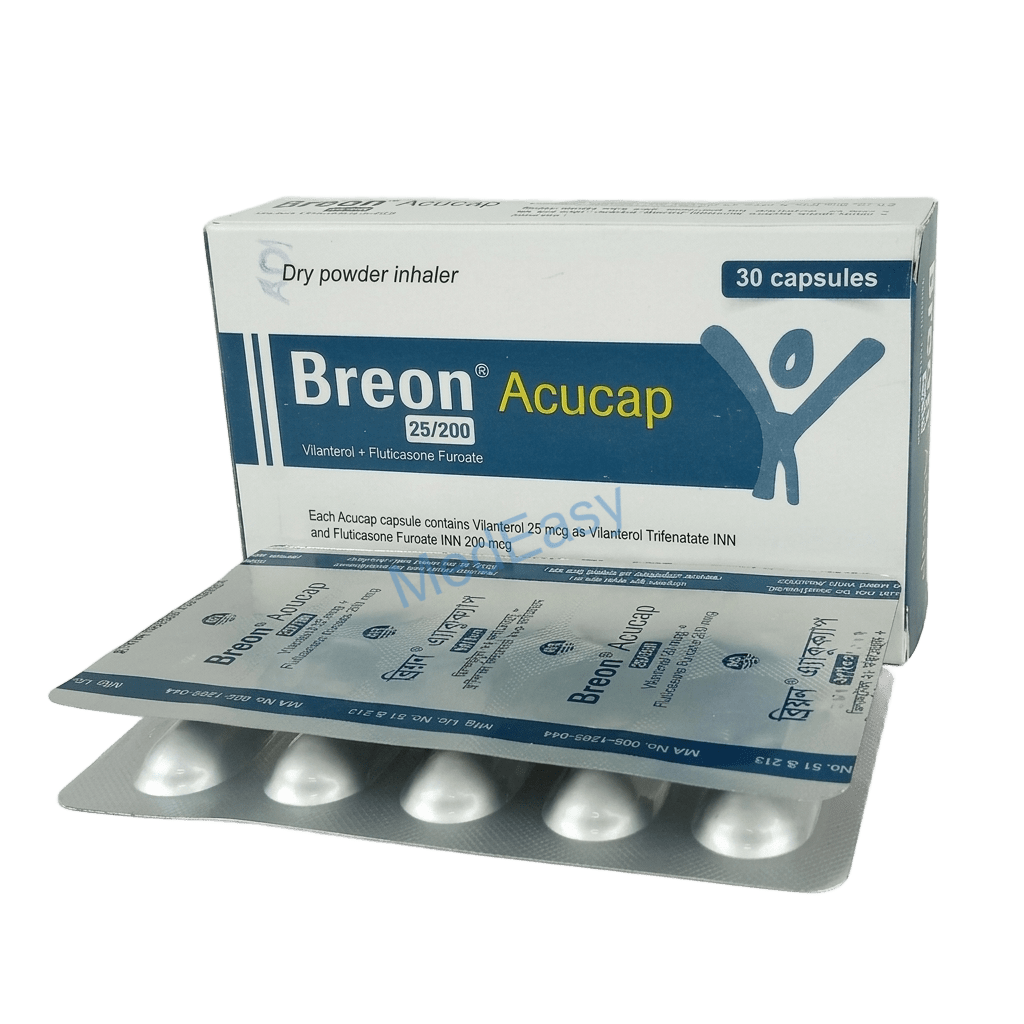
Breon25 mcg+200
ACI Limited
৳270.00
Add to cart


Bihale is a fixed-dose combination inhaler that is FDA-approved and guideline-supported for the following indications:
Bihale is a long-term, once-daily maintenance medicine only. It is not a rescue inhaler and is not indicated for the relief of acute bronchospasm or acute asthma/COPD exacerbations; a separate short-acting bronchodilator must be available for acute symptoms.
Vilanterol Trifenatate + Fluticasone Furoate is supplied as a dry powder for oral inhalation, combining two active ingredients in fixed strengths per actuation:
The inhaler also contains lactose monohydrate (which contains trace milk proteins) as a carrier excipient. Locally marketed strengths of Vilanterol Trifenatate + Fluticasone Furoate may vary by manufacturer; always check the pack label for the exact strength prescribed.
Bihale is a fixed-dose combination, multi-dose dry powder inhaler used for the long-term maintenance treatment of asthma and chronic obstructive pulmonary disease (COPD). It combines vilanterol trifenatate, a long-acting beta2-adrenergic agonist (LABA) that relaxes airway smooth muscle to widen the airways, with fluticasone furoate, an inhaled corticosteroid (ICS) that reduces airway inflammation.
Bihale is administered as a single inhalation once daily using a breath-activated, multi-dose inhaler device. It is intended for regular, scheduled use to control symptoms and prevent flare-ups, not for immediate relief of sudden breathing difficulty.
Bihale belongs to the therapeutic class of combination respiratory agents, specifically a fixed-dose combination of a long-acting beta2-adrenergic agonist (LABA) and an inhaled corticosteroid (ICS), used in the management of obstructive airway diseases.
Vilanterol Trifenatate + Fluticasone Furoate works through the complementary actions of its two components:
Following inhalation, both components are absorbed predominantly through the lungs; systemic exposure is metabolized mainly via the hepatic CYP3A4 pathway. Vilanterol Trifenatate + Fluticasone Furoate is designed for once-daily administration due to the prolonged airway retention and receptor binding of both components.
| Age Group | Recommended Starting Dose of Bihale |
|---|---|
| 5 to 11 years | Lowest available strength (vilanterol 25 mcg/fluticasone furoate 50 mcg), one inhalation once daily |
| 12 years and older / Adults | Vilanterol 25 mcg/fluticasone furoate 100 mcg once daily; may be increased to the 25 mcg/200 mcg strength if asthma is not adequately controlled on the lower strength, under physician guidance |
One inhalation of vilanterol 25 mcg/fluticasone furoate 100 mcg once daily. Higher strengths of Bihale have not shown additional benefit and are not indicated for COPD.
No dose adjustment is required for renal impairment. In patients with moderate to severe hepatic impairment, use the lowest effective strength of Bihale and monitor for systemic corticosteroid effects, since fluticasone furoate is cleared hepatically and hepatic impairment can increase systemic exposure.
Bihale is for oral inhalation only and must never be swallowed, injected, or administered by any other route. It is delivered using a breath-activated, multi-dose dry powder inhaler that does not require priming or shaking. Patients should be trained by a healthcare provider or pharmacist on correct inhaler technique before first use, and should rinse the mouth with water after each dose.
Bihale has the following well-documented, clinically significant interactions:
Vilanterol Trifenatate + Fluticasone Furoate is contraindicated in:
Common side effects reported with Bihale include:
Less common but serious effects that require prompt medical attention include signs of pneumonia (in COPD patients), hypersensitivity reactions (rash, swelling of the face/throat, difficulty breathing), significant changes in heart rate or rhythm, paradoxical bronchospasm (worsening wheeze immediately after use), vision changes, and signs of adrenal suppression. See Precautions and Warnings for further detail on these serious risks.
Pregnancy: There are no adequate and well-controlled studies of Bihale in pregnant women. Oral corticosteroids and beta-agonists have shown some effects in animal reproduction studies at high systemic exposures. Bihale should be used during pregnancy only if the potential benefit to the mother clearly justifies the potential risk to the fetus; because poorly controlled asthma itself poses risks to both mother and fetus, asthma control should generally be maintained during pregnancy under close physician supervision.
Lactation: It is not known whether the components of Bihale are excreted in human breast milk in clinically significant amounts. A decision on whether to continue breastfeeding or continue/discontinue therapy with Bihale should be made in consultation with a physician, weighing the benefits of breastfeeding against the mother's clinical need for the medicine.
The following precautions and warnings apply to Bihale:
There is limited clinical experience with overdose of Bihale. Excessive doses may exaggerate the effects of each component: signs of vilanterol overdose can include tachycardia, palpitations, tremor, headache, muscle cramps, hypokalemia, and hyperglycemia; excessive fluticasone furoate exposure may lead to suppression of the hypothalamic-pituitary-adrenal (HPA) axis with prolonged or high-dose exposure.
If an overdose of Bihale is suspected, seek immediate medical attention or contact a poison control center right away. There is no specific antidote; management is supportive and symptomatic under medical supervision, with cardiac monitoring where indicated. Do not attempt to manage a suspected overdose at home.
Store at room temperature (below 30°C), away from light and moisture. Keep the inhaler in the sealed tray until first use, discard after the labeled number of days once opened or when the dose counter reads zero, and keep out of reach of children.
Fluticasone furoate is predominantly cleared by the liver; in patients with moderate to severe hepatic impairment, systemic exposure to the corticosteroid component of Bihale may be increased. Use the lowest effective strength and monitor for systemic corticosteroid effects.
No dose adjustment of Bihale is required in patients with renal impairment.
No overall differences in safety or effectiveness of Bihale have been identified between elderly and younger adult patients, though age-related cardiovascular disease and reduced bone density warrant routine clinical monitoring.
Use Bihale with caution in patients with active untreated infections due to the local immunosuppressive effect of the inhaled corticosteroid component (see Precautions and Warnings).
Bihale is intended for long-term, regular maintenance treatment of asthma or COPD, not short-term or as-needed use. Physicians should periodically reassess asthma control and consider gradual step-down of therapy once control is well established, or step-up if control is inadequate. In COPD, treatment with Bihale is generally continued long-term as part of ongoing disease management. Do not stop Bihale abruptly without physician guidance, particularly after prolonged use.
Vilanterol Trifenatate + Fluticasone Furoate is a fixed-dose combination of two respiratory drug classes: a long-acting beta2-adrenergic agonist (LABA - vilanterol trifenatate) and an inhaled corticosteroid (ICS - fluticasone furoate).
Vilanterol Trifenatate + Fluticasone Furoate combines two complementary mechanisms in the airway: vilanterol trifenatate stimulates beta2-adrenergic receptors on bronchial smooth muscle to produce sustained bronchodilation lasting approximately 24 hours, while fluticasone furoate binds the glucocorticoid receptor to suppress airway inflammation. Together, the components of Vilanterol Trifenatate + Fluticasone Furoate both relieve airflow obstruction and reduce the underlying inflammatory process that drives asthma and COPD exacerbations.
Bihale is approved for the maintenance treatment of asthma in children aged 5 years and older, using the lowest available strength (vilanterol 25 mcg/fluticasone furoate 50 mcg) as the recommended starting dose in this age group. Safety and efficacy in children younger than 5 years of age have not been established, and Bihale should not be used in this population. Bihale is not indicated for the treatment of COPD in pediatric patients, as COPD does not occur in children. Growth velocity should be monitored periodically in pediatric patients receiving long-term treatment with Bihale, as inhaled corticosteroids may cause a reduction in growth rate.
Q: What is Bihale 25 mcg+200 mcg Dry Powder Inhalation Capsule (DPI) used for?
A: Bihale 25 mcg+200 mcg Dry Powder Inhalation Capsule (DPI) is used for the long-term maintenance treatment of asthma in patients aged 5 years and older, and for the maintenance treatment of airflow obstruction and prevention of exacerbations in chronic obstructive pulmonary disease (COPD) in adults. It is not for relieving sudden breathing difficulty.
Q: How often should I use Bihale 25 mcg+200 mcg Dry Powder Inhalation Capsule (DPI)?
A: Bihale 25 mcg+200 mcg Dry Powder Inhalation Capsule (DPI) is taken as one inhalation, once daily, at the same time each day, using the supplied inhaler device. Do not take more than one inhalation in a 24-hour period, and always keep a separate fast-acting rescue inhaler on hand for sudden symptoms, since Bihale 25 mcg+200 mcg Dry Powder Inhalation Capsule (DPI) does not work quickly enough for acute relief.
Q: Can Bihale 25 mcg+200 mcg Dry Powder Inhalation Capsule (DPI) increase the risk of death in asthma?
A: Medicines in the long-acting beta2-agonist (LABA) class, including the vilanterol component of Bihale 25 mcg+200 mcg Dry Powder Inhalation Capsule (DPI), carry a boxed warning because LABA monotherapy without an inhaled corticosteroid has been shown to increase the risk of asthma-related death. However, Bihale 25 mcg+200 mcg Dry Powder Inhalation Capsule (DPI) always contains an inhaled corticosteroid (fluticasone furoate) combined with the LABA, which mitigates this risk; this warning remains part of the required labeling for the LABA drug class as a whole.
Q: Is Bihale 25 mcg+200 mcg Dry Powder Inhalation Capsule (DPI) safe during pregnancy?
A: There is limited data on the use of Bihale 25 mcg+200 mcg Dry Powder Inhalation Capsule (DPI) during pregnancy. It should be used only if the potential benefit clearly justifies the potential risk to the fetus, and only under the guidance of a physician, since poorly controlled asthma itself can be harmful to both mother and baby.
Q: What are the common side effects of Bihale 25 mcg+200 mcg Dry Powder Inhalation Capsule (DPI)?
A: Common side effects of Bihale 25 mcg+200 mcg Dry Powder Inhalation Capsule (DPI) include headache, nasopharyngitis (cold-like symptoms), upper respiratory tract infection, oral thrush, hoarseness, back pain, and bronchitis. Rinsing the mouth with water after each dose helps reduce the risk of oral thrush and hoarseness.
Q: Who should not use Bihale 25 mcg+200 mcg Dry Powder Inhalation Capsule (DPI)?
A: Bihale 25 mcg+200 mcg Dry Powder Inhalation Capsule (DPI) should not be used by patients with a known severe hypersensitivity to vilanterol trifenatate, fluticasone furoate, or milk proteins, or as a primary treatment for status asthmaticus or other acute asthma/COPD episodes requiring intensive intervention, since it is not a rescue medication.
Disclaimer
The information provided is accurate to the best of our knowledge, but it does not replace professional medical advice. We cannot guarantee its completeness or accuracy, and the absence of specific information about a drug should not be taken as an endorsement. We are not responsible for any consequences arising from this information, so please consult a healthcare professional for any concerns or questions.
