

10% Off
Canarol100 mg
Drug International Ltd.
৳54.00
Add to cart
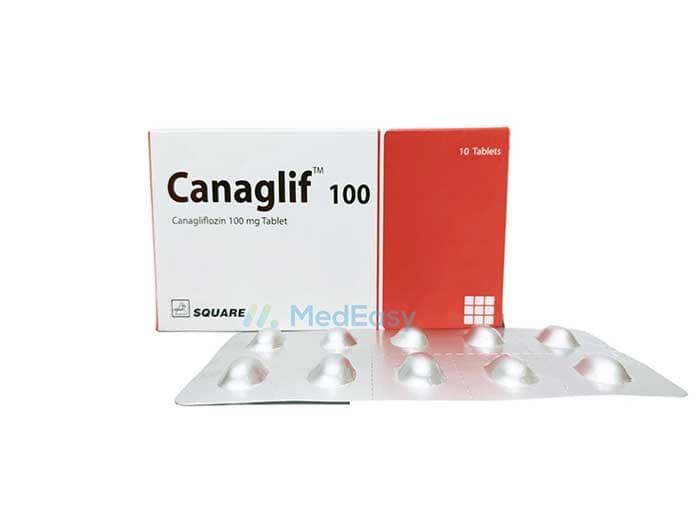
Canaglif 100 mg Tablet is available on MedEasy for ৳36.00 per piece, with home delivery anywhere in Bangladesh. It is manufactured by Square Pharmaceuticals PLC. Its generic name is Canagliflozin Hemihydrate.

Canaglif is a sodium-glucose cotransporter 2 (SGLT2) inhibitor with the following evidence-based indications:
Canaglif is commonly used in combination with other antidiabetic agents (metformin, sulfonylureas, insulin) when glycemic control is inadequate on a single agent, always alongside diet and exercise.
Each tablet contains Canagliflozin Hemihydrate equivalent to canagliflozin 100 mg or 300 mg, along with pharmaceutically acceptable excipients.
Canaglif is an orally administered sodium-glucose cotransporter 2 (SGLT2) inhibitor used in the management of type 2 diabetes mellitus. It works by reducing renal glucose reabsorption, thereby lowering blood glucose levels independent of insulin secretion or action.
Beyond glycemic control, Canaglif has demonstrated cardiovascular and renal protective effects in large clinical outcome trials, making it a valuable option for patients with type 2 diabetes who also have established cardiovascular disease or diabetic kidney disease.
Canaglif belongs to the class of oral antidiabetic drugs known as SGLT2 (sodium-glucose cotransporter 2) inhibitors, sometimes referred to as 'gliflozins'.
Canagliflozin Hemihydrate inhibits sodium-glucose cotransporter 2 (SGLT2) in the proximal renal tubule, which is responsible for reabsorbing the majority of filtered glucose from the tubular lumen back into the bloodstream.
By blocking SGLT2, Canagliflozin Hemihydrate reduces renal glucose reabsorption and lowers the renal threshold for glucose, leading to increased urinary glucose excretion. This mechanism is insulin-independent, so Canagliflozin Hemihydrate lowers blood glucose without directly causing insulin release or increasing insulin resistance.
Additional effects include mild osmotic diuresis and natriuresis, which contribute to modest reductions in blood pressure and body weight, and are thought to underlie some of the observed cardiovascular and renal benefits.
Peak plasma concentrations occur within 1-2 hours after oral administration; Canagliflozin Hemihydrate is highly protein bound and is metabolized mainly via glucuronidation (UGT1A9 and UGT2B4), with a terminal half-life of approximately 10.6 hours (100 mg dose) to 13.1 hours (300 mg dose), permitting once-daily dosing.
Canaglif should be taken orally, once daily, before the first meal of the day. If a dose is missed, it should be taken as soon as remembered on the same day; two doses should not be taken on the same day to make up for a missed dose.
| Indication | Adult dosing |
|---|---|
| Glycemic control in type 2 diabetes mellitus | Initiate at 100 mg once daily. In patients tolerating the 100 mg dose who have an eGFR of 60 mL/min/1.73 m² or greater and who need additional glycemic control, the dose may be increased to 300 mg once daily. |
| Cardiovascular risk reduction (established cardiovascular disease) | 100 mg once daily; may be increased to 300 mg once daily based on tolerability and the need for additional glycemic control, if eGFR is adequate. |
| Diabetic nephropathy with albuminuria | 100 mg once daily. |
Dose adjustment and eligibility for Canaglif depend on estimated glomerular filtration rate (eGFR); Canaglif should not be initiated in patients with an eGFR below 30 mL/min/1.73 m² for the purpose of glycemic control, and is contraindicated in severe renal impairment, end-stage renal disease, or dialysis (see Contraindications). A physician should individualize renal dosing based on current eGFR and indication.
No dose adjustment is required in mild to moderate hepatic impairment. Use in severe hepatic impairment has not been studied and is not recommended.
Canaglif tablets should be swallowed whole with water, taken once daily before the first meal of the day, at approximately the same time each day.
The following are well-established, clinically significant interactions with Canaglif:
Canagliflozin Hemihydrate is contraindicated in:
Common side effects of Canaglif include:
Less common but serious side effects requiring prompt medical attention include diabetic ketoacidosis, acute kidney injury, hyperkalemia, hypotension/volume depletion, necrotizing fasciitis of the perineum (Fournier's gangrene), bone fracture, lower-limb amputation, and hypersensitivity reactions (see Precautions and Warnings).
Pregnancy: Data on the use of Canaglif in pregnant women are limited. Based on its mechanism of action, Canaglif may affect fetal renal development, particularly during the second and third trimesters. Canaglif should be used during pregnancy only if clearly needed and the potential benefit justifies the potential risk to the fetus; a physician should be consulted, and alternative antidiabetic therapy is generally preferred once pregnancy is confirmed.
Lactation: It is not known whether Canaglif is excreted in human breast milk, but based on animal data suggesting presence in milk and potential effects on renal development, use during breastfeeding is not recommended. A physician should be consulted to weigh the benefits of breastfeeding against the theoretical risk to the infant.
The following precautions and warnings apply to Canaglif:
There is no specific antidote for Canaglif overdose. In case of a suspected overdose, seek immediate medical attention or contact a poison control center. Management should include general supportive measures based on the patient's clinical status, including monitoring of blood glucose, renal function, electrolytes, and hydration status. Excess glucose can be removed via hemodialysis in patients with adequate renal function to permit it, under medical supervision.
Store at room temperature (below 30°C), away from light and moisture. Keep out of reach of children.
Renal impairment: Canaglif requires dose consideration based on eGFR and is contraindicated in severe renal impairment, end-stage renal disease, or dialysis (see Contraindications and Dosage and Administration).
Hepatic impairment: No dosage adjustment needed in mild-to-moderate hepatic impairment; use in severe hepatic impairment is not recommended due to lack of data.
Elderly: Elderly patients, especially those 75 years and older, are at higher risk for volume-depletion-related adverse effects and should be monitored closely.
Pediatric use: See Pediatric Uses.
Pregnancy and lactation: See Pregnancy and Lactation.
Canaglif is generally used long-term as part of ongoing management of type 2 diabetes mellitus and its cardiovascular/renal risk reduction, with the duration determined by the treating physician based on glycemic response, tolerability, and overall treatment goals; it is not intended for short-term or as-needed use.
SGLT2 (sodium-glucose cotransporter 2) inhibitor; oral antidiabetic (gliflozin class).
Canagliflozin Hemihydrate selectively inhibits SGLT2 in the proximal renal tubules, reducing reabsorption of filtered glucose and lowering the renal threshold for glucose, which increases urinary glucose excretion and lowers blood glucose levels independent of insulin.
The safety and efficacy of Canaglif in pediatric patients under 18 years of age have not been established. Canaglif is therefore not recommended for use in children and adolescents.
Q: What is Canaglif 100 mg Tablet used for?
A: Canaglif 100 mg Tablet is used to improve blood glucose control in adults with type 2 diabetes mellitus, alongside diet and exercise. It is also used to reduce the risk of major cardiovascular events in patients with type 2 diabetes and established heart disease, and to reduce the risk of kidney disease progression in patients with type 2 diabetes and diabetic kidney disease with albuminuria.
Q: How should I take Canaglif 100 mg Tablet?
A: Canaglif 100 mg Tablet is usually taken once daily by mouth, before the first meal of the day, at around the same time each day. Follow your physician's exact instructions regarding the dose.
Q: Can Canaglif 100 mg Tablet cause low blood sugar (hypoglycemia)?
A: Canaglif 100 mg Tablet alone has a low risk of causing hypoglycemia, but the risk increases when it is combined with insulin or sulfonylureas. Discuss with your physician if you experience symptoms such as shakiness, sweating, or confusion.
Q: Who should not take Canaglif 100 mg Tablet?
A: Canaglif 100 mg Tablet should not be used by patients with a known serious hypersensitivity reaction to it, or by patients with severe renal impairment, end-stage renal disease, or those on dialysis.
Q: What serious side effects should I watch for with Canaglif 100 mg Tablet?
A: Seek prompt medical attention if you develop nausea, vomiting, abdominal pain, or unusual fatigue (possible ketoacidosis), new pain, sores, or infections in your legs or feet (possible risk of amputation), or severe pain/swelling in the genital or perineal area with fever (a rare but serious infection called Fournier's gangrene).
Q: Can Canaglif 100 mg Tablet be used during pregnancy or breastfeeding?
A: Canaglif 100 mg Tablet is generally not recommended during pregnancy or breastfeeding due to limited safety data and potential effects on fetal kidney development. Use only if clearly needed and after consulting a physician.
Disclaimer
The information provided is accurate to the best of our knowledge, but it does not replace professional medical advice. We cannot guarantee its completeness or accuracy, and the absence of specific information about a drug should not be taken as an endorsement. We are not responsible for any consequences arising from this information, so please consult a healthcare professional for any concerns or questions.