
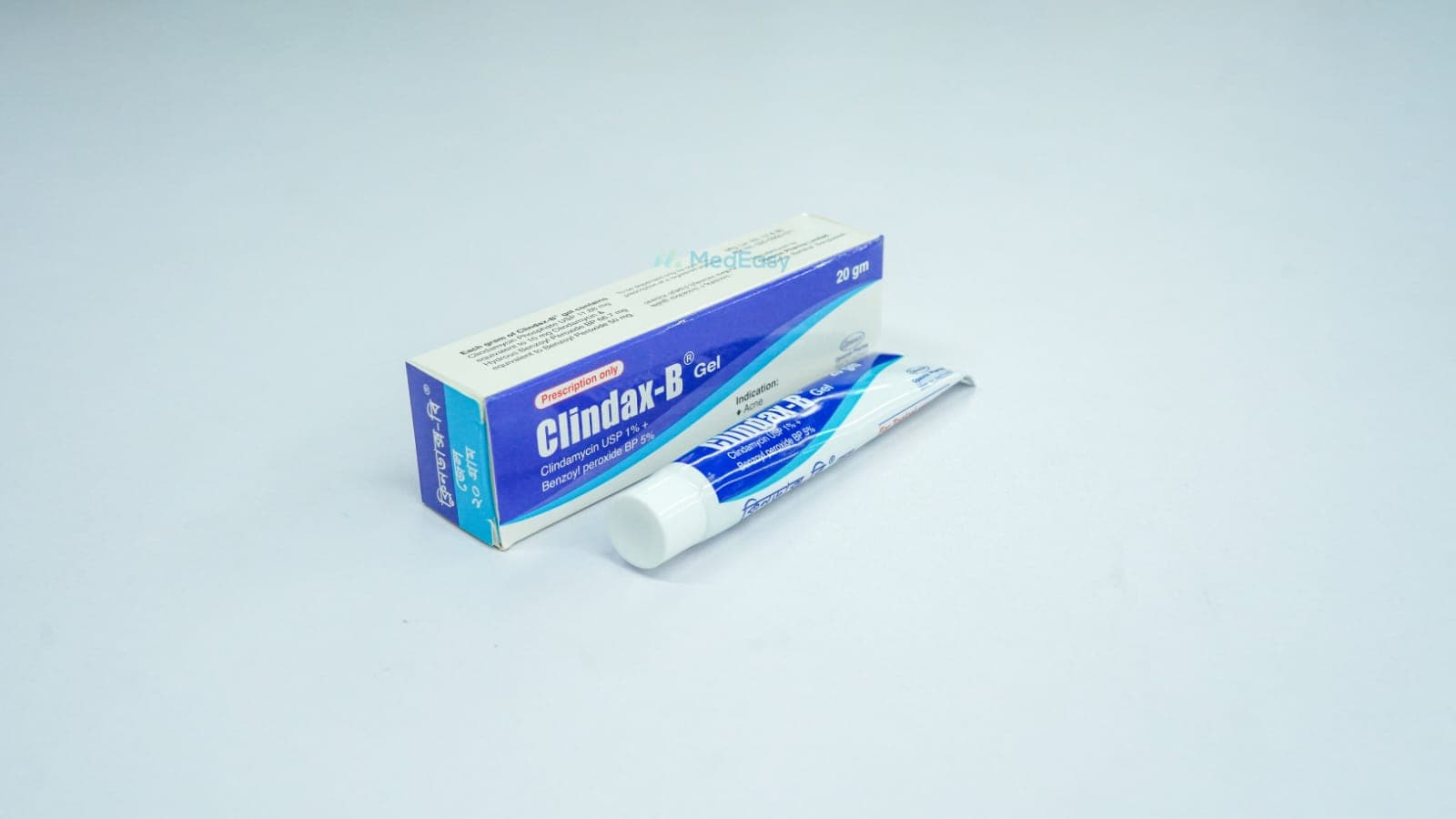
Key facts
Clindax-B 20 gm Gel is available on MedEasy for ৳322.00 per 20 gm tube, with home delivery anywhere in Bangladesh. It is manufactured by Opsonin Pharma Ltd. Its generic name is Clindamycin + Benzoyl Peroxide.
- Pack sizes
- 20 gm tube
- Prescription
- Required. Upload a valid doctor's prescription at checkout; a MedEasy pharmacist verifies it before dispatch.
- Delivery
- Home delivery across Bangladesh. Same-day delivery in Dhaka, Chattogram, Sylhet and Bogura city areas; 2-3 days elsewhere.
- Payment
- Cash on delivery, bKash, cards and mobile banking.
- Brand
- Clindax-B
- Generic name
- Clindamycin + Benzoyl Peroxide
- Manufacturer
- Opsonin Pharma Ltd.
- Form & strength
- Gel 20 gm
- Availability
- In stock
- Authenticity
- Sourced from licensed suppliers and the manufacturer's authorised distributors in Bangladesh.

Medicine overview
Indications of Clindax-B
Clindax-B is a fixed-dose topical combination product indicated for the treatment of acne vulgaris in patients who require combined antibacterial and keratolytic therapy.
- Established/FDA-approved use: Topical treatment of mild to moderate inflammatory acne vulgaris in patients generally 12 years of age and older.
- Guideline-supported use: Dermatology treatment guidelines (e.g., American Academy of Dermatology) recommend combining a topical antibiotic with benzoyl peroxide, rather than using a topical antibiotic alone, specifically to reduce the emergence of antibiotic-resistant Cutibacterium (Propionibacterium) acnes.
- Adjunct use: May be used as part of a broader acne regimen together with a topical retinoid, particularly for patients with mixed inflammatory and comedonal lesions.
- Off-label use: Occasionally used off-label for mild acne on the trunk (chest/back) or for acne-related folliculitis, though it is formally labeled for facial use.
Clindax-B is not indicated for non-acne skin conditions such as rosacea, perioral dermatitis, or fungal folliculitis.
Composition
Clindamycin + Benzoyl Peroxide topical gel combines two active ingredients:
- Clindamycin (as clindamycin phosphate), commonly 1% w/w — a semisynthetic lincosamide antibiotic.
- Benzoyl peroxide, commonly 2.5% or 5% w/w (strength varies by brand/formulation) — an antibacterial and keratolytic/comedolytic agent.
Inactive ingredients typically include a gel base such as carbomer, glycerin, dimethicone, disodium EDTA, and purified water; exact excipients vary by manufacturer.
Description
Clindax-B is a topical, fixed-combination acne gel that pairs a lincosamide antibiotic with an oxidizing keratolytic agent in a single vehicle for once- or twice-daily application to affected skin.
The combination is designed to attack acne through two complementary mechanisms while the benzoyl peroxide component also helps reduce the risk of the acne-causing bacteria developing resistance to the clindamycin component, which is a known limitation of long-term topical antibiotic monotherapy.
Therapeutic Class
Clindax-B belongs to the class of topical anti-acne combination agents, combining a lincosamide antibiotic (clindamycin) with a keratolytic/antibacterial peroxide agent (benzoyl peroxide).
Pharmacology
Clindamycin + Benzoyl Peroxide works through two distinct, complementary mechanisms:
- Clindamycin is a lincosamide antibiotic that binds to the 50S ribosomal subunit of susceptible bacteria, inhibiting bacterial protein synthesis. This produces a bacteriostatic (and at higher local concentrations, bactericidal) effect against Cutibacterium (Propionibacterium) acnes, the bacterium implicated in inflammatory acne, and also has some anti-inflammatory activity.
- Benzoyl peroxide is a potent oxidizing agent that releases free-radical oxygen species within the follicle, which are bactericidal against C. acnes through a non-antibiotic mechanism. It is also keratolytic/comedolytic, helping to normalize follicular shedding, and its bactericidal action helps suppress the emergence of clindamycin-resistant bacterial strains.
Systemic absorption of both components through intact skin is low; clindamycin absorption from topical combination gels is generally under 1%, and benzoyl peroxide is largely converted to benzoic acid at the skin surface with minimal systemic exposure.
Dosage & Administration of Clindax-B
How to use Clindax-B
- Gently wash the affected area with a mild, non-medicated cleanser and pat dry.
- Apply a thin (pea-sized to fingertip-unit, depending on area) layer of Clindax-B once daily (evening) or twice daily as directed by the prescribing physician, to the entire affected area — not just individual spots.
- Wait for the gel to dry before applying any other topical product, cosmetic, or sunscreen.
- Wash hands after application.
- Avoid contact with eyes, lips, mouth, other mucous membranes, and broken or sunburned skin.
| Indication | Typical adult/adolescent dose | Notes |
|---|---|---|
| Acne vulgaris (face, ≥12 years) | Apply thin layer to affected area once or twice daily, per product labeling and physician instruction | Response is usually assessed over 8–12 weeks |
Antibiotic stewardship: Take/use exactly as prescribed by your physician; do not stop, extend, skip applications, or share this medicine with others without medical advice, as inappropriate use of the clindamycin component contributes to antibiotic resistance.
Administration of Clindax-B
Clindax-B is for external (topical/cutaneous) use only. Apply to clean, dry skin, avoiding the eyes, mouth, nostrils, and mucous membranes. Do not apply to open wounds, cuts, or sunburned skin. Not for oral, ophthalmic, vaginal, or rectal use.
Interaction of Clindax-B
Clinically significant interactions with Clindax-B include:
- Topical or systemic erythromycin-containing products: Should not be used concurrently with Clindax-B, since clindamycin and erythromycin can antagonize each other's antibacterial activity at the bacterial ribosome.
- Other topical acne agents (retinoids, other benzoyl peroxide products, salicylic acid, alcohol- or astringent-based products, medicated soaps): Concurrent use may cause additive skin dryness, peeling, and irritation; if combined (e.g., with a topical retinoid), stagger application times (e.g., one in the morning, one in the evening) and introduce gradually.
- Neuromuscular blocking agents: Clindamycin has neuromuscular blocking properties when given systemically; this is a theoretical concern only with topical use given minimal systemic absorption, but caution is advised if patients are also receiving systemic clindamycin or neuromuscular blockers for other reasons.
- Oxidizing or bleaching agents: Benzoyl peroxide can react with and bleach hair, colored fabric, carpeting, and some furniture; allow the gel to fully dry before contact with fabrics.
Contraindications
Clindamycin + Benzoyl Peroxide is contraindicated in patients with:
- Known hypersensitivity to clindamycin, lincomycin, benzoyl peroxide, or any other component of the formulation.
- A history of regional enteritis (Crohn's disease), ulcerative colitis, or antibiotic-associated colitis (including prior pseudomembranous colitis), since clindamycin — even applied topically — has been associated with Clostridioides difficile-associated diarrhea and colitis.
Side Effects of Clindax-B
Most adverse effects of Clindax-B are local skin reactions related mainly to the benzoyl peroxide component:
- Very common: Dry skin, mild burning/stinging on application.
- Common: Application-site erythema (redness), peeling/scaling, pruritus (itching), skin irritation.
- Less common: Sunburn-like reaction, application-site reaction, contact dermatitis.
- Rare but serious: Severe allergic reactions (swelling of face/lips/throat, difficulty breathing, hives) requiring emergency care; severe diarrhea or abdominal cramping suggestive of C. difficile-associated colitis (see Contraindications) — discontinue and seek medical attention if this occurs.
Local irritation is usually most pronounced in the first 1–2 weeks of treatment and often improves with continued, consistent use.
Pregnancy & Lactation
Pregnancy: There are no adequate, well-controlled studies of Clindax-B in pregnant women. Because systemic absorption of both components through the skin is low, systemic fetal exposure is expected to be minimal; however, Clindax-B should be used during pregnancy only if clearly needed and if the potential benefit justifies the potential risk to the fetus. Consult a physician before use in pregnancy.
Lactation: It is not known whether topically applied clindamycin or benzoyl peroxide are excreted in clinically significant amounts in human milk; orally administered clindamycin has been detected in breast milk. Caution is advised, and breastfeeding mothers should avoid applying Clindax-B directly to the chest/nipple area to prevent inadvertent infant ingestion. Consult a physician before use while breastfeeding.
Precautions & Warnings
- Colitis risk: Clindamycin, including topical formulations, has been associated with severe diarrhea and colitis (including C. difficile-associated colitis), which can occur even with minimal systemic absorption; discontinue Clindax-B immediately and seek medical evaluation if significant, persistent, or bloody diarrhea occurs (see Contraindications for absolute exclusions).
- Skin irritation: May cause significant dryness, peeling, redness, and irritation, especially during the first weeks of use; start with less frequent application if irritation is severe, and use a non-comedogenic moisturizer as needed.
- Photosensitivity: Benzoyl peroxide can increase skin sensitivity to sunlight; minimize sun exposure and UV lamp use, and apply broad-spectrum sunscreen (SPF 15 or higher) and protective clothing during use.
- Bleaching effect: May bleach hair, fabric, carpeting, and other colored materials on contact; take care with clothing, towels, and bedding.
- Avoid mucous membranes: Do not apply to eyes, mouth, inside the nose, or other mucous membranes; if accidental contact occurs, flush thoroughly with water.
- Not for oral/ingested use; external use only.
Overdose Effects of Clindax-B
Clindax-B is intended for external use only. Excessive topical application does not speed clinical improvement and increases the risk of severe skin dryness, redness, and irritation. If a large amount is accidentally ingested, or if it is applied over an unusually large body surface area, or if signs of a severe allergic reaction or severe diarrhea develop, seek immediate medical attention or contact a poison control center/emergency services. Do not attempt to manage a suspected overdose or serious reaction with home remedies.
Storage Conditions
Store at room temperature (below 30°C), away from light and moisture. Do not freeze. Keep the tube tightly closed when not in use, and keep out of reach of children.
Use In Special Populations
- Pediatric use: Safety and efficacy of Clindax-B in children under 12 years of age have not been established. Use in adolescents 12 years and older should follow physician guidance.
- Geriatric use: Clinical studies have not identified differences in response between elderly and younger patients; no specific dose adjustment is established, but elderly patients with thinner or more fragile skin may be more prone to irritation.
- Renal/hepatic impairment: No formal dose adjustment is established for topical use, given minimal systemic absorption; systemic clindamycin dose adjustment concepts do not directly apply to this topical product.
- Patients with inflammatory bowel disease or history of colitis: Contraindicated — see Contraindications.
Duration Of Treatment
Clindax-B is typically used continuously for at least 8–12 weeks to assess treatment response, as acne improvement is gradual. Many patients continue therapy for several months under physician supervision; long-term continuous use of the antibiotic component beyond what is medically necessary should be avoided, and physicians periodically reassess whether continued antibiotic-containing therapy is needed versus stepping down to benzoyl peroxide or retinoid maintenance alone.
Drug Classes
Topical antibacterial and keratolytic acne combination (lincosamide antibiotic + benzoyl peroxide)
Mode Of Action
Clindamycin + Benzoyl Peroxide combines two mechanisms in one product: clindamycin inhibits bacterial protein synthesis by binding the 50S ribosomal subunit, suppressing Cutibacterium acnes and reducing inflammatory mediators; benzoyl peroxide releases bactericidal free-radical oxygen species within the pilosebaceous follicle and has keratolytic/comedolytic activity, while also reducing the likelihood of bacterial resistance developing to the clindamycin component.
Pregnancy
C
Pediatric Uses
Clindax-B has not been established as safe and effective in children under 12 years of age. In adolescents 12 years of age and older with acne vulgaris, it may be used under physician supervision following the same application instructions as for adults, starting with the lowest effective frequency to assess tolerability, since children and adolescents may be more prone to local skin irritation.
Frequently Asked Questions
Q: What is Clindax-B 20 gm Gel used for?
A: Clindax-B 20 gm Gel is a topical combination gel used to treat mild to moderate inflammatory acne vulgaris, usually in patients 12 years of age and older, by combining an antibiotic with an antibacterial/keratolytic agent.
Q: How long does it take Clindax-B 20 gm Gel to work?
A: Most patients notice initial improvement within 4–6 weeks, with fuller results typically assessed after 8–12 weeks of consistent daily use. Acne treatment generally requires patience and continued application even if improvement seems slow.
Q: Can I use Clindax-B 20 gm Gel during pregnancy?
A: There are no adequate, well-controlled studies of Clindax-B 20 gm Gel in pregnant women. Systemic absorption through the skin is low, but it should be used in pregnancy only if clearly needed and if the potential benefit justifies the potential risk to the fetus; always consult your physician before using it while pregnant.
Q: Why does my skin feel dry or start peeling after starting Clindax-B 20 gm Gel?
A: Dryness, peeling, and mild irritation are the most common side effects of Clindax-B 20 gm Gel, caused mainly by its benzoyl peroxide component, and are usually most noticeable in the first 1–2 weeks. This typically improves with continued use; a non-comedogenic moisturizer and sunscreen can help manage it. If irritation is severe or persistent, consult your physician.
Q: Will Clindax-B 20 gm Gel bleach my clothes, towels, or hair?
A: Yes, the benzoyl peroxide component of Clindax-B 20 gm Gel can bleach hair, clothing, towels, bedding, and other colored fabrics on contact. Allow the gel to dry fully before contact with fabric, and use white towels/pillowcases where possible.
Q: What should I do if I get severe diarrhea while using Clindax-B 20 gm Gel?
A: Stop using Clindax-B 20 gm Gel and contact your physician promptly if you develop significant, persistent, or bloody diarrhea or abdominal cramping, as clindamycin (even applied topically) has rarely been associated with serious intestinal conditions such as antibiotic-associated colitis. Do not use Clindax-B 20 gm Gel at all if you have a history of ulcerative colitis, Crohn's disease, or prior antibiotic-associated colitis.
Disclaimer
The information provided is accurate to the best of our knowledge, but it does not replace professional medical advice. We cannot guarantee its completeness or accuracy, and the absence of specific information about a drug should not be taken as an endorsement. We are not responsible for any consequences arising from this information, so please consult a healthcare professional for any concerns or questions.