

8% Off
Becoral Kit150 mg+600
Beximco Pharmaceuticals Ltd.
৳2300.00
Add to cart
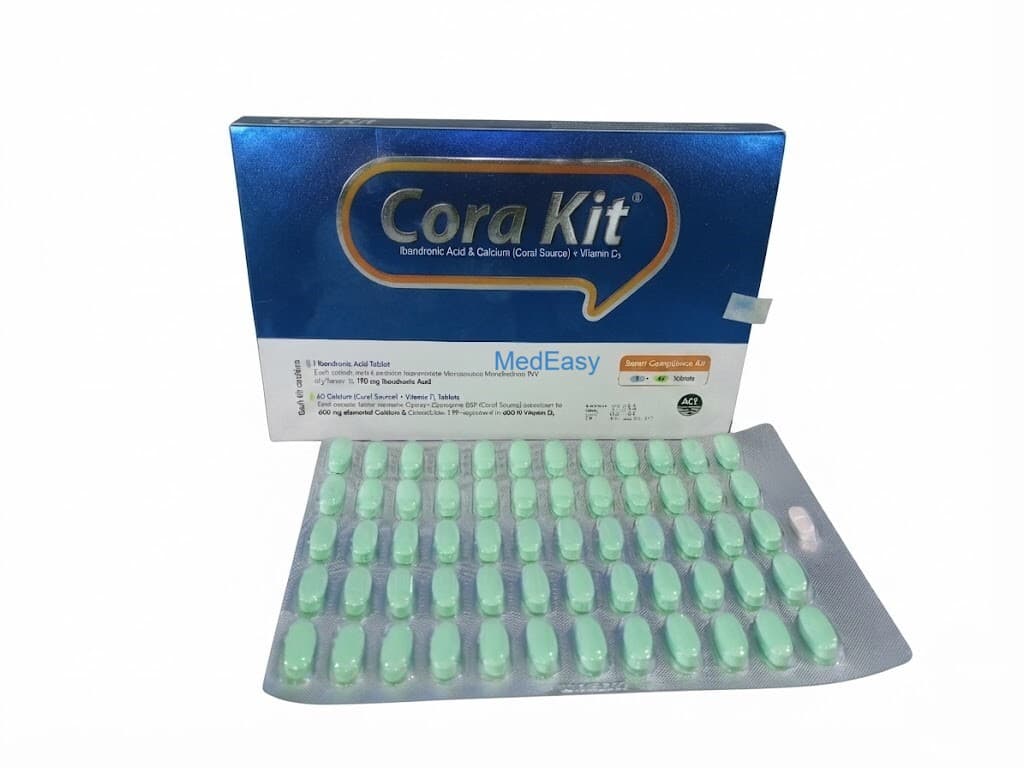

Cora Kit is indicated for use in the management of osteoporosis, combining a bisphosphonate (ibandronic acid) with calcium (from a coral source) and vitamin D3 to support bone mineral density and reduce fracture risk.
This is a combination product intended to be used exactly as prescribed; it does not replace individualized medical assessment of fracture risk.
Ibandronic Acid + Coral Calcium + Vitamin D3 is a combination product typically containing:
Exact strengths vary by manufacturer and product presentation; always check the product label/pack insert for the precise composition of the specific brand dispensed.
Cora Kit is a combination medicine used in the management of osteoporosis. It pairs ibandronic acid, a potent nitrogen-containing bisphosphonate that slows bone breakdown (resorption), with coral-sourced calcium and vitamin D3, which together support normal bone mineralization and help ensure that calcium and vitamin D status does not limit the benefit of bisphosphonate therapy.
Cora Kit is generally prescribed for postmenopausal women, and sometimes other patients, at increased risk of osteoporotic fractures, as part of a broader bone health plan that may also include weight-bearing exercise, fall-prevention measures, and lifestyle modification.
Cora Kit belongs to the therapeutic class of anti-osteoporotic agents: a bisphosphonate (bone resorption inhibitor) combined with a calcium supplement and a vitamin D3 (fat-soluble vitamin) analog used for bone health.
Ibandronic acid is a nitrogen-containing bisphosphonate that binds strongly to bone mineral (hydroxyapatite) at sites of active bone remodeling. It is selectively taken up by osteoclasts, where it inhibits farnesyl pyrophosphate synthase in the mevalonate pathway, disrupting osteoclast cytoskeletal function and inducing osteoclast apoptosis. This reduces bone resorption and bone turnover, leading over time to a net increase in bone mineral density.
After oral administration, absorption of ibandronic acid is low (roughly 0.6%) and is further reduced by food, calcium, and other divalent cations, which is why it must be taken on an empty stomach, separated from calcium intake. It is not metabolized, binds extensively to bone, and the unabsorbed/unbound fraction is excreted mainly via the kidneys.
Coral calcium provides elemental calcium (as calcium carbonate) required for bone mineralization, neuromuscular function, and normal blood clotting. Vitamin D3 (cholecalciferol) is hydroxylated in the liver and kidney to its active form, which increases intestinal absorption of calcium and phosphate and supports normal bone mineralization, working together with calcium to provide the mineral substrate that bisphosphonate therapy needs to be effective.
Ibandronic Acid + Coral Calcium + Vitamin D3 therefore works through complementary mechanisms: reduced bone resorption from ibandronic acid, and adequate mineral/vitamin substrate from calcium and vitamin D3.
Cora Kit must be taken exactly as directed by a physician, with strict attention to timing and administration technique for the ibandronic acid component, since incorrect administration significantly increases the risk of esophageal irritation and reduces absorption.
| Indication | Ibandronic Acid Component | Calcium/Vitamin D3 Component |
|---|---|---|
| Treatment of postmenopausal osteoporosis | 150 mg orally once monthly, on the same date each month | Taken separately, at a different time of day, as directed (see below) |
| Prevention of postmenopausal osteoporosis | 150 mg orally once monthly (or lower daily regimen per physician) | Taken separately, as directed |
The calcium/vitamin D3 component should be taken at a different time of day from the ibandronic acid component (calcium significantly reduces bisphosphonate absorption if taken together), typically with a meal to enhance calcium absorption, and consistently every day as directed.
Do not alter the dose or schedule of Cora Kit without consulting a physician.
Take the ibandronic acid component of Cora Kit first thing in the morning on an empty stomach, with a full glass of plain water, then remain upright for at least 60 minutes and avoid food, drink, or other medicines during that time. Take the calcium/vitamin D3 component at a separate time of day, generally with food, to maximize calcium absorption and avoid interfering with bisphosphonate absorption. Do not take other oral medicines, including calcium, iron, or antacids, within the 60-minute window after the bisphosphonate dose.
Cora Kit contains components with distinct interaction profiles that should be reviewed together with a physician or pharmacist.
Ibandronic Acid + Coral Calcium + Vitamin D3 is contraindicated in:
Side effects of Cora Kit may relate to either the bisphosphonate or the calcium/vitamin D3 component.
Cora Kit is intended for use in postmenopausal osteoporosis and is not indicated for use during pregnancy. Ibandronic acid is incorporated into bone and released slowly over a long period, and its effects on a developing fetus if pregnancy occurs after treatment are not fully known; animal studies with bisphosphonates have shown effects on fetal bone development at high doses. Cora Kit should not be used in women who are or may become pregnant unless a physician determines there is a specific, clearly justified need and no safer alternative exists.
It is not known whether the ibandronic acid component passes into breast milk; use during breastfeeding is not recommended. The calcium and vitamin D3 component may generally be appropriate in usual nutritional doses during pregnancy/lactation, but the combination product as a whole should only be used if clearly needed and only under a physician's guidance, weighing potential benefit against potential risk.
Cora Kit carries several important, well-established warnings, chiefly related to its bisphosphonate component:
Overdose of the ibandronic acid component may cause hypocalcemia, hypophosphatemia, upper gastrointestinal irritation (heartburn, esophagitis, ulcer), and, in significant excess, gastric or esophageal injury. Overdose of the calcium/vitamin D3 component may cause symptoms of hypercalcemia such as nausea, vomiting, constipation, confusion, excessive thirst, or irregular heartbeat.
If an overdose of Cora Kit is suspected, seek immediate medical attention or contact a poison control center/emergency services right away. The patient should remain upright and not induce vomiting; milk or antacids containing calcium or magnesium may be given to bind the bisphosphonate while awaiting emergency care, but specific treatment must be directed by a physician in a medical facility.
Store at room temperature (below 30°C), away from light and moisture. Keep out of reach of children.
The duration of Cora Kit therapy should be individualized by the prescribing physician based on fracture risk, bone density response, and tolerability. Bisphosphonate therapy for osteoporosis is often continued for approximately 3-5 years, after which the physician may reassess whether to continue, switch therapy, or consider a temporary treatment break ("drug holiday"), since bisphosphonates remain active in bone for a prolonged period after stopping. The calcium and vitamin D3 component is generally continued long term as part of ongoing bone health maintenance, per physician advice. Do not stop or extend treatment without consulting a physician.
Bisphosphonate (nitrogen-containing); Calcium supplement; Vitamin D3 (cholecalciferol) analog; Anti-osteoporotic combination agent
Ibandronic Acid + Coral Calcium + Vitamin D3 acts through ibandronic acid, which inhibits osteoclast-mediated bone resorption by disrupting the mevalonate pathway in osteoclasts, together with coral-sourced calcium and vitamin D3, which supply the mineral substrate and support intestinal calcium absorption needed for normal bone mineralization (see Pharmacology for full detail).
C
Safety and efficacy of Cora Kit have not been established in children and adolescents. Cora Kit is not indicated for use in pediatric patients; osteoporosis management in this age group requires specialist pediatric evaluation and alternative approaches.
Q: What is Cora Kit 150 mg+600 mg+400 IU Tablet used for?
A: Cora Kit 150 mg+600 mg+400 IU Tablet is used in the management of osteoporosis, mainly in postmenopausal women, to reduce bone breakdown and support bone mineralization, lowering the risk of fractures.
Q: How should I take Cora Kit 150 mg+600 mg+400 IU Tablet correctly?
A: Take the ibandronic acid component first thing in the morning on an empty stomach with a full glass of plain water, then remain upright for at least 60 minutes without eating, drinking anything else, or taking other medicines. Take the calcium/vitamin D3 component at a separate time of day, usually with a meal, exactly as your physician directs.
Q: Can I take calcium supplements at the same time as the bisphosphonate dose?
A: No. Calcium significantly reduces absorption of the ibandronic acid component, so the calcium/vitamin D3 part of Cora Kit 150 mg+600 mg+400 IU Tablet must be taken at a different time of day from the bisphosphonate dose, as instructed.
Q: What serious risks should I watch for with Cora Kit 150 mg+600 mg+400 IU Tablet?
A: Watch for new or worsening difficulty or pain on swallowing, chest pain, or heartburn (possible esophageal irritation); jaw pain, swelling, or numbness, especially after dental work (possible osteonecrosis of the jaw); and new thigh, hip, or groin pain (possible atypical femur fracture). Seek medical attention promptly if these occur.
Q: Is Cora Kit 150 mg+600 mg+400 IU Tablet safe during pregnancy or breastfeeding?
A: Cora Kit 150 mg+600 mg+400 IU Tablet is not indicated for use during pregnancy or breastfeeding. It should be used only if a physician determines there is a clearly justified need and no safer alternative, since the bisphosphonate component is taken up by bone and released slowly over time.
Q: What should I do if I miss a dose or think I have taken too much?
A: If you miss a monthly bisphosphonate dose, contact your physician for guidance rather than doubling up. If you suspect an overdose of Cora Kit 150 mg+600 mg+400 IU Tablet, seek immediate medical attention or contact emergency services/poison control right away; remain upright and do not lie down.
Disclaimer
The information provided is accurate to the best of our knowledge, but it does not replace professional medical advice. We cannot guarantee its completeness or accuracy, and the absence of specific information about a drug should not be taken as an endorsement. We are not responsible for any consequences arising from this information, so please consult a healthcare professional for any concerns or questions.
