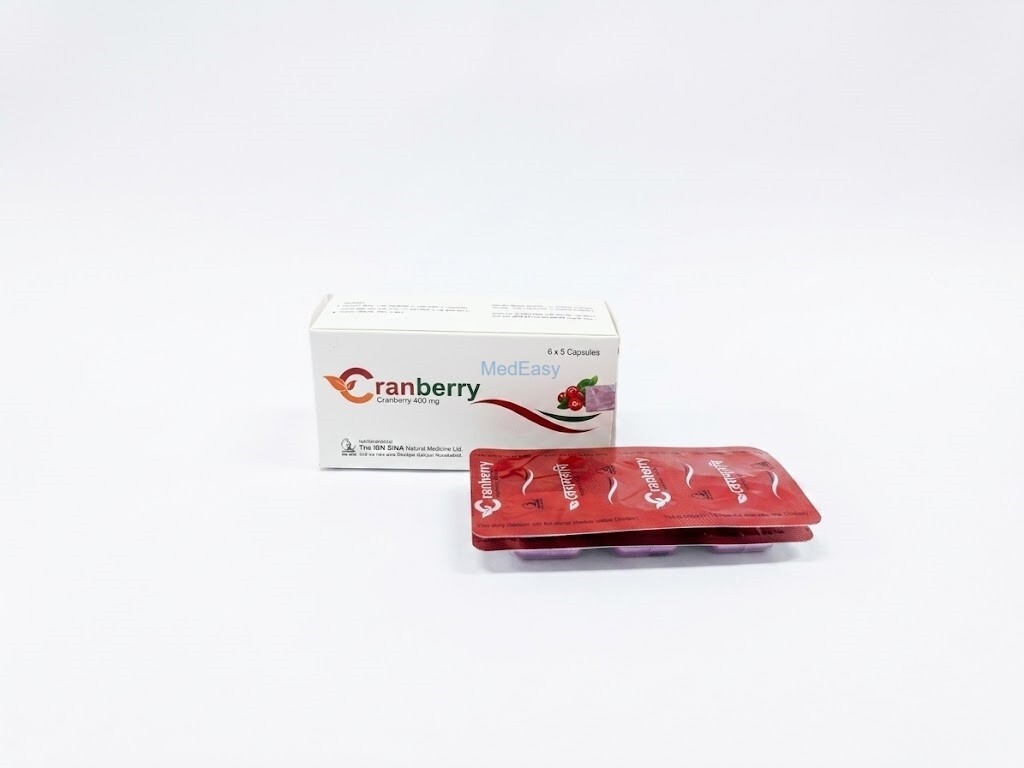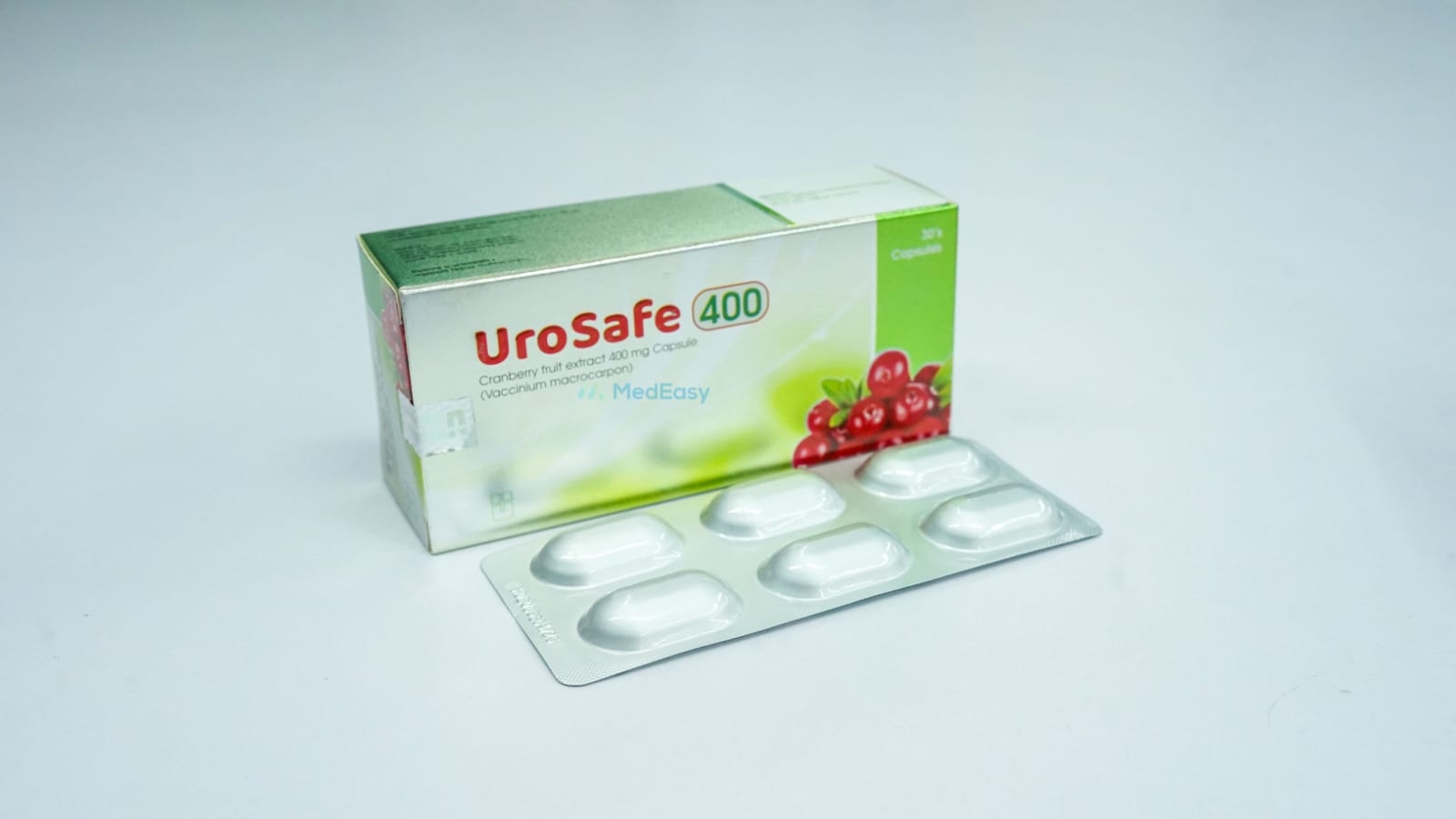
10% Off
Urobery400 mg
Square Pharmaceuticals PLC.
৳108.00
Add to cart
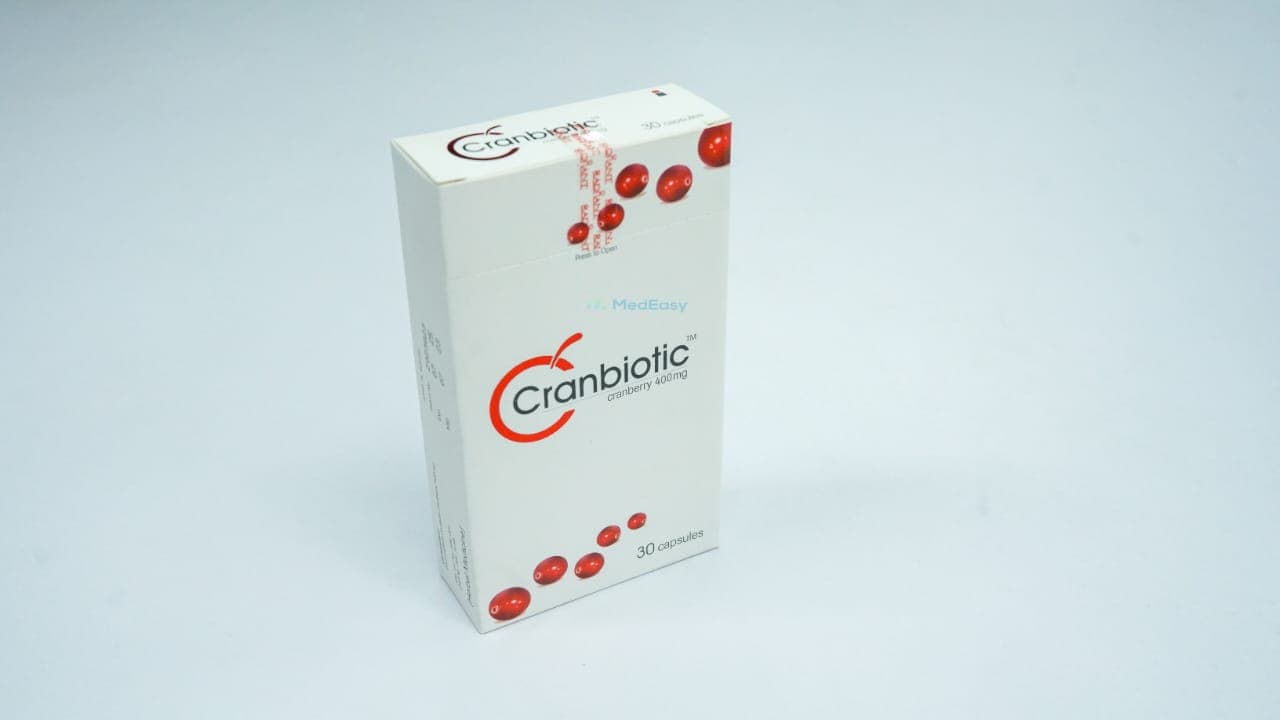
Cranbiotic 400 mg Capsule is available on MedEasy for ৳202.40 per 10's Strip, with home delivery anywhere in Bangladesh. It is manufactured by Radiant Pharmaceuticals Ltd. Its generic name is Cranberry [Vaccinium macrocarpon].

Cranbiotic is a herbal/nutritional supplement derived from cranberry fruit extract. It is used based on the following evidence:
Each dosage unit (capsule/tablet/syrup) contains standardized Cranberry [Vaccinium macrocarpon] fruit extract, typically standardized to a defined proanthocyanidin (PAC) content. Strength varies by brand and formulation (e.g., 300-500 mg extract per capsule, or 300 mg/5 mL syrup). Refer to the specific product label for exact strength and excipients.
Cranbiotic is derived from the fruit of the cranberry plant (Vaccinium macrocarpon), a shrub native to North America. Cranberry fruit contains proanthocyanidins (PACs), particularly type-A proanthocyanidins, which are believed to inhibit the adhesion of certain bacteria (notably E. coli) to the urinary tract lining, thereby reducing the likelihood of bacterial colonization and recurrent infection.
Cranbiotic is available in various forms including capsules, tablets, and oral syrup, and is commonly used as a dietary supplement for urinary tract health rather than as a conventional pharmaceutical.
Herbal/nutritional supplement - urinary tract health agent (Cranbiotic)
Cranberry [Vaccinium macrocarpon] contains proanthocyanidins (PACs), particularly A-type PACs, which are thought to interfere with the ability of fimbriated bacteria (especially uropathogenic Escherichia coli) to adhere to uroepithelial cells lining the bladder and urinary tract. By reducing bacterial adhesion, Cranberry [Vaccinium macrocarpon] may lower the likelihood of bacterial colonization and subsequent infection, rather than exerting a direct antibacterial (killing) effect.
PACs and other cranberry polyphenols undergo partial absorption and metabolism; a portion is excreted in urine, which is consistent with the proposed local anti-adhesive mechanism in the urinary tract. Detailed pharmacokinetic data (e.g., precise bioavailability, half-life) are not well characterized due to the product's classification as a dietary supplement rather than a regulated drug.
| Indication | Typical Dose |
|---|---|
| Prevention of recurrent UTI (adjunct) | One capsule/tablet of standardized extract (commonly 300-500 mg) once or twice daily, or 5-10 mL of syrup (300 mg/5 mL strength) once or twice daily, or as directed on the product label |
Use in children should be guided by product-specific labeling and a physician's advice; formal pediatric dosing has not been well established for standardized Cranbiotic extract products (see Use in Special Populations).
Cranbiotic may be taken with or without food. Adequate fluid (water) intake is recommended alongside use to support urinary tract health. Swallow capsules/tablets whole; shake syrup well before use and measure with an appropriate measuring device.
Note: Cranbiotic is a preventive supplement only. If symptoms of an active UTI (e.g., burning on urination, urgency, fever, flank pain) occur, seek prompt medical evaluation, as antibiotic treatment is required for a confirmed infection.
Cranbiotic can be taken orally with or without food. Capsules/tablets should be swallowed with a glass of water; syrup formulations should be shaken well before use and measured using the provided measuring cup or spoon. Maintaining good hydration while using Cranbiotic is recommended to support the intended urinary tract benefit.
Warfarin: Case reports describe a clinically significant interaction in which concomitant use of cranberry products with warfarin potentiated the anticoagulant effect and increased INR (International Normalized Ratio), with some cases associated with bleeding. The proposed mechanism involves inhibition of warfarin metabolism (CYP2C9 pathway). Patients on warfarin who wish to use Cranbiotic should inform their physician; closer INR monitoring is advised if concurrent use cannot be avoided.
Theoretical interactions with other drugs metabolized via cytochrome P450 enzymes have been proposed but are not well-established clinically; caution and physician consultation are advised when combining Cranbiotic with other prescription medications, particularly anticoagulants/antiplatelet agents.
Cranberry [Vaccinium macrocarpon] is contraindicated in individuals with known hypersensitivity to cranberry, other Vaccinium species, or any component of the specific product formulation.
Cranbiotic is generally well tolerated when taken at recommended doses. The most commonly reported side effects are gastrointestinal and include:
These effects are more likely with concentrated extracts or higher-than-recommended doses. Rare hypersensitivity reactions (e.g., skin rash) may occur in sensitive individuals.
Cranbiotic has a long history of use as a dietary fruit product and is generally considered to carry relatively low risk when consumed in ordinary food amounts during pregnancy and breastfeeding. However, for concentrated supplement forms, safety data are limited. As a conservative approach, Cranbiotic supplement products should be used during pregnancy or lactation only if clearly needed, and a physician should be consulted before use to weigh potential benefit against any uncertain risk.
Excessive intake of Cranbiotic may increase the likelihood of gastrointestinal side effects such as stomach upset and diarrhea, and, in very high or prolonged supplemental doses, could theoretically increase the risk of oxalate kidney stone formation in susceptible individuals. There is no established specific antidote. If a large overdose is suspected or the person develops severe symptoms (e.g., persistent vomiting, severe abdominal pain, signs of kidney stone such as severe flank pain or blood in urine), seek immediate medical attention or contact a poison control center/emergency services.
Store at room temperature (below 30°C), away from light and moisture. Keep out of reach of children.
Safety and efficacy of standardized Cranbiotic extract products for UTI prevention in children have not been well established through controlled pediatric trials. Use in children should only be under the guidance of a pediatrician, generally reserved for children with recurrent UTIs where dietary measures are being considered as an adjunct, and dosing should follow product-specific pediatric labeling if available.
No specific dose adjustment is generally required for elderly patients; however, elderly individuals, especially those on warfarin or with reduced renal function or a history of kidney stones, should use Cranbiotic with caution and physician oversight (see Interactions and Precautions).
Patients with a history of kidney stones or significant renal impairment should consult a physician before using Cranbiotic due to the oxalate content (see Precautions and Warnings).
No well-established dose adjustment is required; data are limited, so caution is advised.
Cranbiotic is typically used as an ongoing preventive supplement for individuals prone to recurrent UTIs, rather than for a fixed short-term course. Duration of use should be individualized based on the frequency of recurrent infections and physician advice; periodic reassessment of continued need is recommended, especially given the moderate/mixed strength of supporting evidence.
Herbal supplement / Nutraceutical - Urinary tract health agent (Cranberry [Vaccinium macrocarpon])
Cranberry [Vaccinium macrocarpon] contains type-A proanthocyanidins (PACs) believed to inhibit adhesion of fimbriated uropathogenic bacteria (particularly E. coli) to the urothelium lining the bladder and urinary tract, thereby reducing bacterial colonization rather than acting as a direct antimicrobial agent.
Safety and efficacy of standardized Cranbiotic extract/supplement products have not been well established in children through robust controlled trials. Where used for recurrent UTI prevention in children, it should be under pediatrician supervision, following age/product-appropriate dosing on the specific label, and is not a substitute for medical evaluation of recurrent pediatric UTIs, which often require investigation for underlying anatomical or functional causes.
Q: Is Cranbiotic 400 mg Capsule used to treat a urinary tract infection I already have?
A: No. Cranbiotic 400 mg Capsule is intended only for the prevention of recurrent urinary tract infections, not as a treatment for an active or confirmed UTI. If you have symptoms such as burning on urination, urgency, fever, or flank pain, you need prompt medical evaluation and antibiotic treatment; Cranbiotic 400 mg Capsule is not a substitute for antibiotics.
Q: Can I take Cranbiotic 400 mg Capsule if I am on warfarin (blood thinner)?
A: Caution is needed. There are case reports of Cranbiotic 400 mg Capsule potentiating the anticoagulant effect of warfarin and increasing INR, which can raise bleeding risk. If you are taking warfarin, inform your physician before starting Cranbiotic 400 mg Capsule, and closer INR monitoring may be advised if the combination is used.
Q: Is Cranbiotic 400 mg Capsule safe for someone with a history of kidney stones?
A: Use with caution. Cranbiotic 400 mg Capsule contains oxalate, which may theoretically contribute to oxalate-containing kidney stone formation in susceptible individuals, such as those with a prior history of calcium-oxalate stones. Such patients should consult their physician before using Cranbiotic 400 mg Capsule.
Q: What are the common side effects of Cranbiotic 400 mg Capsule?
A: Cranbiotic 400 mg Capsule is generally well tolerated. The most common side effects are mild gastrointestinal symptoms such as stomach upset, diarrhea, and nausea, particularly with concentrated extracts or higher doses. Rare allergic reactions can occur in sensitive individuals.
Q: Can pregnant or breastfeeding women use Cranbiotic 400 mg Capsule?
A: Cranberry consumed as ordinary food is generally considered low risk in pregnancy and breastfeeding, but safety data for concentrated Cranbiotic 400 mg Capsule supplement products are limited. As a precaution, such products should be used during pregnancy or lactation only if clearly needed, and a physician should be consulted first.
Q: Can children use Cranbiotic 400 mg Capsule for recurrent UTIs?
A: Safety and efficacy of standardized Cranbiotic 400 mg Capsule products have not been well established in children through robust studies. Use in children should only occur under a pediatrician's guidance, and recurrent pediatric UTIs should first be properly evaluated by a doctor.
Disclaimer
The information provided is accurate to the best of our knowledge, but it does not replace professional medical advice. We cannot guarantee its completeness or accuracy, and the absence of specific information about a drug should not be taken as an endorsement. We are not responsible for any consequences arising from this information, so please consult a healthcare professional for any concerns or questions.