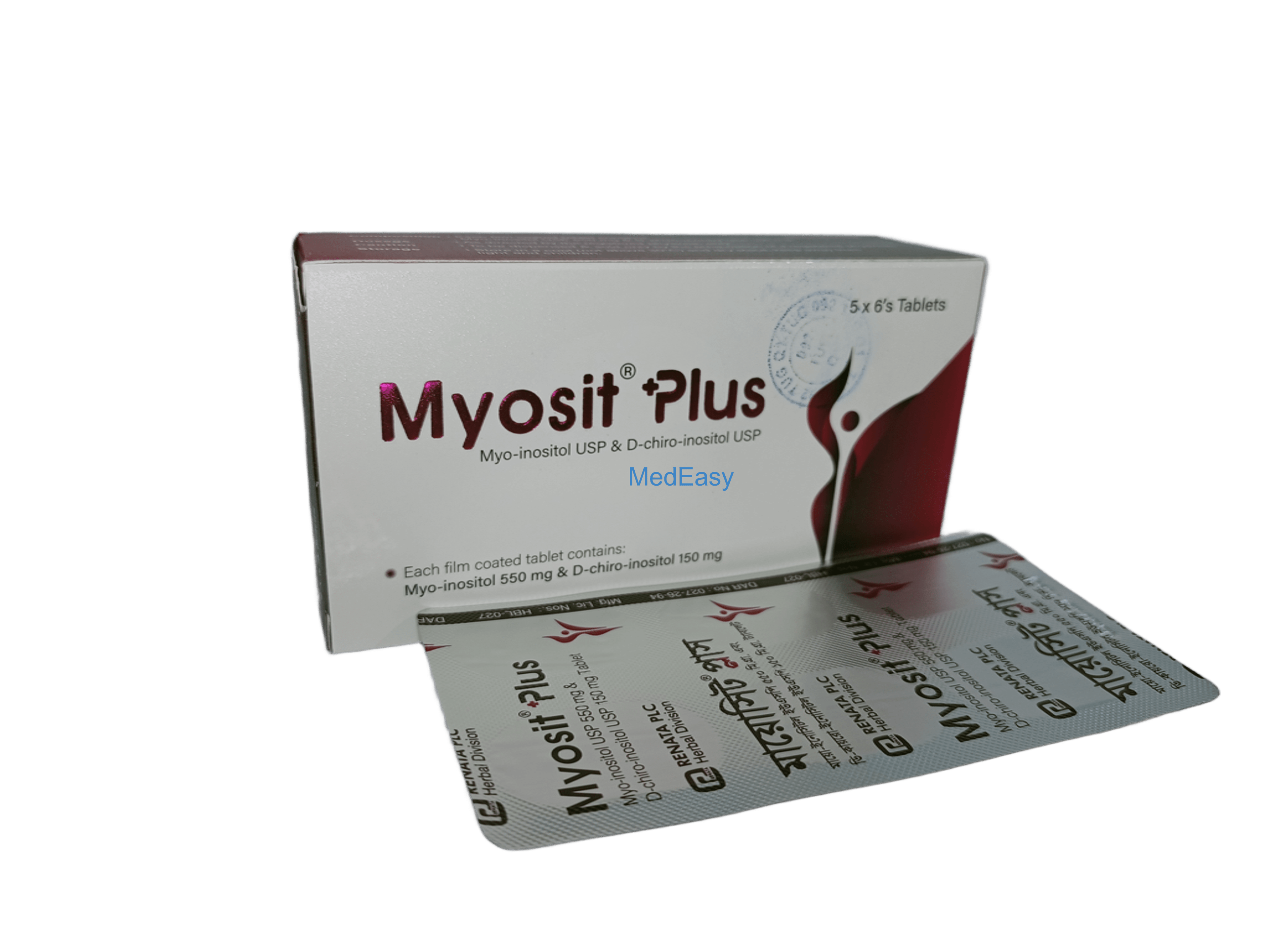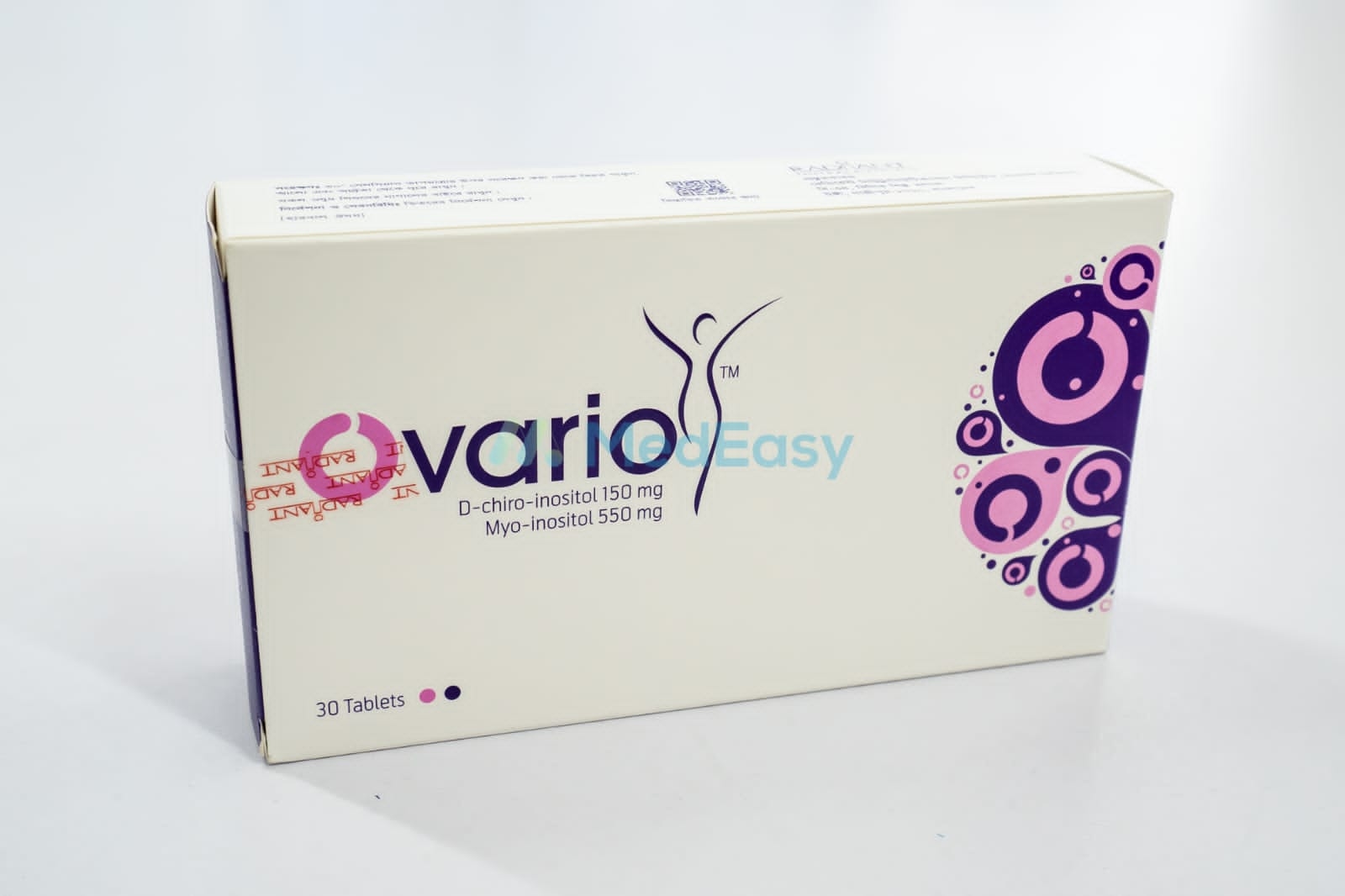
7% Off
Ovario150 mg+550
Radiant Pharmaceuticals Ltd.
৳465.00
Add to cart
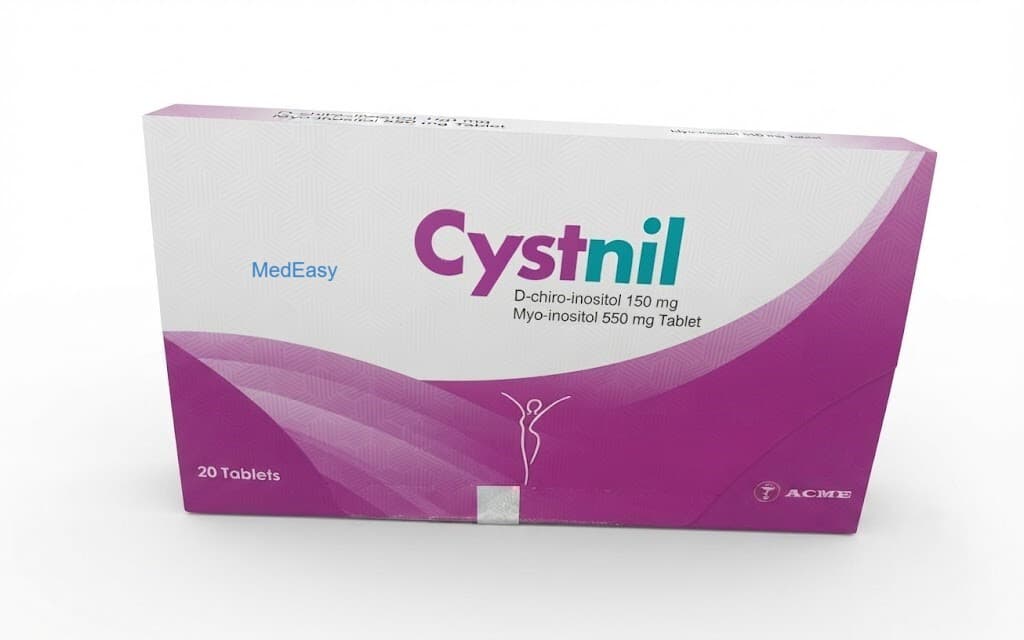

Important: This is not an FDA-approved prescription medicine; evidence supporting its use is more limited than for conventional pharmacotherapy. Cystnil should be used as directed by a physician and is not a substitute for prescribed treatment where one is indicated.
D-chiro-inositol + Myo-inositol is a combination nutraceutical/dietary supplement containing two naturally occurring stereoisomers of inositol: myo-inositol and D-chiro-inositol. It is most commonly formulated in a physiological plasma ratio of approximately 40:1 (myo-inositol:D-chiro-inositol), for example 2000 mg myo-inositol combined with 50 mg D-chiro-inositol per sachet/capsule, though exact strengths vary by manufacturer and product presentation (powder sachet, capsule, or tablet).
Cystnil is a combined insulin-sensitizing inositol stereoisomer supplement, not a conventional single-molecule pharmaceutical drug and not FDA-approved as a prescription medicine. It is marketed as a dietary supplement/nutraceutical, most often used as adjunctive support in women with polycystic ovary syndrome (PCOS) to help improve insulin sensitivity and support ovulatory and metabolic function.
Myo-inositol and D-chiro-inositol are both naturally occurring in the body and in the diet (found in fruits, beans, grains, and nuts) and act as precursors of insulin second-messenger molecules. In women with PCOS, an imbalance in the conversion of myo-inositol to D-chiro-inositol in ovarian tissue has been proposed as a contributing mechanism to insulin resistance and abnormal ovarian steroidogenesis; combined supplementation with Cystnil in a physiological ratio is intended to help restore this balance.
Cystnil belongs to the class of insulin-sensitizing nutraceuticals/dietary supplements (inositol stereoisomer combination). It is not classified as a prescription drug under conventional pharmacologic drug classes such as biguanides or thiazolidinediones, although it is used for a related purpose (improving insulin sensitivity).
Mechanism of action: Myo-inositol and D-chiro-inositol are both inositol stereoisomers that act as precursors of inositolphosphoglycan (IPG) second-messenger molecules involved in intracellular insulin signal transduction. Myo-inositol also serves as a precursor for the phosphatidylinositol pathway involved in follicle-stimulating hormone (FSH) signaling within the ovary, supporting normal follicular development. D-chiro-inositol is involved in insulin-stimulated glycogen synthesis and has been shown to modulate ovarian androgen (testosterone) production.
In women with PCOS, tissue-specific conversion of myo-inositol to D-chiro-inositol in the ovary may be abnormal, contributing to reduced insulin sensitivity and disrupted ovarian function. D-chiro-inositol + Myo-inositol, given in a combined formulation approximating the physiological plasma ratio (commonly 40:1 myo-inositol to D-chiro-inositol), is intended to help correct this imbalance, thereby supporting improved insulin sensitivity, more regular ovulatory cycles, and modest improvements in circulating androgen and lipid levels in some studies.
Cystnil dosing should be individualized and guided by a physician. A commonly studied and used regimen for PCOS-related insulin resistance is a formulation providing myo-inositol and D-chiro-inositol in a 40:1 ratio, taken twice daily by mouth.
| Indication | Typical Adult Dose |
|---|---|
| PCOS / insulin resistance support | Cystnil providing approximately 2000 mg myo-inositol + 50 mg D-chiro-inositol (40:1 ratio), taken twice daily (total approx. 4000 mg myo-inositol + 100 mg D-chiro-inositol per day) |
| Pediatric / adolescent use | Safety and efficacy not established; use only under specialist supervision if considered |
| Renal or hepatic impairment | No well-established dose adjustment; use with caution and physician guidance |
Cystnil is typically supplied as an oral powder sachet (dissolved in a glass of water), capsule, or tablet. It may be taken with or without food, though taking it with meals may reduce the chance of mild gastrointestinal upset. Doses are usually spaced approximately 12 hours apart (e.g. once in the morning and once in the evening). It should be taken consistently as directed by a physician for the recommended duration to assess benefit.
Cystnil is typically supplied as an oral powder sachet (dissolved in a glass of water), capsule, or tablet. It may be taken with or without food, though taking it with meals may reduce the chance of mild gastrointestinal upset. Doses are usually spaced approximately 12 hours apart (e.g. once in the morning and once in the evening). It should be taken consistently as directed by a physician for the recommended duration to assess benefit.
Well-documented, clinically significant drug interactions are limited, reflecting its status as a nutraceutical rather than a conventional pharmaceutical. Notable points include:
Patients should inform their physician of all medications and supplements they are taking before starting Cystnil.
D-chiro-inositol + Myo-inositol is contraindicated in individuals with known hypersensitivity to myo-inositol, D-chiro-inositol, or any excipient in the specific product formulation. No other well-established absolute contraindications have been identified in the available literature.
Cystnil is generally well tolerated. When side effects occur, they are usually mild and dose-related, most commonly involving the gastrointestinal tract:
Serious adverse effects are rare. Patients who experience severe or persistent symptoms should stop use of Cystnil and consult a physician.
Data on the use of Cystnil during pregnancy and lactation are limited. Although myo-inositol has been studied in some trials for reducing gestational diabetes risk in at-risk pregnant women, robust safety data for the combined Cystnil formulation in pregnancy and breastfeeding are not well established. Cystnil should be used during pregnancy or while breastfeeding only if clearly needed and under the guidance of a physician, who can weigh the potential benefit against any potential risk. It should not be self-initiated during pregnancy without medical advice.
Cystnil is a dietary supplement/nutraceutical and is not a substitute for prescribed medical therapy for PCOS, diabetes, or infertility. Patients should continue any physician-prescribed treatment unless advised otherwise.
There is limited formal data on overdose with Cystnil. Taking substantially more than the recommended dose is likely to increase the chance and severity of gastrointestinal side effects such as nausea, vomiting, abdominal cramping, and diarrhea. There is no specific antidote. If a large overdose is suspected or if severe or persistent symptoms occur, seek immediate medical attention or contact a poison control center/emergency services; do not attempt specific home treatment beyond general supportive measures advised by a healthcare professional.
Store at room temperature (below 30°C), away from light and moisture. Keep out of reach of children.
Cystnil is typically used for a trial period of at least 3 to 6 months, as improvements in ovulatory cycles and metabolic parameters in PCOS are usually assessed over this timeframe. The treating physician should periodically reassess response and determine whether continued use of Cystnil is appropriate.
Nutraceutical / dietary supplement; insulin-sensitizing agent; inositol stereoisomer combination
Mechanism of action: Myo-inositol and D-chiro-inositol are both inositol stereoisomers that act as precursors of inositolphosphoglycan (IPG) second-messenger molecules involved in intracellular insulin signal transduction. Myo-inositol also serves as a precursor for the phosphatidylinositol pathway involved in follicle-stimulating hormone (FSH) signaling within the ovary, supporting normal follicular development. D-chiro-inositol is involved in insulin-stimulated glycogen synthesis and has been shown to modulate ovarian androgen (testosterone) production.
In women with PCOS, tissue-specific conversion of myo-inositol to D-chiro-inositol in the ovary may be abnormal, contributing to reduced insulin sensitivity and disrupted ovarian function. D-chiro-inositol + Myo-inositol, given in a combined formulation approximating the physiological plasma ratio (commonly 40:1 myo-inositol to D-chiro-inositol), is intended to help correct this imbalance, thereby supporting improved insulin sensitivity, more regular ovulatory cycles, and modest improvements in circulating androgen and lipid levels in some studies.
Safety and efficacy of Cystnil in children and pre-menarchal adolescents have not been established, and Cystnil is not indicated in this population. In adolescent girls with a confirmed diagnosis of PCOS after menarche, Cystnil has been used in some limited studies under specialist (pediatric endocrinology or gynecology) supervision, but it should not be used in adolescents without medical guidance and a confirmed diagnosis.
Q: What is Cystnil 150 mg+550 mg Tablet used for?
A: Cystnil 150 mg+550 mg Tablet is a combination inositol supplement mainly used to help improve insulin sensitivity and support more regular ovulation in women with polycystic ovary syndrome (PCOS). It is used as an adjunct to lifestyle changes and, in some cases, alongside fertility treatment, rather than as a replacement for prescribed medical therapy.
Q: Is Cystnil 150 mg+550 mg Tablet the same as a prescription medicine for PCOS?
A: No. Cystnil 150 mg+550 mg Tablet is a dietary supplement/nutraceutical, not an FDA-approved prescription drug. Evidence for its benefit is more limited than for conventional prescribed treatments, so it should be used as directed by a physician and not as a substitute for prescribed medication where one has been advised.
Q: What is the usual dose of Cystnil 150 mg+550 mg Tablet?
A: A commonly used regimen provides myo-inositol and D-chiro-inositol in a 40:1 ratio (for example 2000 mg myo-inositol plus 50 mg D-chiro-inositol) taken twice daily by mouth, but the exact dose should be confirmed with a physician, as Cystnil 150 mg+550 mg Tablet products can vary in strength.
Q: Can Cystnil 150 mg+550 mg Tablet be taken during pregnancy or while breastfeeding?
A: Data on Cystnil 150 mg+550 mg Tablet in pregnancy and breastfeeding are limited. It should be used during pregnancy or lactation only if clearly needed and under a physician's guidance, who can weigh potential benefits against potential risks; it should not be started on one's own during pregnancy.
Q: What are the common side effects of Cystnil 150 mg+550 mg Tablet?
A: Cystnil 150 mg+550 mg Tablet is generally well tolerated. The most common side effects are mild gastrointestinal symptoms such as nausea, bloating, flatulence, or loose stools, especially at higher doses. Serious side effects are rare.
Q: Can Cystnil 150 mg+550 mg Tablet be taken together with metformin or other diabetes medicines?
A: Cystnil 150 mg+550 mg Tablet can have an additive blood-glucose-lowering effect when combined with anti-diabetic medicines such as metformin, sulfonylureas, or insulin. This combination should only be used under medical supervision with appropriate blood glucose monitoring.
Disclaimer
The information provided is accurate to the best of our knowledge, but it does not replace professional medical advice. We cannot guarantee its completeness or accuracy, and the absence of specific information about a drug should not be taken as an endorsement. We are not responsible for any consequences arising from this information, so please consult a healthcare professional for any concerns or questions.