8% Off
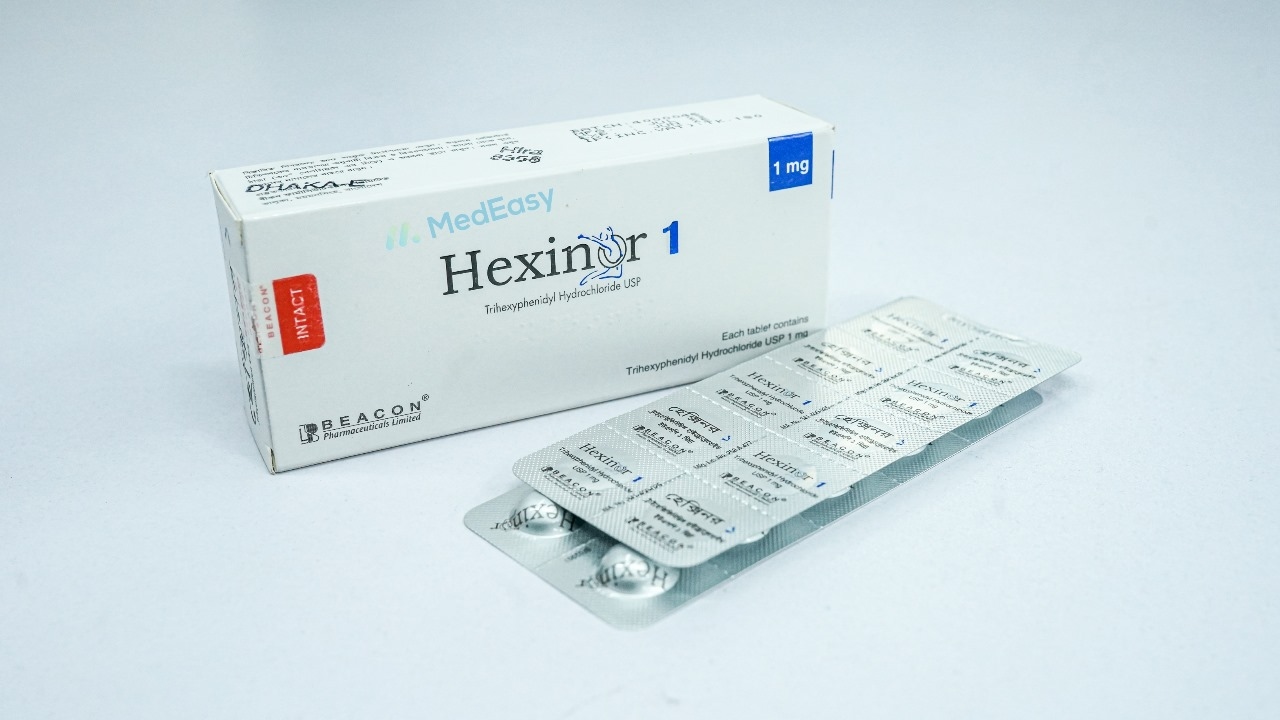
Hexinor1 mg
Beacon Pharmaceuticals PLC
৳27.60
Add to cart
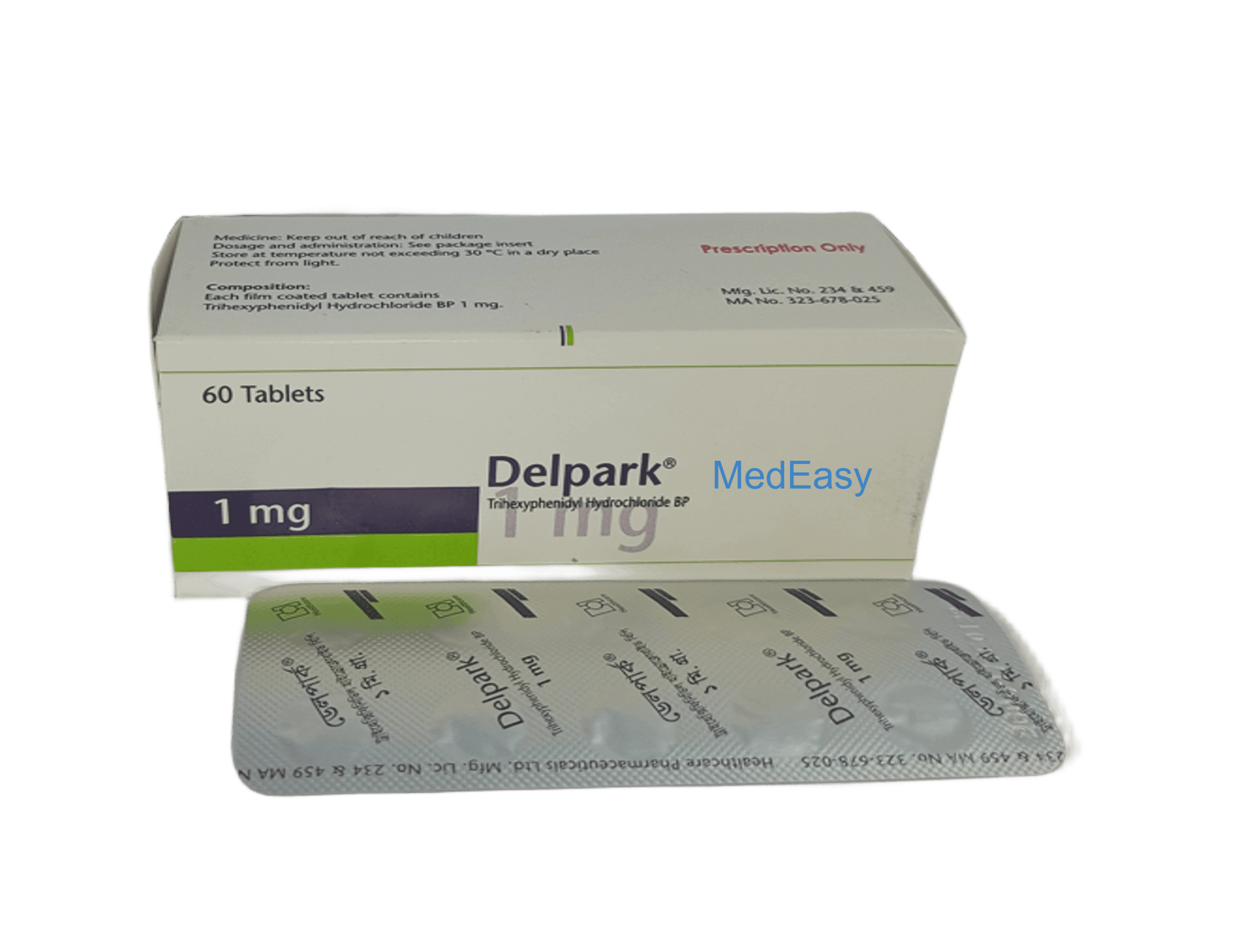
Delpark 1 mg Tablet is available on MedEasy for ৳27.60 per 10's Strip, with home delivery anywhere in Bangladesh. It is manufactured by Healthcare Pharmaceuticals Ltd. Its generic name is Trihexyphenidyl Hydrochloride.

Delpark is an anticholinergic (antimuscarinic) medicine used for the following indications:
Delpark is generally not recommended as a sole treatment for tardive dyskinesia (a late-onset movement disorder from long-term antipsychotic use) unless the patient also has coexisting Parkinson's disease, since anticholinergics can sometimes worsen tardive dyskinesia.
Each tablet contains Trihexyphenidyl Hydrochloride as the active ingredient, commonly available in strengths such as 2 mg and 5 mg. Excipients typically include microcrystalline cellulose, magnesium stearate, and sodium starch glycolate. An oral solution/syrup formulation (e.g. 2 mg/5 mL) is also available in some markets. Exact composition and available strengths/forms may vary by manufacturer; refer to the specific product label.
Delpark is a synthetic antimuscarinic (anticholinergic) agent chemically related to atropine but with a more selective action and generally milder peripheral side effects at therapeutic doses. It is used to help control the tremor and rigidity associated with Parkinson's disease and with drug-induced extrapyramidal reactions. It is available as tablets and, in some markets, as an oral solution.
Delpark belongs to the antiparkinsonian, anticholinergic (antimuscarinic) agents therapeutic class.
Trihexyphenidyl Hydrochloride exerts a direct inhibitory (antimuscarinic/anticholinergic) effect on the parasympathetic nervous system, similar in action to atropine but generally with a lower incidence of peripheral autonomic side effects at usual doses. In the central nervous system, it is believed to help restore the balance between depleted dopaminergic activity and relatively excessive cholinergic activity in the basal ganglia that occurs in Parkinson's disease and in drug-induced extrapyramidal syndromes, thereby reducing tremor, rigidity, and associated muscular stiffness. It also has a mild direct relaxant effect on smooth muscle.
Pharmacokinetics: Absorbed from the gastrointestinal tract; onset of action typically occurs within 1 hour of an oral dose, with peak effect around 2-3 hours and a duration of action of approximately 6-12 hours. It is metabolized in the liver, and excreted mainly via the kidneys.
Dosing of Delpark must be individualized, starting at a low dose with gradual increases according to response and tolerability. The total daily dose is usually divided into 3 doses given with meals; doses above 10 mg/day may be divided into 4 doses (3 at mealtimes and 1 at bedtime). If dry mouth is troublesome, the medicine may be taken after meals instead; if it causes excess salivation, it may be taken before meals.
| Indication | Typical adult dosing |
|---|---|
| Idiopathic Parkinson's disease (initial therapy) | Start at 1 mg on day 1; increase by 2 mg increments every 3-5 days until a total of 6-10 mg daily is reached (some patients, particularly postencephalitic parkinsonism, may require 12-15 mg/day) under physician supervision. |
| Parkinson's disease, as adjunct with levodopa | Usually 3-6 mg daily in divided doses; doses of both levodopa and Delpark are often reduced when combined, under physician guidance. |
| Drug-induced extrapyramidal symptoms | Usually 5-15 mg daily (range 1-15 mg); start at 1 mg and increase gradually until symptoms are controlled. Most patients respond to 5-15 mg/day in divided doses. Concurrent antipsychotic dose may also be adjusted by the prescriber. |
Discontinuation: Do not stop Delpark abruptly after prolonged use; abrupt withdrawal can cause a sudden return/worsening of parkinsonian symptoms or, rarely, precipitate a neuroleptic malignant syndrome-like state. Dose reduction should be gradual and physician-guided.
See Use in Special Populations for pediatric and elderly dosing considerations, and Overdose Effects for management of excessive intake.
Delpark is administered orally as a tablet or oral solution, usually 3-4 times a day with meals. Tablets should be swallowed with water. If dry mouth occurs, taking the dose after meals may help; if excessive salivation occurs, taking it before meals may help. Do not exceed the dose prescribed by the physician, and do not discontinue abruptly without medical advice.
Delpark has the following clinically significant drug interactions:
Inform the physician about all other medicines being taken before starting Delpark.
Trihexyphenidyl Hydrochloride is contraindicated in the following situations:
Side effects of Delpark are mostly related to its anticholinergic action and are dose-dependent; they often lessen with continued use as tolerance develops.
Report any severe or persistent side effect to a physician promptly.
Pregnancy: Adequate and well-controlled studies of Delpark in pregnant women are lacking, and animal reproduction/teratogenicity data are limited. Delpark should be used during pregnancy only if clearly needed and if the potential benefit justifies the potential risk to the fetus; consult a physician before use.
Lactation: It is not known whether Delpark is excreted in human breast milk. Anticholinergic agents may also suppress lactation. Delpark should be used during breastfeeding only if the expected maternal benefit outweighs the potential risk to the infant, and only under medical supervision.
Use Delpark with caution and under close medical supervision in the following situations:
Overdose of Delpark produces a central and peripheral anticholinergic (antimuscarinic) toxic syndrome, which may include dilated pupils, warm dry flushed skin, dry mouth, reduced secretions, fever, fast heart rate, urinary retention, and neuropsychiatric symptoms such as confusion, agitation, disorientation, hallucinations, and incoherence, which can progress to seizures, coma, and (rarely) death, particularly with very high doses or when combined with other CNS depressants.
If overdose is suspected, seek immediate medical attention or contact emergency services/a poison control center right away. Do not attempt to manage a suspected overdose at home. Treatment in a medical facility is supportive and may include measures to limit further drug absorption, control agitation, and support breathing, circulation, and body temperature, as determined by the treating physician.
Store at room temperature (below 30°C), away from light and moisture. Keep out of reach of children.
Pediatric use: The safety and effectiveness of Delpark in children have not been established. Use in children should only be under specialist medical supervision, when the physician judges the benefit outweighs the risk; reported adverse effects in children include hyperkinesia, behavioural changes, and sleep disturbance.
Elderly patients: Patients over 60 years of age are more sensitive to the anticholinergic effects of Delpark, including confusion and memory impairment; treatment should start at the lowest effective dose with close observation.
Renal/hepatic impairment: No well-established formal dose-adjustment guidelines exist; use with caution and close monitoring, as impaired clearance may increase the risk of anticholinergic toxicity.
Pregnancy and lactation: See Pregnancy and Lactation section above.
Duration of treatment with Delpark is determined by the treating physician based on the underlying condition (e.g. chronic Parkinson's disease management versus temporary control of drug-induced extrapyramidal symptoms following an antipsychotic dose change). Treatment is often long-term in Parkinson's disease. Do not stop treatment abruptly without medical advice, even if symptoms improve, as sudden discontinuation can cause rebound worsening of symptoms.
Trihexyphenidyl Hydrochloride is classified as an anticholinergic / antimuscarinic antiparkinsonian agent.
Trihexyphenidyl Hydrochloride works by blocking muscarinic acetylcholine receptors, producing an antimuscarinic (anticholinergic) effect similar to atropine. In Parkinson's disease and drug-induced extrapyramidal syndromes, dopaminergic activity in the basal ganglia is reduced relative to cholinergic activity; by inhibiting central cholinergic transmission, Trihexyphenidyl Hydrochloride helps restore this balance, reducing tremor and rigidity. It also has a mild direct antispasmodic action on smooth muscle.
C
The safety and effectiveness of Delpark in pediatric patients have not been formally established. Its use in children (e.g. for drug-induced extrapyramidal symptoms) should occur only under close specialist supervision, with the lowest effective dose used and the child monitored for anticholinergic adverse effects such as hyperkinesia, behavioural change, and sleep disturbance.
Q: What is Delpark 1 mg Tablet used for?
A: Delpark 1 mg Tablet is used to help manage tremor, rigidity, and muscle stiffness in Parkinson's disease (alone or together with levodopa) and to treat extrapyramidal side effects (such as stiffness, tremor, or restlessness) caused by certain antipsychotic medicines.
Q: Can I stop taking Delpark 1 mg Tablet suddenly if I feel better?
A: No. Do not stop Delpark 1 mg Tablet abruptly after taking it for a while, as sudden discontinuation can cause your parkinsonian or extrapyramidal symptoms to suddenly worsen, and in rare cases can contribute to a serious reaction called neuroleptic malignant syndrome. Always reduce the dose gradually under your physician's guidance.
Q: Who should not take Delpark 1 mg Tablet?
A: Delpark 1 mg Tablet should not be used by people who are hypersensitive/allergic to it, who have narrow-angle (angle-closure) glaucoma, myasthenia gravis, or a mechanical bowel obstruction such as paralytic ileus or pyloric/duodenal obstruction, because its anticholinergic action can seriously worsen these conditions.
Q: What are the common side effects of Delpark 1 mg Tablet?
A: Common side effects of Delpark 1 mg Tablet include dry mouth, blurred vision, dizziness, mild nausea, nervousness, constipation, urinary hesitancy, and drowsiness. These effects are related to its anticholinergic action and often lessen somewhat with continued use. More serious effects such as confusion, hallucinations, fast heartbeat, or eye pain (possible glaucoma) should be reported to a physician immediately.
Q: Is Delpark 1 mg Tablet safe during pregnancy or breastfeeding?
A: Safety data on Delpark 1 mg Tablet in pregnancy and breastfeeding are limited. It should be used during pregnancy only if clearly needed and the potential benefit justifies the potential risk to the fetus, and during breastfeeding only if the benefit to the mother outweighs the possible risk to the infant. Always consult a physician before use in these situations.
Q: Can Delpark 1 mg Tablet be misused?
A: Yes. At doses higher than prescribed, Delpark 1 mg Tablet has stimulant and euphoriant properties and has been reported to be misused for its hallucinogenic or euphoric effects. It should only be taken exactly as prescribed by a physician, and never in higher-than-prescribed amounts.
Disclaimer
The information provided is accurate to the best of our knowledge, but it does not replace professional medical advice. We cannot guarantee its completeness or accuracy, and the absence of specific information about a drug should not be taken as an endorsement. We are not responsible for any consequences arising from this information, so please consult a healthcare professional for any concerns or questions.