10% Off
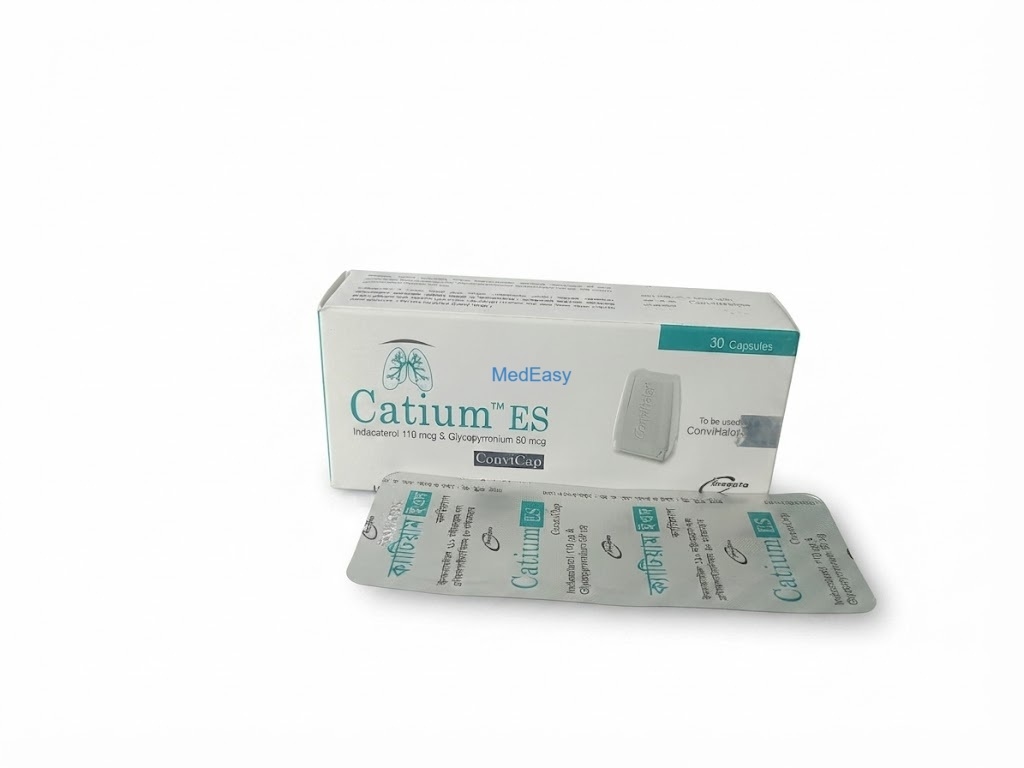
Catium ES110 mcg+50
Incepta Pharmaceuticals Ltd.
৳270.00
Add to cart
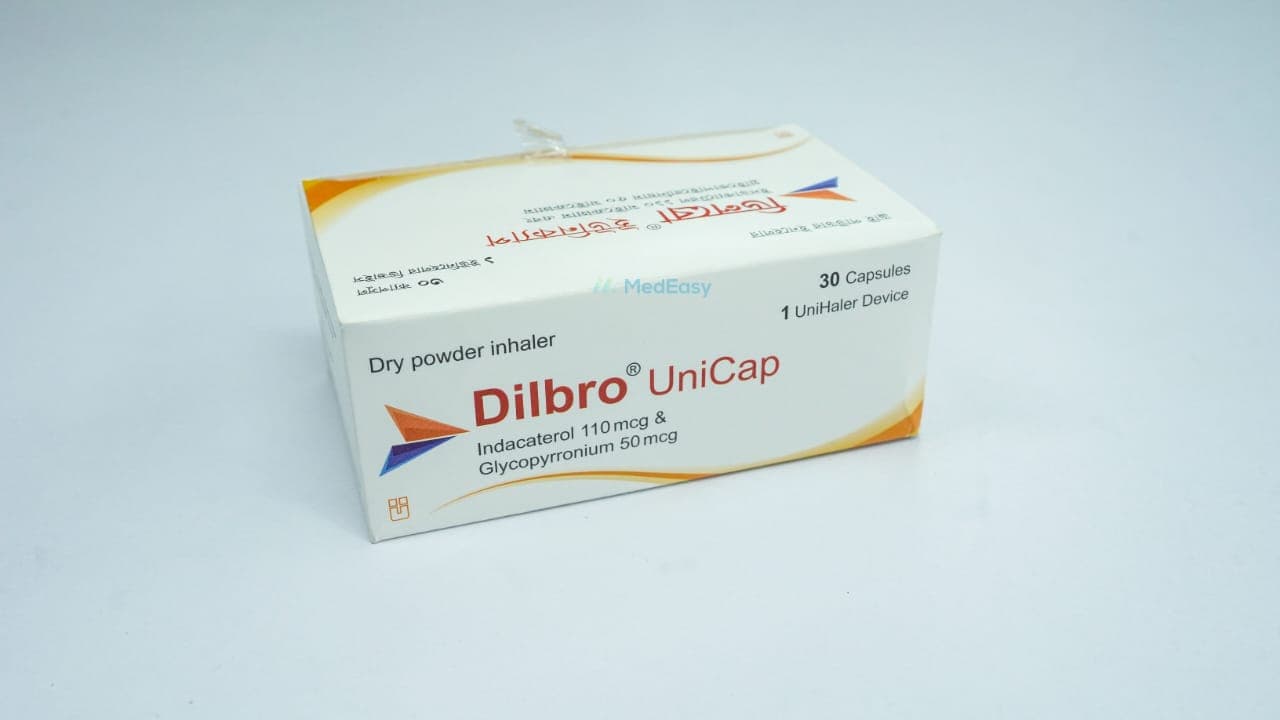
Dilbro UniCap 110 mcg+50 mcg Inhalation Capsule is available on MedEasy for ৳630.00 per 10's Strip, with home delivery anywhere in Bangladesh. It is manufactured by Unimed Unihealth MFG. Ltd. Its generic name is Indacaterol + Glycopyrronium.

Dilbro UniCap is an inhaled combination of a long-acting beta2-agonist (LABA) and a long-acting muscarinic antagonist (LAMA), indicated for the following uses:
Dilbro UniCap is intended for once-daily, regular maintenance use, not for as-needed symptom relief.
Indacaterol + Glycopyrronium inhalation capsules (for use with a dedicated dry-powder inhaler device) typically contain a fixed-dose combination of:
Each hard capsule also contains excipients, including lactose monohydrate (which may contain trace milk proteins). Strength combinations and exact excipients vary by manufacturer and market; always check the product label of the specific brand dispensed.
Dilbro UniCap is a fixed-dose combination inhaled medicine used in adults for the long-term maintenance treatment of chronic obstructive pulmonary disease (COPD). It combines two complementary bronchodilators - an ultra-long-acting beta2-agonist and a long-acting anticholinergic (antimuscarinic) agent - delivered together once daily via a dry-powder inhaler device using hard capsules.
By combining two different bronchodilator mechanisms, Dilbro UniCap produces greater and more sustained improvement in airflow and symptom control than either component used alone, and is intended for regular, ongoing use rather than occasional or emergency use.
Dilbro UniCap belongs to the therapeutic class of inhaled bronchodilators for obstructive airway disease, specifically a fixed-dose combination of a long-acting beta2-agonist (LABA) and a long-acting muscarinic antagonist (LAMA), used for COPD maintenance therapy.
Indacaterol + Glycopyrronium combines two bronchodilators with complementary mechanisms of action:
Indacaterol selectively stimulates beta2-adrenergic receptors on airway smooth muscle, activating adenylate cyclase and increasing intracellular cyclic AMP (cAMP). This leads to relaxation of bronchial smooth muscle and bronchodilation. Its effect is long-acting, supporting once-daily dosing.
Glycopyrronium is a competitive, reversible antagonist of muscarinic acetylcholine receptors, particularly the M3 subtype found on airway smooth muscle. By blocking acetylcholine's bronchoconstrictor action, it produces sustained bronchodilation and reduces airway resistance.
Used together, the two components act on different receptor pathways, producing additive bronchodilation and improved lung function compared with either agent alone.
| Indication | Recommended Dose | Frequency |
|---|---|---|
| COPD maintenance bronchodilator therapy | Contents of one inhalation capsule (indacaterol/glycopyrronium combination strength as prescribed) | Once daily (or as specifically labeled for the dispensed brand), inhaled at the same time each day using the supplied inhaler device |
Not applicable - Dilbro UniCap is not indicated for use in children; safety and efficacy have not been established.
No dose adjustment is generally required in mild-to-moderate renal or hepatic impairment. Use with caution and under close medical supervision in severe renal impairment (including end-stage renal disease) or severe hepatic impairment, as clinical experience is limited (see Use in Special Populations).
Dilbro UniCap is administered by oral inhalation only, using the dry-powder inhaler device provided with the pack. The capsule must not be swallowed. Each capsule is loaded into the inhaler immediately before use, pierced, and its powder contents inhaled through the mouthpiece in one or two deep breaths, followed by breath-holding for a few seconds. Patients should be trained on correct inhaler technique, as inadequate technique reduces the amount of drug delivered to the lungs.
Dilbro UniCap has been studied for the following clinically significant drug interactions:
Indacaterol + Glycopyrronium is contraindicated in patients with:
Indacaterol + Glycopyrronium is not indicated for use in asthma and must not be used as a substitute for an inhaled corticosteroid in asthma management. It is also not to be used for the treatment of acute bronchospasm or as a rescue inhaler; these are important labeling restrictions rather than absolute contraindications, but they must be strictly observed.
Side effects reported with Dilbro UniCap are generally related to its two components (a LABA and a LAMA):
Patients experiencing severe or persistent side effects should contact their physician promptly.
Pregnancy: There are no adequate and well-controlled studies of Dilbro UniCap in pregnant women. Dilbro UniCap should be used during pregnancy only if the potential benefit to the mother clearly justifies the potential risk to the fetus, and only under the direct advice and supervision of a physician.
Lactation: It is not known whether the components of Dilbro UniCap are excreted in human breast milk. Because many drugs are excreted in breast milk, caution should be exercised, and a decision should be made whether to discontinue breastfeeding or discontinue the medicine, taking into account the importance of the drug to the mother - a physician should be consulted before use while breastfeeding.
Overdose with Dilbro UniCap may be expected to produce exaggerated effects of its two components, such as excessive beta-adrenergic stimulation (tachycardia, palpitations, arrhythmias, tremor, headache, nausea, hypokalemia, hyperglycemia) and/or anticholinergic effects (dry mouth, blurred vision, urinary retention, constipation).
There is no specific antidote. If overdose is suspected, seek immediate medical attention or contact emergency services/a poison control center. Treatment is supportive and symptomatic; cardiac monitoring is advised, and cardioselective beta-blockers may be considered by a physician with caution, given the risk of bronchospasm. Do not attempt to manage a suspected overdose at home without medical guidance.
Store at room temperature (below 30°C), away from light and moisture. Keep capsules in the sealed blister and remove only immediately before use. Do not refrigerate or freeze. Keep out of reach of children.
No dose adjustment is generally required in elderly patients; however, they may be more susceptible to cardiovascular and anticholinergic side effects, so monitor accordingly.
No dose adjustment needed in mild-to-moderate renal impairment. Use with caution and close monitoring in severe renal impairment or end-stage renal disease, including patients on dialysis, as clinical data are limited.
No dose adjustment needed in mild-to-moderate hepatic impairment. Use with caution in severe hepatic impairment due to limited clinical data.
Dilbro UniCap is not indicated for use in children or adolescents; safety and efficacy have not been established (see Pediatric Uses).
See Pregnancy and Lactation section for detailed guidance.
Dilbro UniCap is intended for long-term, continuous maintenance treatment of COPD rather than short courses or as-needed use. It should be taken regularly, once daily, for as long as prescribed by the treating physician, who will periodically reassess the need for continued therapy, response to treatment, and any emerging side effects.
Indacaterol + Glycopyrronium is a fixed-dose combination of a long-acting beta2-adrenergic agonist (LABA) and a long-acting muscarinic antagonist (LAMA), classified as an inhaled dual bronchodilator for obstructive airway disease.
Indacaterol + Glycopyrronium works through two complementary bronchodilator mechanisms: the indacaterol component stimulates beta2-adrenergic receptors on airway smooth muscle, raising intracellular cAMP and causing relaxation of the airways, while the glycopyrronium component blocks M3 muscarinic acetylcholine receptors, preventing acetylcholine-driven bronchoconstriction. Together, these actions produce greater and more sustained bronchodilation than either mechanism alone, improving airflow and reducing COPD symptoms.
C
Dilbro UniCap is not indicated for use in children or adolescents. The safety and efficacy of Dilbro UniCap in patients under 18 years of age have not been established, and it should not be prescribed for pediatric patients outside of a clinical trial setting.
Q: What is Dilbro UniCap 110 mcg+50 mcg Inhalation Capsule used for?
A: Dilbro UniCap 110 mcg+50 mcg Inhalation Capsule is an inhaled medicine used for the long-term, once-daily maintenance treatment of chronic obstructive pulmonary disease (COPD) in adults. It is not used for asthma and is not a rescue inhaler for sudden breathing difficulty.
Q: Can I use Dilbro UniCap 110 mcg+50 mcg Inhalation Capsule for a sudden asthma or COPD attack?
A: No. Dilbro UniCap 110 mcg+50 mcg Inhalation Capsule is not a rescue medicine and works too slowly to relieve sudden symptoms. You should always keep a separate fast-acting (rescue) inhaler prescribed by your doctor for acute breathing difficulty, and use Dilbro UniCap 110 mcg+50 mcg Inhalation Capsule only for regular, scheduled maintenance dosing.
Q: How should I take Dilbro UniCap 110 mcg+50 mcg Inhalation Capsule?
A: Dilbro UniCap 110 mcg+50 mcg Inhalation Capsule is taken by inhaling the powder from one capsule, once daily at the same time each day, using the special inhaler device provided. The capsule must never be swallowed - it is for inhalation only. Always follow your physician's or pharmacist's instructions on correct technique.
Q: Who should not use Dilbro UniCap 110 mcg+50 mcg Inhalation Capsule?
A: Dilbro UniCap 110 mcg+50 mcg Inhalation Capsule should not be used by anyone with a known allergy (hypersensitivity) to indacaterol, glycopyrronium, or any ingredient in the product, including people with a severe milk protein allergy, since some formulations contain lactose. It is also not approved for treating asthma.
Q: Is Dilbro UniCap 110 mcg+50 mcg Inhalation Capsule safe during pregnancy or breastfeeding?
A: There isn't enough data to confirm Dilbro UniCap 110 mcg+50 mcg Inhalation Capsule is safe in pregnancy or breastfeeding. It should be used in pregnancy only if your doctor decides the benefit clearly outweighs any potential risk to the baby, and breastfeeding mothers should consult their physician before using it.
Q: What side effects should I watch for?
A: Common side effects of Dilbro UniCap 110 mcg+50 mcg Inhalation Capsule include dry mouth, headache, cough, and nasopharyngitis (cold-like symptoms). Less commonly, it can cause a fast or irregular heartbeat, difficulty urinating, or eye pain/blurred vision (which can signal an eye problem called narrow-angle glaucoma). Seek medical attention promptly if you notice these or any severe reaction after inhaling Dilbro UniCap 110 mcg+50 mcg Inhalation Capsule.
Disclaimer
The information provided is accurate to the best of our knowledge, but it does not replace professional medical advice. We cannot guarantee its completeness or accuracy, and the absence of specific information about a drug should not be taken as an endorsement. We are not responsible for any consequences arising from this information, so please consult a healthcare professional for any concerns or questions.