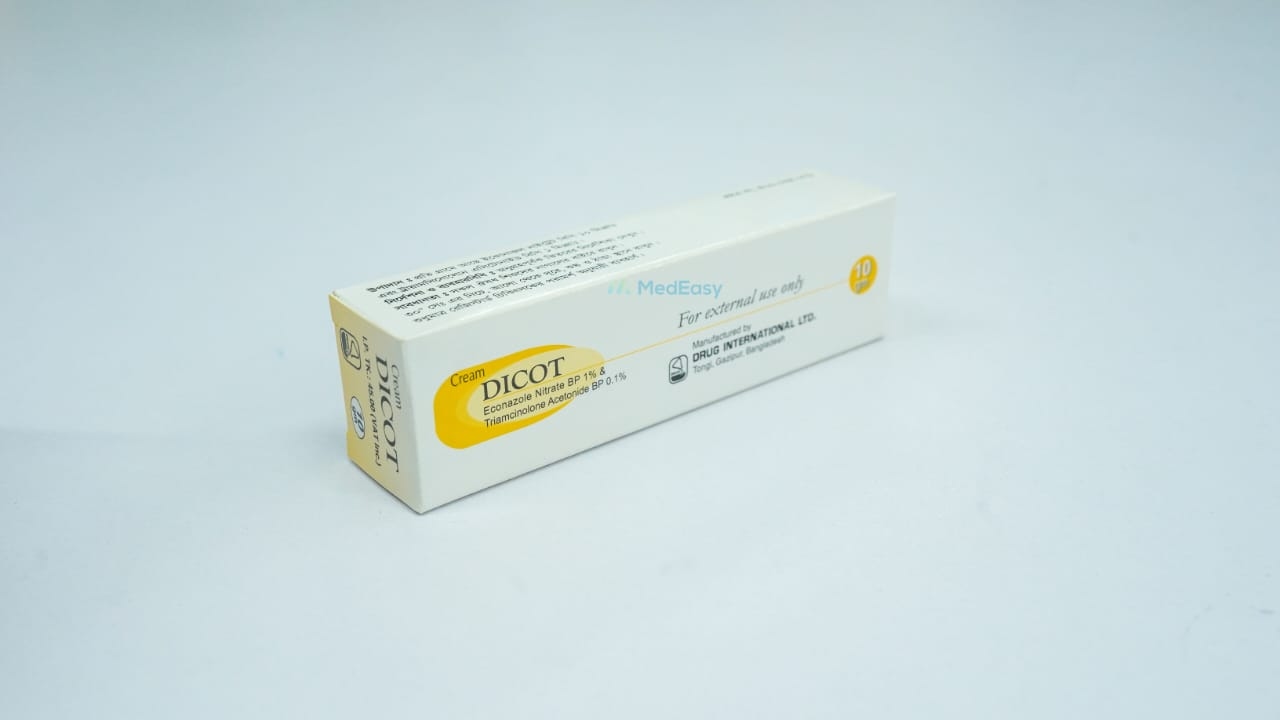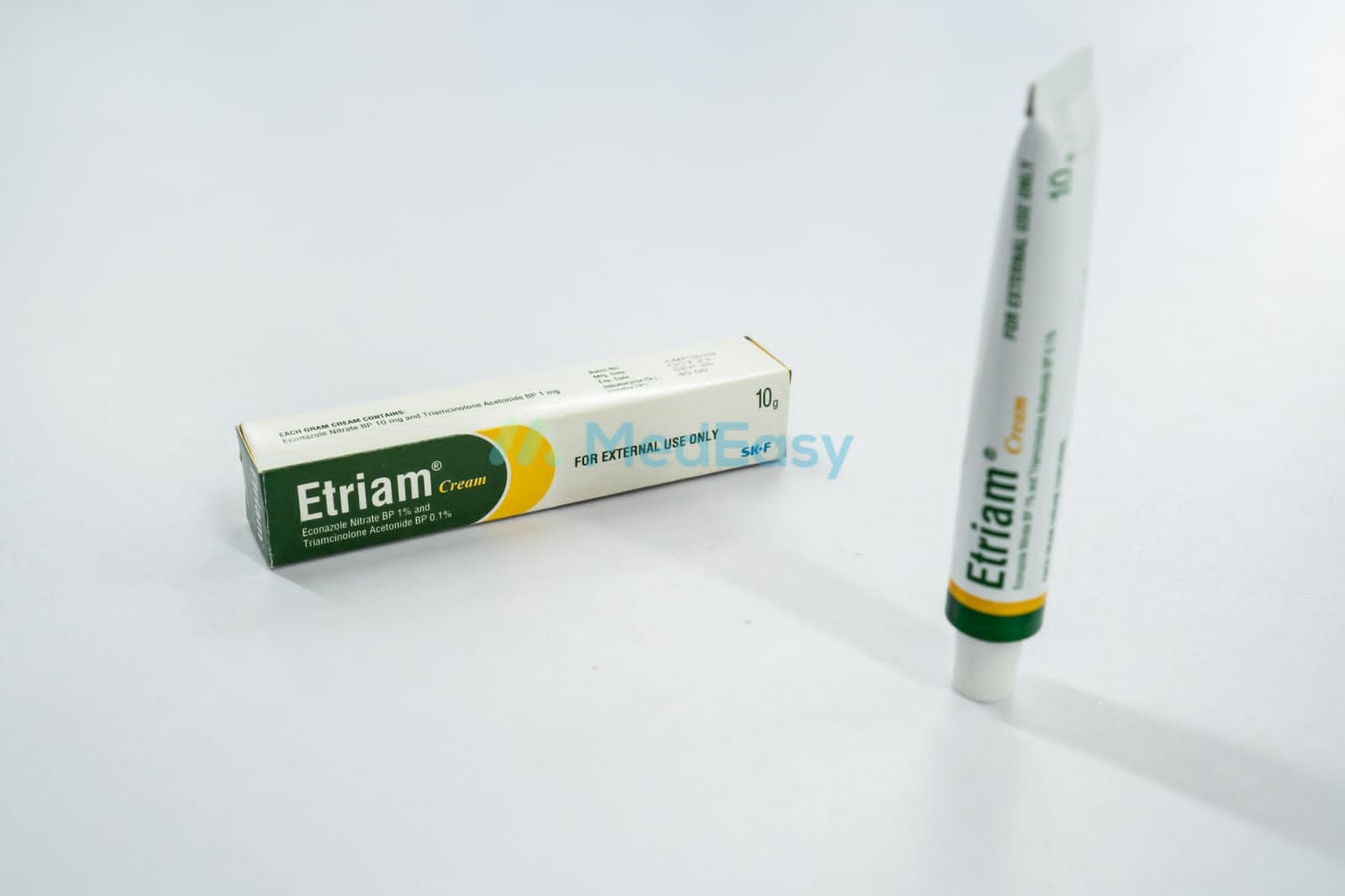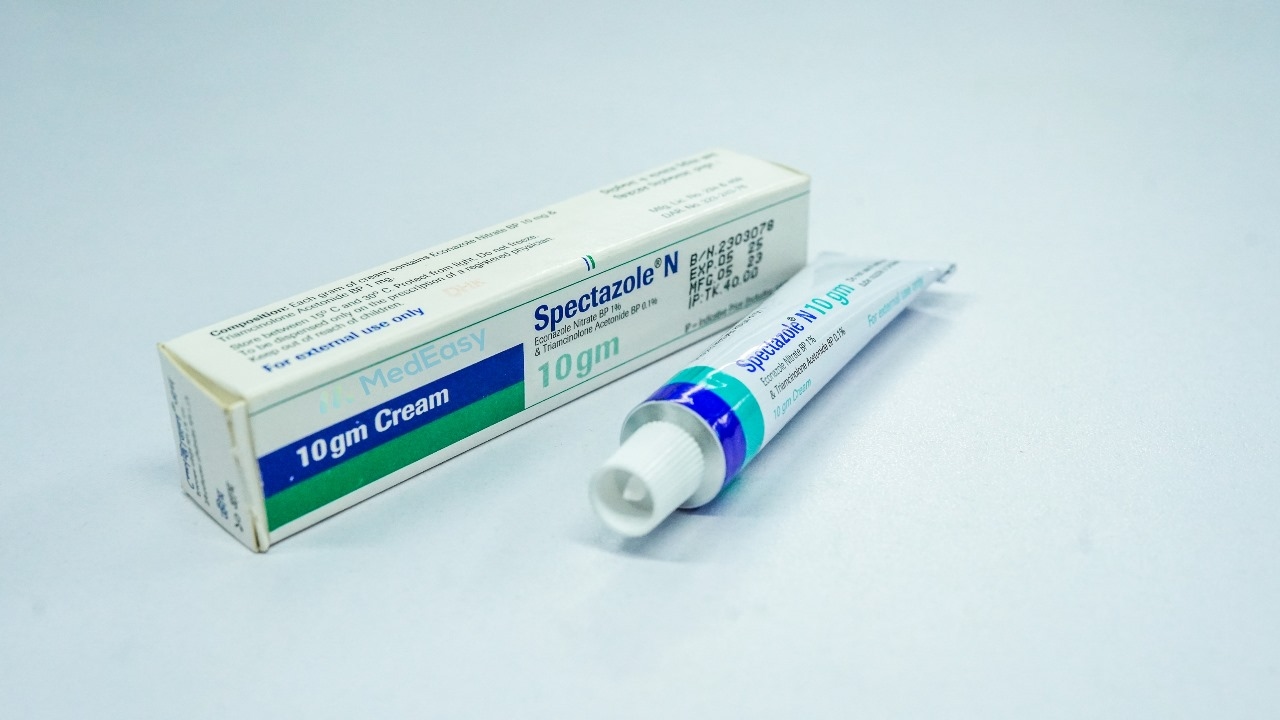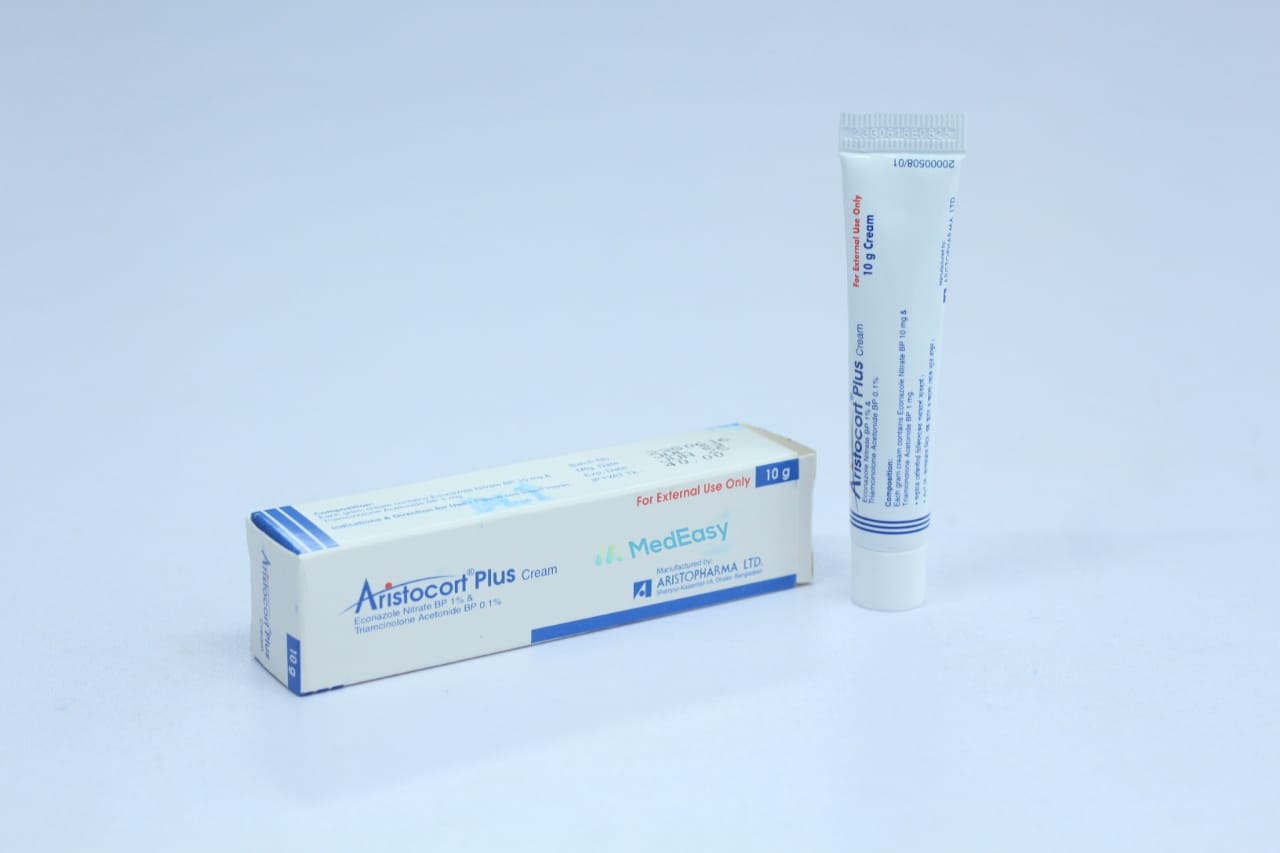
8% Off
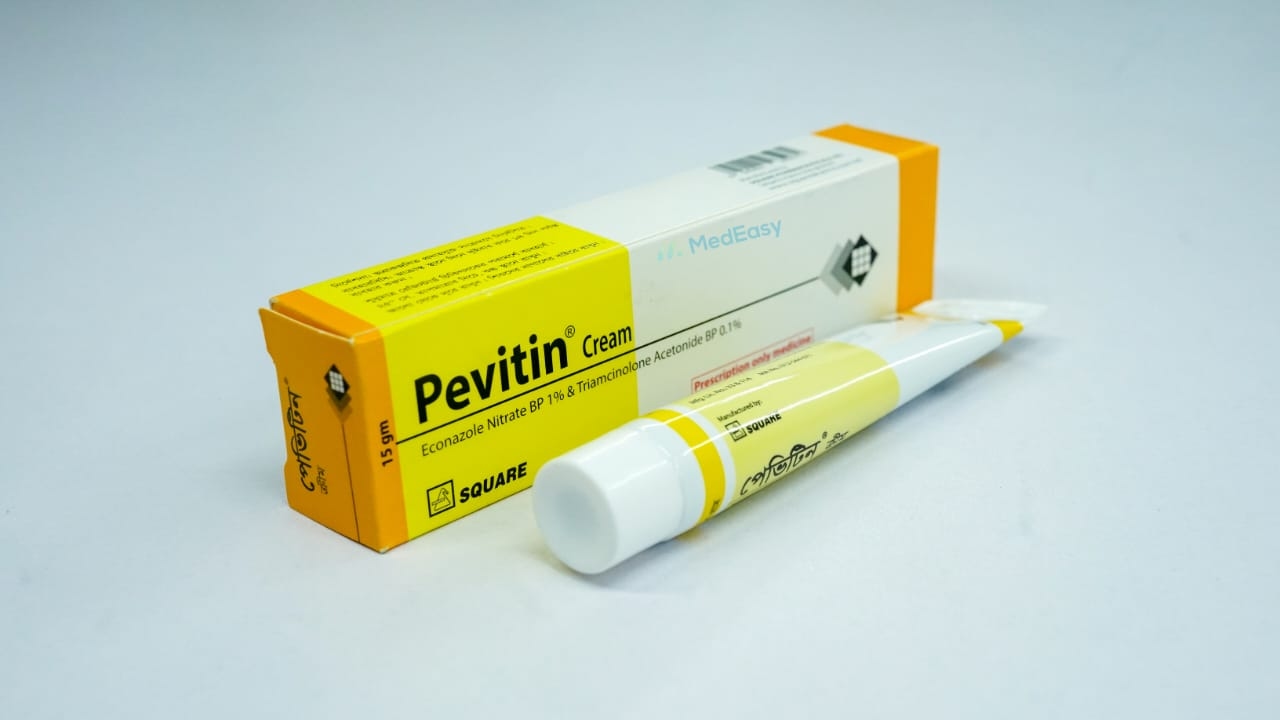
Pevitin1%+0.1%
Square Pharmaceuticals PLC.
৳64.40
Add to cart

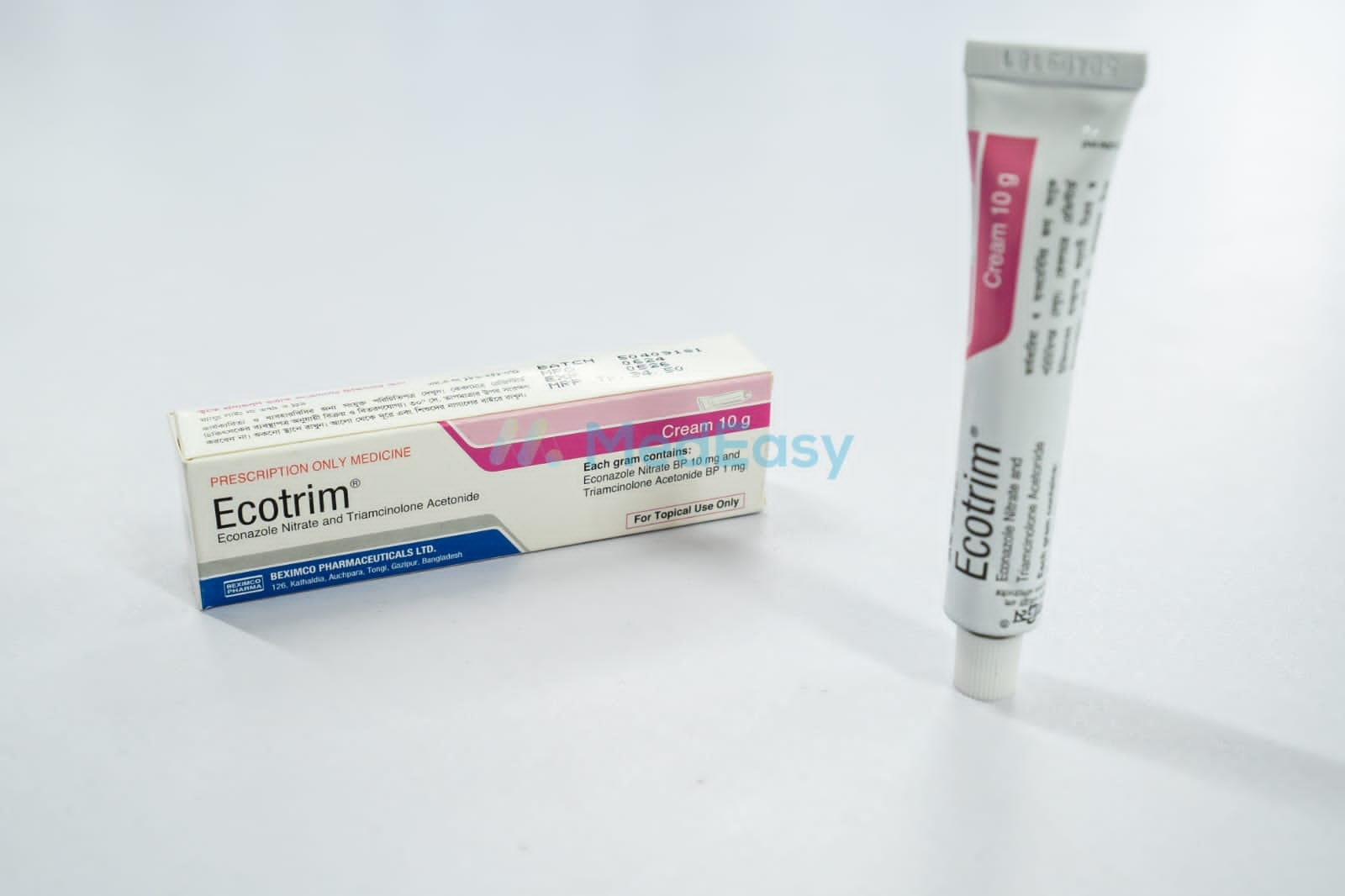
Ecocort 1%+0.1% Cream is available on MedEasy for ৳36.00 per 10 gm tube, with home delivery anywhere in Bangladesh. It is manufactured by Globe Pharmaceuticals Ltd. Its generic name is Econazole Nitrate + Triamcinolone Acetonide.

Ecocort is a combination topical cream indicated for the short-term treatment of inflammatory fungal skin infections where both antifungal and anti-inflammatory action are needed. This is an established use, supported by clinical and regulatory data.
Ecocort is intended only for cases where superficial dermatophyte or yeast infection is accompanied by marked inflammation and itching; once inflammation subsides, treatment should continue, if needed, with an antifungal-only product. It is not a first-line treatment for uncomplicated fungal infections without inflammation, and is generally not recommended for diaper rash in infants and young children (see Precautions and Pediatric Use).
Each gram of Econazole Nitrate + Triamcinolone Acetonide cream typically contains:
in a suitable cream base. Strength and excipients may vary slightly by manufacturer; refer to the specific product label for exact composition.
Ecocort is a fixed-dose combination topical preparation that pairs a broad-spectrum imidazole antifungal (econazole nitrate) with a synthetic corticosteroid (triamcinolone acetonide). The combination is formulated to provide simultaneous antifungal activity against dermatophytes, yeasts (including Candida), and certain gram-positive bacteria, along with anti-inflammatory, anti-pruritic, and anti-allergic effects. Ecocort is intended for short-term application to reduce both the causative fungal organism and the associated inflammation, itching, and discomfort of the skin lesion.
Topical Antifungal and Corticosteroid Combination — Ecocort combines an imidazole-derivative antifungal with a mid-to-high potency synthetic corticosteroid for dermatological use.
Econazole Nitrate + Triamcinolone Acetonide combines two agents with complementary actions:
Together, these actions in Econazole Nitrate + Triamcinolone Acetonide allow more rapid symptomatic relief than an antifungal agent alone, while treating the underlying fungal infection.
Ecocort is for external (topical) use only.
Adults: Apply a thin layer of Ecocort to the affected skin area(s) twice daily (morning and evening), gently massaging in. Treatment is typically limited to a maximum of 2 weeks; if there is no improvement within this period, discontinue and consult a physician rather than continuing use.
Children (under close physician supervision only): Use the smallest effective amount, applied once or twice daily, to the smallest area necessary, for the shortest duration possible (generally less than 2 weeks), and only when the potential benefit justifies the risk (see Pediatric Use and Precautions).
Once the inflammatory component has resolved, if antifungal treatment needs to continue, switch to an antifungal-only preparation rather than continuing the combination product.
For topical use on the skin only — not for oral, ophthalmic, intravaginal, or intranasal use.
Clinically significant drug-drug interactions with topically applied Ecocort are uncommon because systemic absorption from intact, non-occluded skin is generally low. However, the following should be noted:
Econazole Nitrate + Triamcinolone Acetonide is contraindicated in:
Econazole Nitrate + Triamcinolone Acetonide should not be used for these indications; a physician should be consulted for appropriate alternative therapy.
Most adverse effects with Ecocort are local and mild, occurring at the application site:
With prolonged or inappropriate use (beyond the recommended duration, under occlusion, or over large areas), corticosteroid-related effects may occur, including:
Patients should stop use and consult a physician if signs of hypersensitivity, worsening infection, or significant skin changes occur.
Pregnancy: There are limited controlled data on the use of Ecocort in human pregnancy. Topical corticosteroids can be absorbed systemically and may be associated with fetal risk when used in large amounts or for prolonged periods. Ecocort should be used during pregnancy only if the potential benefit justifies the potential risk to the fetus, at the lowest effective dose, for the shortest necessary duration, and under medical supervision.
Lactation: It is not known whether topically applied triamcinolone acetonide is excreted in human breast milk in clinically significant amounts; econazole may be excreted in negligible amounts. As a precaution, Ecocort should not be applied to the breast/nipple area before breastfeeding, and use elsewhere on the body should be limited to the smallest effective amount for the shortest duration, under physician guidance.
Ecocort is intended for short-term use only — treatment should generally not exceed about 2 weeks. If there is no visible improvement within the expected treatment period, discontinue the product and consult a physician rather than continuing use indefinitely.
Topical overdose with Ecocort is unlikely with correct use, but excessive or prolonged application, especially under occlusion or over large areas, may lead to increased local irritation and systemic corticosteroid effects (including HPA-axis suppression). If applied excessively, wash off the excess cream with lukewarm water.
If the product is accidentally ingested (e.g., by a child), seek medical attention promptly; treatment is generally supportive and symptomatic, as directed by a physician or poison control center.
If accidental contact with the eyes occurs, rinse thoroughly with clean water or saline and seek medical attention if irritation or visual symptoms persist.
Store at room temperature (below 30°C), away from light and moisture. Keep out of reach of children. Do not freeze.
Pediatric patients: Use of Ecocort in children should be limited to the smallest effective amount, on the smallest necessary area, for the shortest duration, and only under close physician supervision, due to a higher risk of HPA-axis suppression than in adults. Generally not recommended for diaper rash in infants (see Pediatric Uses).
Elderly patients: No specific dose adjustment is typically required; skin may be thinner and more prone to corticosteroid-related atrophy, so use the lowest effective amount for the shortest duration.
Renal or hepatic impairment: No specific dosage adjustment data are available; systemic absorption from topical use is normally minimal, but caution is advised with extensive application.
Immunocompromised patients: Use with caution and under medical supervision, as corticosteroid effects may mask signs of worsening or secondary infection.
Ecocort is intended for short-term use only. In most patients and body areas, treatment should not continue beyond approximately 2 weeks. Prolonged or continuous use, especially under occlusion (including diapers), on large body surface areas, or on the face and skin folds, increases the risk of skin atrophy, striae, telangiectasia, and systemic corticosteroid absorption with HPA-axis suppression. If the skin lesion has not improved noticeably within the expected treatment period, treatment should be stopped and a physician consulted for reassessment, rather than continuing the product indefinitely. Once inflammation has resolved, if further antifungal treatment is needed, an antifungal-only product should be used instead of continuing the combination.
Econazole Nitrate + Triamcinolone Acetonide belongs to the drug class of Topical Antifungal–Corticosteroid Combinations, combining an imidazole-derivative antifungal (econazole nitrate) with a synthetic glucocorticoid (triamcinolone acetonide).
Econazole Nitrate + Triamcinolone Acetonide works through two complementary mechanisms: econazole nitrate disrupts fungal cell membrane synthesis by inhibiting ergosterol production, leading to fungal cell death, while triamcinolone acetonide suppresses local inflammation by inhibiting inflammatory mediator release and causing vasoconstriction, reducing redness, swelling, and itching.
C
Ecocort requires particular caution in pediatric patients. Infants and young children have a larger skin-surface-area-to-body-weight ratio than adults, making them more susceptible to systemic absorption of the corticosteroid component and resulting HPA-axis suppression, which can present as reduced cortisol response, growth retardation, delayed weight gain, or Cushingoid features (e.g., moon face, weight gain).
Q: What is Ecocort 1%+0.1% Cream used for?
A: Ecocort 1%+0.1% Cream is a topical cream used for short-term treatment of fungal skin infections (such as ringworm, athlete's foot, jock itch, or candidiasis) that are also significantly inflamed, red, or itchy. It combines an antifungal with an anti-inflammatory corticosteroid.
Q: Can Ecocort 1%+0.1% Cream be used for a baby's diaper rash?
A: No. Ecocort 1%+0.1% Cream is generally not recommended for diaper rash in infants and young children, because the diaper acts like an occlusive dressing that increases absorption of the steroid component into the body, raising the risk of adrenal suppression. Consult a pediatrician for appropriate alternatives for diaper rash.
Q: How long can I use Ecocort 1%+0.1% Cream?
A: Treatment with Ecocort 1%+0.1% Cream should generally not exceed about 2 weeks. If your skin condition has not improved within this time, stop using it and see a physician rather than continuing use, as prolonged use increases the risk of skin thinning and other steroid-related side effects.
Q: Can I use Ecocort 1%+0.1% Cream on my face?
A: Ecocort 1%+0.1% Cream should not be applied to the face unless a physician specifically directs you to, because facial skin is thinner and more prone to steroid-induced thinning, stretch marks, and visible blood vessels with this type of combination cream.
Q: Is Ecocort 1%+0.1% Cream safe during pregnancy?
A: Ecocort 1%+0.1% Cream should be used in pregnancy only if a physician determines the benefit outweighs the potential risk, at the lowest effective amount for the shortest time, since topical corticosteroids can be absorbed into the bloodstream, particularly with prolonged or extensive use.
Q: What should I do if I swallow Ecocort 1%+0.1% Cream by accident?
A: If Ecocort 1%+0.1% Cream is accidentally swallowed, especially by a child, seek medical attention immediately or contact a poison control center, even if no symptoms are present.
Disclaimer
The information provided is accurate to the best of our knowledge, but it does not replace professional medical advice. We cannot guarantee its completeness or accuracy, and the absence of specific information about a drug should not be taken as an endorsement. We are not responsible for any consequences arising from this information, so please consult a healthcare professional for any concerns or questions.