

10% Off
Ecozol VT150 mg
Opsonin Pharma Ltd.
৳21.08
Add to cart
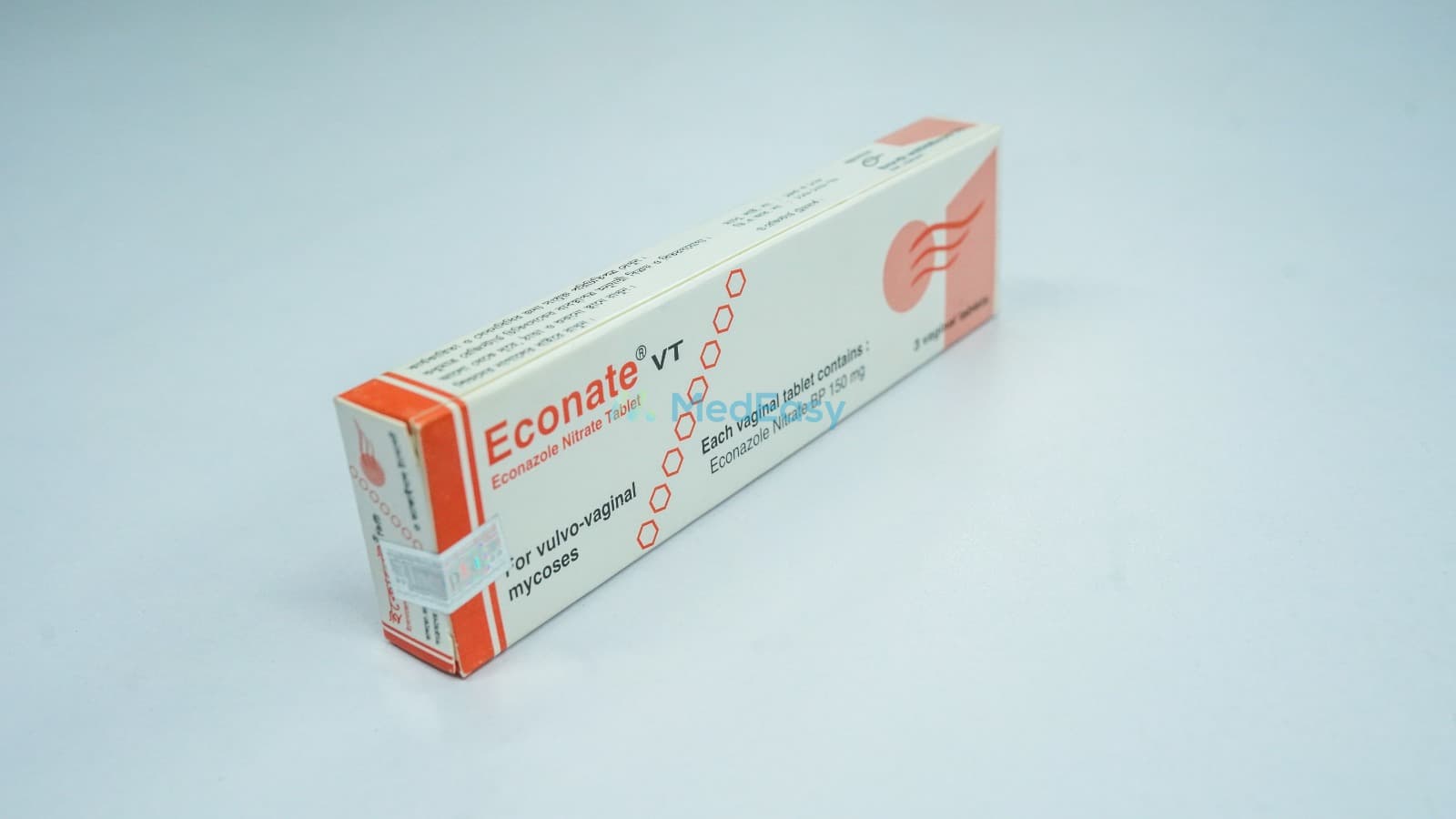

Econate VT is a topical (skin-applied) antifungal medicine belonging to the imidazole class. It is used to treat a range of fungal (dermatophyte and yeast) infections of the skin.
Econate VT is intended for external use on the skin only, for the specific dosage form and indication printed on the product label/pack insert dispensed to the patient. It is not interchangeable with oral or vaginal antifungal products unless the specific product has been formulated and labeled for that route by the manufacturer; always follow the exact instructions on the pack and your physician's advice for the product actually dispensed.
Each product contains Econazole Nitrate as the active pharmaceutical ingredient, typically formulated as a 1% w/w topical cream (10 mg of Econazole Nitrate per gram of cream). Other strengths or dosage forms (e.g., lotion, foam, powder) may be available in some markets; always check the pack for the exact strength and excipients such as cream base, preservatives, and emulsifiers.
Econate VT is a synthetic imidazole-derivative antifungal agent used topically for the treatment of superficial fungal infections of the skin. It is active against a broad range of dermatophytes (such as Trichophyton, Microsporum, and Epidermophyton species) as well as yeasts such as Candida albicans and Malassezia furfur. In addition to its antifungal action, Econate VT has demonstrated some in-vitro activity against certain gram-positive bacteria.
Econate VT is formulated as a cream for topical application to the skin and is intended for external use only.
Topical Antifungal (Imidazole derivative) — Econate VT belongs to the azole class of antifungal agents used for dermatological (skin) fungal infections.
Econazole Nitrate exerts its antifungal effect by inhibiting the synthesis of ergosterol, an essential component of the fungal cell membrane. It does this by inhibiting the cytochrome P450-dependent enzyme 14-alpha-demethylase, which converts lanosterol to ergosterol. Depletion of ergosterol and accumulation of toxic sterol intermediates disrupt the structure and function of the fungal cell membrane, increasing its permeability. This leads to leakage of essential intracellular components and ultimately fungal cell death (fungicidal/fungistatic activity depending on concentration and organism).
Following topical application, systemic absorption of Econazole Nitrate through intact skin is minimal, which limits systemic pharmacologic or toxic effects when used as directed on the labeled skin area.
Econate VT cream is for external (topical) use on the skin only. Wash and dry the affected area gently before application unless your physician advises otherwise. Apply a thin layer of the cream to cover the affected area and enough surrounding skin, and gently massage in.
| Indication | Frequency | Typical Duration |
|---|---|---|
| Tinea corporis, tinea cruris, tinea versicolor | Once daily | At least 2 weeks |
| Tinea pedis (athlete's foot) | Once daily | Up to 1 month (may require longer courses due to relapse tendency) |
| Cutaneous candidiasis | Twice daily (morning and evening) | At least 2 weeks |
Even if symptoms (itching, redness) improve earlier, the full prescribed course of Econate VT should be completed as directed by the physician to reduce the chance of the infection returning. If no improvement is seen after the recommended treatment period, consult a physician to confirm the diagnosis and consider alternative therapy.
Because Econate VT is applied topically and has minimal systemic absorption through intact skin, clinically significant drug interactions are uncommon. However:
Always inform your physician or pharmacist of all medicines you are using, including topical products, before starting Econate VT.
Econazole Nitrate is contraindicated in patients with known hypersensitivity (allergy) to Econazole Nitrate, any other imidazole antifungal, or any excipient/component of the specific formulation being used.
Most side effects of Econate VT are local, mild, and limited to the site of application.
If burning, redness, swelling, or irritation is severe or worsens with continued use, stop using Econate VT and consult your physician.
Pregnancy: Data on the use of Econate VT in pregnant women are limited. Because systemic absorption through intact skin is minimal when used as directed, the risk to the fetus is expected to be low; however, Econate VT should be used during pregnancy only if clearly needed, and only after consulting a physician, who will weigh the potential benefit against any potential risk.
Lactation: It is not known whether topically applied Econate VT passes into breast milk in clinically significant amounts. As a precaution, avoid applying Econate VT directly to the breast/nipple area if breastfeeding, and consult a physician before use while breastfeeding.
Econate VT is intended for topical use, and significant systemic overdose is unlikely with normal use on the skin. Excessive or prolonged application may increase the risk of local irritation, redness, or burning.
If Econate VT cream is accidentally swallowed, or if a large amount is applied to broken or extensive areas of skin causing concerning symptoms, seek immediate medical attention or contact a poison control center/emergency services. Do not attempt home treatment for a suspected ingestion beyond following professional medical or poison-control advice.
Store at room temperature (below 30°C), away from light and moisture. Do not freeze. Keep the tube tightly closed. Keep out of reach of children.
Safety and efficacy of Econate VT in children have not been as extensively established as in adults; some product labels restrict use below a certain age (e.g., below 12 years) without specific medical guidance. Econate VT should be used in children only under the direction and supervision of a physician, who will weigh the benefits against risks for the specific age and condition being treated.
No specific dose adjustment is generally required for elderly patients using Econate VT topically, as systemic absorption is minimal. Age-related skin fragility may warrant closer observation for local irritation.
Because systemic absorption of topical Econate VT is minimal, no specific dose adjustment is established or generally required for patients with renal or hepatic impairment when used as directed on intact skin.
Duration of Econate VT treatment depends on the specific fungal infection being treated: generally at least 2 weeks for tinea corporis, tinea cruris, tinea versicolor, and cutaneous candidiasis, and up to 1 month for tinea pedis (athlete's foot). Always complete the full duration recommended by your physician, even if symptoms resolve earlier, and follow up with your physician if there is no improvement within the expected timeframe.
Antifungals; Imidazole derivatives; Topical dermatological antifungal agents. Econazole Nitrate is classified within this group.
Econazole Nitrate inhibits fungal cytochrome P450 14-alpha-demethylase, blocking conversion of lanosterol to ergosterol, a key structural component of the fungal cell membrane. This depletes ergosterol and causes accumulation of toxic methylated sterol precursors, disrupting the integrity and function of the fungal cell membrane. The resulting increase in membrane permeability leads to leakage of intracellular contents and inhibition of fungal cell growth or fungal cell death.
C
Use of Econate VT in pediatric patients should be under medical supervision. Some formulations of Econate VT are labeled with a minimum age restriction (commonly 12 years and above) for use without direct physician guidance, reflecting that safety and efficacy data in younger children are more limited than in adults. Where a physician determines Econate VT is appropriate for a younger child, it should be used exactly as directed, for the shortest effective duration, with close monitoring for local skin reactions.
Q: What is Econate VT 150 mg Vaginal Tablet used for?
A: Econate VT 150 mg Vaginal Tablet is a topical antifungal cream used to treat fungal skin infections such as athlete's foot (tinea pedis), jock itch (tinea cruris), ringworm (tinea corporis), tinea versicolor, and cutaneous candidiasis (skin yeast infection).
Q: How long does it take for Econate VT 150 mg Vaginal Tablet to work?
A: Symptoms such as itching often start to improve within the first week or two of using Econate VT 150 mg Vaginal Tablet, but the fungal infection itself typically requires 2 to 4 weeks of continued treatment (depending on the specific condition) to fully clear. It is important to complete the full course exactly as prescribed, even if the skin looks better sooner, because stopping early can allow the infection to return.
Q: Can I use Econate VT 150 mg Vaginal Tablet on my face or in sensitive areas like the eyes?
A: No. Econate VT 150 mg Vaginal Tablet is for external use on the skin only and should not be applied near or in the eyes, inside the nose or mouth, or on other mucous membranes. If it accidentally gets into the eyes, rinse thoroughly with water and seek medical advice if irritation continues. Use on the face should only be done if specifically directed by a physician.
Q: Is Econate VT 150 mg Vaginal Tablet safe to use during pregnancy or while breastfeeding?
A: Data on Econate VT 150 mg Vaginal Tablet use in pregnancy are limited, and systemic absorption through the skin is minimal when used as directed, so risk is expected to be low. Even so, Econate VT 150 mg Vaginal Tablet should be used during pregnancy only if clearly needed and after consulting a physician, who can weigh the potential benefit against any potential risk. If breastfeeding, avoid applying Econate VT 150 mg Vaginal Tablet directly to the breast/nipple area and consult a physician before use.
Q: What should I do if I miss an application of Econate VT 150 mg Vaginal Tablet?
A: Apply Econate VT 150 mg Vaginal Tablet as soon as you remember, then continue with your regular dosing schedule. Do not apply a double amount to make up for a missed application. Consistent daily use for the full recommended duration is important for the treatment to work.
Q: Can children use Econate VT 150 mg Vaginal Tablet?
A: Econate VT 150 mg Vaginal Tablet should only be used in children under the direction and supervision of a physician. Some formulations restrict use in children below a certain age (commonly under 12 years) because safety and efficacy data in that age group are more limited. Always follow your physician's specific instructions if Econate VT 150 mg Vaginal Tablet is prescribed for a child.
Disclaimer
The information provided is accurate to the best of our knowledge, but it does not replace professional medical advice. We cannot guarantee its completeness or accuracy, and the absence of specific information about a drug should not be taken as an endorsement. We are not responsible for any consequences arising from this information, so please consult a healthcare professional for any concerns or questions.
