
Key facts
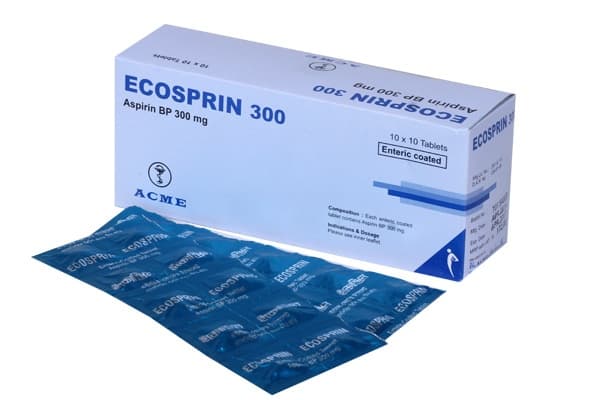
Ecosprin 300 mg Tablet is available on MedEasy for ৳15.48 per 10's Strip, with home delivery anywhere in Bangladesh. It is manufactured by ACME Laboratories Ltd. Its generic name is Aspirin.
- Pack sizes
- 10's Strip, 100's pack
- Prescription
- Required. Upload a valid doctor's prescription at checkout; a MedEasy pharmacist verifies it before dispatch.
- Delivery
- Home delivery across Bangladesh. Same-day delivery in Dhaka, Chattogram, Sylhet and Bogura city areas; 2-3 days elsewhere.
- Payment
- Cash on delivery, bKash, cards and mobile banking.
- Brand
- Ecosprin
- Generic name
- Aspirin
- Manufacturer
- ACME Laboratories Ltd.
- Form & strength
- Tablet 300 mg
- Availability
- Currently out of stock
- Authenticity
- Sourced from licensed suppliers and the manufacturer's authorised distributors in Bangladesh.

Medicine overview
Indications of Ecosprin
Ecosprin (acetylsalicylic acid) is a salicylate used for two clinically distinct purposes: analgesic/anti-inflammatory use at regular doses, and antiplatelet/cardioprotective use at low doses. Indications are classified below by strength of evidence.
Established / FDA-approved uses
- Analgesic and antipyretic: relief of mild-to-moderate pain (headache, muscle ache, dental pain, dysmenorrhea) and reduction of fever.
- Anti-inflammatory: relief of pain and inflammation associated with rheumatoid arthritis, osteoarthritis, and other inflammatory joint conditions (higher doses; largely superseded by other NSAIDs due to gastrointestinal toxicity at these doses).
- Cardioprotective (low-dose) antiplatelet use: secondary prevention of myocardial infarction and ischemic stroke/transient ischemic attack in patients with established cardiovascular or cerebrovascular disease; management of acute myocardial infarction and unstable angina; use after certain revascularization procedures (e.g., coronary artery bypass grafting, percutaneous coronary intervention/stenting), as directed by a physician.
Guideline-supported adjunct / specific-population uses
- Kawasaki disease: used in combination with intravenous immunoglobulin, initially at high anti-inflammatory doses followed by low antiplatelet doses, under specialist/hospital supervision.
- Prevention of pre-eclampsia in high-risk pregnancy: low-dose Ecosprin (about 81 mg once daily) is recommended by obstetric guidelines for women at high risk of pre-eclampsia, initiated in the first/early second trimester and continued under physician supervision; this is a guideline-supported adjunct use rather than a primary analgesic indication.
Off-label use
- Primary prevention of cardiovascular disease in selected adults, individualized by a physician based on cardiovascular risk versus bleeding risk (no longer routinely recommended for most low-risk adults).
Composition
Each Aspirin tablet contains acetylsalicylic acid as the active ingredient, commonly available in strengths such as 75 mg, 81 mg, 100 mg, 150 mg, 300 mg, and 325 mg, together with pharmaceutically approved excipients. Aspirin is formulated as plain (immediate-release), enteric-coated, dispersible/soluble, and chewable tablets.
Description
Ecosprin is a salicylate that acts as a non-opioid analgesic, antipyretic, and anti-inflammatory agent, and, at low doses, as an antiplatelet (blood-thinning) agent. It works by irreversibly inhibiting the cyclooxygenase (COX-1 and COX-2) enzymes, reducing production of prostaglandins and thromboxane A2.
At regular-to-high doses, Ecosprin relieves pain, reduces fever, and reduces inflammation. At low doses, Ecosprin irreversibly inhibits platelet aggregation for the lifespan of the platelet, which is why it is widely used for secondary prevention of heart attack and ischemic stroke. Ecosprin has been used clinically for over a century and remains one of the most extensively studied medicines in the world.
Therapeutic Class
Ecosprin is a salicylate classified as a Non-Steroidal Anti-Inflammatory Drug (NSAID) with analgesic, antipyretic, and anti-inflammatory activity at regular-to-high doses. At low doses, Ecosprin is classified separately as an antiplatelet agent (platelet-aggregation inhibitor).
Pharmacology
Mechanism of action
Aspirin irreversibly acetylates and inhibits cyclooxygenase-1 (COX-1) and cyclooxygenase-2 (COX-2), blocking conversion of arachidonic acid to prostaglandins and thromboxane A2. Reduced prostaglandin synthesis accounts for the analgesic, antipyretic, and anti-inflammatory effects. In platelets, which lack a nucleus and cannot resynthesize COX-1, inhibition of thromboxane A2 production blocks platelet aggregation for the platelet's entire lifespan (approximately 7-10 days), producing the antiplatelet effect seen with low-dose Aspirin.
Pharmacokinetics
Aspirin is rapidly absorbed from the gastrointestinal tract and is quickly hydrolyzed to its active metabolite, salicylic acid. Plasma protein binding is high (mainly to albumin). Metabolism occurs primarily in the liver, and elimination follows dose-dependent (non-linear) kinetics - the elimination half-life is short (about 15-20 minutes for Aspirin itself) at low doses but the half-life of total salicylate lengthens substantially at higher, anti-inflammatory doses. Excretion is mainly renal, and is pH-dependent (enhanced in alkaline urine).
Dosage & Administration of Ecosprin
Dosing of Ecosprin varies substantially by indication and must be individualized by a physician. Representative regimens are summarized below; enteric-coated or buffered formulations may be preferred to reduce gastrointestinal irritation for chronic use.
| Indication | Typical adult dose | Notes |
|---|---|---|
| Pain / fever (analgesic-antipyretic) | 325-650 mg orally every 4-6 hours as needed | Do not exceed 4 g/day; use lowest effective dose for shortest duration |
| Anti-inflammatory (e.g., rheumatoid arthritis) | Up to 4-8 g/day in divided doses | Physician-supervised; higher gastrointestinal bleeding risk at these doses |
| Suspected acute myocardial infarction | 162-325 mg chewed and swallowed as soon as possible | Emergency use; seek immediate medical care |
| Secondary prevention of MI/stroke (cardioprotective) | 75-100 mg once daily (commonly 81 mg) | Long-term, physician-prescribed; do not stop abruptly without medical advice |
| Pre-eclampsia prevention (high-risk pregnancy) | 81 mg once daily, started in the first/early second trimester | Only under physician/obstetric supervision; continued until delivery |
| Kawasaki disease (pediatric, specialist-supervised) | High anti-inflammatory dose initially, then low antiplatelet dose | Hospital/specialist protocol only; exact regimen individualized |
See Use in Special Populations for renal/hepatic and elderly considerations, and Contraindications for the pediatric viral-illness restriction.
Administration of Ecosprin
Ecosprin tablets are usually taken orally with a full glass of water, preferably with food or immediately after meals to reduce stomach irritation. Enteric-coated tablets should be swallowed whole and not crushed, split, or chewed, as this destroys the coating that protects the stomach lining. Chewable or dispersible formulations should be used as labeled. For suspected heart attack, a non-enteric-coated tablet is typically chewed for faster absorption, on the advice of emergency medical personnel.
Interaction of Ecosprin
- Anticoagulants (e.g., warfarin, direct oral anticoagulants) and other antiplatelet agents (e.g., clopidogrel): concurrent use with Ecosprin substantially increases the risk of bleeding, including gastrointestinal and intracranial bleeding.
- Other NSAIDs (e.g., ibuprofen): concurrent use increases the risk of gastrointestinal ulceration and bleeding; ibuprofen may also interfere with the antiplatelet effect of low-dose Ecosprin if taken before it.
- Selective serotonin reuptake inhibitors (SSRIs) / SNRIs: increased risk of gastrointestinal bleeding when combined with Ecosprin.
- Methotrexate: Ecosprin can reduce renal clearance of methotrexate, increasing methotrexate toxicity, particularly at higher Ecosprin doses.
- ACE inhibitors, angiotensin receptor blockers, and diuretics: Ecosprin may reduce their antihypertensive effect and, in dehydrated or renally impaired patients, increase the risk of acute kidney injury.
- Corticosteroids: combined use with Ecosprin increases the risk of gastrointestinal ulceration and bleeding.
- Alcohol: increases the risk of gastrointestinal irritation and bleeding when consumed with Ecosprin.
- Uricosuric agents (e.g., probenecid): Ecosprin, even at low doses, can reduce the uric-acid-lowering effect of these agents.
Contraindications
Aspirin is contraindicated in the following situations:
- Known hypersensitivity to Aspirin, other salicylates, or other NSAIDs, including a history of aspirin-exacerbated respiratory disease (asthma, nasal polyps, and bronchospasm/urticaria triggered by Aspirin or other NSAIDs).
- Active peptic ulcer disease or active gastrointestinal bleeding.
- Known bleeding disorders (e.g., hemophilia, severe thrombocytopenia).
- Children and teenagers with, or recovering from, chickenpox or influenza-like viral illness, because of the risk of Reye's syndrome (see Precautions and Warnings).
- Third trimester of pregnancy at analgesic/anti-inflammatory doses, due to the risk of premature closure of the fetal ductus arteriosus (see Pregnancy and Lactation).
Side Effects of Ecosprin
Common
- Dyspepsia, heartburn, nausea, or stomach discomfort
- Mild gastrointestinal irritation
Serious (require prompt medical attention)
- Gastrointestinal bleeding or ulceration, which can occur without warning symptoms, especially at higher analgesic doses (see Precautions and Warnings)
- Hypersensitivity reactions, including bronchospasm, wheezing, or urticaria (Ecosprin-exacerbated respiratory disease)
- Tinnitus (ringing in the ears) or hearing loss, typically signs of salicylate accumulation at higher doses
- Easy bruising or increased bleeding tendency
- Reye's syndrome in children/teenagers with a viral illness (see Contraindications)
Pregnancy & Lactation
Pregnancy
Routine use of Ecosprin at analgesic/anti-inflammatory doses is not recommended during pregnancy, and is contraindicated in the third trimester because of the risk of premature closure of the fetal ductus arteriosus, and because use near delivery can prolong labor and increase maternal and neonatal bleeding risk. Ecosprin should be used during pregnancy only if clearly needed and only when a physician determines that the potential benefit justifies the potential risk to the fetus. A notable exception is low-dose Ecosprin (about 81 mg once daily), which is recommended by obstetric guidelines for prevention of pre-eclampsia in women at high risk, but this must be initiated and monitored by a physician; it should not be self-initiated.
Lactation
Ecosprin passes into breast milk. Occasional, low-dose use is generally considered acceptable by many authorities, but regular or high-dose use during breastfeeding is best avoided due to a theoretical association with Reye's syndrome in the nursing infant and the risk of neonatal platelet dysfunction. A physician should be consulted before using Ecosprin while breastfeeding.
Precautions & Warnings
- Gastrointestinal bleeding: Ecosprin, like other NSAIDs, can cause gastrointestinal ulceration and bleeding at any time during treatment, with or without warning symptoms; risk increases with higher analgesic/anti-inflammatory doses, longer duration of use, older age, history of peptic ulcer disease, and concurrent use of alcohol, corticosteroids, anticoagulants, or other NSAIDs.
- Reye's syndrome: Ecosprin must not be given to children or teenagers who have or are recovering from chickenpox or influenza-like illness, because of the risk of Reye's syndrome, a rare but potentially fatal condition affecting the liver and brain (see Contraindications and Pediatric Uses).
- Bleeding risk / surgery: because Ecosprin irreversibly impairs platelet function for the platelet's lifespan, it increases surgical and procedural bleeding risk; a physician may advise stopping Ecosprin before elective surgery or dental procedures.
- Renal and hepatic impairment: use with caution; higher doses can worsen renal function, especially in dehydration, and severe hepatic impairment increases toxicity risk.
- Ecosprin-exacerbated respiratory disease: use with caution in patients with asthma or nasal polyps even without a confirmed prior reaction, as some may develop bronchospasm.
- G6PD deficiency: high doses may precipitate hemolysis in susceptible individuals.
- Avoid alcohol, which increases gastrointestinal bleeding risk when combined with Ecosprin.
- Do not stop long-term, physician-prescribed low-dose Ecosprin therapy abruptly without medical advice, as this can increase the risk of rebound blood clot formation.
Overdose Effects of Ecosprin
Overdose of Ecosprin (salicylate toxicity) is a medical emergency. Early symptoms may include ringing in the ears (tinnitus), rapid or deep breathing, nausea, vomiting, sweating, and confusion. Severe overdose can progress to high fever, dehydration, seizures, severe acid-base disturbances, and coma, and can be fatal, particularly in children.
If overdose is suspected, seek immediate medical attention or contact emergency services / a poison control center right away. Do not attempt to treat a suspected overdose at home; management requires hospital-based monitoring and treatment.
Storage Conditions
Store at room temperature (below 30°C), away from light and moisture. Keep out of reach of children. Ecosprin tablets are sensitive to moisture and can degrade over time, producing a vinegar-like odor; discard tablets that smell strongly of vinegar and do not use expired product.
Use In Special Populations
- Renal impairment: use with caution; avoid regular/high-dose Ecosprin in significant renal impairment, as it can further reduce renal function, particularly with dehydration or concurrent nephrotoxic drugs.
- Hepatic impairment: use with caution at reduced doses in mild-to-moderate impairment; avoid in severe hepatic disease.
- Elderly: increased susceptibility to gastrointestinal bleeding and renal effects; use the lowest effective dose and monitor closely (see Precautions and Warnings).
- Children/adolescents: routine use is restricted because of the risk of Reye's syndrome with viral illness (see Contraindications); specific pediatric use is limited to conditions such as Kawasaki disease under specialist supervision (see Pediatric Uses).
- Pregnancy and lactation: see Pregnancy and Lactation.
Duration Of Treatment
Duration of Ecosprin therapy depends on indication. For pain or fever, Ecosprin is generally intended for short-term use; if fever persists beyond 3 days or pain beyond 10 days, a physician should be consulted before continuing. For cardioprotective/antiplatelet use, Ecosprin is typically taken long-term or indefinitely as prescribed by a physician, and should not be discontinued abruptly without medical advice. For pre-eclampsia prevention, low-dose Ecosprin is continued from early pregnancy until delivery under obstetric supervision. For Kawasaki disease, duration and dose transitions follow a specialist-defined protocol.
Drug Classes
Salicylates; Non-Steroidal Anti-Inflammatory Drugs (NSAIDs); Antiplatelet agents (platelet-aggregation inhibitors)
Mode Of Action
Aspirin irreversibly acetylates cyclooxygenase-1 (COX-1) and cyclooxygenase-2 (COX-2) enzymes, preventing conversion of arachidonic acid into prostaglandins and thromboxane A2. Reduced prostaglandin synthesis in peripheral tissues and the central nervous system produces Aspirin's analgesic, antipyretic, and anti-inflammatory effects. Because platelets cannot synthesize new COX-1 enzyme (they lack a nucleus), a single low dose of Aspirin irreversibly blocks thromboxane A2-mediated platelet aggregation for the entire circulating lifespan of the affected platelets (about 7-10 days), which underlies its cardioprotective antiplatelet effect.
Pregnancy
C (D in the third trimester or with full-dose/prolonged use near term)
Pediatric Uses
Ecosprin is contraindicated in children and teenagers who have, or are recovering from, chickenpox or influenza-like viral illness, because of the risk of Reye's syndrome, a rare but potentially fatal condition (see Contraindications). Because of this risk, Ecosprin is not routinely used as a first-line antipyretic or analgesic in children; paracetamol or ibuprofen are generally preferred for common childhood fever and pain.
A specific, well-established pediatric use of Ecosprin is treatment of Kawasaki disease, where it is used in combination with intravenous immunoglobulin under specialist/hospital supervision, typically starting at a high anti-inflammatory dose and transitioning to a low antiplatelet dose. Outside such specialist-supervised indications, the safety and efficacy of routine Ecosprin use in children have not been established, and it should not be given to children without specific medical direction.
Frequently Asked Questions
Q: Can I give Ecosprin 300 mg Tablet to my child for fever?
A: No, in most cases. Ecosprin 300 mg Tablet should not be given to children or teenagers, especially during or after chickenpox or flu-like illness, because of the risk of Reye's syndrome, a rare but life-threatening condition affecting the liver and brain. Paracetamol or ibuprofen are generally preferred for childhood fever. Ecosprin 300 mg Tablet is used in children only for specific conditions like Kawasaki disease, under a specialist's direct supervision.
Q: Why does Ecosprin 300 mg Tablet cause stomach bleeding, and how would I know?
A: Ecosprin 300 mg Tablet blocks protective prostaglandins in the stomach lining, which can lead to irritation, ulcers, and gastrointestinal bleeding. This risk increases with higher doses, longer use, older age, and combination with alcohol, steroids, or other NSAIDs. Importantly, Ecosprin 300 mg Tablet-related gastrointestinal bleeding can occur without any warning symptoms, so report black or tarry stools, vomiting blood, unusual bruising, or persistent stomach pain to a physician immediately.
Q: Is it safe to take low-dose Ecosprin 300 mg Tablet every day for my heart?
A: Low-dose Ecosprin 300 mg Tablet (typically 75-100 mg daily) is commonly prescribed long-term for secondary prevention of heart attack or stroke in people with established cardiovascular disease, under a physician's supervision. It should not be started on your own for general prevention without medical advice, since it carries a bleeding risk that must be weighed against cardiovascular benefit, and should not be stopped abruptly once prescribed without consulting your physician.
Q: Can I take Ecosprin 300 mg Tablet during pregnancy?
A: Ecosprin 300 mg Tablet should be used in pregnancy only if clearly needed and only if your physician determines the potential benefit justifies the potential risk, and it must be avoided in the third trimester at regular/analgesic doses because it can cause premature closure of a blood vessel in the fetal heart (the ductus arteriosus) and increase bleeding risk around delivery. The exception is low-dose Ecosprin 300 mg Tablet, which some physicians prescribe specifically to prevent pre-eclampsia in high-risk pregnancies - but only under direct medical supervision, never self-prescribed.
Q: What should I do if I think someone has taken too much Ecosprin 300 mg Tablet?
A: Ecosprin 300 mg Tablet overdose (salicylate toxicity) is a medical emergency. Warning signs include ringing in the ears, rapid breathing, nausea, vomiting, confusion, or high fever. Seek immediate medical attention or contact emergency services/a poison control center right away - do not wait for symptoms to worsen and do not attempt home treatment.
Q: Can I take Ecosprin 300 mg Tablet together with ibuprofen or blood thinners?
A: Combining Ecosprin 300 mg Tablet with other NSAIDs (like ibuprofen), anticoagulants (like warfarin), or other antiplatelet medicines significantly increases the risk of bleeding, including gastrointestinal and intracranial bleeding. Ibuprofen taken before low-dose Ecosprin 300 mg Tablet can also blunt its heart-protective antiplatelet effect. Always tell your physician or pharmacist about all medicines you take before combining them with Ecosprin 300 mg Tablet.
Disclaimer
The information provided is accurate to the best of our knowledge, but it does not replace professional medical advice. We cannot guarantee its completeness or accuracy, and the absence of specific information about a drug should not be taken as an endorsement. We are not responsible for any consequences arising from this information, so please consult a healthcare professional for any concerns or questions.