8% Off
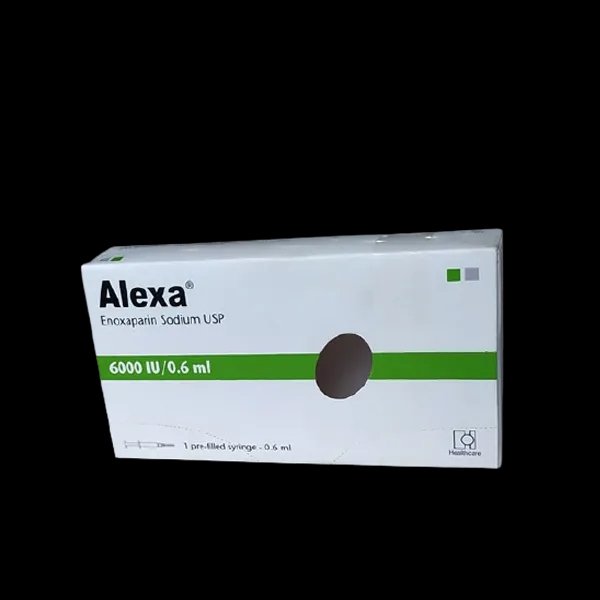
Alexa6000 Anti-
Healthcare Pharmaceuticals Ltd.
৳598.00
Add to cart

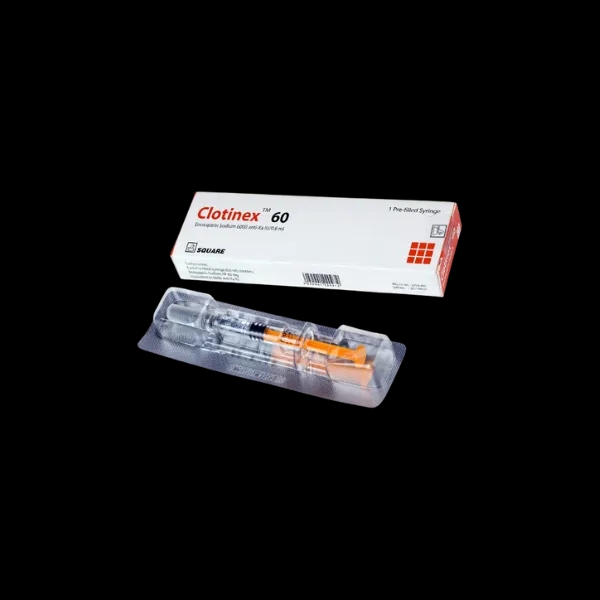
Enoparin 6000 Anti-Xa IU/0.6 ml SC Injection is available on MedEasy for ৳529.00 per 0.6 ml pre-filled syringe, with home delivery anywhere in Bangladesh. It is manufactured by Popular Pharmaceuticals Ltd. Its generic name is Enoxaparin Sodium.

Enoparin must always be prescribed and monitored by a qualified physician; the specific dose and duration depend on the indication being treated.
Each pre-filled syringe or vial contains Enoxaparin Sodium as the active ingredient, available in various strengths expressed in anti-Factor Xa International Units (IU), such as 2,000 IU/0.2 mL, 4,000 IU/0.4 mL, 6,000 IU/0.6 mL, 8,000 IU/0.8 mL, and other locally available strengths. The solution is sterile, aqueous, and intended for subcutaneous or intravenous injection as directed. Formulation excipients (e.g. water for injection) vary slightly by manufacturer; consult the specific product's package insert for exact composition.
Enoparin is a low molecular weight heparin (LMWH) derived from the depolymerization of unfractionated porcine heparin. It is an anticoagulant ("blood thinner") that works by inhibiting the clotting cascade, thereby reducing the formation and extension of blood clots.
Enoparin is supplied as a sterile solution in pre-filled syringes or multi-dose vials for subcutaneous injection, and in some settings for intravenous use (e.g. during percutaneous coronary intervention). It is widely used in hospital and outpatient settings for the prevention and treatment of venous thromboembolism and in acute coronary syndromes.
Enoparin belongs to the class of Low Molecular Weight Heparins (LMWH), a subgroup of anticoagulant (antithrombotic) medicines. It is pharmacologically distinct from unfractionated heparin and from other LMWH products, and is not interchangeable with them on a unit-for-unit basis.
Enoxaparin Sodium is produced by controlled depolymerization of heparin benzyl ester, yielding a low molecular weight heparin with a mean molecular weight of approximately 4,500 daltons. It exerts its anticoagulant effect primarily by potentiating antithrombin III, which inhibits activated Factor Xa and, to a lesser extent, thrombin (Factor IIa). Compared with unfractionated heparin, Enoxaparin Sodium has a higher ratio of anti-Xa to anti-IIa activity (approximately 3.3:1 to 5.3:1).
At recommended prophylactic doses, Enoxaparin Sodium does not significantly affect platelet aggregation or bind to plasma proteins to the same extent as unfractionated heparin, resulting in more predictable pharmacokinetics and a lower requirement for routine coagulation monitoring. Following subcutaneous injection, Enoxaparin Sodium is absorbed rapidly and almost completely (bioavailability ~100%), with peak anti-Xa activity occurring approximately 3 to 5 hours after dosing. It is eliminated mainly via the kidneys, and its elimination half-life is prolonged in patients with renal impairment.
Enoparin dosing is expressed in milligrams (mg) or anti-Xa International Units (IU) depending on the product and region, and must be individualized to the indication. Doses below are typical adult regimens; always follow the prescribing physician's instructions.
| Indication | Typical Adult Dosage |
|---|---|
| DVT prophylaxis - abdominal surgery | 40 mg (or equivalent IU) subcutaneously once daily, usually for 7-10 days, starting 2 hours before surgery |
| DVT prophylaxis - hip/knee replacement | 30 mg every 12 hours, or 40 mg once daily, subcutaneously, for up to 10-35 days depending on the regimen |
| DVT prophylaxis - acutely ill medical patients | 40 mg subcutaneously once daily for 6-14 days |
| Acute DVT/PE treatment | 1 mg/kg subcutaneously every 12 hours, or 1.5 mg/kg once daily (inpatient use only), usually with or followed by an oral anticoagulant |
| Unstable angina / non-Q-wave MI | 1 mg/kg subcutaneously every 12 hours, in combination with oral aspirin, for a minimum of 2 days and continued until clinical stabilization |
| Acute STEMI | 30 mg intravenous bolus plus 1 mg/kg subcutaneously, followed by 1 mg/kg subcutaneously every 12 hours (with dose adjustment in patients ≥75 years), with aspirin |
| Hemodialysis | Approximately 1 mg/kg (or per institutional protocol) introduced into the arterial line of the dialysis circuit at the start of the session |
In patients with severe renal impairment (creatinine clearance <30 mL/min), the dose of Enoparin must be reduced (e.g. to once-daily dosing) because of reduced clearance and increased bleeding risk; consult a physician for individualized adjustment.
Do not use Enoparin interchangeably (unit-for-unit) with unfractionated heparin or with other low molecular weight heparin products, as they differ in manufacturing, dosing, and clinical activity.
Enoparin is given by subcutaneous injection for most indications (deep into the abdominal wall fat), and occasionally by intravenous bolus injection in specific cardiac indications (e.g. at the start of treatment for STEMI) under medical supervision. It must never be given by intramuscular injection because of the risk of hematoma at the injection site. Patients or caregivers may be trained to self-administer subcutaneous doses at home, but the first dose(s) and technique should be supervised by a healthcare professional.
Concurrent use of Enoparin with other drugs that affect hemostasis increases the risk of bleeding. Clinically significant interactions include:
Inform the prescribing physician of all other medicines, supplements, and herbal products being used before starting Enoparin.
Enoxaparin Sodium is contraindicated in patients with:
Enoxaparin Sodium should also not be used in patients undergoing neuraxial (spinal/epidural) anesthesia or spinal puncture procedures where the specific dose and timing precautions described under "Precautions and Warnings" cannot be observed, given the risk of spinal/epidural hematoma.
The most common adverse effects of Enoparin relate to its anticoagulant action and the injection procedure itself:
Patients should seek urgent medical attention for signs of unusual bleeding (blood in urine or stool, unusual bruising, prolonged bleeding from cuts), sudden back pain, numbness, or weakness in the legs (which may indicate spinal/epidural hematoma), or signs of an allergic reaction.
Pregnancy: Data on the use of Enoparin in pregnancy are limited; it does not appear to cross the placental barrier in significant amounts. Enoparin should be used during pregnancy only if the potential benefit justifies the potential risk to the fetus, and only under close physician supervision — for example, in pregnant women with a clear indication for anticoagulation. Multi-dose vials of Enoparin may contain benzyl alcohol as a preservative, which should be avoided in pregnancy where preservative-free formulations are available. Long-term use has been associated with a risk of maternal osteoporosis and bone fracture; discuss the risks and benefits with a physician.
Lactation: There is limited information on whether Enoparin passes into human breast milk. Because of its large molecular size, clinically significant transfer to a nursing infant is considered unlikely, but a physician should be consulted before use during breastfeeding to weigh the benefits against any potential unknown risk.
In all cases, Enoparin should be used in pregnant or breastfeeding women only under direct medical supervision.
Patients receiving Enoparin who undergo neuraxial anesthesia (spinal/epidural) or spinal puncture are at risk of developing an epidural or spinal hematoma, which can result in long-term or permanent paralysis. This risk is increased by the use of indwelling epidural catheters, concomitant use of other drugs affecting hemostasis (e.g. NSAIDs, antiplatelet agents, other anticoagulants), a history of traumatic or repeated epidural/spinal puncture, and a history of spinal deformity or spinal surgery. Strict adherence to recommended dosing intervals and timing between Enoparin administration and catheter placement/removal is essential, and patients must be monitored closely for signs of neurological impairment (e.g. back pain, sensory/motor deficits, bowel or bladder dysfunction); if such signs occur, urgent diagnosis and treatment are required.
Enoparin, like other heparin products, can cause HIT, an immune-mediated reaction that paradoxically increases the risk of new blood clots. Platelet counts should be monitored, particularly during the first weeks of therapy. Enoparin must be discontinued if HIT is suspected or confirmed, and alternative anticoagulation considered.
Enoparin should be used with caution in patients with conditions that increase bleeding risk, such as a history of peptic ulcer disease, recent hemorrhagic stroke, uncontrolled severe hypertension, bacterial endocarditis, diabetic retinopathy, or concomitant use of other agents that affect hemostasis. Monitor closely for signs of bleeding throughout treatment.
Enoparin is not interchangeable unit-for-unit with unfractionated heparin or with other low molecular weight heparin products, each of which has its own dosing regimen and clinical data. Do not substitute between products.
Accidental overdose of Enoparin may lead to bleeding complications, ranging from minor bruising to serious or life-threatening hemorrhage. If overdose is suspected, seek immediate medical attention or contact emergency services / a poison control center right away; do not attempt to manage a suspected overdose at home. In a medical setting, the anticoagulant effect of Enoparin can be partially reversed with intravenous protamine sulfate, although reversal may be incomplete. Management focuses on identifying and controlling any active bleeding and providing supportive care as directed by a physician.
Store Enoparin at room temperature (below 30°C), protected from light and moisture. Do not freeze. Keep out of the reach and sight of children. Do not use if the solution is discolored or contains particulate matter, or after the expiry date printed on the packaging. Discard used syringes safely in a puncture-resistant sharps container.
Dose reduction of Enoparin is required in patients with severe renal impairment (creatinine clearance <30 mL/min) due to reduced clearance and increased bleeding risk. Use with caution and consider anti-Xa monitoring in moderate renal impairment.
Use Enoparin with caution in patients with hepatic impairment, as data are limited and bleeding risk may be increased; clinical and laboratory monitoring is advised.
Elderly patients (particularly those ≥75 years) may have an increased risk of bleeding; dose adjustment is recommended for certain indications (e.g. STEMI). Renal function should be assessed before starting Enoparin in elderly patients.
Patients at extremes of body weight may require individualized dosing and closer monitoring, as both under- and over-anticoagulation are possible with standard weight-based dosing.
See also Pediatric Uses and Pregnancy and Lactation sections for further population-specific guidance.
The duration of Enoparin therapy depends on the indication being treated: typically 6-14 days for prophylaxis in medical or surgical patients (up to 35 days for extended prophylaxis after hip replacement), a minimum of 5 days (often overlapping with an oral anticoagulant) for acute DVT/PE treatment, and 2-8 days or until clinical stabilization for unstable angina/non-Q-wave MI. Long-term use beyond several months (e.g. in cancer-associated thrombosis) requires ongoing physician reassessment of the risks and benefits, including bleeding risk and bone health. Do not stop or extend treatment with Enoparin without consulting the prescribing physician.
Enoxaparin Sodium belongs to the following drug classification: Anticoagulants → Heparins → Low Molecular Weight Heparins (LMWH). It shares this class with other LMWH agents (e.g. dalteparin, tinzaparin), but is not therapeutically interchangeable with them.
Enoxaparin Sodium acts by binding to and potentiating antithrombin III, which markedly accelerates the inhibition of activated Factor Xa in the coagulation cascade, and to a lesser extent inhibits thrombin (Factor IIa). By selectively inhibiting Factor Xa, Enoxaparin Sodium interrupts the coagulation cascade at an early stage, preventing the generation of thrombin and the subsequent formation of fibrin clots, without producing the pronounced effect on clotting time seen with unfractionated heparin.
B
The safety and efficacy of Enoparin in pediatric patients have not been well established through large controlled trials, and it is not FDA-approved for routine use in children. When used in pediatric patients (e.g. for treatment or prevention of thrombosis in specific clinical situations), dosing should be individualized under the supervision of a pediatric specialist experienced in anticoagulation, generally on a weight-based (mg/kg) schedule with close monitoring of anti-Xa levels.
Important: Multi-dose vials of Enoparin that contain benzyl alcohol as a preservative must not be used in neonates or infants, as benzyl alcohol has been associated with a fatal "gasping syndrome" in this age group; preservative-free, single-dose formulations should be used instead.
Q: What is Enoparin 6000 Anti-Xa IU/0.6 ml SC Injection used for?
A: Enoparin 6000 Anti-Xa IU/0.6 ml SC Injection is an injectable anticoagulant (blood thinner) used to prevent and treat blood clots such as deep vein thrombosis (DVT) and pulmonary embolism (PE), to prevent clot-related complications after certain surgeries (e.g. hip or knee replacement), and to manage certain heart conditions such as unstable angina and heart attack (myocardial infarction), usually alongside aspirin.
Q: How is Enoparin 6000 Anti-Xa IU/0.6 ml SC Injection given?
A: Enoparin 6000 Anti-Xa IU/0.6 ml SC Injection is usually given as a subcutaneous (under-the-skin) injection into the fat of the abdomen, once or twice daily depending on the indication. It is injected deep into the skin fold, and the injection site should be rotated. In hospital, Enoparin 6000 Anti-Xa IU/0.6 ml SC Injection may occasionally be given intravenously in specific heart-related indications. It should never be injected into a muscle.
Q: Can Enoparin 6000 Anti-Xa IU/0.6 ml SC Injection cause bleeding?
A: Yes. Because Enoparin 6000 Anti-Xa IU/0.6 ml SC Injection is an anticoagulant, the most common side effect is an increased risk of bleeding, which can range from minor bruising at the injection site to serious internal bleeding. Contact a doctor immediately if you notice unusual bruising, blood in urine or stool, prolonged bleeding, or signs of severe bleeding.
Q: Is it safe to have spinal or epidural anesthesia while on Enoparin 6000 Anti-Xa IU/0.6 ml SC Injection?
A: This requires great caution. Enoparin 6000 Anti-Xa IU/0.6 ml SC Injection carries a serious risk of causing a spinal or epidural hematoma (bleeding around the spinal cord) in patients undergoing spinal/epidural anesthesia or spinal puncture, which can lead to long-term or permanent paralysis. Your physician must carefully time doses of Enoparin 6000 Anti-Xa IU/0.6 ml SC Injection around any planned spinal procedure, and you should immediately report any back pain, numbness, or weakness in the legs, or bowel/bladder problems, after such a procedure.
Q: Can Enoparin 6000 Anti-Xa IU/0.6 ml SC Injection be used during pregnancy?
A: Enoparin 6000 Anti-Xa IU/0.6 ml SC Injection should be used during pregnancy only if clearly needed and if the potential benefit to the mother justifies the potential risk to the fetus, under close physician supervision. It does not appear to cross the placenta in significant amounts, but long-term use has been linked to a risk of maternal bone thinning (osteoporosis). Always consult your physician before using Enoparin 6000 Anti-Xa IU/0.6 ml SC Injection during pregnancy or while breastfeeding.
Q: Can I switch between Enoparin 6000 Anti-Xa IU/0.6 ml SC Injection and other heparin products on my own?
A: No. Enoparin 6000 Anti-Xa IU/0.6 ml SC Injection is not interchangeable unit-for-unit with unfractionated heparin or with other low molecular weight heparin products, as each has different dosing and clinical activity. Never switch between anticoagulant products without your physician's specific instruction.
Disclaimer
The information provided is accurate to the best of our knowledge, but it does not replace professional medical advice. We cannot guarantee its completeness or accuracy, and the absence of specific information about a drug should not be taken as an endorsement. We are not responsible for any consequences arising from this information, so please consult a healthcare professional for any concerns or questions.