10% Off
Aqua Care10%
Drug International Ltd.
৳67.50
Add to cart
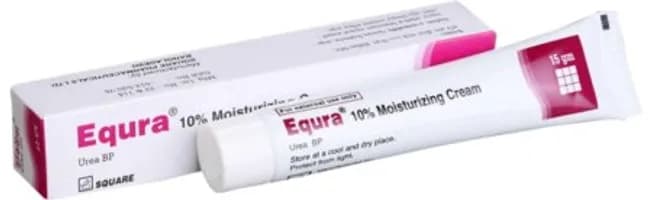

Equra is a topical emollient/keratolytic preparation used for the following indications:
At this lower (10%) concentration, Equra functions predominantly as a humectant/emollient rather than an aggressive keratolytic (higher concentrations such as 40% are used for more intensive keratolysis, e.g., thickened nails, and are not covered by this entry).
Each gram of Urea [10%] cream/lotion contains Urea USP 10% w/w in a suitable emollient cream, lotion, or ointment base.
Equra is a topical dermatological preparation containing urea, a naturally occurring compound found in skin that functions as a key component of the skin's natural moisturizing factor. At a 10% concentration, Equra is primarily used as an emollient and mild keratolytic to hydrate dry skin, soften thickened or scaly skin, and improve the skin barrier in conditions such as xerosis and ichthyosis. It is available over-the-counter as well as on prescription in cream, lotion, and ointment forms.
Equra belongs to the therapeutic class of topical emollients and keratolytic agents (dermatological preparations for dry and hyperkeratotic skin conditions).
Urea [10%] works through the following mechanisms:
| Indication | Recommended Use |
|---|---|
| Dry skin / xerosis | Apply a thin layer of Equra to the affected area(s) 1-2 times daily, or as directed by a physician. |
| Ichthyosis / hyperkeratotic conditions | Apply to affected areas once or twice daily; may be used regularly for maintenance as advised by a physician. |
| Adjunct with other topical therapy | Apply as directed, typically before or after the co-prescribed agent, allowing full absorption between applications. |
For external use on the skin only. Not for ophthalmic, oral, vaginal, or rectal use.
Equra is for topical (external) use only.
No clinically significant systemic drug interactions have been well established for Equra, owing to its topical use and minimal systemic absorption at this concentration.
Urea [10%] is contraindicated in patients with known hypersensitivity to urea or to any excipient in the specific product formulation.
Equra is generally well tolerated at this lower concentration. Reported side effects include:
Discontinue use and consult a physician if severe irritation, rash, or signs of an allergic reaction occur.
Pregnancy: Systemic absorption of Equra after topical application is minimal. However, as with any medication during pregnancy, Equra should be used only if clearly needed and the potential benefit justifies the potential risk; consult a physician before use.
Lactation: There is no specific evidence that topical Equra poses a risk to a nursing infant given minimal systemic absorption; nonetheless, avoid applying it directly to the nipple/areola area before breastfeeding to prevent inadvertent infant ingestion, and consult a physician if uncertain.
The following precautions apply to the use of Equra:
Topical overdose with Equra is unlikely to cause serious harm because systemic absorption is minimal; excessive local application may cause increased skin irritation, redness, or stinging, which usually resolves with discontinuation.
If Equra is accidentally ingested (particularly in children) or applied over very large areas of broken skin, it may cause gastrointestinal upset or increased systemic absorption; seek immediate medical attention or contact a poison control center/emergency services in such cases.
Store at room temperature (below 30°C), away from light and moisture. Keep out of reach of children. Keep the container tightly closed after use.
Use of Equra in infants and young children should be under the guidance of a physician; safety and efficacy in neonates and very young infants have not been well established for all formulations. It is commonly used in older children for dry skin conditions under medical advice.
Equra is commonly and safely used in elderly patients for age-related xerosis; no specific dose adjustment is required, though skin fragility should be considered.
Because systemic absorption of topical Equra is minimal, no specific dosage adjustment is established for renal or hepatic impairment; use as directed by a physician.
Duration of treatment with Equra depends on the underlying condition and response: short courses (days to a few weeks) are typical for acute dry skin flares, while chronic hyperkeratotic conditions such as ichthyosis may require longer-term, ongoing maintenance use as advised by a physician.
Emollients; Keratolytics; Topical dermatological/skin-hydrating agents.
Urea [10%] acts primarily as a humectant, binding and retaining water within the stratum corneum to hydrate dry skin, and secondarily as a mild keratolytic by loosening intercellular cohesion in hyperkeratotic tissue, thereby softening and smoothing rough or scaly skin.
Use of Equra in children should be guided by a physician. It is commonly used in children older than 2 years for dry skin conditions under medical advice, applied sparingly to the affected area. Safety and efficacy of routine use in neonates and infants under 2 years have not been well established, and use in this age group should occur only under direct physician supervision.
Q: What is Equra 10% Cream used for?
A: Equra 10% Cream is a topical cream/lotion used to moisturize and soften dry, rough, or scaly skin, and to manage conditions such as ichthyosis and other mild hyperkeratotic skin disorders.
Q: How should I apply Equra 10% Cream?
A: Apply a thin layer of Equra 10% Cream to clean, dry skin 1-2 times daily, or as directed by your physician. Avoid the eyes, lips, and mucous membranes.
Q: Can I use Equra 10% Cream on broken or infected skin?
A: No. Avoid applying Equra 10% Cream to broken, infected, or highly inflamed skin unless specifically directed by a physician, as it may cause additional stinging or irritation.
Q: Is Equra 10% Cream safe to use during pregnancy or breastfeeding?
A: Systemic absorption of Equra 10% Cream after topical use is minimal, but it should be used during pregnancy only if clearly needed, with a physician's advice. While breastfeeding, avoid applying it directly to the nipple/areola area to prevent infant ingestion, and consult a physician if unsure.
Q: What side effects can Equra 10% Cream cause?
A: Equra 10% Cream is generally well tolerated; mild, transient stinging, burning, or redness may occur, especially on sensitive or compromised skin. Discontinue use and see a doctor if severe irritation or an allergic reaction develops.
Q: What should I do if Equra 10% Cream is accidentally swallowed?
A: Accidental ingestion of Equra 10% Cream, particularly by children, may cause gastrointestinal upset. Seek immediate medical attention or contact a poison control center/emergency services if this occurs.
Disclaimer
The information provided is accurate to the best of our knowledge, but it does not replace professional medical advice. We cannot guarantee its completeness or accuracy, and the absence of specific information about a drug should not be taken as an endorsement. We are not responsible for any consequences arising from this information, so please consult a healthcare professional for any concerns or questions.