
7% Off
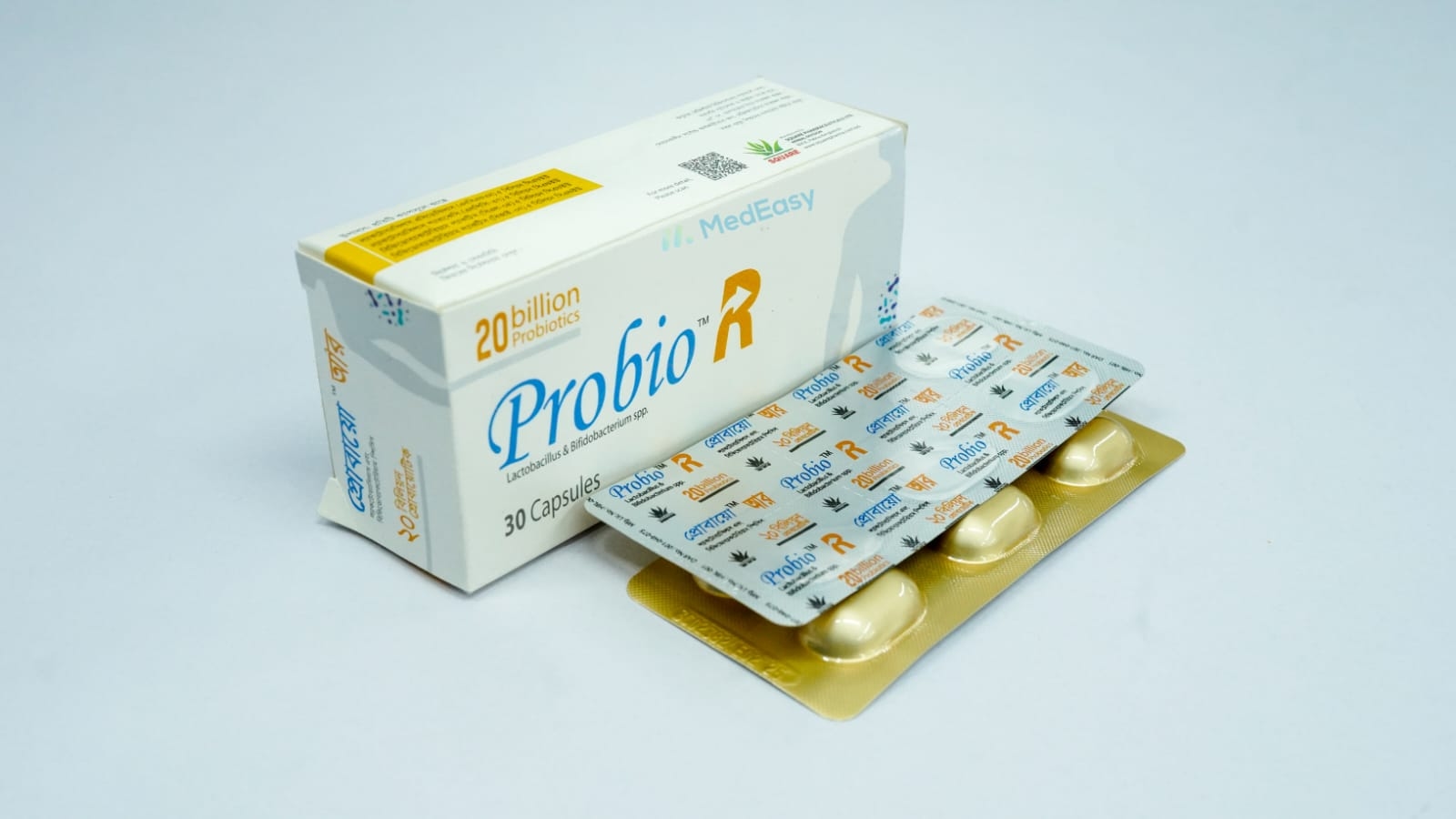
Probio R20 Billion
Square Pharmaceuticals PLC.
৳223.20
Add to cart


Ezygut 20 billion is a multi-strain probiotic dietary supplement standardized to deliver 20 billion colony-forming units (CFU) per dose, used to support gastrointestinal microbiota balance. Evidence and acceptance vary by use, so indications are classified below by strength of evidence.
Note: Ezygut 20 billion is a dietary/nutritional supplement, not a substitute for medical treatment of significant, persistent, or severe gastrointestinal illness. It is not FDA-approved as a drug for any disease indication; use should be individualized and, where possible, guided by a physician or pharmacist, especially in infants, the chronically ill, or immunocompromised patients.
Each dose of Ezygut 20 billion provides a standardized multi-strain blend of live, freeze-dried probiotic microorganisms (commonly including Lactobacillus and Bifidobacterium species, and in some formulations Saccharomyces boulardii or Streptococcus/Bacillus species) combined to deliver a total viable count of 20 billion CFU per serving at the time of manufacture. Exact strain identities, individual strain CFU allocation, and carrier excipients (e.g., maltodextrin, inulin/prebiotic fiber) vary by specific product formulation; refer to the product package insert for the precise strain composition of the marketed brand.
Ezygut 20 billion is an oral multi-strain probiotic supplement formulated to deliver 20 billion colony-forming units (CFU) of live beneficial bacteria per dose. Probiotics are live microorganisms that, when administered in adequate amounts, are intended to confer a health benefit by helping restore or maintain a favorable balance of gut microbiota.
Ezygut 20 billion is available in forms such as capsules or oral powder sachets and is widely used both as a general digestive health supplement and as an adjunct during antibiotic therapy or acute diarrheal illness. It is marketed and used in Bangladesh and internationally as a dietary supplement rather than a prescription drug in most jurisdictions, although clinical use is often physician-directed.
Probiotic supplement / Gastrointestinal microbiota-modulating agent. Ezygut 20 billion belongs to the class of live microbial dietary supplements rather than a conventional pharmacologic drug class.
Ezygut 20 billion works through several proposed mechanisms of action typical of multi-strain probiotic products:
As a live-organism supplement rather than an absorbed drug, conventional pharmacokinetic parameters (absorption, distribution, metabolism, elimination) do not apply to Ezygut 20 billion in the traditional sense. Viable organisms act locally within the gastrointestinal tract and are largely excreted in feces; they are not intended to be systemically absorbed in healthy individuals with intact gut barriers.
Dosing of Ezygut 20 billion should follow the specific product label, as CFU delivery and dosing frequency can vary by brand and formulation. The following reflects typical, evidence-informed dosing patterns.
| Indication | Typical adult dose | Typical pediatric dose |
|---|---|---|
| General digestive health maintenance | 1 capsule/sachet (20 billion CFU) once daily, or as directed | Use only under pediatrician guidance; age-appropriate strain/dose selection required |
| Prevention of antibiotic-associated diarrhea | 1 capsule/sachet once or twice daily, started with and continued for several days after completing the antibiotic course | As directed by pediatrician, typically once daily, weight/age-appropriate |
| Adjunct in acute infectious diarrhea | 1 capsule/sachet once or twice daily as an adjunct to oral rehydration solution, until symptom resolution | As directed by pediatrician alongside oral rehydration therapy |
Ezygut 20 billion is taken orally. Capsules are typically swallowed with water; powder sachets may be mixed into cool or lukewarm (not hot) water, milk, or soft food immediately before consumption, as heat can reduce organism viability. Ezygut 20 billion may be taken with or without food unless the specific product label states otherwise. If taken together with an antibiotic, dosing should be spaced apart from the antibiotic dose (commonly by at least 2-3 hours) per product label guidance, to reduce loss of probiotic viability from the antibiotic's antimicrobial action.
Typical dosing of Ezygut 20 billion is one capsule or sachet (providing 20 billion CFU) once daily for general use, increasing to twice daily for antibiotic-associated diarrhea prevention or acute diarrhea support, as directed by a physician or the product label. See the Dosage and Administration section for a full per-indication breakdown. Pediatric dosing of Ezygut 20 billion should always be individualized by a pediatrician based on age and clinical context.
Administer Ezygut 20 billion orally, swallowing capsules whole with water, or dissolving powder sachets in cool/lukewarm liquid or soft food immediately before use. Avoid mixing with hot liquids or food, which can reduce viability of the live organisms in Ezygut 20 billion. When co-administered with antibiotics, separate dosing of Ezygut 20 billion from the antibiotic dose by several hours as directed on the product label.
No other extensive, well-established drug interactions are documented for Ezygut 20 billion; this is not an exhaustive list of theoretical interactions.
Rare case reports of probiotic-associated bacteremia or fungemia have been described in vulnerable populations. Ezygut 20 billion should generally be avoided, or used only under close medical supervision, in:
Ezygut 20 billion is generally well tolerated. The most common effects are mild and transient, typically occurring at the start of use:
Rare but serious infections (bacteremia/fungemia) have been reported almost exclusively in high-risk populations described under Contraindications; this is not a typical risk in healthy individuals using Ezygut 20 billion as directed.
Formal, well-controlled safety data on Ezygut 20 billion in human pregnancy and lactation are limited, as is typical for probiotic dietary supplements. Available data have not shown clear evidence of harm for common probiotic strains used at typical doses, but because comprehensive safety data are lacking, Ezygut 20 billion should be used during pregnancy or breastfeeding only if clearly needed and the potential benefit justifies the potential unknown risk; a physician should be consulted before use in these settings.
Ezygut 20 billion has a wide margin of safety, and significant toxicity from excessive intake is not expected in healthy individuals. Taking more than the recommended dose of Ezygut 20 billion may increase the likelihood of transient bloating, gas, or mild gastrointestinal discomfort. There is no specific antidote. If a large accidental ingestion occurs, particularly in a young child, or if any concerning symptoms develop, seek immediate medical attention or contact a poison control center/emergency services for guidance rather than attempting home treatment.
Store Ezygut 20 billion at room temperature (below 30°C), away from direct light and moisture, unless the specific product label states a different requirement. Some probiotic formulations, particularly certain refrigerated brands, require storage in a refrigerator (2-8°C) to preserve organism viability; always check and follow the storage instructions printed on the specific product packaging. Keep Ezygut 20 billion out of reach of children.
No specific dose adjustment of Ezygut 20 billion is established for renal impairment; standard dosing is generally used.
No specific dose adjustment of Ezygut 20 billion is established for hepatic impairment; standard dosing is generally used.
Ezygut 20 billion is generally used at standard adult doses in elderly patients, who may benefit from probiotic support during antibiotic therapy, though age-related frailty or comorbidities should prompt physician guidance.
Ezygut 20 billion should be avoided or used only under close medical supervision in severely immunocompromised or critically ill patients, and those with a central venous catheter or short-gut syndrome, due to rare reports of probiotic-associated infection (see Contraindications).
Duration of Ezygut 20 billion use depends on the indication: for general digestive health support, it may be used on an ongoing basis as directed. For prevention of antibiotic-associated diarrhea, Ezygut 20 billion is typically continued for the duration of the antibiotic course and for several days afterward. For adjunct support in acute infectious diarrhea, Ezygut 20 billion is generally used for approximately 5-7 days or until symptom resolution; if diarrhea persists beyond 2-3 days (or sooner in infants, young children, or the elderly), or if red-flag symptoms occur, medical evaluation should be sought rather than continuing Ezygut 20 billion alone.
Probiotics; live microbial dietary supplements; gastrointestinal microbiota modulators.
Ezygut 20 billion acts locally within the gastrointestinal tract through competitive exclusion of pathogenic organisms, production of short-chain fatty acids and other metabolites that support colonic epithelial health and lower luminal pH, restoration of a favorable balance of commensal gut microbiota, and modest modulation of gut-associated mucosal immune responses. Unlike conventional pharmacologic agents, Ezygut 20 billion does not rely on systemic absorption for its intended effects.
Ezygut 20 billion is used in children, most commonly as an adjunct to reduce the risk of antibiotic-associated diarrhea or to support recovery from acute infectious diarrhea alongside oral rehydration therapy, reflecting patterns supported by pediatric gastroenterology guidance for certain probiotic strains. However, Ezygut 20 billion is a dietary supplement, and formal safety and efficacy data for specific strain combinations and CFU counts have not been established by regulatory agencies for all pediatric age groups. Use in infants, especially preterm or medically fragile infants, should be guided by a pediatrician, as such infants may be at higher risk for rare probiotic-associated infections. Age- and weight-appropriate dosing of Ezygut 20 billion should always follow product labeling or pediatrician direction.
Q: What is Ezygut 20 billion used for?
A: Ezygut 20 billion is a multi-strain probiotic supplement providing 20 billion CFU per dose, mainly used to support gut microbiota balance, help prevent antibiotic-associated diarrhea, and support recovery from acute diarrheal illness alongside oral rehydration therapy.
Q: Can I take Ezygut 20 billion together with antibiotics?
A: Yes, Ezygut 20 billion is commonly used alongside antibiotics to help reduce the risk of antibiotic-associated diarrhea. However, antibiotics can reduce the viability of the live organisms in Ezygut 20 billion, so it is best to space doses apart, typically by at least 2-3 hours, following the product label or your physician's guidance.
Q: What are the side effects of Ezygut 20 billion?
A: Ezygut 20 billion is generally well tolerated. The most common effects are mild and transient, such as bloating, increased gas, or slight changes in stool consistency, especially when starting use. Serious side effects are rare and are mainly reported in people with severely weakened immune systems, critical illness, a central venous catheter, or short-gut syndrome.
Q: Is Ezygut 20 billion safe during pregnancy or breastfeeding?
A: Data on Ezygut 20 billion in pregnancy and breastfeeding are limited. It should be used in these situations only if clearly needed and the potential benefit outweighs the potential unknown risk, and only after consulting a physician.
Q: Who should avoid Ezygut 20 billion?
A: Anyone with a known hypersensitivity to any component of Ezygut 20 billion should not take it. It should also be avoided, or used only under close medical supervision, in severely immunocompromised or critically ill patients, those with a central venous catheter, or those with short-gut syndrome, due to rare reports of probiotic-associated bloodstream infections in these groups.
Q: What should I do if I miss a dose or take too much Ezygut 20 billion?
A: If you miss a dose, simply resume your normal dosing schedule; do not double the dose. Taking more than recommended is unlikely to cause serious harm in healthy individuals but may increase mild bloating or gas. If a large accidental ingestion occurs or concerning symptoms develop, seek immediate medical attention or contact a poison control center.
Disclaimer
The information provided is accurate to the best of our knowledge, but it does not replace professional medical advice. We cannot guarantee its completeness or accuracy, and the absence of specific information about a drug should not be taken as an endorsement. We are not responsible for any consequences arising from this information, so please consult a healthcare professional for any concerns or questions.
