
8% Off
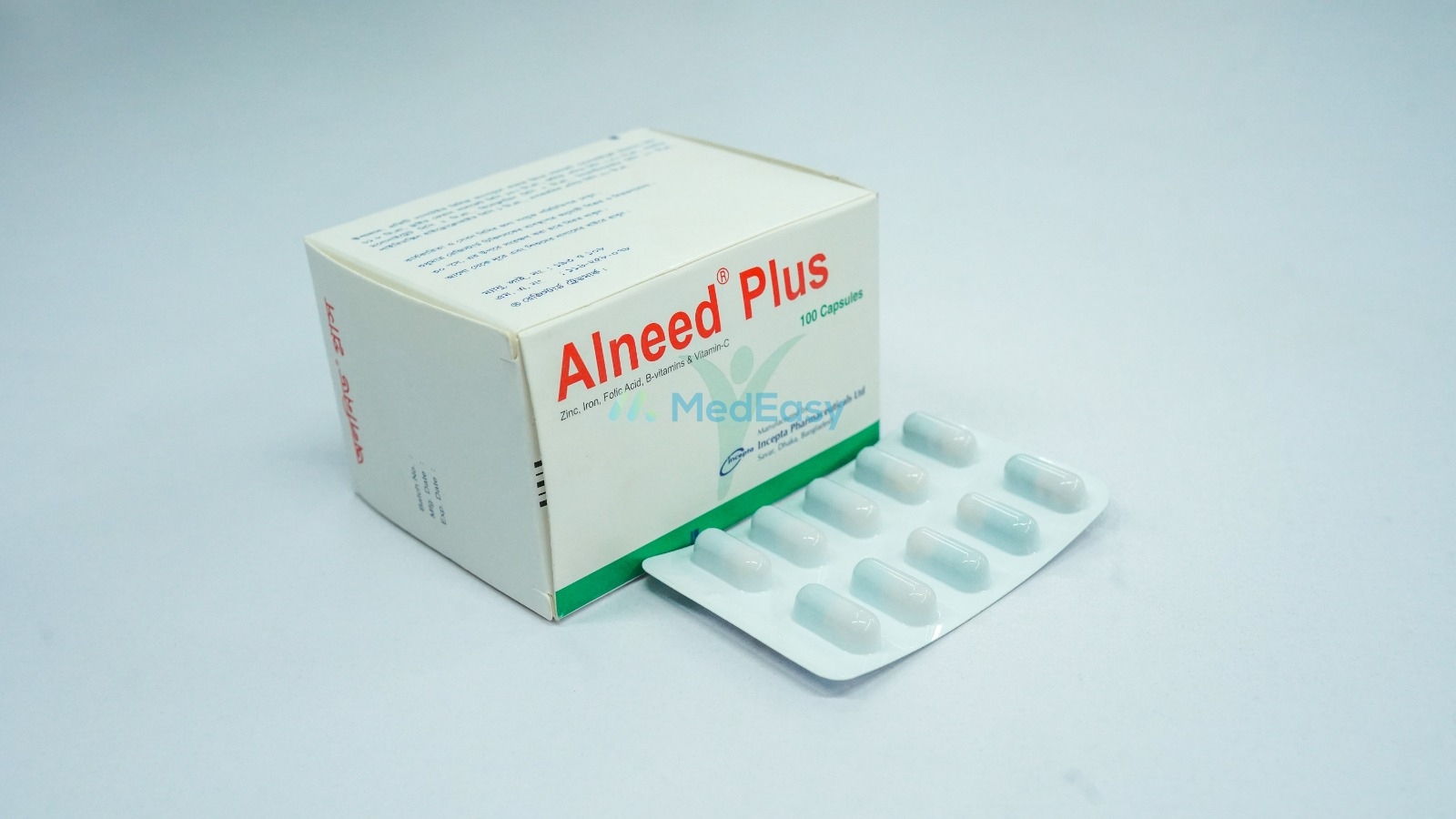
Alneed Plus
Incepta Pharmaceuticals Ltd.
৳32.20
Add to cart

Feona Z Capsule is available on MedEasy for ৳3.15 per piece, with home delivery anywhere in Bangladesh. It is manufactured by Delta Pharma Ltd. Its generic name is Iron + Folic Acid + Vitamin B Complex + Vitamine C + Zinc Sulfate.

Feona Z is an oral multi-nutrient (hematinic) supplement used for the following indications:
Note: Severe anemia, anemia of chronic disease, or anemia with an unclear cause should be properly investigated by a physician before use of Feona Z, since this combination is not a substitute for definitive diagnosis and treatment of the underlying cause.
Each unit (tablet/capsule) of Iron + Folic Acid + Vitamin B Complex + Vitamine C + Zinc Sulfate typically contains:
Exact strengths differ by manufacturer and product; refer to the specific product label for precise composition.
Feona Z is a fixed-dose oral nutritional (hematinic) combination product. The iron component (a ferrous salt) is used to build hemoglobin and correct or prevent iron-deficiency states. Folic acid and vitamin B-complex support red blood cell formation, DNA synthesis, and normal nerve and energy metabolism. Vitamine C enhances absorption of non-heme dietary iron, and zinc sulfate supplies zinc, an essential trace mineral involved in immune function, growth, wound healing, and enzymatic activity. Together, Feona Z is formulated to correct or prevent combined deficiencies of these nutrients, commonly used as a general nutritional supplement in Bangladesh.
Feona Z belongs to the therapeutic class of oral hematinics and multivitamin-mineral nutritional supplements, specifically anti-anemia preparations combining a ferrous iron source with hematopoietic vitamins (folic acid, B-complex), an absorption-enhancing vitamin (vitamine C), and an essential trace element (zinc sulfate).
Iron + Folic Acid + Vitamin B Complex + Vitamine C + Zinc Sulfate combines agents with complementary roles in hematopoiesis and general nutrition:
Dosage of Feona Z should be individualized by a physician based on the degree of deficiency, age, and clinical response. General guidance:
| Population | Typical Dose |
|---|---|
| Adults | One tablet/capsule once daily, or as directed by the physician, preferably after a meal to reduce gastric upset. |
| Pregnant/lactating women | As advised by the attending physician as part of antenatal/postnatal micronutrient supplementation; do not exceed the prescribed dose. |
| Children | Not generally recommended for young children unless a pediatric-specific formulation and physician-directed dose is used; keep out of reach of children (see Use in Special Populations). |
Duration of therapy for iron-deficiency anemia is typically several weeks to a few months, guided by hemoglobin/ferritin response — see Duration of Treatment.
Feona Z should be taken orally, preferably with or after food to minimize gastrointestinal discomfort, and swallowed whole with a full glass of water. Avoid taking it at the same time as tea, coffee, milk/dairy products, or calcium/antacid supplements, as these may reduce iron and zinc absorption; a gap of about 1–2 hours from these items is advisable for optimal absorption.
Feona Z may interact with:
Inform your physician of all other medications and supplements being taken before starting Feona Z.
Iron + Folic Acid + Vitamin B Complex + Vitamine C + Zinc Sulfate is contraindicated in:
Side effects of Feona Z are usually mild and dose-related, most commonly arising from the iron and zinc components. Reported effects include:
Most gastrointestinal effects improve by taking the product with food or reducing the dose temporarily; consult a physician if side effects are severe or persistent.
Iron and folic acid supplementation is standard and recommended during pregnancy per WHO/obstetric guidance to help meet increased requirements and to support prevention of neural tube defects. However, this specific fixed-dose combination and its total nutrient content, including the zinc sulfate and vitamine C components, should be used only if clearly needed and as directed by a physician, since self-directed high-dose supplementation is not advised and doses should be individualized. Use of Feona Z during pregnancy and breastfeeding should be guided by a physician who can tailor the dose to individual nutritional needs and monitor for adequacy and safety.
Observe the following precautions with Feona Z:
Overdose of Feona Z is a recognized medical emergency, primarily due to the iron component; accidental pediatric ingestion is a particular concern. Symptoms may include nausea, vomiting (sometimes bloody), abdominal pain, diarrhea, lethargy, and, in significant overdose, more serious systemic effects such as metabolic acidosis, shock, or organ dysfunction, which can occur even after an initial symptom-free period. Zinc overdose can cause nausea and vomiting, and chronic excess can cause copper deficiency. In case of suspected overdose, especially in a child, seek immediate medical attention or contact emergency services/a poison control center right away; do not attempt home treatment or induce vomiting without professional guidance. Bring the product packaging to the healthcare facility if possible.
Store at room temperature (below 30°C), away from light and moisture. Keep out of reach of children.
Renal impairment: No specific dose adjustment is well established for Feona Z; use with caution and physician guidance, particularly regarding zinc and vitamin accumulation.
Hepatic impairment: Use with caution under medical supervision; no well-established specific dose adjustment.
Elderly: Generally well tolerated; monitor for gastrointestinal tolerance and confirm the indication for supplementation.
Children: See Pediatric Uses; not for use in young children except under specific pediatric formulations/physician direction, given the serious risk of accidental iron overdose.
For iron-deficiency anemia, treatment with Feona Z is typically continued for at least 8–12 weeks after hemoglobin normalizes, to replenish iron stores, with total duration guided by the physician based on periodic hemoglobin/ferritin monitoring. For general nutritional supplementation, duration should follow the physician's recommendation and the underlying dietary or clinical need, and long-term continuous use without reassessment is not advised, particularly regarding the zinc sulfate component.
Iron + Folic Acid + Vitamin B Complex + Vitamine C + Zinc Sulfate belongs to the drug classes: Hematinics (anti-anemia agents), Vitamin B-complex/Folate supplements, Vitamine C (ascorbic acid) supplements, and Trace element (zinc) supplements — combined as a multi-nutrient oral supplement.
Iron + Folic Acid + Vitamin B Complex + Vitamine C + Zinc Sulfate acts through the combined, complementary mechanisms of its components: the ferrous iron salt is absorbed in the proximal small intestine and incorporated into hemoglobin for oxygen transport; folic acid and B-complex vitamins support DNA synthesis and maturation of red blood cell precursors in the bone marrow; vitamine C chemically reduces dietary iron to its more absorbable ferrous form, enhancing intestinal iron uptake; and zinc sulfate supplies zinc, which functions as a cofactor for numerous metabolic enzymes supporting immune function, growth, and tissue repair.
Use of Feona Z in children should be under pediatric medical supervision, with dose individualized by age, weight, and degree of deficiency; safety and efficacy of this specific fixed-dose adult-strength combination have not been formally established in young children, and pediatric-specific formulations or lower-strength products are generally preferred where available. Accidental ingestion of iron-containing products by children is a recognized, potentially serious medical emergency; the product should be kept well out of reach of children and stored in child-resistant packaging at all times.
Q: What is Feona Z Capsule used for?
A: Feona Z Capsule is used to prevent and treat iron-deficiency anemia and to supplement combined deficiencies of iron, folic acid, B-complex vitamins, vitamine C, and zinc, especially when dietary intake is inadequate or requirements are increased, such as during pregnancy, growth, or convalescence.
Q: How should I take Feona Z Capsule?
A: Feona Z Capsule is usually taken once daily by mouth, preferably with or after food to reduce stomach upset, or exactly as directed by your physician. Avoid taking it with tea, coffee, milk, or antacids, as these can reduce absorption.
Q: Why are my stools dark after taking Feona Z Capsule?
A: Dark or black stools are a common, harmless effect of the iron component of Feona Z Capsule and do not indicate bleeding. If you notice black, tarry, or foul-smelling stools accompanied by abdominal pain or dizziness, consult a physician to rule out gastrointestinal bleeding.
Q: Is Feona Z Capsule safe during pregnancy?
A: Iron and folic acid supplementation is standard and recommended during pregnancy, but Feona Z Capsule as a fixed combination should be used only if clearly needed and as directed by a physician, since a physician can tailor the specific dose of iron, folic acid, and zinc sulfate to individual pregnancy needs.
Q: Can children take Feona Z Capsule?
A: Feona Z Capsule is not generally recommended for young children unless a physician prescribes a specific pediatric formulation and dose. It must be kept well out of reach of children, because accidental ingestion of iron-containing products can cause serious, potentially life-threatening iron toxicity in a child.
Q: What should I do if a child accidentally swallows Feona Z Capsule?
A: Seek immediate medical attention or contact emergency services/a poison control center right away if a child accidentally ingests Feona Z Capsule, even if the child seems well at first, since serious iron toxicity can develop after a delay. Do not attempt home treatment; bring the product packaging with you to the healthcare facility.
Disclaimer
The information provided is accurate to the best of our knowledge, but it does not replace professional medical advice. We cannot guarantee its completeness or accuracy, and the absence of specific information about a drug should not be taken as an endorsement. We are not responsible for any consequences arising from this information, so please consult a healthcare professional for any concerns or questions.
