
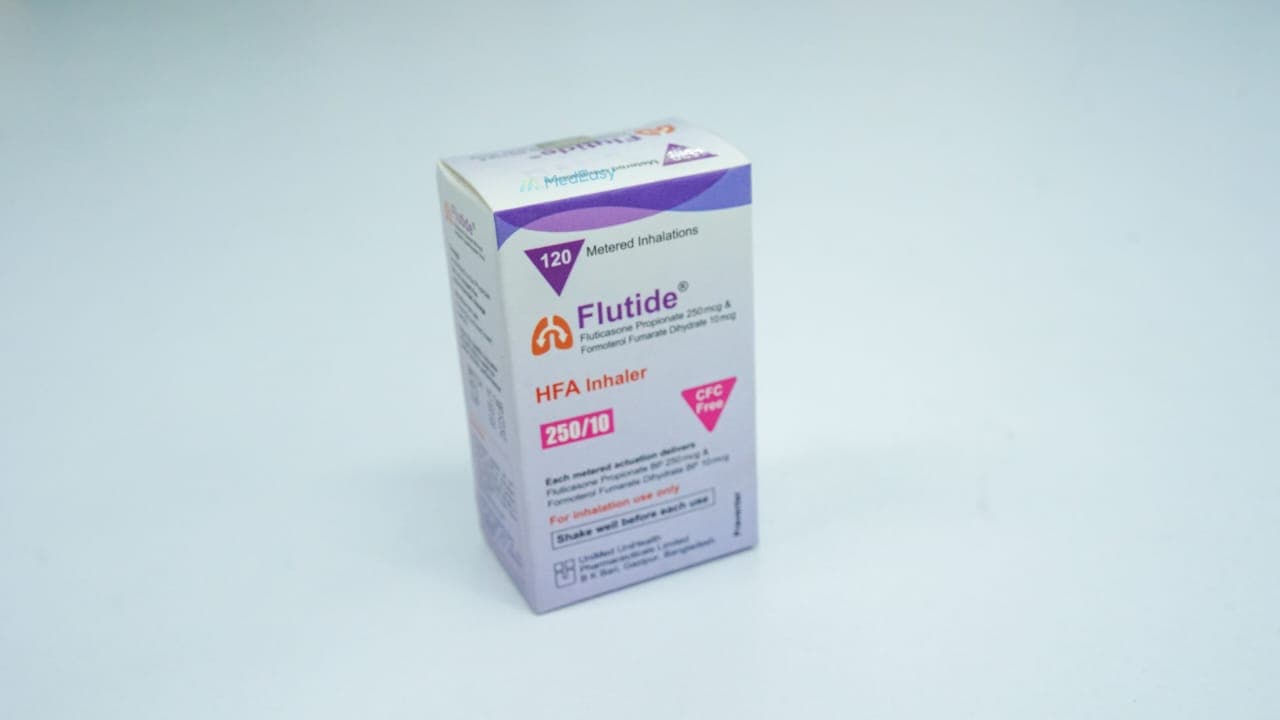
Flutide250 mcg+10 mcg

Medicine overview
Indications of Flutide
Flutide is a fixed-dose combination inhaler containing an inhaled corticosteroid (ICS) and a long-acting beta2-agonist (LABA), indicated for the regular maintenance treatment of asthma in adults and adolescents (12 years and older) in whom use of a combination inhaler is appropriate, specifically:
- Patients whose asthma is not adequately controlled with an inhaled corticosteroid alone plus an "as-needed" inhaled short-acting beta2-agonist; or
- Patients who are already adequately controlled on both an inhaled corticosteroid and a long-acting beta2-agonist and wish to consolidate therapy into a single inhaler.
Flutide is a maintenance (controller) therapy and is not indicated for the relief of acute bronchospasm or as a rescue treatment for sudden asthma attacks; a separate short-acting bronchodilator should always be available for acute symptoms.
Evidence supporting use of Flutide in chronic obstructive pulmonary disease (COPD) is limited, and this specific combination is generally not recommended for COPD; it should be used in COPD only under specific physician direction where locally approved.
Composition
Fluticasone Propionate + Formoterol Fumarate pressurized metered-dose inhaler is available in the following strengths (per actuation/puff):
| Strength (per puff) | Fluticasone Propionate | Formoterol Fumarate |
|---|---|---|
| 50/5 | 50 mcg | 5 mcg |
| 125/5 | 125 mcg | 5 mcg |
| 250/10 | 250 mcg | 10 mcg |
Each actuation of Fluticasone Propionate + Formoterol Fumarate delivers the stated combination of active ingredients from a metered-dose inhaler device, along with standard propellant and excipients.
Description
Flutide combines two medicines in a single inhaler device: fluticasone propionate, a corticosteroid that reduces airway inflammation, and formoterol fumarate, a long-acting beta2-adrenergic agonist (LABA) that relaxes the smooth muscle of the airways to keep them open over an extended period. Used together, they help control the symptoms and underlying inflammation of persistent asthma when a single agent alone is not sufficient.
Flutide is administered as regularly scheduled twice-daily inhalations and is intended for long-term maintenance control, not for immediate relief of sudden breathing difficulty.
Therapeutic Class
Flutide belongs to the therapeutic class of Inhaled Corticosteroid (ICS) and Long-Acting Beta2-Agonist (LABA) fixed-dose combinations, within the anti-asthmatic / anti-inflammatory bronchodilator drug group.
Pharmacology
Fluticasone Propionate + Formoterol Fumarate works through the complementary actions of its two components:
- Fluticasone propionate is a synthetic corticosteroid with potent local anti-inflammatory activity in the airways. It binds to glucocorticoid receptors, reducing the number and activity of inflammatory cells (eosinophils, mast cells, lymphocytes) and inhibiting the release of inflammatory mediators, thereby reducing airway hyperresponsiveness and swelling.
- Formoterol fumarate is a long-acting, selective beta2-adrenergic receptor agonist. It stimulates beta2-receptors on airway smooth muscle, increasing intracellular cyclic AMP, producing relaxation of bronchial smooth muscle and bronchodilation with onset within minutes and an effect lasting approximately 12 hours.
Together in Fluticasone Propionate + Formoterol Fumarate, the anti-inflammatory action of the corticosteroid and the sustained bronchodilation of the LABA act in a complementary manner to improve lung function and reduce asthma exacerbations more effectively than either component alone.
Systemically absorbed drug from both components is metabolized primarily via hepatic cytochrome P450 3A4 (CYP3A4), and eliminated mainly via feces (fluticasone) and urine/feces as metabolites (formoterol).
Dosage & Administration of Flutide
Dosing of Flutide is individualized according to asthma severity and prior therapy, using the lowest strength that maintains control.
| Population | Recommended Dose |
|---|---|
| Adults and adolescents 12 years and older | Two inhalations twice daily (morning and evening, about 12 hours apart), using the strength (50/5, 125/5, or 250/10 mcg) appropriate to asthma severity. |
| Children under 12 years | Not recommended; safety and efficacy have not been established in this age group. |
The 250/10 mcg strength is intended for adults only. Flutide should be used at regular intervals exactly as prescribed, even when asymptomatic, and must not be stopped abruptly or the dose changed without medical advice. If symptoms occur between doses, a separate fast-acting rescue inhaler should be used; increasing rescue-inhaler use requires medical review. See Administration below for correct inhaler technique and mouth-rinsing instructions.
Administration of Flutide
Flutide is for oral inhalation only and must never be swallowed or used by any other route.
- Shake the inhaler well before each use.
- Prime the inhaler before first use, and if it has not been used for 3 or more days, by releasing test sprays into the air away from the face.
- Breathe out gently, place the mouthpiece between the lips, and inhale slowly and deeply while pressing down on the canister; hold the breath for about 10 seconds before breathing out slowly.
- Wait about 30–60 seconds between the two inhalations of a single dose.
- After each use, rinse the mouth with water and spit it out (do not swallow) to reduce the risk of oral thrush (candidiasis) and hoarseness.
- Clean the mouthpiece regularly as directed in the patient information leaflet.
Interaction of Flutide
Flutide has clinically significant interactions with the following:
- Strong CYP3A4 inhibitors (e.g., ritonavir, ketoconazole, itraconazole, clarithromycin): can substantially increase systemic exposure to the fluticasone propionate component, raising the risk of systemic corticosteroid side effects including adrenal suppression; concurrent use should generally be avoided unless the benefit outweighs the risk.
- Beta-blockers (including ophthalmic beta-blocker eye drops): may reduce or antagonize the bronchodilator effect of the formoterol component and can provoke severe bronchospasm; avoid unless there is a compelling reason, using cardioselective agents cautiously if unavoidable.
- Other beta-adrenergic agonists or xanthine derivatives: may potentiate cardiovascular side effects (tachycardia, arrhythmia) when combined with the formoterol component.
- Non-potassium-sparing diuretics (e.g., loop or thiazide diuretics): additive hypokalemia risk with the formoterol component; monitor potassium at higher doses.
- Monoamine oxidase inhibitors, tricyclic antidepressants, and drugs that prolong the QT interval: may potentiate cardiovascular effects of the formoterol component (arrhythmia risk); use together with caution.
Contraindications
Fluticasone Propionate + Formoterol Fumarate is contraindicated in:
- Patients with known hypersensitivity to fluticasone propionate, formoterol fumarate, or any excipient of the formulation.
- As the primary (sole) treatment of status asthmaticus or other acute episodes of asthma/COPD requiring intensive measures — it is not a rescue inhaler.
Side Effects of Flutide
Side effects associated with Flutide may include:
- Common: Headache, tremor, throat irritation, hoarseness/dysphonia, oral or throat candidiasis (thrush), palpitations, dizziness, nasopharyngitis.
- Less common: Muscle cramps, nervousness, sleep disturbance, dry mouth, nausea, taste disturbance, mild increases in blood glucose.
- Rare but serious: Paradoxical bronchospasm (sudden worsening of wheeze/breathlessness immediately after use), hypersensitivity reactions (rash, angioedema, bronchospasm, anaphylaxis), cardiac arrhythmias, hypokalemia, adrenal suppression and other systemic corticosteroid effects with long-term/high-dose use, and reduced bone mineral density with prolonged use.
Patients should seek prompt medical attention for signs of a serious allergic reaction, sudden worsening of breathing after a dose, chest pain/palpitations, or visual disturbance.
Pregnancy & Lactation
Pregnancy: There are limited human data on the use of Flutide during pregnancy. It should be used in pregnancy only if the anticipated benefit to the mother justifies the potential risk to the fetus, and only under a physician's direction. As with other beta2-agonists, the potential effect of the formoterol component on uterine contractility should be considered, especially near term.
Lactation: It is not known whether the components of Flutide pass into human breast milk. A decision on whether to continue breastfeeding or continue the medicine should be made after consulting a physician, weighing the benefit of breastfeeding against the mother's clinical need for treatment.
Precautions & Warnings
LABA safety warning: Medicines containing a long-acting beta2-agonist (LABA), such as the formoterol fumarate component of Flutide, have been associated with an increased risk of asthma-related hospitalization and death when a LABA is used alone (without an inhaled corticosteroid) for asthma. This risk is reduced when the LABA is used together with an inhaled corticosteroid, as in this fixed-dose combination, but the underlying class effect should be understood by patients and caregivers. Flutide should not be used together with any other medicine containing a LABA.
Not for acute symptoms: This medicine does not relieve acute bronchospasm; a fast-acting rescue inhaler must always be available. Increasing use of the rescue inhaler signals worsening disease requiring medical review — do not increase the dose of Flutide on one's own.
Infections: Because it contains an inhaled corticosteroid, use with caution in patients with active or quiescent pulmonary tuberculosis, or untreated fungal, bacterial, viral, or parasitic infections, as local immunosuppressive effects (notably oral candidiasis) can occur; rinse the mouth after each use.
Cardiovascular effects: Use with caution in patients with cardiovascular disorders (coronary artery disease, arrhythmias, hypertension), as beta-agonists can produce tachycardia, palpitations, and rarely arrhythmias or ECG changes (QTc prolongation).
Adrenal suppression: Long-term use of inhaled corticosteroids can lead to systemic effects including adrenal suppression; risk increases with higher doses and with concomitant strong CYP3A4 inhibitors. Do not stop abruptly; discontinue gradually under medical supervision.
Bone density and growth: Long-term use may be associated with decreased bone mineral density; growth in children and adolescents on prolonged corticosteroid-containing therapy should be monitored periodically.
Other: Use with caution in diabetes mellitus (may raise blood glucose) and in patients at risk of hypokalemia (e.g., those on concurrent diuretics). Not recommended for COPD. Do not switch abruptly from oral/systemic corticosteroids to Flutide without medical guidance, due to the risk of adrenal insufficiency during transition.
Overdose Effects of Flutide
Overdose of Flutide may cause exaggerated effects of its components: from the formoterol component — tremor, headache, palpitations, tachycardia, arrhythmia, nausea, hypokalemia, hyperglycemia, and rarely seizures; from the fluticasone component, acute overdose is unlikely to cause immediate problems, but chronic excessive use can suppress adrenal function.
If an overdose is suspected, seek immediate medical attention or contact a poison control center/emergency services. Treatment is supportive; cardiac monitoring is advised, and a cardioselective beta-blocker may be considered by a physician for severe cardiovascular symptoms, used cautiously due to bronchospasm risk. Do not attempt to manage a suspected overdose at home.
Storage Conditions
Store Flutide at room temperature, below 30°C, away from direct heat, sunlight, and moisture. Do not freeze or refrigerate. Do not puncture, break, or burn the canister even when apparently empty, as it remains pressurized. Keep out of reach and sight of children.
Use In Special Populations
Pediatric: Safety and efficacy of Flutide have not been established in children under 12 years; it is not recommended for this age group. In adolescents 12 years and older, use as directed and monitor growth periodically during prolonged treatment.
Elderly: No dose adjustment is generally required in elderly patients, but comorbidities such as cardiovascular disease should be considered when initiating therapy.
Hepatic impairment: Systemic exposure to the fluticasone propionate component may be increased in patients with hepatic impairment; use with caution and monitor for systemic corticosteroid effects, particularly in severe hepatic impairment.
Renal impairment: Specific dose-adjustment data are not available; use with caution and standard clinical monitoring.
Duration Of Treatment
Flutide is intended for long-term, regular maintenance use as part of ongoing asthma management, not for short courses. Treatment duration and any step-down to a lower strength or to inhaled-corticosteroid-only therapy should be reviewed periodically by the treating physician based on symptom control, generally every 3 to 6 months. Do not stop treatment abruptly without medical advice, even if symptoms improve.
Drug Classes
Inhaled Corticosteroid (ICS) + Long-Acting Beta2-Agonist (LABA) fixed-dose combination (anti-asthmatic / bronchodilator combination)
Mode Of Action
Fluticasone Propionate + Formoterol Fumarate acts through two complementary mechanisms: the fluticasone propionate component suppresses airway inflammation by acting on glucocorticoid receptors to reduce inflammatory cell activity and mediator release, while the formoterol fumarate component relaxes bronchial smooth muscle by stimulating beta2-adrenergic receptors, producing long-lasting bronchodilation. Together, they reduce airway inflammation and keep the airways open over an extended period.
Pregnancy
C
Pediatric Uses
Flutide is not recommended for children under 12 years of age, as safety and efficacy have not been established in this age group. For adolescents 12 years and older, it may be used at the dose and strength prescribed by the physician for maintenance asthma treatment; growth should be monitored periodically during long-term therapy, as with other corticosteroid-containing inhaled medicines.
Frequently Asked Questions
Q: What is Flutide 250 mcg+10 mcg Inhaler used for?
A: Flutide 250 mcg+10 mcg Inhaler is used for the regular, ongoing (maintenance) treatment of asthma in adults and adolescents 12 years and older whose asthma needs both an inhaled corticosteroid and a long-acting bronchodilator. It is not for treating a sudden asthma attack.
Q: How should I use my Flutide 250 mcg+10 mcg Inhaler inhaler?
A: The usual dose is two inhalations twice daily, about 12 hours apart, at the strength prescribed by your physician. Shake well before use, inhale slowly and deeply while pressing the canister, hold your breath briefly, and rinse your mouth with water afterward without swallowing it.
Q: Can I use Flutide 250 mcg+10 mcg Inhaler for a sudden asthma attack?
A: No. Flutide 250 mcg+10 mcg Inhaler is a maintenance medicine and does not work fast enough to relieve sudden breathlessness or wheezing. You should always keep a separate fast-acting rescue inhaler with you for sudden symptoms, and see a doctor if you need it more often than usual.
Q: Is Flutide 250 mcg+10 mcg Inhaler safe during pregnancy or breastfeeding?
A: Human data on Flutide 250 mcg+10 mcg Inhaler in pregnancy are limited, so it should be used in pregnancy only if the expected benefit to the mother clearly outweighs any potential risk to the baby, and only under a physician's guidance. It is also not known whether it passes into breast milk, so breastfeeding mothers should consult their physician before using it.
Q: What are the main side effects and warnings I should know about Flutide 250 mcg+10 mcg Inhaler?
A: Common side effects include headache, tremor, throat irritation, hoarseness, and oral thrush (rinse your mouth after each dose to reduce this risk). Because it contains a long-acting beta2-agonist (LABA), there is a class-related warning that LABA medicines can increase the risk of serious asthma events when used without an inhaled corticosteroid; since Flutide 250 mcg+10 mcg Inhaler always combines both, this risk is reduced, but you should never combine it with another LABA-containing inhaler and should never stop it abruptly without medical advice.
Q: Can children use Flutide 250 mcg+10 mcg Inhaler?
A: Flutide 250 mcg+10 mcg Inhaler is not recommended for children under 12 years old because its safety and effectiveness have not been established in this age group. For adolescents 12 years and older, it can be used exactly as prescribed by a physician, with periodic monitoring of growth during long-term use.
Disclaimer
The information provided is accurate to the best of our knowledge, but it does not replace professional medical advice. We cannot guarantee its completeness or accuracy, and the absence of specific information about a drug should not be taken as an endorsement. We are not responsible for any consequences arising from this information, so please consult a healthcare professional for any concerns or questions.
