8% Off
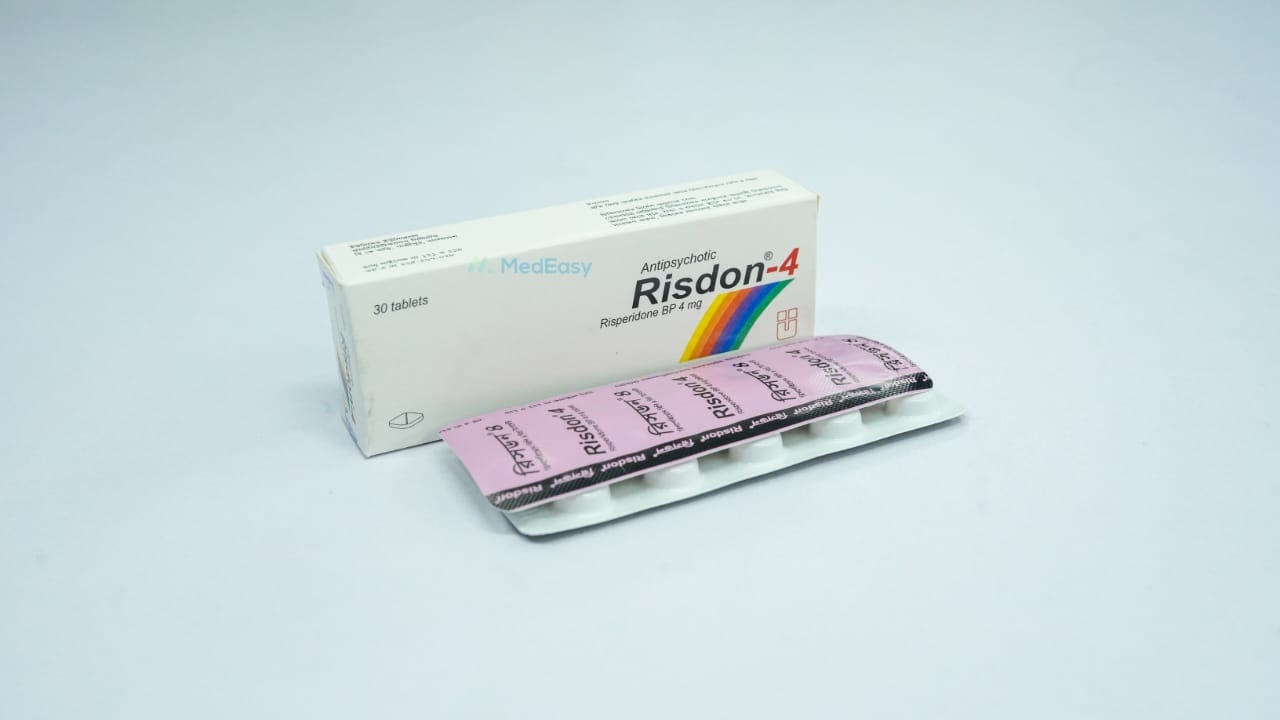
Risdon4 mg
Unimed Unihealth MFG. Ltd.
৳82.80
Add to cart


Frenia is FDA-approved for the treatment of schizophrenia in adults and in adolescents aged 13 to 17 years.
Frenia is approved as monotherapy for acute manic or mixed episodes of Bipolar I Disorder in adults and in children and adolescents aged 10 to 17 years. Frenia is also approved as adjunctive therapy with lithium or valproate for acute manic or mixed episodes of Bipolar I Disorder in adults (Adjunct use).
Frenia is approved for the treatment of irritability associated with autistic disorder (including symptoms such as aggression, self-injury, and severe tantrums) in children and adolescents aged 5 to 16 years.
Frenia is sometimes used off-label, under specialist supervision, for other psychotic disorders and severe behavioral disturbances based on clinical judgement; such use of Frenia is not an FDA-approved indication.
Each tablet of Risperidone contains Risperidone INN 1 mg, 2 mg, 3 mg, or 4 mg. Risperidone is also available as an oral solution containing Risperidone 1 mg/mL.
Frenia is an atypical (second-generation) antipsychotic medicine used to help manage symptoms of certain mental health conditions. Frenia works by helping to rebalance certain chemical messengers in the brain, particularly dopamine and serotonin, which are thought to be involved in symptoms such as hallucinations, delusions, and severe mood disturbances. Frenia is prescribed for adults and, in specific approved age groups, for children and adolescents with schizophrenia, bipolar mania, or irritability associated with autistic disorder. Frenia should only be used under the guidance of a qualified healthcare professional, who will determine the right dose and monitor for effectiveness and side effects. Frenia is not a cure, but when taken as prescribed, Frenia can help reduce symptoms and improve day-to-day functioning.
Antipsychotic (Atypical/Second-Generation)
Risperidone acts as a potent antagonist at central dopamine D2 receptors and serotonin 5-HT2A receptors, a combined action thought to underlie the antipsychotic and mood-stabilizing effects of Risperidone with a comparatively lower risk of extrapyramidal symptoms than older antipsychotics at usual doses. Risperidone also has affinity for alpha1- and alpha2-adrenergic receptors and histamine H1 receptors, which contributes to effects such as orthostatic hypotension and sedation seen with Risperidone. Risperidone is extensively metabolized in the liver, primarily via the CYP2D6 enzyme pathway, to an active metabolite (9-hydroxyrisperidone/paliperidone) that contributes to the overall clinical effect of Risperidone; because of this pathway, drugs that inhibit or induce CYP2D6 can significantly change blood levels of Risperidone.
The dose of Frenia is individualized by indication, age group, and patient response, and must be determined and adjusted only by a qualified healthcare professional. The table below outlines typical starting doses, titration, and target/effective ranges for Frenia; it is provided for general information and is not a substitute for a prescriber's instructions.
Risperidone is contraindicated in patients with known hypersensitivity to Risperidone or to any component of the Risperidone formulation. No other absolute contraindication to Risperidone is established.
Frenia should be used during pregnancy only if the potential benefit justifies the potential risk to the fetus, as data on Frenia in human pregnancy are limited. Neonates exposed to Frenia and other antipsychotic medicines during the third trimester of pregnancy are at risk of extrapyramidal and/or withdrawal symptoms after delivery, which may include agitation, abnormal muscle tone, tremor, somnolence, respiratory distress, or feeding difficulty; these symptoms have varied in severity and duration, and some newborns exposed to Frenia have required extended hospital monitoring. Any decision to continue or stop Frenia during pregnancy should be made together with a healthcare professional.
Frenia passes into breast milk. Breastfeeding is generally not recommended during treatment with Frenia unless a healthcare professional determines the benefit outweighs the risk; if Frenia is used while breastfeeding, the infant should be monitored for excess sedation, feeding difficulty, and extrapyramidal symptoms.
Likely effects of a Frenia overdose include drowsiness, sedation, tachycardia (fast heart rate), low blood pressure, and extrapyramidal symptoms (tremor, stiffness, abnormal movements). More severe overdose of Frenia may cause QT-interval prolongation, irregular heart rhythm, seizures, respiratory depression, and coma; the safety of doses of Frenia above 16 mg/day has not been evaluated in clinical trials. There is no specific antidote for Frenia overdose; management is supportive and symptomatic, with cardiac (ECG) monitoring, maintenance of the airway, oxygenation and ventilation as needed, and treatment of hypotension and other symptoms. Do not induce vomiting unless specifically directed to do so by a doctor or poison control center. If an overdose of Frenia is suspected, contact emergency medical services or a poison control center immediately.
Store Frenia according to the instructions on the product label/pack. Keep Frenia in its original container, protected from light and moisture, and out of the sight and reach of children. Do not use Frenia after the expiry date printed on the pack.
Frenia is approved for use in children and adolescents only for specific indications and age ranges: schizophrenia (13-17 years), Bipolar I mania monotherapy (10-17 years), and irritability associated with autistic disorder (5-16 years). Safety and effectiveness of Frenia are not established in children outside these approved ages and indications.
Elderly patients with dementia-related psychosis face an increased risk of death and cerebrovascular events when treated with antipsychotic drugs, including Frenia; Frenia is not approved for this population (see Precautions and Warnings – Boxed Warning). In elderly patients without dementia, Frenia is generally started at a lower dose (0.5 mg twice daily) with slower titration due to greater sensitivity to sedation and orthostatic hypotension.
Patients with renal impairment should be started on a lower dose of Frenia (0.5 mg twice daily) with slower, more gradual titration, as clearance of Frenia and its active metabolite is reduced.
Patients with hepatic impairment should be started on a lower dose of Frenia (0.5 mg twice daily) with slower, more gradual titration, as the free fraction of Frenia is increased in this population.
Frenia should be used with caution in patients with cardiovascular disease, a history of seizures, Parkinson's disease or Lewy body dementia (increased sensitivity to the effects of Frenia), and in patients at risk of aspiration.
Frenia is typically used as long-term maintenance therapy for schizophrenia; the need for continued treatment with Frenia should be periodically reassessed by a healthcare professional.
The efficacy of Frenia for acute mania has been established in short-term trials (approximately 3 weeks); a healthcare professional will decide whether continued treatment with Frenia is appropriate based on ongoing evaluation.
The efficacy of Frenia for this indication has been demonstrated in short-term trials (up to 8 weeks); if Frenia is continued longer-term, a healthcare professional should periodically reassess the ongoing need for and benefit of Frenia.
Atypical (second-generation) antipsychotic; benzisoxazole derivative; serotonin-dopamine antagonist
Risperidone exerts its effects mainly through antagonism of central dopamine D2 receptors and serotonin 5-HT2A receptors. Risperidone also has antagonist activity at alpha1- and alpha2-adrenergic receptors and H1-histaminergic receptors, but Risperidone has no appreciable affinity for cholinergic muscarinic receptors.
Frenia has specific, age-defined pediatric approvals and is not approved for use in all children. The current approved pediatric uses of Frenia are: schizophrenia in adolescents aged 13 to 17 years; Bipolar I Disorder (acute manic or mixed episodes), as monotherapy, in children and adolescents aged 10 to 17 years; and irritability associated with autistic disorder in children and adolescents aged 5 to 16 years. Safety and effectiveness of Frenia have not been established for schizophrenia below 13 years of age, for bipolar mania below 10 years of age, or for autistic disorder-related irritability below 5 years of age. Use of Frenia in children requires careful age- and weight-based dosing and close monitoring for weight gain, metabolic changes, sedation, and elevated prolactin, which have been reported at higher rates in pediatric patients treated with Frenia.
Q: What is Frenia 4 mg Tablet used for?
A: Frenia 4 mg Tablet is used to treat schizophrenia, acute manic or mixed episodes of Bipolar I Disorder, and irritability associated with autistic disorder, in specific adult and pediatric age groups.
Q: What is the usual dose of Frenia 4 mg Tablet?
A: The dose of Frenia 4 mg Tablet varies by indication, age, and individual response; a healthcare professional determines the starting dose and titration schedule for Frenia 4 mg Tablet, which typically begins low and is increased gradually.
Q: Can Frenia 4 mg Tablet be taken with other medicines?
A: Some medicines interact with Frenia 4 mg Tablet, including strong CYP2D6 inhibitors (such as fluoxetine and paroxetine), enzyme inducers (such as carbamazepine), CNS depressants, antihypertensives, and levodopa/dopamine agonists; always tell a healthcare professional about all medicines being taken before starting Frenia 4 mg Tablet.
Q: Is Frenia 4 mg Tablet safe to use during pregnancy?
A: Frenia 4 mg Tablet should only be used during pregnancy if a healthcare professional determines the benefit outweighs the risk, since babies exposed to Frenia 4 mg Tablet in the third trimester may develop extrapyramidal or withdrawal symptoms after birth; discuss the risks and benefits of Frenia 4 mg Tablet with a doctor before or during pregnancy.
Q: Can children take Frenia 4 mg Tablet?
A: Yes, Frenia 4 mg Tablet is approved for specific pediatric uses: schizophrenia in adolescents 13-17 years, bipolar mania in children/adolescents 10-17 years, and irritability associated with autistic disorder in children 5-16 years; Frenia 4 mg Tablet should only be given to a child under specialist medical supervision.
Q: What are the common side effects of Frenia 4 mg Tablet?
A: Common side effects of Frenia 4 mg Tablet include drowsiness, dizziness, headache, weight gain, increased appetite, restlessness, and gastrointestinal upset.
Q: What serious risks are associated with Frenia 4 mg Tablet?
A: Serious risks of Frenia 4 mg Tablet include Neuroleptic Malignant Syndrome, tardive dyskinesia, metabolic changes (weight gain, high blood sugar, abnormal cholesterol), elevated prolactin, and, in elderly patients with dementia-related psychosis, an increased risk of death; Frenia 4 mg Tablet is not approved for that population.
Q: What should be done if a dose of Frenia 4 mg Tablet is missed?
A: If a dose of Frenia 4 mg Tablet is missed, take the missed dose of Frenia 4 mg Tablet as soon as remembered unless it is nearly time for the next dose, in which case the missed dose of Frenia 4 mg Tablet should be skipped; do not take a double dose of Frenia 4 mg Tablet.
Q: Can Frenia 4 mg Tablet be stopped suddenly?
A: Frenia 4 mg Tablet should not be stopped suddenly without medical advice, as abruptly stopping Frenia 4 mg Tablet can cause symptoms to return or cause withdrawal-type effects; any change in Frenia 4 mg Tablet treatment should be guided by a healthcare professional.
Disclaimer
The information provided is accurate to the best of our knowledge, but it does not replace professional medical advice. We cannot guarantee its completeness or accuracy, and the absence of specific information about a drug should not be taken as an endorsement. We are not responsible for any consequences arising from this information, so please consult a healthcare professional for any concerns or questions.