10% Off
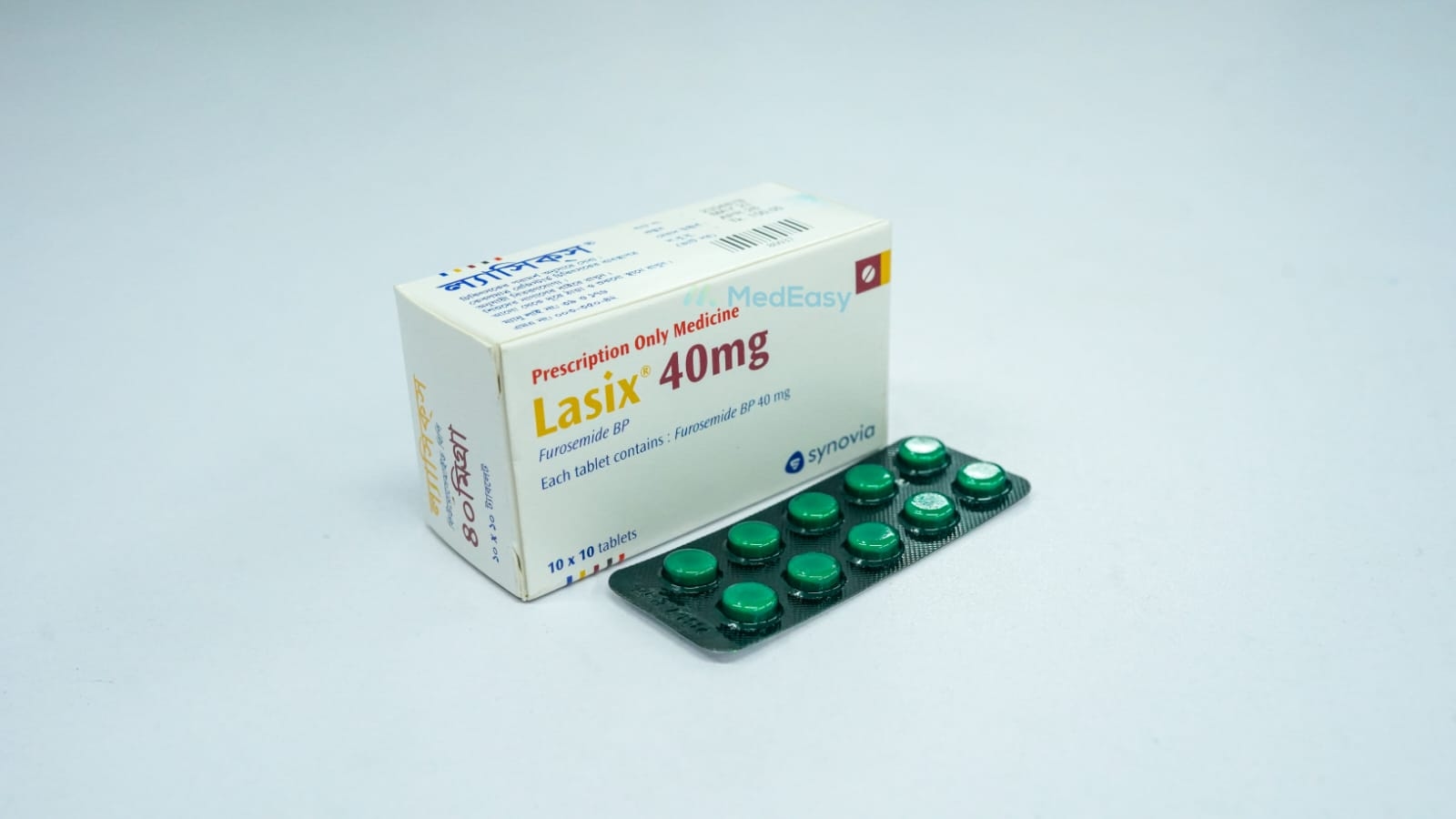
Lasix40 mg
Synovia Pharma PLC
৳9.00
Add to cart
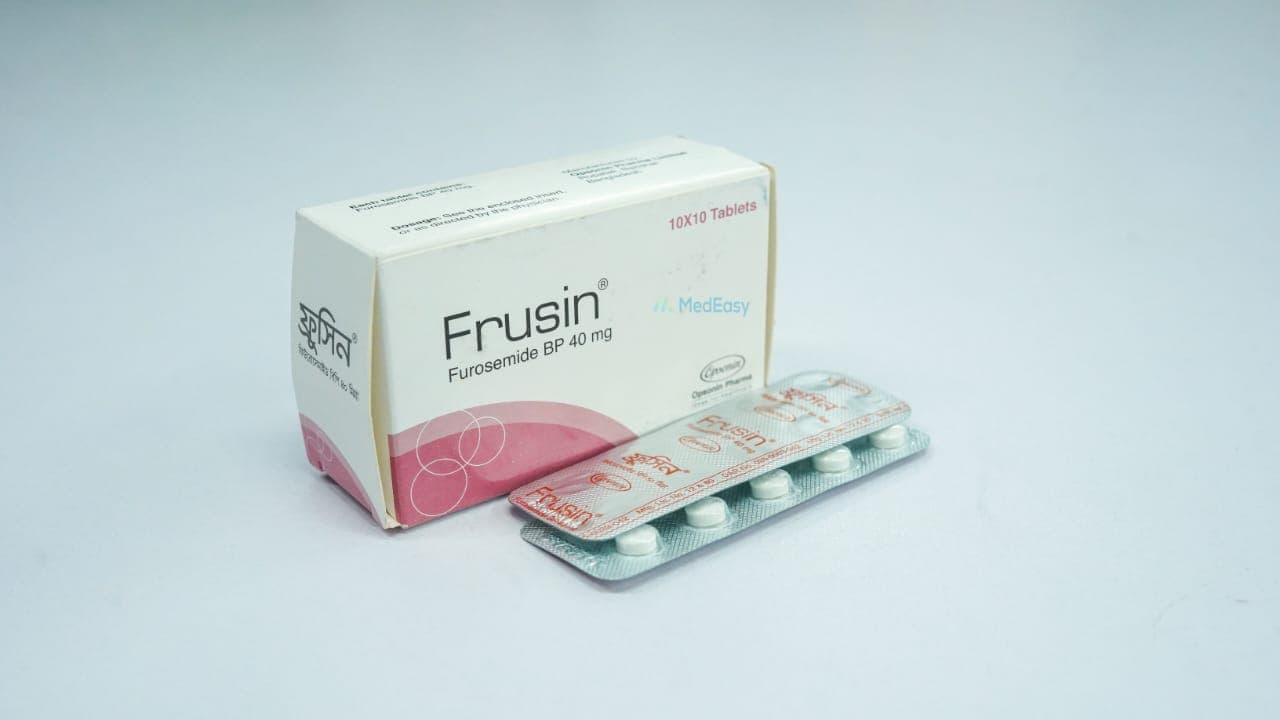
Frusin 40 mg Tablet is available on MedEasy for ৳0.92 per piece, with home delivery anywhere in Bangladesh. It is manufactured by Opsonin Pharma Ltd. Its generic name is Furosemide.

Frusin is a loop diuretic ("water pill") with FDA-approved and guideline-supported uses across several conditions:
The specific dose and form (tablet, oral solution, or injection) depend on the indication and severity — see Dosage and Administration.
Each Furosemide tablet, oral solution, or injection contains Furosemide as the active pharmaceutical ingredient. Common strengths marketed include:
Formulations also contain standard pharmaceutical excipients that do not affect the therapeutic action of Furosemide.
Frusin is a potent loop diuretic (a "water pill") belonging to the sulfonamide-derivative class of drugs, chemically distinct from thiazide diuretics. It is one of the most widely used diuretics worldwide because of its rapid onset and strong ("high-ceiling") diuretic effect, even in patients with reduced kidney function.
Frusin works by increasing the excretion of salt (sodium and chloride) and water by the kidneys, which reduces fluid overload in conditions such as heart failure, liver disease, and kidney disease, and helps lower blood pressure. It is available as oral tablets, an oral solution, and an injectable form for use when rapid or parenteral therapy is required.
Frusin belongs to the loop diuretic (high-ceiling diuretic) class, a sulfonamide-derivative group of medicines distinct from thiazide and potassium-sparing diuretics.
Furosemide acts primarily on the thick ascending limb of the loop of Henle in the kidney, where it inhibits the Na+/K+/2Cl- co-transporter. This blocks reabsorption of sodium, potassium, and chloride, leading to a marked increase in excretion of these electrolytes along with water. Furosemide also increases excretion of calcium and magnesium.
Dosing of Frusin is individualized according to indication, severity, and patient response, using the lowest effective dose. General guidance is summarized below; see Dosage for indication-specific details.
Frusin tablets/solution may be taken with or without food, generally in the morning (and, if a second dose is needed, in the early afternoon) to avoid nighttime urination. Swallow tablets with a glass of water; the oral solution should be measured with an accurate dosing device. The injectable form of Frusin is administered by a healthcare professional intravenously (slowly) or intramuscularly. Do not increase the dose or frequency on your own — take Frusin exactly as prescribed.
Frusin has several clinically significant drug interactions:
Furosemide is contraindicated in:
Side effects of Frusin are generally dose-related and most often reflect its diuretic and electrolyte-depleting action.
Pregnancy: Frusin should be used during pregnancy only if clearly needed and if the potential benefit justifies the potential risk to the fetus. Animal studies have shown adverse effects at high doses, and adequate, well-controlled human studies are lacking; fetal growth should be monitored if Frusin is used during pregnancy. Always consult a physician before using Frusin during pregnancy.
Lactation: Frusin passes into breast milk and may inhibit lactation (milk production). Use during breastfeeding should occur only under medical supervision, weighing the benefit to the mother against potential risk to the infant; consult a physician before use.
Frusin requires careful monitoring during use:
Overdose of Frusin can cause profound diuresis leading to dehydration, blood volume depletion, hypotension, electrolyte imbalance (particularly hypokalemia and hypochloremic alkalosis), and circulatory collapse. Symptoms may include severe thirst, weakness, dizziness, confusion, muscle cramps, low blood pressure, and reduced urine output.
If an overdose of Frusin is suspected, seek immediate medical attention or contact a poison control center/emergency services right away. Treatment is supportive, focusing on fluid and electrolyte replacement and monitoring under medical supervision; do not attempt to manage a suspected overdose at home.
Store at room temperature (below 30°C), protected from light and moisture. Keep out of reach of children. Do not use tablets that have changed color.
Duration of Frusin therapy depends on the underlying condition. Acute pulmonary edema typically requires only short-term (days) use, while chronic conditions such as heart failure, cirrhosis with ascites, or chronic kidney disease may require long-term, ongoing therapy with periodic dose adjustment. Frusin for hypertension is generally continued long-term as part of an overall treatment plan. Treatment duration and the need for continued therapy should always be determined by the prescribing physician based on clinical response and regular monitoring.
Furosemide is classified as a loop diuretic (high-ceiling diuretic), within the broader sulfonamide-derivative (non-antibacterial) chemical class of medicines.
Furosemide inhibits the Na+/K+/2Cl- co-transporter (NKCC2) located on the luminal membrane of the thick ascending limb of the loop of Henle in the nephron. By blocking this transporter, Furosemide prevents reabsorption of sodium, potassium, and chloride ions, which increases their excretion, along with obligatory water, into the urine. This produces a rapid and pronounced ("high-ceiling") diuretic effect, even in patients with reduced glomerular filtration rate. Furosemide also promotes renal excretion of calcium and magnesium and has some direct venodilatory effect that can provide rapid symptomatic relief in acute pulmonary edema, prior to the onset of diuresis.
C
Frusin is used in children for the treatment of edema associated with congestive heart failure, renal disease (including nephrotic syndrome), and hepatic disease, using weight-based dosing (initial 2 mg/kg orally as a single dose, increased cautiously by 1–2 mg/kg no sooner than every 6–8 hours; not to exceed 6 mg/kg/day) under close physician supervision.
Use in premature infants requires particular caution: Frusin has been associated with nephrocalcinosis/nephrolithiasis and may increase the risk of a persistent patent ductus arteriosus when given in the first weeks of life; renal function and, where appropriate, renal ultrasonography should be monitored. Safety and efficacy for indications outside these established uses have not been fully established in all pediatric age groups, and pediatric use should always be guided and monitored by a physician.
Q: What is Frusin 40 mg Tablet used for?
A: Frusin 40 mg Tablet is a loop diuretic ("water pill") used to treat fluid retention (edema) caused by heart failure, liver disease (cirrhosis), and kidney disease, including nephrotic syndrome. It is also used, often together with other medicines, to treat high blood pressure (hypertension).
Q: How should I take Frusin 40 mg Tablet?
A: Take Frusin 40 mg Tablet exactly as prescribed by your physician, usually once or twice daily, generally in the morning to avoid needing to urinate at night. It can be taken with or without food. Do not change your dose or stop Frusin 40 mg Tablet without consulting your doctor, as this can affect fluid balance and blood pressure control.
Q: What are the common side effects of Frusin 40 mg Tablet?
A: Common side effects of Frusin 40 mg Tablet include increased urination, dizziness, low blood pressure (especially on standing up), electrolyte disturbances (such as low potassium or sodium), dehydration, headache, and increased blood sugar or uric acid levels. Contact your doctor if you experience severe dizziness, muscle cramps, irregular heartbeat, ringing in the ears, or hearing changes.
Q: Can Frusin 40 mg Tablet be used during pregnancy or breastfeeding?
A: Frusin 40 mg Tablet should be used during pregnancy only if clearly needed, since animal studies suggest possible risk and adequate human studies are lacking; a physician must weigh the potential benefit against potential risk to the fetus. Frusin 40 mg Tablet also passes into breast milk and may reduce milk production, so it should be used during breastfeeding only under medical supervision. Always consult your doctor before using Frusin 40 mg Tablet if you are pregnant or breastfeeding.
Q: Who should not take Frusin 40 mg Tablet?
A: Frusin 40 mg Tablet should not be used by people with a known allergy to Frusin 40 mg Tablet or to sulfonamide-derivative medicines, patients with anuria (no urine production), or those with severe electrolyte depletion or hepatic pre-coma/coma associated with severe liver cirrhosis, until that condition is corrected. Always inform your doctor of your full medical history before starting Frusin 40 mg Tablet.
Q: What should I do if I miss a dose or take too much Frusin 40 mg Tablet?
A: If you miss a dose of Frusin 40 mg Tablet, take it as soon as you remember, but skip it if it is almost time for your next dose — do not double the dose. If you or someone else has taken too much Frusin 40 mg Tablet and shows symptoms such as severe thirst, weakness, dizziness, or very low urine output, seek immediate medical attention or contact emergency services/a poison control center right away.
Disclaimer
The information provided is accurate to the best of our knowledge, but it does not replace professional medical advice. We cannot guarantee its completeness or accuracy, and the absence of specific information about a drug should not be taken as an endorsement. We are not responsible for any consequences arising from this information, so please consult a healthcare professional for any concerns or questions.