%2F5-ml.jpg&w=3840&q=100)
8% Off
Maganta Plus200 ml
Square Pharmaceuticals PLC.
৳101.20
Add to cart
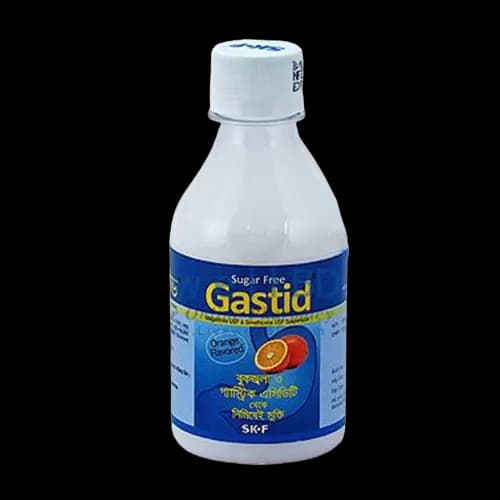
Gastid 200 ml Oral Suspension is available on MedEasy for ৳110.40 per 200 ml bottle, with home delivery anywhere in Bangladesh. It is manufactured by Eskayef Bangladesh Ltd. Its generic name is Magaldrate + Simethicone.

Gastid is an antacid-antiflatulent combination used for the short-term relief of gastrointestinal discomfort caused by excess stomach acid and trapped gas.
Gastid provides symptomatic relief only; it does not treat the underlying cause of acid-related disease and is not a substitute for evaluation and treatment of persistent or severe symptoms.
Each unit dose of Magaldrate + Simethicone typically contains magaldrate (a hydrated complex of magnesium and aluminum hydroxide, commonly 480 mg) and simethicone (an antiflatulent, commonly 20 mg), formulated as a chewable tablet or oral suspension.
Exact strengths vary by brand and dosage form; check the product label for the specific formulation dispensed.
Gastid is a fixed-dose combination of magaldrate, an antacid that neutralizes gastric acid, and simethicone, an antiflatulent (defoaming agent) that reduces gas-related bloating and discomfort.
It is available as chewable tablets and as an oral suspension, and is used for short-term, on-demand relief of acid indigestion and gas symptoms.
Gastid belongs to the antacid and antiflatulent combination class of gastrointestinal drugs.
Magaldrate + Simethicone combines two complementary mechanisms:
| Formulation | Dose | Frequency |
|---|---|---|
| Chewable tablet | 1–2 tablets, chewed thoroughly | 20–60 minutes after meals and at bedtime, or as symptoms occur |
| Oral suspension | 1–2 teaspoonfuls (5–10 mL) | 20–60 minutes after meals and at bedtime, or as symptoms occur |
Do not exceed the maximum dose stated on the product label (commonly up to 4 tablets or 4 teaspoonfuls in 24 hours, unless a physician advises otherwise). Do not use continuously for more than 2 weeks without consulting a physician.
Safety and efficacy of Gastid in children have not been well established; pediatric use should only be under a physician's guidance and supervision.
Use with caution and under medical supervision in patients with reduced kidney function; see Precautions and Warnings.
Chewable tablets should be chewed thoroughly before swallowing. The oral suspension should be shaken well before use and may be taken directly or followed by a small amount of water. Other oral medicines should be spaced at least 2 hours apart from Gastid (see Interactions).
Chew tablets thoroughly before swallowing. Shake the oral suspension well before measuring the dose. Take Gastid 20–60 minutes after meals and at bedtime for best effect, and separate its administration from other oral medicines by at least 2 hours.
Gastid can bind to or alter the absorption of several oral medicines when taken at the same time, reducing their effectiveness. Clinically significant interactions include:
To avoid these interactions, separate administration of Gastid from other oral medicines by at least 2 hours (or longer for tetracyclines/fluoroquinolones, per product-specific advice), or consult a physician or pharmacist.
Magaldrate + Simethicone is contraindicated in patients with known hypersensitivity to magaldrate, simethicone, or any component of the formulation.
Gastid is generally well tolerated when used as directed. Gastrointestinal effects are the most commonly reported and are usually related to the magnesium/aluminum balance:
Rarely, and mainly with prolonged high-dose use or in patients with renal impairment, symptoms of magnesium or aluminum accumulation (e.g., hypermagnesemia) may occur; see Precautions and Warnings.
Gastid should be used during pregnancy only if clearly needed and if the potential benefit justifies the potential risk to the fetus; avoid excessive or prolonged dosing. Consult a physician before use during pregnancy.
Small amounts of the components may pass into breast milk; no significant problems have been commonly reported with occasional use, but a physician should be consulted before use during breastfeeding, particularly with regular or high-dose use.
Use Gastid with caution in the following situations:
Overdose with Gastid is uncommon with normal use but excessive or prolonged intake, especially in patients with renal impairment, may cause electrolyte disturbances (hypermagnesemia), diarrhea, or aluminum accumulation. Symptoms may include severe diarrhea, muscle weakness, low blood pressure, or confusion.
If overdose is suspected, seek immediate medical attention or contact a poison control center. Do not attempt specific home treatment without medical guidance.
Store at room temperature (below 30°C), away from light and moisture. Keep out of reach of children.
Renal impairment: Use Gastid with caution and only under medical supervision, due to the risk of magnesium and aluminum accumulation; see Precautions and Warnings.
Hepatic impairment: No well-established dose adjustment is required, but general caution is advised as with any medicine in significant liver disease.
Elderly: May be more prone to electrolyte disturbances and altered bowel habit; use the lowest effective dose.
Children: Safety and efficacy have not been well established; use only under a physician's supervision.
Gastid is intended for short-term, symptomatic, or as-needed use. It should not be used continuously for more than 2 weeks unless directed by a physician. Persistent symptoms warrant medical evaluation.
Antacid + Antiflatulent (gastrointestinal agent combination).
Magaldrate + Simethicone works through two complementary actions: magaldrate chemically neutralizes excess gastric hydrochloric acid, raising intragastric pH and reducing pepsin activity without marked acid rebound, while simethicone physically reduces the surface tension of gas bubbles in the gut so they coalesce and are more easily expelled, relieving bloating and flatulence.
Safety and efficacy of Gastid in children have not been well established through controlled clinical studies. If use is considered necessary in a child, it should only be under the direct guidance and supervision of a physician, with attention to appropriate dose and duration.
Q: What is Gastid 200 ml Oral Suspension used for?
A: Gastid 200 ml Oral Suspension is used to relieve symptoms of acid indigestion, heartburn, sour stomach, and gas-related bloating or flatulence. It provides quick symptomatic relief but does not treat the underlying cause of acid-related conditions.
Q: How should I take Gastid 200 ml Oral Suspension?
A: Take Gastid 200 ml Oral Suspension as a chewable tablet (chewed thoroughly) or as an oral suspension (shaken well before use), usually 20–60 minutes after meals and at bedtime, or as symptoms occur, without exceeding the maximum dose on the product label.
Q: Can I take Gastid 200 ml Oral Suspension with other medicines?
A: Gastid 200 ml Oral Suspension can reduce the absorption of many oral medicines, including tetracycline and fluoroquinolone antibiotics, digoxin, levothyroxine, and iron supplements. Separate Gastid 200 ml Oral Suspension from other oral medicines by at least 2 hours, and consult your physician or pharmacist if you take other regular medications.
Q: Is Gastid 200 ml Oral Suspension safe during pregnancy or breastfeeding?
A: Gastid 200 ml Oral Suspension should be used during pregnancy only if clearly needed, avoiding excessive or prolonged dosing, and only after consulting a physician. Small amounts may pass into breast milk; consult a physician before use while breastfeeding.
Q: Who should not take Gastid 200 ml Oral Suspension?
A: Gastid 200 ml Oral Suspension should not be used by anyone with a known hypersensitivity (allergy) to magaldrate, simethicone, or any component of the product. Patients with kidney disease should use it only under medical supervision due to the risk of magnesium and aluminum accumulation.
Q: What should I do if I miss a dose or take too much Gastid 200 ml Oral Suspension?
A: Gastid 200 ml Oral Suspension is usually taken as needed, so a missed dose is generally not a concern; simply take the next dose when required. If you suspect you have taken too much, especially if you have kidney problems, seek immediate medical attention or contact a poison control center.
Disclaimer
The information provided is accurate to the best of our knowledge, but it does not replace professional medical advice. We cannot guarantee its completeness or accuracy, and the absence of specific information about a drug should not be taken as an endorsement. We are not responsible for any consequences arising from this information, so please consult a healthcare professional for any concerns or questions.