10% Off
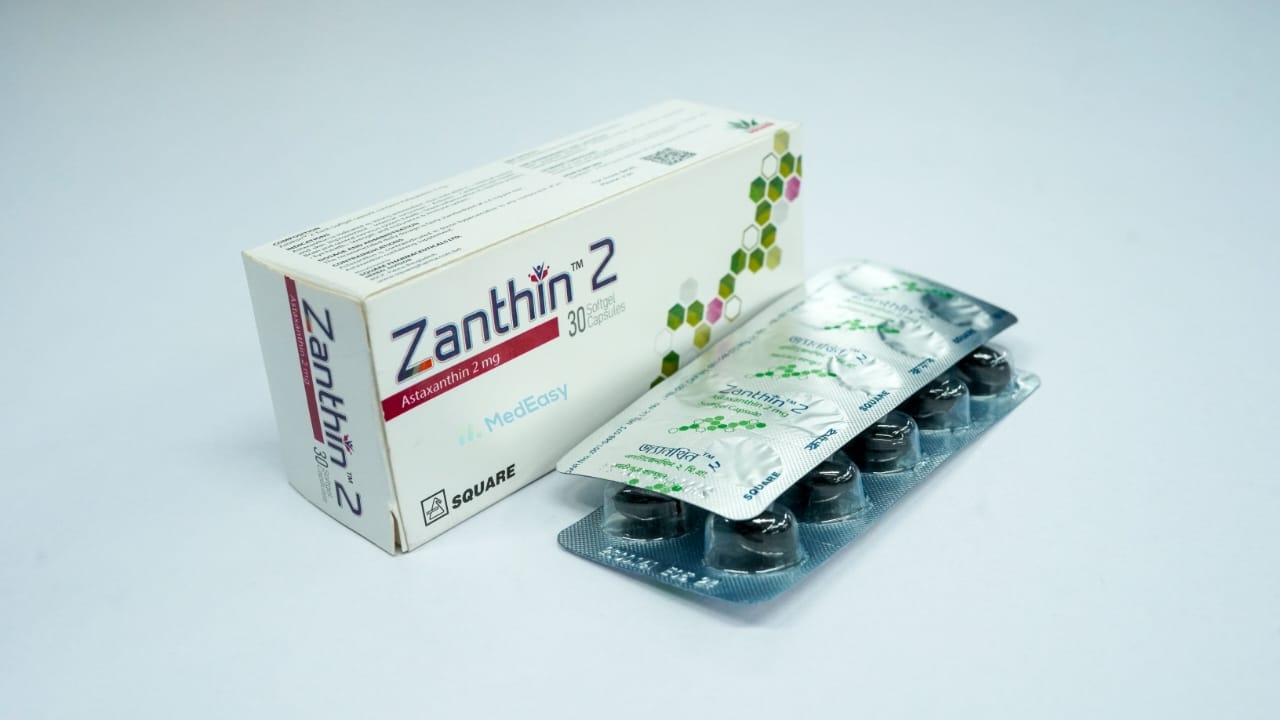
Zanthin2 mg
Square Pharmaceuticals PLC.
৳108.00
Add to cart

Greenox 2 mg Capsule is available on MedEasy for ৳10.81 per piece, with home delivery anywhere in Bangladesh. It is manufactured by Julphar Bangladesh Ltd. Its generic name is Astaxanthin.

Greenox is a dietary supplement, not an FDA-approved drug for the treatment of any disease. Its use is supported by varying levels of evidence, summarized below.
None of the above uses are established, FDA-approved treatments for a specific disease. Greenox should not replace prescribed medical therapy, and any therapeutic claim should be discussed with a physician.
Each softgel/capsule typically contains Astaxanthin as the active carotenoid, commonly sourced from the microalgae Haematococcus pluvialis (natural source) or produced synthetically. Common marketed strengths include 4 mg, 6 mg, 8mg and 12 mg of Astaxanthin per softgel, often combined with an oil base (e.g. olive oil, sunflower oil) to aid absorption of this fat-soluble compound. Exact composition and strength vary by product/brand.
Greenox is a naturally occurring reddish-pink pigment belonging to the carotenoid (xanthophyll) family of compounds. It is found in microalgae, and accumulates up the food chain in organisms such as salmon, trout, shrimp, and krill, giving them their characteristic color.
Greenox is best known as one of the most potent naturally occurring antioxidants studied to date. Unlike some other carotenoids, its molecular structure allows it to span the entire cell membrane, which is thought to give it a distinctive ability to neutralize free radicals both inside and at the surface of cells. It is marketed as an oral dietary supplement, most commonly in softgel capsule form, for general antioxidant, skin, eye, and exercise-recovery support.
Dietary Supplement — Antioxidant (Carotenoid/Xanthophyll)
Astaxanthin is a xanthophyll carotenoid with a unique molecular structure that spans the lipid bilayer of cell membranes. This positioning allows it to scavenge reactive oxygen species (free radicals) and quench singlet oxygen at multiple points within the membrane, distinguishing it from carotenoids such as beta-carotene.
Astaxanthin is fat-soluble and absorption is enhanced when taken with a meal containing dietary fat. It is transported in the blood via lipoproteins, distributed to tissues, metabolized primarily in the liver, and eliminated mainly through the feces (which can cause harmless reddish stool discoloration at higher intakes).
| Use | Typical adult dose | Notes |
|---|---|---|
| General antioxidant/wellness support | 4–8 mg once daily | Take with a meal containing fat |
| Skin health support | 4–12 mg once daily | Effects generally assessed after 8–12 weeks of regular use |
| Eye comfort/exercise recovery support | 6–12 mg once daily | Individualize based on product labeling and physician advice |
There is no standardized prescription dose for Greenox because it is regulated as a dietary supplement, not a drug. Always follow the specific product's labeled dose or a physician's/qualified nutritionist's advice, and do not exceed the labeled maximum without medical supervision.
Greenox has no well-established major drug interactions at typical supplement doses. However, the following theoretical/clinically-relevant cautions apply:
Astaxanthin is contraindicated in individuals with known hypersensitivity to Astaxanthin, to algae-derived products, or to any excipient in the specific formulation.
Greenox is generally well tolerated at typical supplement doses. Reported side effects are usually mild:
Data on the safety of Greenox during pregnancy and breastfeeding are insufficient to establish safety. As a precaution, Greenox should be used during pregnancy or lactation only if clearly needed and the potential benefit justifies the potential risk to the fetus or infant, and only after consulting a physician. Routine use for general wellness purposes is not recommended during pregnancy or breastfeeding without medical advice.
There is no well-documented case of serious toxicity from Greenox overdose in humans, and it is generally regarded as having a wide margin of safety at typical supplement intakes. Taking substantially more than the labeled dose may increase the likelihood of mild gastrointestinal upset or more pronounced orange/red stool discoloration. If a large amount has been accidentally ingested, or if any concerning symptoms develop, seek immediate medical attention or contact a poison control center/emergency services rather than attempting home treatment.
Store Greenox at room temperature (below 30°C) in a tightly closed container, protected from light and moisture, as the pigment is sensitive to degradation from light exposure. Keep out of reach of children.
As a dietary supplement, Greenox does not have a fixed, disease-specific treatment duration. It is typically used on an ongoing or cyclical basis (e.g. continuous daily use, or courses of 8–12 weeks reassessed periodically) according to product labeling or a physician's/nutritionist's advice. Long-term use beyond product labeling should be discussed with a healthcare provider.
Carotenoid; Xanthophyll pigment; Antioxidant dietary supplement
Astaxanthin is a xanthophyll carotenoid whose molecular structure spans the cell membrane, allowing it to scavenge free radicals and quench singlet oxygen both within and at the surface of cell membranes. This gives it potent antioxidant activity, along with mild modulation of inflammatory signaling pathways, which underlies its proposed benefits for skin, eye, exercise-recovery, and general oxidative-stress support.
The safety and efficacy of Greenox in children and adolescents have not been established. Greenox is not recommended for pediatric use for general wellness purposes without the guidance of a physician, and should not be given to infants or young children.
Q: What is Greenox 2 mg Capsule used for?
A: Greenox 2 mg Capsule is a dietary antioxidant supplement used mainly to support general antioxidant status, skin health, eye comfort, and exercise recovery. It is not an FDA-approved treatment for any disease, and should be viewed as a wellness supplement rather than a medication.
Q: What is the usual dose of Greenox 2 mg Capsule?
A: Typical adult supplement doses range from 4 mg to 12 mg once daily, taken with a meal containing some fat to improve absorption. Always follow the specific product label or a physician's advice, as dosing is not standardized the way prescription medicines are.
Q: Are there any side effects of Greenox 2 mg Capsule?
A: Greenox 2 mg Capsule is generally well tolerated. The most notable effect is a harmless orange-to-red discoloration of the stool at higher doses, which is not a cause for concern. Mild nausea or stomach upset can occur in some people. Rare allergic reactions are possible in those sensitive to Greenox 2 mg Capsule or its algal source.
Q: Can Greenox 2 mg Capsule be taken during pregnancy or breastfeeding?
A: Safety data in pregnancy and breastfeeding are insufficient. Greenox 2 mg Capsule should only be used during pregnancy or lactation if clearly needed and a physician confirms the potential benefit outweighs any potential risk; routine wellness use is not recommended without medical advice in these situations.
Q: Can Greenox 2 mg Capsule be taken with blood thinners or during chemotherapy?
A: Greenox 2 mg Capsule may have a mild antiplatelet effect, so caution is advised with anticoagulant or antiplatelet medicines due to a theoretical added bleeding risk. Patients undergoing chemotherapy or radiotherapy should consult their oncologist before taking Greenox 2 mg Capsule, since antioxidant supplements could theoretically interfere with the oxidative mechanisms some cancer treatments rely on.
Q: What happens if I take too much Greenox 2 mg Capsule?
A: Greenox 2 mg Capsule has a wide margin of safety, and no serious toxicity has been well documented from overdose. Excess intake may cause more noticeable stool discoloration or mild stomach upset. If a large amount is accidentally taken or concerning symptoms appear, seek immediate medical attention or contact a poison control center rather than treating it at home.
Disclaimer
The information provided is accurate to the best of our knowledge, but it does not replace professional medical advice. We cannot guarantee its completeness or accuracy, and the absence of specific information about a drug should not be taken as an endorsement. We are not responsible for any consequences arising from this information, so please consult a healthcare professional for any concerns or questions.