
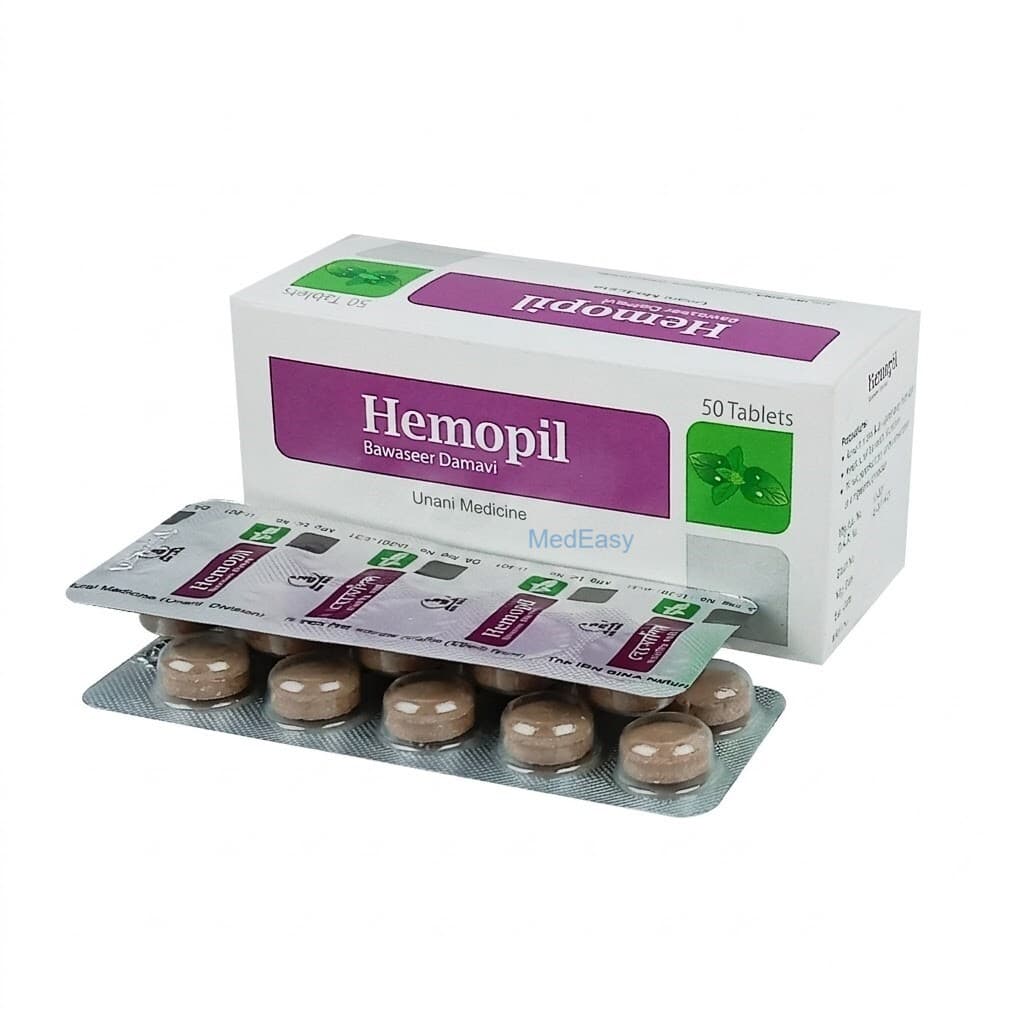

Medicine overview
Indications of Hemopil
Hemopil is a traditional Unani (herbal/polyherbal) formulation historically used in Unani medicine for the symptomatic support of Bawaseer Damavi (the bleeding-type variant of piles/hemorrhoids in traditional Unani classification).
Evidence classification
- Traditional/anecdotal use: Hemopil is used within traditional Unani practice for symptomatic relief of bleeding piles. This use is based on long-standing traditional formulary categorization and practitioner experience, not on robust modern randomized controlled clinical trials.
- Not an evidence-based first-line therapy: Hemopil is not supported by the same level of clinical evidence as conventional pharmaceutical treatments for hemorrhoids and should not be considered a substitute for medical or surgical evaluation and treatment.
Hemopil should be used only as a supportive/adjunct measure under the guidance of a qualified Unani physician (hakim) or medical practitioner, alongside appropriate lifestyle measures (adequate fluid and fiber intake, avoidance of straining), and not as a replacement for evaluation of the underlying cause of bleeding.
Composition
Habbe Bawaseer Damavi is a polyherbal Unani formulation. Exact composition, standardized ratios, and excipients vary by manufacturer, as this is a traditional formulary product rather than a single standardized pharmaceutical entity. Buyers/patients should refer to the specific manufacturer's product label/pack insert for the exact list of herbal ingredients and their quantities.
In Unani formularies, "Habbe Bawaseer" type pill preparations for the bleeding-type ("Damavi") variant of piles typically combine multiple traditional herbal drugs selected for astringent, hemostatic (styptic), and anti-inflammatory properties as understood in Unani medicine; the exact herbal composition is manufacturer-specific and was not independently verified against a single fixed formula.
Description
Hemopil is a traditional Unani pill (Habbe = pill/tablet) formulated for Bawaseer Damavi — the bleeding subtype of piles (hemorrhoids) as classified in traditional Unani medicine ("Damavi" refers to the blood/bleeding-related variant).
It is manufactured and marketed as a traditional/herbal medicine rather than as a modern allopathic pharmaceutical, and its formulation reflects classical Unani pharmacopeial tradition rather than a single internationally standardized drug entity.
Therapeutic Class
Hemopil belongs to the category of traditional Unani (herbal/polyherbal) formulations used for symptomatic management of piles (hemorrhoids), specifically the bleeding-type variant. It is not classified within a modern allopathic pharmacological drug class.
Pharmacology
Habbe Bawaseer Damavi is a polyherbal Unani preparation, and its mechanism of action has not been characterized through modern pharmacological or pharmacokinetic studies to the standard applied to conventional pharmaceuticals.
Within traditional Unani medicine theory, the herbal ingredients used in formulations of this type are selected for properties traditionally described as astringent (Qabiz), styptic/hemostatic (to help reduce bleeding), and anti-inflammatory, intended to provide symptomatic relief in bleeding piles. These effects are based on traditional Unani pharmacological concepts and practitioner experience rather than on validated modern mechanism-of-action data, receptor pharmacology, or controlled pharmacokinetic studies.
Dosage & Administration of Hemopil
General guidance
Dosage of Hemopil varies by manufacturer and product strength/pack. There is no single internationally standardized dose because this is a traditional Unani formulary product, not a fixed modern pharmaceutical.
| Population | Typical guidance |
|---|---|
| Adults | Use strictly as directed on the manufacturer's product label or as prescribed by a qualified Unani physician (hakim)/practitioner; typically taken orally with water, as advised. |
| Children | Not recommended without direct supervision of a qualified practitioner; see Use in Special Populations. |
| Elderly | Use under practitioner guidance; underlying causes of bleeding should be medically evaluated first. |
Do not exceed the dose or duration recommended by the prescribing practitioner or the product label. If symptoms (bleeding, pain, prolapse) persist or worsen, seek prompt conventional medical evaluation rather than continuing self-treatment.
Administration of Hemopil
Hemopil is taken orally, typically with water, as directed on the product packaging or by the prescribing practitioner. It should be taken consistently as advised, and not combined with other remedies for the same condition without professional guidance.
Interaction of Hemopil
Formal, controlled drug-interaction studies for Hemopil have not been conducted, as is typical for traditional polyherbal Unani formulations. However, general caution is advised:
- Concurrent use with other herbal or Unani remedies intended for the same condition should be avoided unless directed by a qualified practitioner, to reduce the risk of unpredictable additive effects.
- Patients taking anticoagulant or antiplatelet medicines, or other prescription medicines, should inform their physician or hakim before using Hemopil, since herbal ingredients in traditional formulations can occasionally have unpredictable interactions with conventional medicines.
If you are on any regular prescription medication, consult your physician or hakim before starting Hemopil.
Contraindications
Habbe Bawaseer Damavi is contraindicated in individuals with known hypersensitivity to any of its herbal components.
Side Effects of Hemopil
Because Hemopil is a traditional polyherbal formulation, a formally characterized modern adverse-effect profile (as would exist for a standard pharmaceutical) is not established. Reported or theoretically possible effects, based on general experience with herbal formulations of this type, may include:
- Mild gastrointestinal discomfort (e.g., nausea, stomach upset)
- Allergic reactions (e.g., skin rash or itching) in sensitive individuals
If any unexpected or bothersome symptom occurs while using Hemopil, discontinue use and consult a physician or hakim.
Pregnancy & Lactation
Safety data for Hemopil in pregnancy and lactation have not been established through controlled modern studies. As a general precaution with traditional herbal formulations of unverified safety in pregnancy and breastfeeding, Hemopil should be avoided during pregnancy and breastfeeding unless specifically advised and supervised by a qualified physician or hakim, who can weigh the potential benefit against the unknown risk.
Precautions & Warnings
Hemopil is a traditional Unani formulation, and the following precautions apply:
- Standardized composition and dosing vary by manufacturer and have not been independently verified beyond general Unani formulary categorization; use only a reputable, appropriately licensed product.
- Use only under the guidance of a qualified Unani physician (hakim) or medical practitioner.
- Bleeding piles should always be medically assessed, since rectal bleeding can occasionally be a sign of other, more serious gastrointestinal conditions that require conventional diagnosis (e.g., colonoscopy) rather than reliance on a traditional remedy alone.
- Seek prompt conventional medical evaluation if you experience: active or heavy rectal bleeding, symptoms of anemia (e.g., unusual fatigue, dizziness, pallor), severe pain, prolapse (protrusion) of hemorrhoidal tissue, or symptoms that persist despite use of this product.
- Avoid use in children and during pregnancy/breastfeeding without professional guidance (see Use in Special Populations and Pregnancy and Lactation).
- See Contraindications for hypersensitivity information.
Overdose Effects of Hemopil
Specific overdose data for Hemopil are not established. As with any medicine taken in excess of the recommended dose, exceeding the advised amount could increase the risk of gastrointestinal or other adverse effects. If an overdose is suspected, seek immediate medical attention or contact a poison control center/emergency services rather than attempting home treatment.
Storage Conditions
Store at room temperature (below 30°C), away from light and moisture. Keep out of reach of children.
Use In Special Populations
Children: Use of Hemopil in children is not well studied; safety and efficacy in the pediatric population have not been established. Avoid use in children without direct supervision and specific guidance from a qualified Unani physician or pediatrician.
Elderly: No specific dose adjustment data are available; use under practitioner guidance, and ensure the underlying cause of any bleeding is medically evaluated, since older adults are at higher risk for other causes of rectal bleeding.
Pregnancy/breastfeeding: See Pregnancy and Lactation section — avoid unless specifically advised by a qualified physician or hakim.
Patients with active/heavy rectal bleeding, anemia symptoms, severe pain, or prolapse: These patients should undergo prompt conventional medical evaluation rather than relying on Hemopil alone. See Precautions and Warnings.
Duration Of Treatment
Duration of use of Hemopil should be as directed by the manufacturer's label or the prescribing Unani physician/practitioner. If symptoms do not improve within a reasonable period, or if they worsen, treatment should be reassessed and conventional medical evaluation sought rather than prolonging self-treatment indefinitely.
Drug Classes
Traditional Unani polyherbal formulation (Habbe/pill dosage form) for symptomatic support of bleeding piles (Bawaseer Damavi); not classified within a modern allopathic pharmacological drug class.
Mode Of Action
Habbe Bawaseer Damavi has not been characterized through modern pharmacological studies. Within Unani medicine theory, its herbal constituents are traditionally understood to act through astringent and styptic (hemostatic) properties that may help reduce bleeding symptomatically, along with traditionally described anti-inflammatory effects; this is a traditional conceptual model rather than a validated modern mechanism of action.
Pediatric Uses
Safety and efficacy of Hemopil in children have not been established through controlled studies. Use in children should be avoided unless specifically directed and supervised by a qualified Unani physician (hakim) or pediatric practitioner, and only after conventional medical causes of any bleeding have been appropriately evaluated.
Frequently Asked Questions
Q: What is Hemopil Tablet used for?
A: Hemopil Tablet is a traditional Unani polyherbal pill used for symptomatic support of bleeding piles (Bawaseer Damavi). Its use is based on traditional Unani practice rather than robust modern clinical trial evidence, and it is not a substitute for medical or surgical evaluation of hemorrhoids.
Q: Can I take Hemopil Tablet instead of seeing a doctor for bleeding piles?
A: No. Bleeding from the rectum should always be medically evaluated, because it can occasionally signal other, more serious gastrointestinal conditions. Hemopil Tablet may be used only as a supportive traditional remedy under the guidance of a qualified Unani physician (hakim) or doctor, alongside proper medical assessment, not as a replacement for it.
Q: Is Hemopil Tablet safe during pregnancy or breastfeeding?
A: Safety in pregnancy and breastfeeding has not been established through controlled studies. As a precaution, Hemopil Tablet should be avoided during pregnancy and breastfeeding unless specifically advised and supervised by a qualified physician or hakim.
Q: Can children take Hemopil Tablet?
A: Safety and efficacy in children have not been established. Hemopil Tablet should be avoided in children unless specifically directed and supervised by a qualified Unani physician or pediatrician.
Q: What are the side effects of Hemopil Tablet?
A: As a traditional polyherbal formulation, a fully characterized modern side-effect profile is not established. Possible effects may include mild gastrointestinal discomfort or allergic reactions (such as rash or itching) in sensitive individuals. Discontinue use and consult a physician or hakim if any unexpected symptoms occur.
Q: When should I stop using Hemopil Tablet and see a doctor urgently?
A: Seek prompt conventional medical evaluation if you have active or heavy rectal bleeding, signs of anemia (such as unusual fatigue, dizziness, or pallor), severe pain, prolapse (protrusion) of hemorrhoidal tissue, or symptoms that persist despite using Hemopil Tablet.
Disclaimer
The information provided is accurate to the best of our knowledge, but it does not replace professional medical advice. We cannot guarantee its completeness or accuracy, and the absence of specific information about a drug should not be taken as an endorsement. We are not responsible for any consequences arising from this information, so please consult a healthcare professional for any concerns or questions.
