
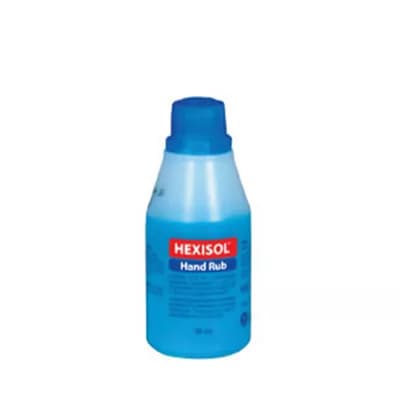

Medicine overview
Indications of Hexisol
Hexisol is a topical antiseptic/disinfectant combination indicated for use as a rapid-acting, broad-spectrum microbicidal skin and hand preparation. It is not for ingestion or internal use.
Established Uses
- Surgical hand scrub/antisepsis: to significantly reduce the number of microorganisms on the hands and forearms of surgeons and operating room personnel prior to surgery.
- Patient pre-operative skin preparation: to prepare the patient's skin prior to surgery or invasive procedures (e.g. injections, IV line insertion, blood draws) to help reduce bacteria that could cause infection.
- Healthcare personnel handwash: routine antiseptic handwash to help reduce disease-causing microorganisms found on the hands.
- Disinfection of surgical instruments prior to reuse, per facility protocol.
Hexisol is used only on intact skin and hands; it is not intended for use as a general wound antiseptic on open or deep wounds.
Composition
Chlorhexidine Gluconate + Isopropyl alcohol is available as a topical antiseptic solution. Common formulations contain Chlorhexidine Gluconate in strengths ranging from 0.5% w/v to 4% w/v, combined with Isopropyl alcohol (commonly 70% v/v). The exact strength and combination ratio varies by brand and intended use (surgical scrub solution, single-use applicator/swabstick, or antiseptic handwash).
Description
Hexisol is a topical antiseptic combination product that pairs chlorhexidine gluconate, a cationic biguanide antiseptic with persistent (residual) antimicrobial activity, with isopropyl alcohol, a fast-acting alcohol-based antiseptic. Together they provide both a rapid onset of microbicidal action and prolonged residual antimicrobial effect on the skin.
Hexisol is used exclusively as a topical skin and hand antiseptic in clinical and surgical settings. It is flammable due to its alcohol content and must not come into contact with the eyes, ears, mucous membranes, or open/deep wounds.
Therapeutic Class
Topical Antiseptic and Disinfectant (Chlorhexidine–Alcohol Combination) — Hexisol belongs to the class of topical skin/hand antiseptics.
Pharmacology
Chlorhexidine Gluconate + Isopropyl alcohol combines two complementary antimicrobial mechanisms:
- Chlorhexidine gluconate is a cationic biguanide. Its positively charged molecule binds to the negatively charged phosphate groups on bacterial cell walls and membranes. At low concentrations this disrupts membrane osmotic equilibrium (bacteriostatic effect); at higher concentrations it causes precipitation and coagulation of intracellular contents, leading to cell death (bactericidal effect). Chlorhexidine also binds to skin keratin, giving it a persistent, residual antimicrobial effect that continues after application.
- Isopropyl alcohol acts rapidly by denaturing microbial cell wall proteins and dissolving lipid membranes, producing an immediate but non-persistent microbicidal effect.
The combination in Chlorhexidine Gluconate + Isopropyl alcohol is active against a broad spectrum of gram-positive and gram-negative bacteria, many fungi, and lipid-enveloped viruses.
Dosage & Administration of Hexisol
Hexisol is for external topical use only. Application volume and technique vary by indication:
| Indication | Typical Application |
|---|---|
| Surgical hand scrub | Wet hands and forearms; apply approximately 5 mL and scrub thoroughly (nails, cuticles, interdigital spaces) for 2–3 minutes; rinse and repeat as per facility protocol; dry with a sterile towel. |
| Patient pre-operative skin preparation | Apply approximately 3 mL to the operative site using gentle back-and-forth strokes; allow to air-dry completely (minimum 3 minutes on hairless skin, up to 1 hour in hair-bearing areas) before any incision or use of cautery/ignition sources. |
| Healthcare personnel handwash | Wet hands, dispense approximately 3–5 mL, wash vigorously for about 30 seconds, rinse, and dry thoroughly. |
| Disinfection of surgical instruments | Immerse cleaned instruments in the solution for the duration specified by facility infection-control protocol (commonly around 2 minutes), then rinse as required. |
Do not use Hexisol near the eyes, ears, mouth, or on deep/open wounds. Allow the solution to dry completely before using electrocautery or other ignition sources, as it is flammable.
Administration of Hexisol
Hexisol is for external use only and must never be swallowed, injected, or instilled into body cavities. Apply to intact skin only, using the applicator, swab, or dispenser provided, and allow the treated area to air-dry completely before draping, cautery, or any ignition source is used. Do not blot or wipe the solution dry. Avoid pooling of solution on the skin or under the patient, particularly under tourniquets or in skin folds, as prolonged contact with wet solution can cause chemical skin irritation or burns.
Interaction of Hexisol
Hexisol has limited systemic drug-interaction potential since it is used topically, but the following product-level interactions are clinically relevant:
- Anionic agents/soaps: chlorhexidine's antimicrobial activity can be neutralized or reduced by anionic surfactants and soaps; avoid mixing with or applying soap immediately before/after Hexisol.
- Other antiseptics (e.g., iodine-based products): concurrent or sequential use with other antiseptics is not recommended, as it may cause skin irritation or reduce efficacy; allow surfaces to dry between different antiseptic applications.
- Hypochlorite (bleach) products: may cause brown/discoloration staining of fabrics or surfaces previously exposed to chlorhexidine-containing products.
Contraindications
Chlorhexidine Gluconate + Isopropyl alcohol is contraindicated in:
- Patients with a known hypersensitivity or allergic reaction to chlorhexidine gluconate, isopropyl alcohol, or any component of the formulation.
- Use in contact with the meninges (e.g., during lumbar puncture or procedures where the solution may contact the brain or spinal meninges), due to reports of serious neurological injury/arachnoiditis.
- Use in the middle ear in patients with a perforated tympanic membrane, due to a well-documented risk of ototoxicity/deafness.
Side Effects of Hexisol
Most reactions to Hexisol are local and mild, but serious reactions can occur:
- Common: localized skin irritation, dryness, redness, or a burning/stinging sensation at the application site.
- Uncommon: contact dermatitis, photosensitivity-type skin reactions.
- Rare but serious: hypersensitivity reactions ranging from localized hives and facial swelling to severe generalized allergic reactions/anaphylaxis (wheezing, difficulty breathing, shock) — see Contraindications.
- Eye contact may cause conjunctival irritation or, rarely, serious/permanent eye injury.
- Contact with the middle ear through a perforated eardrum has been associated with hearing loss.
- Chemical/thermal skin burns have been reported when the solution was allowed to pool under the patient or when ignition sources were used before the solution had fully dried, due to its flammability.
Pregnancy & Lactation
Pregnancy: Hexisol is applied topically with minimal expected systemic absorption through intact skin. Nonetheless, as with any product used during pregnancy, it should be used only if clearly needed, applied only to the intended skin area, and only after consulting a physician, since a potential benefit-versus-risk assessment should always be made by a treating clinician.
Lactation: There is limited data on excretion into breast milk; because it is a topical antiseptic, systemic exposure is expected to be minimal. As a precaution, avoid application of Hexisol directly to the nipple/areola area, and if used near the breast, wash the area thoroughly before breastfeeding. Consult a physician regarding use while breastfeeding.
Precautions & Warnings
Flammability: Hexisol contains isopropyl alcohol and gives off flammable vapors. Do not use near open flame or with electrocautery, electrosurgical, or laser equipment until the solution has completely air-dried (a minimum of 3 minutes on hairless skin, and up to 1 hour on hair-bearing areas). Do not allow the solution to pool on the skin, on surgical drapes, or in linens.
Eyes, ears, and mucous membranes: Avoid contact with the eyes, ears (especially with a perforated eardrum), mouth, and other mucous membranes; if accidental contact occurs, rinse immediately and thoroughly with water and seek medical advice if irritation persists — see Contraindications and Side Effects.
Wounds/meninges: Not for use on deep or open wounds, or in any procedure where contact with the meninges/brain or spinal fluid is possible.
Neonates and premature infants: Use with caution in infants under 2 months of age, particularly premature infants, due to an increased risk of irritation or chemical burns; safety and efficacy in this age group have not been fully established.
External use only: Hexisol is for topical/external use only and must never be swallowed or used internally.
Overdose Effects of Hexisol
Hexisol is intended for external topical use only and is not meant to be ingested. Accidental ingestion may cause gastrointestinal irritation, nausea, vomiting, and, due to the alcohol content, symptoms of alcohol intoxication or central nervous system depression, particularly in children.
If Hexisol is accidentally swallowed, or if excessive/prolonged skin contact causes irritation, chemical burn, or an allergic reaction, or if the solution contacts the eyes or ears, seek immediate medical attention or contact a poison control center/emergency services right away. Do not attempt to induce vomiting or self-treat significant exposures at home. For skin or eye contact, rinse the affected area thoroughly with water while awaiting medical guidance.
Storage Conditions
Store Hexisol at room temperature (below 30°C), away from direct light, heat, and open flame due to its flammable alcohol content. Keep the container tightly closed when not in use, and keep out of the reach of children.
Use In Special Populations
Pediatric patients: Use Hexisol with caution in neonates and infants, especially those born prematurely or under 2 months of age, due to a higher risk of skin irritation or chemical burns; safety and efficacy in this group are not fully established — see Pediatric Uses.
Elderly patients: No specific dose adjustment is required, but elderly patients often have thinner, more fragile skin and may be more prone to local irritation; monitor the application site.
Renal/hepatic impairment: Not applicable — Hexisol is used topically with minimal systemic absorption, so no renal or hepatic dose adjustment is needed.
Duration Of Treatment
Hexisol is generally used as a single application per procedure (e.g., one surgical scrub or skin preparation prior to a procedure) or as part of a routine handwashing protocol used multiple times per day by healthcare personnel. It is not intended for continuous or prolonged application to the same skin area beyond what is required for the antiseptic procedure.
Drug Classes
Topical Antiseptics — Biguanide Antiseptic (Chlorhexidine) combined with Alcohol-based Antiseptic (Isopropyl Alcohol); Chlorhexidine Gluconate + Isopropyl alcohol is classified as a chlorhexidine–alcohol skin antiseptic combination.
Mode Of Action
Chlorhexidine Gluconate + Isopropyl alcohol works through two complementary antimicrobial mechanisms. Chlorhexidine gluconate, a cationic biguanide, binds to negatively charged microbial cell membranes, disrupting membrane integrity (bacteriostatic at low concentration) and causing precipitation of cytoplasmic contents (bactericidal at higher concentration), with residual binding to skin keratin providing prolonged antimicrobial activity. Isopropyl alcohol denatures microbial proteins and disrupts lipid membranes, producing an immediate but transient microbicidal effect. Together, Chlorhexidine Gluconate + Isopropyl alcohol provides both rapid-onset and long-lasting antisepsis.
Pediatric Uses
Hexisol may be used in pediatric patients as a topical skin/hand antiseptic, but with important caveats:
- Use with caution in infants under 2 months of age, and particularly in premature infants, because of an increased risk of local skin irritation or chemical burns from prolonged or occlusive contact.
- Safety and efficacy of Hexisol in neonates have not been fully established; use in this age group only under direct medical supervision.
- In older infants and children, apply the smallest effective amount, avoid contact with the eyes, ears, and mucous membranes, and ensure the solution is not allowed to pool against the skin or under the child during a procedure.
Frequently Asked Questions
Q: What is Hexisol 50 ml bottle Hand Rub used for?
A: Hexisol 50 ml bottle Hand Rub is a topical antiseptic combination used to disinfect hands and skin before surgery, as a surgical hand scrub, as a routine antiseptic handwash for healthcare workers, and to prepare skin before injections or other procedures. It is not for internal use or for treating infections inside the body.
Q: Can I use Hexisol 50 ml bottle Hand Rub on an open wound?
A: No. Hexisol 50 ml bottle Hand Rub is not intended for use on open or deep wounds, and must never contact the meninges, brain, or spinal fluid, or be used inside the middle ear if the eardrum is perforated. It is meant only for intact skin as a pre-procedure antiseptic.
Q: Is Hexisol 50 ml bottle Hand Rub flammable?
A: Yes. Hexisol 50 ml bottle Hand Rub contains isopropyl alcohol and gives off flammable vapors. The treated area must be allowed to air-dry completely before any open flame, electrocautery, laser, or other ignition source is used, and the solution must not be allowed to pool on the skin or drapes.
Q: Is Hexisol 50 ml bottle Hand Rub safe to use during pregnancy or breastfeeding?
A: Hexisol 50 ml bottle Hand Rub is applied topically with minimal expected absorption into the bloodstream, but it should still be used only if clearly needed and only after consulting a physician during pregnancy. While breastfeeding, avoid applying it directly to the nipple area, and wash the area before feeding if it has been used nearby.
Q: Can Hexisol 50 ml bottle Hand Rub be used on babies?
A: Hexisol 50 ml bottle Hand Rub should be used with caution in infants younger than 2 months old, especially premature babies, because their skin is more sensitive and prone to irritation or chemical burns from the product. Its safety and efficacy in this age group are not fully established, so use in neonates should be done only under medical supervision.
Q: What should I do if Hexisol 50 ml bottle Hand Rub gets in my eyes or is accidentally swallowed?
A: If Hexisol 50 ml bottle Hand Rub contacts the eyes, rinse immediately and thoroughly with water and seek medical attention promptly, as it can cause serious eye irritation or injury. If it is accidentally swallowed, do not try to treat it at home — seek immediate medical attention or contact a poison control center right away.
Disclaimer
The information provided is accurate to the best of our knowledge, but it does not replace professional medical advice. We cannot guarantee its completeness or accuracy, and the absence of specific information about a drug should not be taken as an endorsement. We are not responsible for any consequences arising from this information, so please consult a healthcare professional for any concerns or questions.
