
8% Off
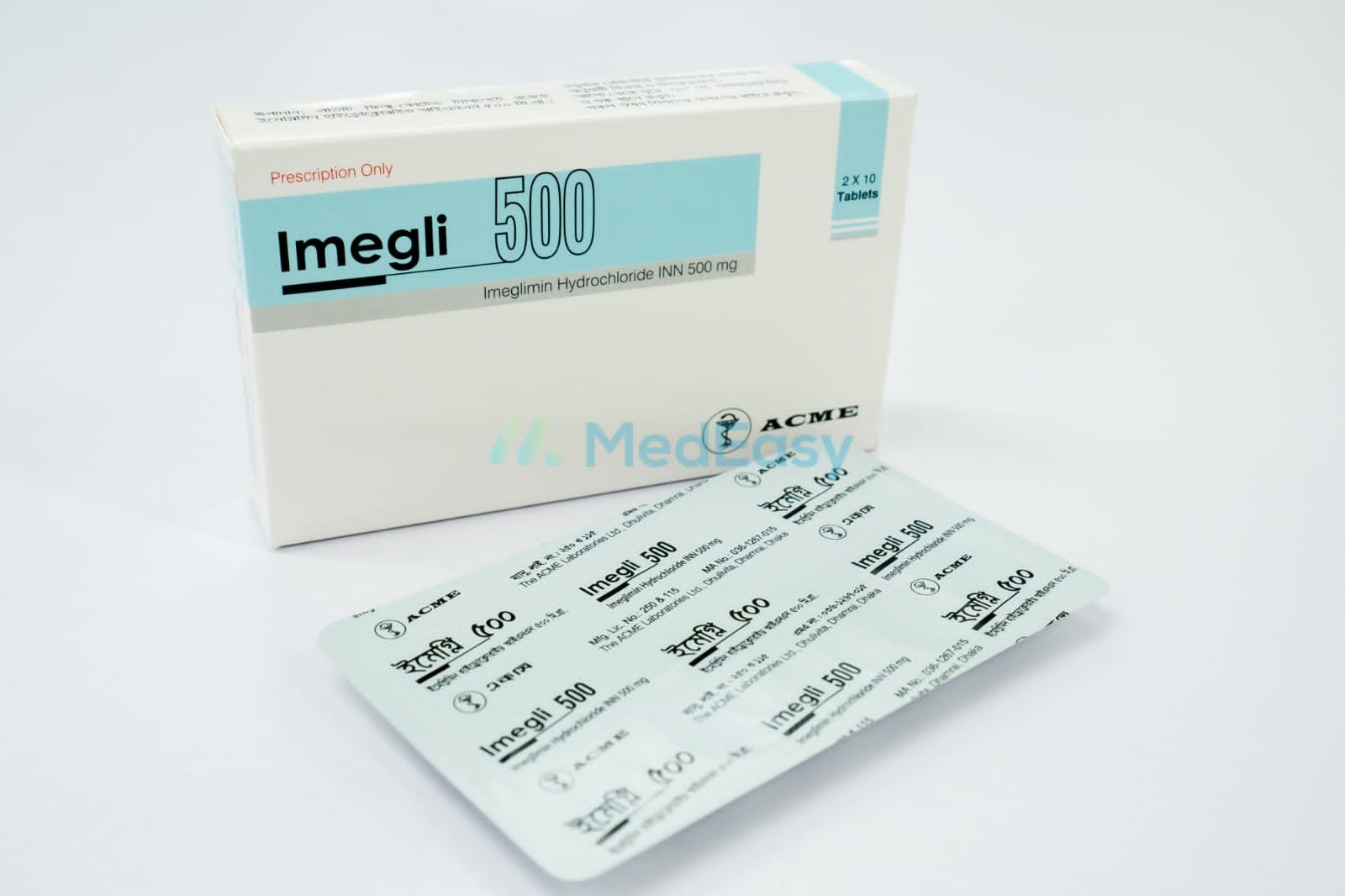
Imegli500 mg
ACME Laboratories Ltd.
৳184.00
Add to cart


Imagin is indicated for the management of type 2 diabetes mellitus (T2DM) in adults, used to improve glycemic control alongside diet and exercise.
Imagin belongs to a relatively new therapeutic class, and its place in overall diabetes treatment algorithms is still evolving as more clinical experience accumulates. It is not indicated for type 1 diabetes or diabetic ketoacidosis.
Each tablet contains Imeglimin Hydrochloride as the active ingredient, typically formulated as 500 mg or 1000 mg strength tablets (equivalent imeglimin base content may vary by manufacturer). Please refer to the specific product label for exact strength.
Imagin is an oral antidiabetic medicine belonging to a novel drug class sometimes referred to as "glimins." It is structurally related to metformin (a biguanide-type structure) but has a distinct mechanism centered on improving mitochondrial bioenergetics in multiple tissues involved in glucose regulation.
Unlike older antidiabetic classes such as sulfonylureas, DPP-4 inhibitors, or SGLT2 inhibitors, Imagin works through a triple mechanism affecting the pancreas, liver, and skeletal muscle simultaneously. As a comparatively newer medicine, real-world long-term safety and outcomes data are still accumulating, and it should be used with appropriately current clinical guidance.
Imagin belongs to the "glimin" class of oral antidiabetic agents — a novel, structurally distinct class related to but separate from biguanides, sulfonylureas, DPP-4 inhibitors, SGLT2 inhibitors, and thiazolidinediones.
Imeglimin Hydrochloride acts through a unique, tetrahydrotriazine-based structure that modulates mitochondrial bioenergetics. Its proposed triple mechanism of action includes:
These effects are thought to occur via modulation of the mitochondrial respiratory chain, an action mechanistically related to (though distinct from) metformin. Because of this shared mitochondrial mechanism, precautions relevant to biguanides (such as risk in hypoxic or hepatic/renal impairment states) are applied conservatively to Imeglimin Hydrochloride as well.
Dosing of Imagin should always be individualized by the prescribing physician based on glycemic response and tolerability.
| Indication | Typical Adult Dosage |
|---|---|
| Type 2 diabetes mellitus (monotherapy or combination) | 1000 mg taken orally twice daily (morning and evening), with or without food, as advised by the physician |
Renal impairment: Not recommended in patients with severe renal impairment (see Contraindications); dose adjustment or physician review is advised in mild-to-moderate renal impairment.
Hepatic impairment: Use with caution and under close physician supervision in patients with hepatic impairment, given limited data.
Pediatric use: Safety and efficacy have not been established in children (see Use in Special Populations).
Imagin tablets should be swallowed whole with a glass of water, morning and evening, at approximately the same times each day. It may be taken with or without food. Do not crush or chew the tablet unless directed by a physician. If a dose is missed, it should be taken as soon as remembered unless it is close to the next scheduled dose — do not double the dose.
Imagin has the following clinically significant interactions:
Reported adverse effects with Imagin include:
Patients should report persistent gastrointestinal symptoms, unusual muscle pain, breathing difficulty, or unexplained fatigue promptly to their physician.
Imagin should be used in pregnancy only if clearly needed and if the potential benefit justifies the potential risk to the fetus, as adequate human safety data are not available for this comparatively new medicine. Insulin is generally preferred for glycemic control during pregnancy. It is not known whether Imagin passes into breast milk; a decision to continue or discontinue breastfeeding, or to continue or discontinue therapy, should be made in consultation with a physician, taking into account the benefit of the drug to the mother.
In case of suspected overdose of Imagin, the main concern is an increased risk of hypoglycemia and, theoretically, lactic acidosis. Seek immediate medical attention or contact emergency services/poison control. Supportive care and monitoring of blood glucose and metabolic status should be provided by a healthcare facility; there is no specific antidote. Do not attempt home treatment of a suspected overdose.
Store at room temperature (below 30°C), away from light and moisture. Keep out of reach of children.
Imagin is generally used as a long-term, ongoing treatment for chronic management of type 2 diabetes, similar to other oral antidiabetic agents. Duration of therapy should be determined by the treating physician based on glycemic control, tolerability, and periodic reassessment (including renal function monitoring).
Imeglimin Hydrochloride belongs to the "glimin" class of oral antidiabetics — a novel class structurally related to biguanides (metformin) but pharmacologically and chemically distinct.
Imeglimin Hydrochloride modulates mitochondrial bioenergetics to produce a triple therapeutic effect: it restores glucose-stimulated insulin secretion in the pancreas, inhibits excessive glucose production (gluconeogenesis) in the liver, and enhances glucose uptake in skeletal muscle — together improving overall glycemic control in type 2 diabetes.
The safety and efficacy of Imagin have not been established in pediatric patients. It is therefore not recommended for use in children or adolescents outside of specialized clinical settings, until further data become available.
Q: What is Imagin 500 mg Tablet used for?
A: Imagin 500 mg Tablet is used to help control blood glucose levels in adults with type 2 diabetes mellitus, either alone or in combination with other antidiabetic medicines.
Q: How should I take Imagin 500 mg Tablet?
A: Imagin 500 mg Tablet is usually taken as a 1000 mg tablet by mouth twice daily, morning and evening, with or without food, exactly as prescribed by your physician.
Q: Can Imagin 500 mg Tablet cause low blood sugar (hypoglycemia)?
A: Imagin 500 mg Tablet alone has a low risk of causing hypoglycemia, but the risk increases when it is combined with insulin or sulfonylurea medicines. Discuss symptoms and management of hypoglycemia with your physician.
Q: Who should not take Imagin 500 mg Tablet?
A: Imagin 500 mg Tablet should not be used by people with known hypersensitivity to it, those with type 1 diabetes or diabetic ketoacidosis, or those with severe kidney impairment.
Q: Is Imagin 500 mg Tablet safe during pregnancy or breastfeeding?
A: Imagin 500 mg Tablet should be used in pregnancy only if clearly needed and if the potential benefit outweighs potential risk, as safety data in pregnant women are limited; insulin is generally preferred during pregnancy. Whether it passes into breast milk is not well established, so consult your physician before use while breastfeeding.
Q: What side effects should I watch for with Imagin 500 mg Tablet?
A: The most common side effects are gastrointestinal, such as nausea, diarrhea, and constipation. Rarely, because of its mechanism related to biguanides, there is a theoretical risk of lactic acidosis, especially in people with kidney or liver problems, or conditions causing low oxygen levels. Seek medical attention promptly for unusual muscle pain, difficulty breathing, or severe fatigue.
Disclaimer
The information provided is accurate to the best of our knowledge, but it does not replace professional medical advice. We cannot guarantee its completeness or accuracy, and the absence of specific information about a drug should not be taken as an endorsement. We are not responsible for any consequences arising from this information, so please consult a healthcare professional for any concerns or questions.
