8% Off
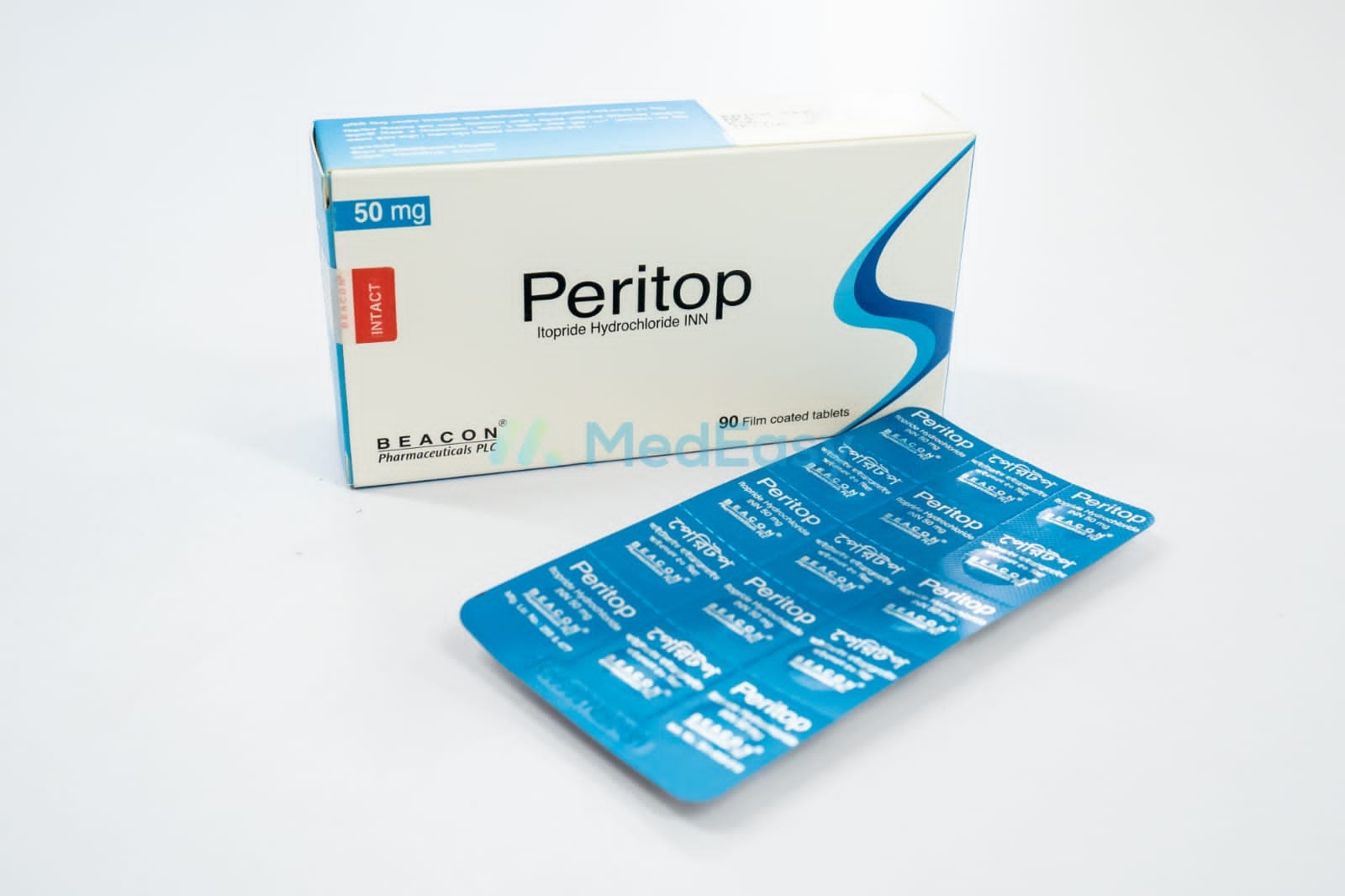
Peritop50 mg
Beacon Pharmaceuticals PLC
৳69.00
Add to cart
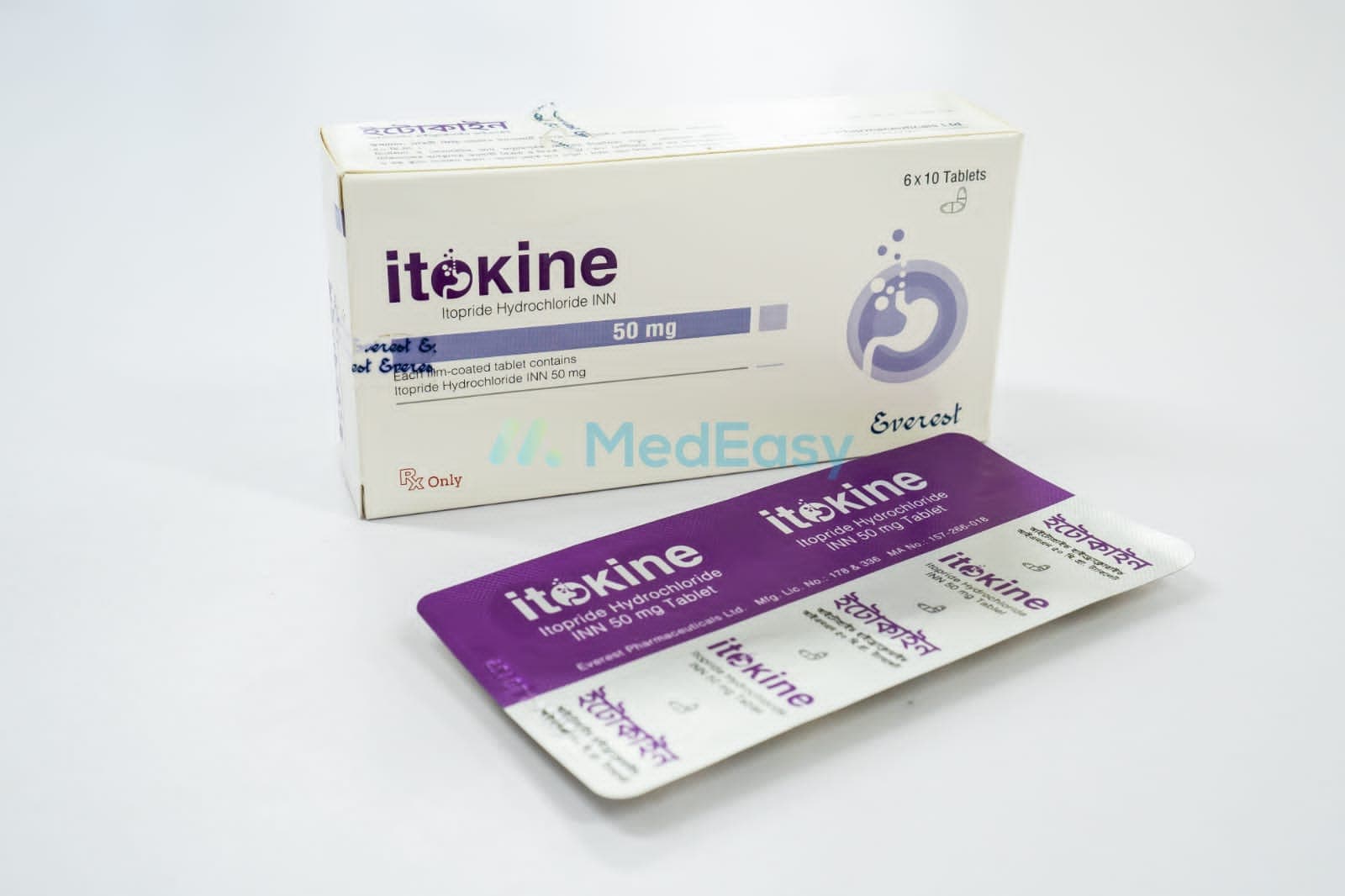

Itokine is a prokinetic agent used for the symptomatic treatment of gastrointestinal motility disorders. Its indications, classified by strength of evidence, are as follows:
Itokine is not indicated for structural or mechanical causes of gastrointestinal symptoms, which require separate diagnostic evaluation and management.
Each film-coated tablet commonly available in Bangladesh contains Itopride Hydrochloride INN 50 mg. Dispersible tablet and sustained-release formulations of Itopride Hydrochloride are also marketed in some regions; strength and formulation should be confirmed on the specific product label before dispensing.
Itokine is a gastroprokinetic agent that enhances upper gastrointestinal motility. It works through a dual mechanism — antagonism of dopamine D2 receptors and inhibition of acetylcholinesterase — which together increase local acetylcholine activity in the gut wall, strengthen gastric antral contractions, coordinate gastroduodenal motility, and accelerate gastric emptying.
Unlike some older prokinetic agents, Itokine penetrates the blood-brain barrier only to a limited extent, which is associated with a lower incidence of central dopaminergic (extrapyramidal) side effects. It is used primarily for the relief of symptoms of functional dyspepsia.
Itokine belongs to the therapeutic class of Prokinetic agents (Gastro-prokinetics), specifically classified as a dopamine D2-receptor antagonist with acetylcholinesterase-inhibiting activity, used in the management of upper gastrointestinal motility disorders.
Itopride Hydrochloride acts as a selective dopamine D2-receptor antagonist and, concurrently, as an acetylcholinesterase inhibitor. Blockade of presynaptic and postsynaptic D2 receptors in the gut increases acetylcholine release, while acetylcholinesterase inhibition reduces its breakdown; the combined effect is enhanced, coordinated cholinergic stimulation of gastrointestinal smooth muscle. This increases lower esophageal sphincter pressure, strengthens gastric antral contractions, improves gastroduodenal coordination, and accelerates gastric emptying. Itopride Hydrochloride also has mild central antiemetic activity via D2 antagonism in the chemoreceptor trigger zone.
Clinical studies have not shown clinically significant QT-interval prolongation with Itopride Hydrochloride at recommended doses, distinguishing it from some other prokinetic agents that carry cardiac conduction warnings.
| Indication | Population | Recommended Dose |
|---|---|---|
| Functional (non-ulcer) dyspepsia | Adults | 50 mg orally, three times daily, before meals |
| Functional (non-ulcer) dyspepsia | Elderly | Same as adult dose; monitor closely, as clearance may be reduced with age (see Use in Special Populations) |
| Functional (non-ulcer) dyspepsia | Children | Safety and efficacy not established (see Pediatric Use) |
No formal dose-adjustment schedule for renal or hepatic impairment is well established for Itokine; use with caution and clinical monitoring in patients with significant renal or hepatic impairment, since elimination may be reduced (see Precautions and Warnings).
Itokine is generally used for a limited course (commonly 2–8 weeks); if symptoms do not improve, the diagnosis should be reassessed rather than the dose increased.
Itokine tablets should be taken orally, generally before meals, swallowed whole with a glass of water. Dispersible tablets, where available, should be dispersed in water as directed on the product label before administration. Do not exceed the prescribed dose or frequency.
Itokine undergoes minimal cytochrome P450-mediated metabolism (it is metabolized mainly by flavin-containing monooxygenase), giving it a comparatively favorable drug-interaction profile relative to some other prokinetic agents. Clinically relevant interactions include:
Itopride Hydrochloride is contraindicated in patients with:
Itokine is generally well tolerated. Reported adverse effects include:
| Frequency | Effects |
|---|---|
| Common | Diarrhea, abdominal pain, headache |
| Uncommon | Constipation, nausea, vomiting, skin rash, increased salivation |
| Rare | Mild elevation of serum prolactin (hyperprolactinemia) due to dopamine-receptor antagonism, occasionally with breast tenderness or gynecomastia; mild elevation of liver enzymes |
Because Itokine has limited penetration across the blood-brain barrier, central dopaminergic effects (extrapyramidal symptoms) are reported less often than with some other dopamine-antagonist prokinetic agents, though they cannot be entirely excluded.
Pregnancy: Data on the use of Itokine in pregnant women are limited. Itokine should be used during pregnancy only if clearly needed and if the potential benefit justifies the potential risk to the fetus; consult a physician before use.
Lactation: It is not known whether Itokine is excreted in human breast milk. Caution is advised, and a physician should be consulted before using Itokine while breastfeeding, weighing the benefit of therapy against potential risk to the infant.
Limited clinical experience with overdosage of Itokine is available. Based on its pharmacology, an overdose may be expected to exaggerate known adverse effects (e.g. gastrointestinal upset, headache). There is no specific antidote for Itokine overdose.
In case of suspected overdose, seek immediate medical attention or contact emergency services / a poison control center. Management should be supportive and symptomatic, with monitoring of vital signs as clinically indicated; gastric decontamination and other supportive measures should be undertaken only under medical supervision.
Store at room temperature (below 30°C), away from light and moisture. Keep out of reach of children.
Use Itokine with caution in patients with significant renal impairment; no formal dose-adjustment schedule is well established, so clinical monitoring is advised (see Precautions and Warnings).
Use Itokine with caution in patients with significant hepatic impairment, with clinical monitoring for adverse effects.
No specific dose reduction is generally required, but elderly patients should be monitored closely given the possibility of age-related decline in renal function.
Safety and efficacy of Itokine have not been well established in children; use is generally not recommended outside specialist guidance (see Pediatric Use).
See Pregnancy and Lactation section for detailed guidance.
Itokine is typically prescribed for a limited course of 2 to 8 weeks for functional dyspepsia, depending on symptom response. If symptoms persist beyond this period or worsen, the patient should be reassessed by a physician, and continued use should be guided by clinical response rather than fixed duration.
Itopride Hydrochloride is classified under: Prokinetic agents; Gastrointestinal motility stimulants; Dopamine D2-receptor antagonists with acetylcholinesterase-inhibitory activity.
Itopride Hydrochloride exerts its prokinetic effect through dual dopamine D2-receptor antagonism and acetylcholinesterase inhibition, which together increase acetylcholine activity at the gastrointestinal smooth muscle, enhance antral contractility, and accelerate gastric emptying (see Pharmacology for full detail).
The safety and efficacy of Itokine in pediatric patients have not been well established through adequate controlled studies. Use in children is generally not recommended outside specialist advice, and if considered necessary, should only be undertaken under close medical supervision with careful weighing of potential benefits against unknown risks.
Q: What is Itokine 50 mg Tablet used for?
A: Itokine 50 mg Tablet is a prokinetic medicine used to relieve symptoms of functional (non-ulcer) dyspepsia, such as bloating, early fullness after eating, upper abdominal discomfort, and nausea, by helping the stomach empty food more efficiently.
Q: How should I take Itokine 50 mg Tablet?
A: Itokine 50 mg Tablet is usually taken as 50 mg by mouth, three times daily, before meals, unless your physician has prescribed a different regimen. Always follow your physician's or pharmacist's instructions.
Q: Can Itokine 50 mg Tablet be taken during pregnancy or while breastfeeding?
A: Data are limited. Itokine 50 mg Tablet should be used during pregnancy or lactation only if your physician determines it is clearly needed and the potential benefit outweighs the potential risk; always consult your physician first.
Q: What are the common side effects of Itokine 50 mg Tablet?
A: Itokine 50 mg Tablet is generally well tolerated. The most common side effects are mild diarrhea, abdominal pain, and headache. Less commonly, it may cause constipation, nausea, rash, or a mild rise in prolactin hormone levels.
Q: Who should not take Itokine 50 mg Tablet?
A: Itokine 50 mg Tablet should not be used by people with a known allergy to it, those with gastrointestinal bleeding, mechanical bowel obstruction, or perforation, and those with pheochromocytoma. Discuss your full medical history with your physician before starting Itokine 50 mg Tablet.
Q: What should I do if I miss a dose or take too much Itokine 50 mg Tablet?
A: If you miss a dose, take it before your next meal as usual; do not double the dose. If you suspect an overdose of Itokine 50 mg Tablet, seek immediate medical attention or contact a poison control center, as symptoms may be more pronounced versions of the usual side effects.
Disclaimer
The information provided is accurate to the best of our knowledge, but it does not replace professional medical advice. We cannot guarantee its completeness or accuracy, and the absence of specific information about a drug should not be taken as an endorsement. We are not responsible for any consequences arising from this information, so please consult a healthcare professional for any concerns or questions.