
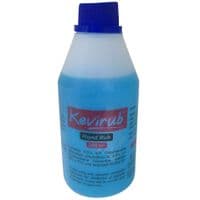

Medicine overview
Indications of Kevirub 250
Kevirub 250 is a broad-spectrum topical antiseptic/antimicrobial agent. Its approved and supported uses vary by concentration and formulation:
Established/FDA-approved uses
- Surgical hand scrub and healthcare personnel handwash (typically 4% solution) to reduce bacteria on the skin before surgical procedures.
- Preoperative skin preparation of the patient's skin before surgery or injections, to reduce microbial flora at the site.
- Skin wound and general skin cleansing as an antiseptic cleanser.
- Treatment of gingivitis and reduction of gingival inflammation (0.12% oral rinse) as part of a professionally supervised periodontal treatment program that includes scaling and root planing.
Guideline-supported / adjunct uses
- Oral decontamination in mechanically ventilated or critically ill patients, used as part of infection-prevention protocols (as an adjunct to standard oral hygiene, not as monotherapy).
- Central venous catheter insertion-site antisepsis and daily patient skin cleansing (chlorhexidine-impregnated cloths) in hospital infection-control bundles, generally in combination with alcohol.
Off-label uses (commonly practiced, not formally FDA-approved for this indication)
- Umbilical cord care in newborns in certain public-health/community settings (based on WHO-supported evidence in specific contexts) — this requires a specific low-concentration formulation and should only be used under medical/public-health program guidance.
- General mucosal or wound antisepsis outside the specific labeled concentration and formulation.
The exact concentration, formulation (aqueous, alcohol-based, oral rinse, impregnated cloth/dressing), and duration of use of Kevirub 250 should always follow the product labeling or a physician's/dentist's instructions.
Composition
Each formulation of Chlorhexidine Gluconate contains chlorhexidine gluconate as the active antiseptic ingredient, at a strength appropriate to its intended use, for example:
- 4% w/v solution — surgical scrub / skin cleanser
- 2% (often combined with 70% isopropyl alcohol) — skin antisepsis for procedures and catheter-site care
- 0.12% w/v oral rinse — gingivitis treatment
- Impregnated sponges, dressings, or cloths for site/skin antisepsis
Inactive ingredients (water, alcohol, surfactants, flavoring/coloring agents) vary by brand and formulation; refer to the specific product label.
Description
Kevirub 250 is a cationic bisbiguanide antiseptic with broad-spectrum activity against gram-positive and gram-negative bacteria, some fungi, and certain enveloped viruses. It is available in multiple formulations — aqueous solutions, alcohol-based solutions, oral rinses, and impregnated dressings/cloths — for use in skin antisepsis, surgical site preparation, wound cleansing, and as an adjunct in the treatment of gingivitis.
Kevirub 250 has a rapid onset of antimicrobial action and a persistent (residual) antimicrobial effect on the skin and oral mucosa after application, which distinguishes it from many other antiseptics.
Therapeutic Class
Pharmacology
Mechanism of Action
Chlorhexidine Gluconate is a cationic biguanide. Its positively charged molecule is attracted to and binds with negatively charged sites on the bacterial cell wall and membrane, disrupting membrane integrity.
- At low concentrations, this alters cell membrane permeability, causing leakage of intracellular components (bacteriostatic effect).
- At higher concentrations, it causes precipitation and coagulation of intracellular proteins and cytoplasm, producing cell death (bactericidal effect).
Chlorhexidine Gluconate is active against a broad range of gram-positive and gram-negative bacteria, yeasts, and some enveloped viruses, but has limited activity against bacterial spores and some non-enveloped viruses.
Pharmacokinetics
Systemic absorption of Chlorhexidine Gluconate through intact skin or oral mucosa is minimal to negligible under normal use conditions. When used as an oral rinse, less than 1% is absorbed from the gastrointestinal tract if swallowed; it is primarily excreted unchanged in the feces.
Dosage & Administration of Kevirub 250
| Indication | Formulation/Strength | Typical Regimen |
|---|---|---|
| Surgical hand scrub / healthcare personnel handwash | 4% solution | Wet hands and forearms, scrub for the time specified on the label (typically 3 minutes), rinse thoroughly. |
| Preoperative skin preparation | 2%–4% solution (aqueous or alcohol-based) | Apply to the surgical site as directed and allow to dry before the procedure. |
| General skin/wound antisepsis | 4% solution | Apply to the affected area, rinse or wipe as directed; use only on intact/labeled skin areas. |
| Gingivitis (adjunct to periodontal treatment) | 0.12% oral rinse | Rinse with 15 mL undiluted for 30 seconds, twice daily (morning and evening) after tooth brushing, typically for a course as directed by a dentist. |
Use Kevirub 250 exactly as directed on the product label or by the prescribing physician/dentist for the full recommended duration; do not use more frequently, for longer, or share the product with others without medical advice, and do not stop a prescribed oral-rinse course early even if symptoms improve, unless advised otherwise.
Administration of Kevirub 250
- Topical/skin use: Apply Kevirub 250 to the skin as directed; allow adequate contact time and allow the area to air-dry before draping, dressing, or use of electrocautery equipment, since alcohol-containing formulations are flammable until fully dry.
- Oral rinse use: Use undiluted after brushing; swish for the full recommended time and then spit out. Do not swallow. Avoid eating, drinking, or rinsing with water immediately afterward, and avoid using regular toothpaste (containing anionic surfactants) right before the rinse, as this can reduce effectiveness.
- Do not use Kevirub 250 in the eyes, ears (especially with a perforated eardrum), mouth wounds beyond the labeled use, or on the brain/meninges.
Interaction of Kevirub 250
Clinically significant, well-verified interactions with Kevirub 250 include:
- Anionic compounds (e.g., sodium lauryl sulfate in toothpaste, soaps): These can chemically inactivate Kevirub 250 and reduce its antimicrobial effect. When used as an oral rinse, brush and rinse with water first, and separate use of anionic-containing toothpaste from the chlorhexidine rinse by a period of time as directed on the label.
- Other topical antiseptics (e.g., iodine-containing products): Concurrent or sequential use on the same site may reduce efficacy of either agent or cause skin irritation; avoid combining unless directed by a healthcare provider.
No clinically significant systemic drug-drug interactions are established, as systemic absorption of Kevirub 250 from normal topical or oral rinse use is minimal.
Contraindications
Chlorhexidine Gluconate is contraindicated in:
- Known hypersensitivity to chlorhexidine or any component of the formulation. Rare but serious/anaphylactic allergic reactions have been reported with Chlorhexidine Gluconate-containing products, particularly with certain formulations and routes of exposure — this is a recognized and important safety signal.
- Use in the middle ear or in patients with a perforated tympanic membrane, due to a risk of ototoxicity if the product contacts the middle ear.
- Contact with the eyes, brain tissue, or meninges (e.g., during neurosurgical procedures), as this can cause serious tissue damage/injury in these specific contexts.
Side Effects of Kevirub 250
Common (expected with regular use)
- Temporary staining of teeth, tongue, and tooth-colored dental restorations (with oral rinse use) — generally reversible with discontinuation or professional cleaning.
- Altered or metallic taste sensation.
- Mild, transient skin irritation, dryness, or local sensitivity at the application site.
- Increased supragingival calculus (tartar) formation with prolonged oral rinse use.
Less common / serious
- Contact dermatitis or photosensitivity reactions.
- Oral mucosal irritation or desquamation (peeling) with oral rinse use.
- Rare but serious hypersensitivity/anaphylactic reactions (see Contraindications) — seek immediate medical attention for rash, hives, difficulty breathing, or facial/throat swelling.
- Corneal injury if the product contacts the eyes; hearing damage if it contacts the middle ear through a perforated eardrum.
Pregnancy & Lactation
Systemic absorption of Kevirub 250 through intact skin or from oral rinse use is minimal, and topical antiseptic use is generally considered low-risk in pregnancy and lactation. However, as with all medicines, Kevirub 250 should be used during pregnancy and breastfeeding only if clearly needed and if the potential benefit justifies the potential risk; a physician or dentist should be consulted before use, particularly for prolonged or extensive-area application.
It is not known whether topically applied Kevirub 250 is excreted in clinically significant amounts in breast milk; avoid applying directly to the breast/nipple area before breastfeeding unless advised by a physician.
Precautions & Warnings
- Oral mouthwash use: Temporary staining of teeth/tongue and altered taste are common and expected with regular use of Kevirub 250 and are generally reversible; avoid swallowing the rinse.
- Skin antisepsis use: Avoid use on broken skin or mucous membranes beyond the labeled indication. Allow Kevirub 250 solutions (especially alcohol-containing formulations) to dry completely before applying surgical drapes or using electrocautery/other ignition sources, due to a fire risk.
- Neonates and premature infants: Use with caution; prolonged or occlusive skin contact with Kevirub 250 has been associated with local skin irritation or chemical burns in very low birth weight/premature infants.
- Discontinue Kevirub 250 and seek prompt medical attention if signs of an allergic reaction (rash, hives, itching, difficulty breathing, swelling of the face/lips/throat) occur.
- Avoid contact with the eyes, ears (with a perforated eardrum), and central nervous system tissue (see Contraindications).
- Use Kevirub 250 exactly as directed by a physician or dentist for the full prescribed duration; do not stop, extend, or share the product with others without medical advice.
Overdose Effects of Kevirub 250
Topical overdose of Kevirub 250 is unlikely to cause systemic toxicity due to minimal skin/mucosal absorption. If a large amount of oral rinse is accidentally swallowed, mild gastrointestinal upset (nausea, vomiting, or stomach discomfort) may occur. If a large volume of concentrated solution is swallowed, or if any symptoms of an allergic reaction, breathing difficulty, or severe irritation occur after any exposure, seek immediate medical attention or contact a poison control center/emergency services. Do not attempt specific home treatment beyond general first aid (e.g., rinsing the affected area with water) without medical guidance.
Storage Conditions
Store at room temperature (below 30°C), away from light and moisture. Keep the container tightly closed and out of reach of children.
Use In Special Populations
- Renal/hepatic impairment: No dose adjustment is established or generally required for topical/oral rinse use of Kevirub 250, given minimal systemic absorption; use as directed.
- Elderly: No specific dose adjustment is required; use as directed, with attention to skin fragility for topical formulations.
- Neonates/premature infants: Use with caution due to a reported risk of local skin irritation or chemical burns with prolonged or occlusive contact in very low birth weight infants; follow specific neonatal-care protocols.
- Immunocompromised patients: Often used as part of standard infection-prevention protocols; follow institutional/physician guidance.
Duration Of Treatment
Duration of use of Kevirub 250 depends on the indication: a single application for surgical/preoperative skin preparation; ongoing use for hospital infection-control bathing/catheter-site protocols as directed by the care team; and, for gingivitis, an oral rinse course is typically used twice daily for up to about 6 months as an adjunct to professional periodontal treatment, or as otherwise directed by a dentist.
Drug Classes
Mode Of Action
Chlorhexidine Gluconate acts as a cationic biguanide that binds to negatively charged components of microbial cell walls and membranes, disrupting membrane integrity. At low concentrations this produces a bacteriostatic effect via increased membrane permeability and leakage of cell contents; at higher concentrations it causes precipitation of intracellular proteins and cytoplasm, resulting in a bactericidal effect. This dual concentration-dependent action underlies the broad-spectrum antimicrobial activity of Chlorhexidine Gluconate.
Pregnancy
B
Pediatric Uses
Safety and efficacy of Kevirub 250 oral rinse have not been established in children younger than 18 years for the gingivitis indication; use in younger children should be under dental/medical supervision only. Topical skin-antiseptic formulations of Kevirub 250 are used in pediatric patients, including infants, under medical guidance, but should be used with particular caution in neonates and premature infants because of a reported risk of local skin irritation or chemical burns with prolonged or occlusive contact. Keep all Kevirub 250 products out of the reach of children, and supervise use to prevent accidental swallowing.
Frequently Asked Questions
Q: What is Kevirub 250 COVID-19 Essentials used for?
A: Kevirub 250 COVID-19 Essentials is a topical antiseptic used for surgical hand scrubs, preoperative skin preparation, general skin/wound cleansing, and as an oral rinse to help treat gingivitis and reduce gum inflammation, usually alongside professional dental cleaning.
Q: Can I swallow Kevirub 250 COVID-19 Essentials mouthwash?
A: No. Kevirub 250 COVID-19 Essentials oral rinse should be spit out after use and not swallowed. If a small amount is accidentally swallowed, mild stomach upset may occur; if a large amount is swallowed or you develop any signs of an allergic reaction, seek immediate medical attention or contact a poison control center.
Q: Why do my teeth look stained after using this mouthwash?
A: Temporary staining of the teeth, tongue, and dental restorations is a common and expected side effect of regular Kevirub 250 COVID-19 Essentials oral rinse use. It is usually reversible after stopping use or with a professional dental cleaning.
Q: Is Kevirub 250 COVID-19 Essentials safe during pregnancy or breastfeeding?
A: Systemic absorption of Kevirub 250 COVID-19 Essentials is minimal with normal topical or oral rinse use, and it is generally considered low-risk, but it should be used during pregnancy or breastfeeding only if clearly needed, with the potential benefit outweighing any potential risk. Consult your physician or dentist before use.
Q: Who should not use Kevirub 250 COVID-19 Essentials?
A: Kevirub 250 COVID-19 Essentials should not be used by anyone with a known hypersensitivity to chlorhexidine, should never be allowed to contact the middle ear (especially with a perforated eardrum), and must not contact the eyes, brain tissue, or meninges, as these can cause serious injury.
Q: Can Kevirub 250 COVID-19 Essentials be used on infants?
A: Topical Kevirub 250 COVID-19 Essentials antiseptic formulations may be used in infants under medical guidance, but caution is needed in newborns and especially premature infants, since prolonged or occlusive skin contact has been linked to local irritation or chemical burns in this group. Always follow your healthcare provider's specific instructions.
Disclaimer
The information provided is accurate to the best of our knowledge, but it does not replace professional medical advice. We cannot guarantee its completeness or accuracy, and the absence of specific information about a drug should not be taken as an endorsement. We are not responsible for any consequences arising from this information, so please consult a healthcare professional for any concerns or questions.
