8% Off
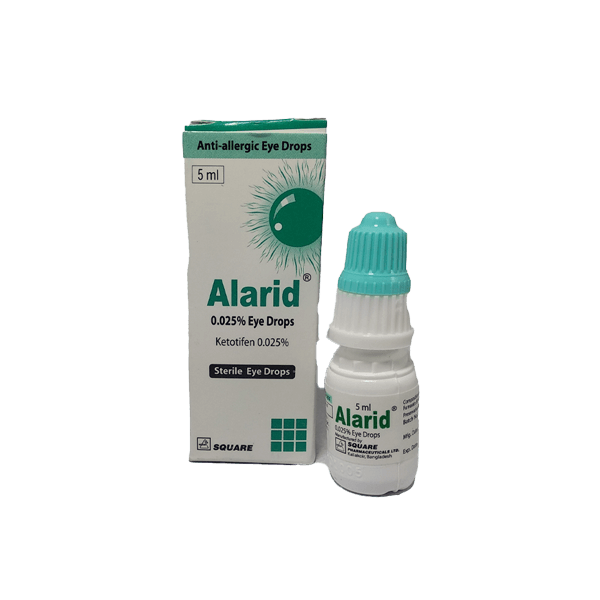
Alarid0.025%
Square Pharmaceuticals PLC.
৳92.28
Add to cart

Kofen 0.025% Ophthalmic Solution is available on MedEasy for ৳90.00 per 5 ml drop, with home delivery anywhere in Bangladesh. It is manufactured by Opsonin Pharma Ltd. Its generic name is Ketotifen Fumarate.

Kofen is a second-generation antihistamine (H1-receptor antagonist) with additional mast cell-stabilizing activity. Its established and commonly recognized uses include:
The prophylactic benefit of Kofen in asthma may take several weeks of regular use to become fully established; any existing asthma medication should generally be continued during this period unless a physician advises otherwise.
Each formulation of Ketotifen Fumarate contains ketotifen (as the fumarate salt) as the active ingredient.
Exact strengths and excipients may vary by manufacturer and locally marketed brand; refer to the specific product's packaging for confirmation.
Kofen is a benzocycloheptathiophene derivative that acts as a non-competitive H1-histamine receptor antagonist with mast cell-stabilizing properties. It is available in oral (tablet and solution) and ophthalmic (eye drop) formulations.
Orally, Kofen is used mainly as a preventive (prophylactic) treatment to reduce the frequency and severity of asthma symptoms, and to relieve symptoms of allergic conditions such as allergic rhinitis and urticaria. The ophthalmic form of Kofen is used topically to relieve itching of the eyes caused by allergic conjunctivitis.
Kofen belongs to the class of antihistamines with mast cell-stabilizing activity - specifically, a second-generation H1-receptor antagonist combined with anti-anaphylactic (mast cell-stabilizing) properties. Depending on formulation, it is classified under:
Ketotifen Fumarate exerts its therapeutic effect through two complementary mechanisms:
Unlike bronchodilators, Ketotifen Fumarate has no direct bronchodilator or acute anti-bronchospastic effect, which is why it is not used to treat an acute asthma attack. Its prophylactic effect on asthma develops gradually, typically over several weeks of regular use.
| Population | Dose |
|---|---|
| Adults | 1 mg twice daily with food; may be increased to 2 mg twice daily in more severe cases if tolerated, under medical supervision. |
| Children (3 years and above) | 1 mg twice daily with food. |
| Children under 3 years | Use only on medical advice; safety and efficacy not well established for routine use. |
| Elderly | Same as adult dose; no specific dose reduction generally required. |
| Patients prone to sedation | An initial dose of 0.5-1 mg at night may be used before increasing to the standard twice-daily regimen. |
| Population | Dose |
|---|---|
| Adults and children 3 years and above | Instill one drop of Kofen ophthalmic solution into the affected eye(s) twice daily, approximately 8-12 hours apart. Do not exceed two doses per day. |
| Children under 3 years | Consult a physician before use; safety and efficacy not established. |
If existing asthma therapy is being used, it should generally be continued for at least the first two weeks after starting oral Kofen, as its full prophylactic effect develops gradually. Contact lenses should be removed before instilling the ophthalmic solution and may be reinserted after 10 minutes.
Oral Kofen tablets or solution should be taken with food to reduce the likelihood of gastrointestinal upset and sedation. The ophthalmic solution is for topical (eye) use only and should not be swallowed. Wash hands before instilling eye drops, avoid touching the dropper tip to the eye or any other surface, and remove contact lenses before use, reinserting them at least 10 minutes after instillation.
Kofen has the following well-established, clinically significant interactions:
Ketotifen Fumarate is contraindicated in patients with known hypersensitivity to ketotifen fumarate or to any excipient in the specific formulation being used.
The most commonly reported side effects of Kofen (oral) include:
These effects are usually mild and tend to resolve spontaneously with continued use. Weight gain has been reported with prolonged oral use in some patients. With the ophthalmic solution, transient stinging, burning, or eye irritation upon instillation may occur; persistent eye pain, redness, or vision changes should prompt discontinuation and medical evaluation.
Kofen should be used during pregnancy only if clearly needed and if the potential benefit justifies the potential risk to the fetus, as human safety data are limited. Although animal studies have not shown clear evidence of teratogenicity, routine use of Kofen during pregnancy is generally not recommended unless advised by a physician.
Kofen is excreted in breast milk; because of the potential for sedation and other effects in the nursing infant, it is not recommended during breastfeeding unless a physician determines the benefit outweighs the risk. Consult a physician before using Kofen during pregnancy or lactation.
The following precautions apply to the use of Kofen:
Overdose with Kofen may cause excessive sedation, drowsiness, confusion, tachycardia, or in severe cases, hypotension or seizures. If an overdose of Kofen is suspected, seek immediate medical attention or contact a poison control center right away. Do not attempt to treat an overdose at home; supportive and symptomatic management should be provided by trained medical personnel.
Store at room temperature (below 30°C), away from light and moisture. Keep out of reach of children. Do not use the ophthalmic solution if it changes color or becomes cloudy.
Pediatric use: Kofen may be used in children 3 years of age and older at the doses described in Dosage and Administration. Safety and efficacy in children under 3 years have not been well established, and use in this age group should be under direct medical supervision.
Elderly: No specific dose adjustment is generally required in elderly patients, though they may be more susceptible to sedative effects; caution is advised.
Renal/Hepatic impairment: Specific dose-adjustment data are limited; use with caution and under medical supervision in patients with significant renal or hepatic impairment.
Pregnancy and lactation: See Pregnancy and Lactation section.
The duration of treatment with Kofen depends on the condition being treated and clinical response. For asthma prophylaxis, a therapeutic trial of at least several weeks (commonly up to 2-3 months) is usually needed to assess effectiveness before deciding whether to continue. For allergic rhinitis, conjunctivitis, or urticaria, treatment may be used during periods of allergen exposure or as advised by a physician. Any decision to stop or continue Kofen should be made in consultation with a physician.
Antihistamine (H1-receptor antagonist); Mast cell stabilizer; Anti-allergic/anti-asthmatic prophylactic agent.
Ketotifen Fumarate acts as a non-competitive, long-acting H1-histamine receptor antagonist and also stabilizes mast cell membranes, inhibiting the release of histamine and other mediators of the allergic/inflammatory response (such as leukotrienes). This dual action underlies its effectiveness in allergic conditions and its prophylactic role in reducing the frequency and severity of asthma symptoms. It does not have direct bronchodilator activity.
Kofen is approved for use in children 3 years of age and older for asthma prophylaxis, allergic rhinitis, urticaria (oral form), and allergic conjunctivitis (ophthalmic form), at the doses outlined in Dosage and Administration. Safety and efficacy of Kofen in children younger than 3 years have not been established, and use in this age group should occur only under direct physician guidance. Children may be more prone to sedation; caution is advised, particularly at the start of treatment.
Q: What is Kofen 0.025% Ophthalmic Solution used for?
A: Kofen 0.025% Ophthalmic Solution is used as a preventive treatment to reduce the frequency and severity of asthma attacks (adjunct therapy, not for acute attacks), and for symptomatic relief of allergic conjunctivitis (eye drops), allergic rhinitis, and urticaria (oral forms).
Q: Can Kofen 0.025% Ophthalmic Solution be used to stop an asthma attack that has already started?
A: No. Kofen 0.025% Ophthalmic Solution is a prophylactic (preventive) medicine only and has no role in treating an acute asthma attack or acute bronchospasm. A fast-acting rescue inhaler prescribed by a physician should be used for acute symptoms.
Q: How long does it take for Kofen 0.025% Ophthalmic Solution to work for asthma prevention?
A: The prophylactic benefit of Kofen 0.025% Ophthalmic Solution in asthma usually takes several weeks of regular use to become fully established. Existing asthma medication should generally be continued during this period unless a physician advises otherwise.
Q: Is it safe to drive after taking Kofen 0.025% Ophthalmic Solution?
A: Kofen 0.025% Ophthalmic Solution can cause drowsiness, especially when treatment is first started. Patients should avoid driving or operating machinery until they know how Kofen 0.025% Ophthalmic Solution affects them, and should avoid alcohol or other sedating medicines while taking it.
Q: Can I use Kofen 0.025% Ophthalmic Solution eye drops with contact lenses?
A: Contact lenses should be removed before instilling Kofen 0.025% Ophthalmic Solution ophthalmic solution and may be reinserted after 10 minutes. The eye drops should not be used to treat irritation caused by contact lenses themselves.
Q: Is Kofen 0.025% Ophthalmic Solution safe during pregnancy or breastfeeding?
A: Kofen 0.025% Ophthalmic Solution should be used during pregnancy only if clearly needed, as potential benefit must be weighed against potential risk to the fetus, since human data are limited. It is excreted in breast milk and is not recommended during breastfeeding unless a physician advises otherwise. Always consult a physician before use in pregnancy or lactation.
Disclaimer
The information provided is accurate to the best of our knowledge, but it does not replace professional medical advice. We cannot guarantee its completeness or accuracy, and the absence of specific information about a drug should not be taken as an endorsement. We are not responsible for any consequences arising from this information, so please consult a healthcare professional for any concerns or questions.