
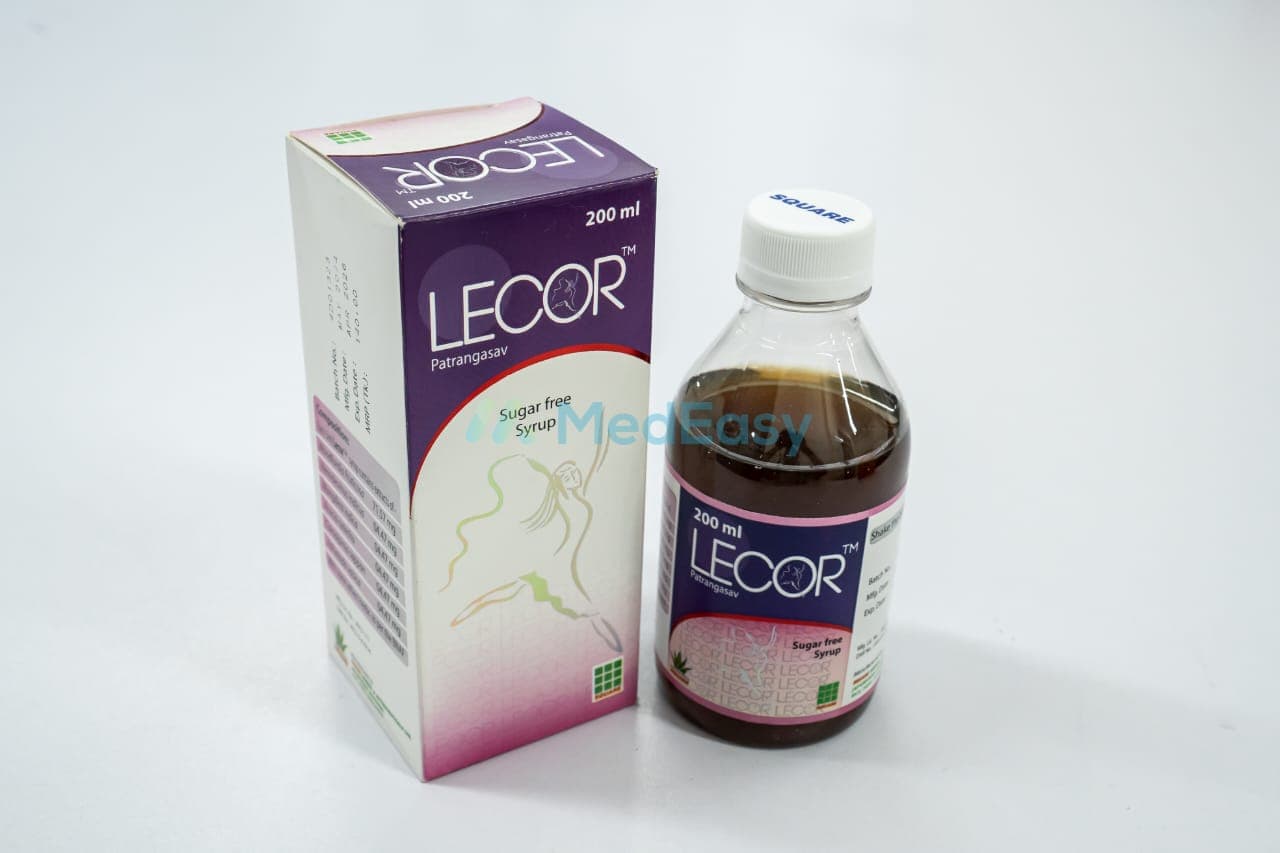

Medicine overview
Indications of Lecor
Lecor is a traditional Ayurvedic Asava-Arishta (self-fermented herbal liquid) preparation historically used as a supportive tonic for women's reproductive and menstrual health.
Traditional/Anecdotal Use (not established by modern clinical trials)
- Symptomatic support for menstrual irregularities, including scanty, delayed, or irregular menstrual bleeding, as used in traditional Ayurvedic practice.
- General gynecological and reproductive wellness support in women, as part of traditional Ayurvedic management.
- Traditionally used as an adjunct alongside other Ayurvedic formulations and lifestyle measures for menstrual health, rather than as a standalone treatment for diagnosed gynecological disease.
Important: The use of Lecor is based on long-standing traditional Ayurvedic practice and classical texts; it is not supported by robust modern randomized controlled clinical trial evidence. Lecor should not replace conventional medical evaluation and treatment for gynecological conditions, especially heavy, prolonged, or abnormal uterine bleeding, which require proper diagnosis.
Composition
Patrangasav is a fermented (Asava-type) polyherbal liquid preparation traditionally formulated around Patranga (Caesalpinia sappan, also known as sappanwood/Bakam) as its principal ingredient, combined with a group of other traditional Ayurvedic herbs (such as Ashoka, Lodhra, Musta, and related ingredients used in classical menstrual-health formulations) in an aqueous herbal decoction that undergoes natural fermentation.
The exact herbal composition, ratio of ingredients, and self-generated alcohol content of Patrangasav can vary between manufacturers, since it is prepared according to classical Ayurvedic formularies rather than a single standardized modern pharmaceutical formula. Patients should check the label of the specific brand of Patrangasav they are using for the manufacturer's declared composition.
Description
Lecor is a traditional Ayurvedic herbal Asava (self-fermented liquid) preparation. Asava/Arishta preparations are made by fermenting herbal decoctions with sugar or jaggery over a period of time, which generates a small amount of alcohol naturally during fermentation; this self-generated alcohol acts as a preservative and is believed in Ayurvedic theory to aid extraction and absorption of the herbal constituents.
Lecor is classically used as a supportive tonic for women's menstrual and reproductive health and is typically taken orally, diluted with water, under the guidance of a qualified Ayurvedic practitioner.
Therapeutic Class
Lecor belongs to the Ayurvedic Asava-Arishta class of traditional fermented herbal preparations. Within this system, Lecor is specifically classified as a "Streerogahara" or gynecological/menstrual-health-supportive tonic, used in classical Ayurvedic practice rather than modern allopathic pharmacological classification.
Pharmacology
Because Patrangasav is a traditional Ayurvedic polyherbal preparation, its mechanism of action has not been characterized through modern pharmacological or clinical-trial methods in the way a single-molecule drug would be.
Traditional/Attributed Properties
- The principal ingredient of Patrangasav, Patranga (Caesalpinia sappan), contains tannins and other polyphenolic compounds that are traditionally attributed with astringent and mild hemostatic (bleeding-reducing) properties, which is the rationale given in Ayurveda for its use in menstrual irregularities.
- Other herbs commonly included in Patrangasav-type formulations are traditionally described as having uterine tonic and astringent actions.
These mechanisms are based on traditional Ayurvedic pharmacological theory and limited preliminary/preclinical data on individual herbal constituents, not on confirmed modern clinical pharmacology of Patrangasav as a finished product.
Dosage & Administration of Lecor
The following is general information; the actual dose of Lecor should be individualized by a qualified Ayurvedic practitioner or physician based on the patient and product label.
| Population | Typical Dose of Lecor | Administration |
|---|---|---|
| Adult women | Commonly 15–30 mL, twice daily | Taken orally, mixed with an equal amount of water, preferably after meals, or as directed on the product label/by the prescriber |
| Children and adolescents | Not established; avoid use without professional guidance | Not applicable — see Use in Special Populations |
Duration of use of Lecor should be determined by the prescribing practitioner and reassessed periodically; see Duration of Treatment.
Administration of Lecor
Lecor is intended for oral use only. It should be measured with the cap/measuring cup provided, diluted with an equal amount of water, and taken after meals unless the label or prescriber advises otherwise. Lecor should not be injected or applied topically.
Interaction of Lecor
Formal drug-interaction studies have not been conducted for Lecor as a finished product. However, the following points are clinically relevant:
- Alcohol-sensitizing drugs: Because Lecor contains a small amount of self-generated (natural fermentation) alcohol, it may theoretically cause a disulfiram-like reaction (flushing, nausea, palpitations) in patients taking disulfiram, metronidazole, or similar alcohol-sensitizing medications.
- CNS depressants/sedatives: The alcohol content of Lecor may add to the sedative effect of benzodiazepines, other sedatives, or additional alcohol intake.
- Other herbal/Ayurvedic products: Concurrent use of Lecor with other herbal or Ayurvedic gynecological formulations should be supervised by a practitioner to avoid duplicated ingredients or additive effects.
Patients should inform their physician or Ayurvedic practitioner of all medicines and supplements before starting Lecor.
Contraindications
Patrangasav is contraindicated in:
- Patients with known hypersensitivity to Patrangasav or any of its herbal ingredients.
- Pregnancy, because traditional Asava/Arishta preparations such as Patrangasav contain self-generated alcohol from fermentation, and alcohol exposure in pregnancy is not considered safe (see Pregnancy and Lactation).
Side Effects of Lecor
Lecor is generally well tolerated when used as directed, but the following effects have been reported:
- Gastric discomfort, nausea, or acidity, particularly if taken without adequate dilution or on an empty stomach.
- Rarely, allergic/hypersensitivity reactions (skin rash, itching) to one of the herbal components.
- Excessive or prolonged use of Lecor beyond the recommended dose/duration may cause gastrointestinal upset due to its alcohol and herbal content.
Patients should stop Lecor and seek medical advice if any concerning symptoms occur.
Pregnancy & Lactation
Lecor is not recommended during pregnancy. Traditional Asava/Arishta preparations, including Lecor, contain a small amount of self-generated alcohol from the fermentation process, and safety of this alcohol exposure to the developing fetus has not been established; avoid use in pregnancy.
During breastfeeding, data on Lecor are lacking. Because of its alcohol content and unstandardized herbal composition, Lecor should be used during breastfeeding only if clearly needed, under medical/Ayurvedic practitioner supervision, after weighing potential benefit against potential risk to the infant.
Precautions & Warnings
Consider the following before and during use of Lecor:
- Composition and dosing variability: The exact herbal composition and alcohol content of Lecor can vary between manufacturers; always follow the label of the specific brand and the guidance of a qualified practitioner.
- Self-generated alcohol content: Lecor naturally contains a small amount of alcohol from fermentation. Use caution if you must avoid alcohol for religious, personal, medical (e.g., alcohol use disorder), or occupational reasons, and use caution if driving or operating machinery.
- Liver disease: Use Lecor with caution, and only under medical supervision, in patients with known liver disease, because of its alcohol content.
- Professional supervision: Lecor should be used only under the guidance of a qualified Ayurvedic practitioner or physician, particularly for dose, duration, and monitoring of response.
- Not a substitute for medical evaluation: Persistent, heavy, prolonged, or otherwise abnormal menstrual bleeding, or other significant gynecological symptoms, should be evaluated by a physician; do not rely on Lecor alone for such symptoms.
- Avoid Lecor in pregnancy, breastfeeding (unless advised), and children without professional guidance (see relevant sections).
Overdose Effects of Lecor
Specific overdose data for Lecor are not available. Taking substantially more than the recommended dose of Lecor may increase the likelihood of gastrointestinal upset, alcohol-related effects (such as drowsiness or nausea), or other adverse effects due to its herbal and alcohol content. If an overdose of Lecor is suspected, or if any severe or unusual symptoms occur, seek immediate medical attention or contact a poison control center/emergency services rather than attempting home treatment.
Storage Conditions
Store Lecor at room temperature (below 30°C), away from light and moisture. Keep the bottle tightly closed and out of the reach and sight of children.
Use In Special Populations
Children
Safety and efficacy of Lecor in children and adolescents have not been established; use in this population should be avoided unless specifically directed by a qualified practitioner.
Elderly
Specific dosing studies of Lecor in elderly patients are lacking; caution is advised, particularly regarding the self-generated alcohol content, concurrent medications, and any underlying hepatic or medical conditions.
Hepatic impairment
Lecor should be used with caution and only under medical supervision in patients with liver disease, due to its alcohol content (see Precautions and Warnings).
Renal impairment
No specific dose adjustment of Lecor has been established for renal impairment; use with caution and under professional guidance.
Duration Of Treatment
The duration of treatment with Lecor is not fixed and should be determined by the prescribing Ayurvedic practitioner or physician based on the individual's response, typically reviewed after a course of several weeks. Lecor is not intended for indefinite self-use without periodic professional reassessment, and persistent symptoms despite use of Lecor should prompt medical evaluation.
Drug Classes
Patrangasav belongs to the traditional Ayurvedic drug class of Asava-Arishta preparations (self-fermented polyherbal liquids), specifically within the subgroup of Streerogahara (women's health/gynecological-supportive) formulations.
Mode Of Action
Patrangasav does not have a modern, pharmacologically confirmed mechanism of action, as it is a traditional multi-herb fermented preparation rather than a single active pharmaceutical ingredient. In Ayurvedic theory, the astringent (Kashaya) and mild hemostatic properties attributed to its principal ingredient, Patranga (Caesalpinia sappan), together with the actions of other included herbs, are believed to underlie the traditional use of Patrangasav in supporting menstrual regularity.
Pediatric Uses
Safety and efficacy of Lecor in pediatric patients (children and adolescents) have not been established. Because Lecor contains self-generated alcohol and its herbal composition is not standardized for pediatric dosing, it should not be given to children except under the specific direction of a qualified Ayurvedic practitioner or physician.
Frequently Asked Questions
Q: What is Lecor 200 ml Syrup used for?
A: Lecor 200 ml Syrup is a traditional Ayurvedic fermented herbal preparation used to support menstrual regularity and general gynecological/reproductive wellness in women; this use is based on traditional Ayurvedic practice rather than modern clinical trial evidence, and persistent or severe menstrual problems should be evaluated by a physician.
Q: Does Lecor 200 ml Syrup contain alcohol?
A: Yes. Lecor 200 ml Syrup is an Asava-type preparation, meaning it is made by natural fermentation of an herbal decoction, which generates a small amount of alcohol. This self-generated alcohol acts as a preservative but means Lecor 200 ml Syrup should be used cautiously by people who must avoid alcohol, those with liver disease, and should be avoided in pregnancy.
Q: Can Lecor 200 ml Syrup be taken during pregnancy?
A: No. Lecor 200 ml Syrup is not recommended during pregnancy because of its self-generated alcohol content and lack of safety data for fetal exposure; pregnant women should avoid Lecor 200 ml Syrup and consult a physician for safe alternatives.
Q: What is the usual dose of Lecor 200 ml Syrup?
A: The typical adult dose of Lecor 200 ml Syrup is about 15–30 mL twice daily, diluted with an equal amount of water, usually after meals, but the exact dose should follow the product label or the advice of a qualified Ayurvedic practitioner or physician.
Q: Are there any side effects of Lecor 200 ml Syrup?
A: Lecor 200 ml Syrup is generally well tolerated, but some people may experience mild gastric discomfort, nausea, or acidity, especially if taken undiluted or on an empty stomach; rarely, allergic reactions to its herbal ingredients can occur. Stop Lecor 200 ml Syrup and seek medical advice if troubling symptoms develop.
Q: Can Lecor 200 ml Syrup replace medical treatment for heavy or abnormal periods?
A: No. Lecor 200 ml Syrup is a traditional supportive tonic and is not a substitute for proper medical diagnosis and treatment; heavy, prolonged, or abnormal uterine bleeding should always be evaluated by a physician rather than managed with Lecor 200 ml Syrup alone.
Disclaimer
The information provided is accurate to the best of our knowledge, but it does not replace professional medical advice. We cannot guarantee its completeness or accuracy, and the absence of specific information about a drug should not be taken as an endorsement. We are not responsible for any consequences arising from this information, so please consult a healthcare professional for any concerns or questions.
