
Key facts
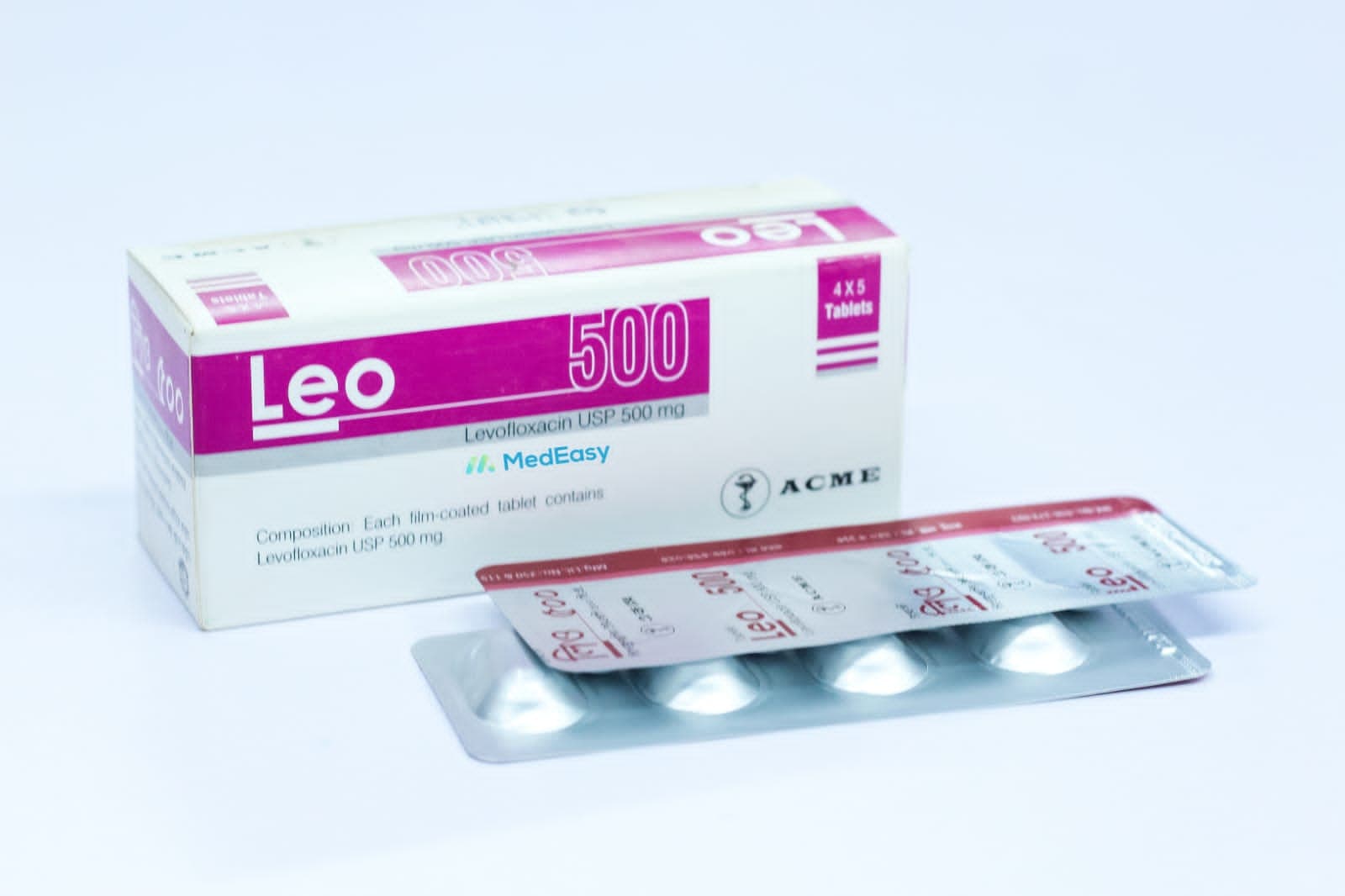
Leo 500 mg Tablet is available on MedEasy for ৳14.72 per 1 Piece, with home delivery anywhere in Bangladesh. It is manufactured by ACME Laboratories Ltd. Its generic name is Levofloxacin Hemihydrate.
- Pack sizes
- 1 Piece, 20's Pack
- Prescription
- Required. Upload a valid doctor's prescription at checkout; a MedEasy pharmacist verifies it before dispatch.
- Delivery
- Home delivery across Bangladesh. Same-day delivery in Dhaka, Chattogram, Sylhet and Bogura city areas; 2-3 days elsewhere.
- Payment
- Cash on delivery, bKash, cards and mobile banking.
- Brand
- Leo
- Generic name
- Levofloxacin Hemihydrate
- Manufacturer
- ACME Laboratories Ltd.
- Form & strength
- Tablet 500 mg
- Availability
- In stock
- Authenticity
- Sourced from licensed suppliers and the manufacturer's authorised distributors in Bangladesh.

Medicine overview
Indications of Leo
Leo is a fluoroquinolone antibiotic used to treat a range of bacterial infections caused by susceptible organisms. Its use is classified below by strength of evidence.
Established/approved uses
- Community-acquired pneumonia
- Nosocomial (hospital-acquired) pneumonia
- Acute bacterial exacerbation of chronic bronchitis
- Acute bacterial sinusitis
- Uncomplicated and complicated urinary tract infections
- Acute pyelonephritis
- Chronic bacterial prostatitis
- Uncomplicated and complicated skin and skin structure infections
Special/adjunct approved uses
- Post-exposure prophylaxis and treatment of inhalational anthrax (adults and children), used together with appropriate supportive care
- Treatment and prophylaxis of plague, including pneumonic and septicemic plague
Guideline-supported/off-label use
- As part of combination regimens for drug-resistant tuberculosis, under specialist supervision
- Typhoid fever in regions with susceptible organisms, as an alternative agent
Leo should only be used for infections that are proven or strongly suspected to be caused by susceptible bacteria, in line with antibiotic stewardship principles.
Composition
Each tablet/capsule or vial of Levofloxacin Hemihydrate contains Levofloxacin Hemihydrate equivalent to the labelled strength of levofloxacin base. Strength, dosage form, and excipients vary by manufacturer and product; refer to the specific product packaging for exact composition.
Description
Leo is the hemihydrate salt form of levofloxacin, a synthetic, broad-spectrum fluoroquinolone antibiotic. It is the levorotatory (S)-isomer of ofloxacin and is active against a wide range of Gram-positive and Gram-negative bacteria, as well as some atypical organisms.
Leo is available as oral tablets, oral solution, and intravenous infusion, depending on the manufacturer and clinical setting, and is used to treat respiratory, urinary, skin, and other systemic bacterial infections.
Therapeutic Class
Leo belongs to the fluoroquinolone class of antibiotics (third-generation quinolone).
Pharmacology
Levofloxacin Hemihydrate exerts its bactericidal action by inhibiting two essential bacterial enzymes, DNA gyrase (topoisomerase II) and topoisomerase IV, which are required for bacterial DNA replication, transcription, repair, and recombination. Inhibition of these enzymes leads to breakage of bacterial DNA strands and cell death.
Levofloxacin Hemihydrate has activity against many Gram-positive organisms (including Streptococcus pneumoniae and Staphylococcus aureus), Gram-negative organisms (including Haemophilus influenzae, Escherichia coli, Klebsiella pneumoniae, and Pseudomonas aeruginosa), and atypical pathogens (including Mycoplasma pneumoniae, Chlamydophila pneumoniae, and Legionella pneumophila).
After oral administration, Levofloxacin Hemihydrate is rapidly and almost completely absorbed, with bioavailability of approximately 99%. It is widely distributed into body tissues and fluids, undergoes minimal hepatic metabolism, and is primarily eliminated unchanged by the kidneys, with an elimination half-life of approximately 6-8 hours in patients with normal renal function.
Dosage & Administration of Leo
Leo may be given orally or by slow intravenous infusion, depending on the product and clinical situation. Take Leo exactly as prescribed by your physician; do not stop, extend, skip doses, or share this medicine with others without medical advice, as inappropriate use of antibiotics can promote resistance and treatment failure.
| Indication | Usual adult dosage regimen |
|---|---|
| Community-acquired pneumonia | 500 mg once daily for 7-14 days, or 750 mg once daily for 5 days |
| Nosocomial pneumonia | 750 mg once daily for 7-14 days |
| Acute bacterial exacerbation of chronic bronchitis | 500 mg once daily for 7 days |
| Acute bacterial sinusitis | 500 mg once daily for 10-14 days, or 750 mg once daily for 5 days |
| Uncomplicated urinary tract infection | 250 mg once daily for 3 days |
| Complicated urinary tract infection / acute pyelonephritis | 250 mg once daily for 10 days, or 750 mg once daily for 5 days |
| Chronic bacterial prostatitis | 500 mg once daily for 28 days |
| Uncomplicated skin and skin structure infection | 500 mg once daily for 7-10 days |
| Complicated skin and skin structure infection | 750 mg once daily for 7-14 days |
| Inhalational anthrax (post-exposure), plague | 500 mg once daily for 10-60 days, as directed by the treating physician |
Renal impairment
Dose and/or dosing interval of Leo must be adjusted according to creatinine clearance; see Use in Special Populations for details.
Administration instructions
- May be taken with or without food; swallow tablets whole with a full glass of water.
- Maintain adequate hydration during treatment.
- Separate oral dosing of Leo from antacids, sucralfate, and products containing iron, zinc, calcium, or magnesium by at least 2 hours before or after, as these markedly reduce absorption.
- Intravenous Leo must be infused slowly (over 60-90 minutes depending on dose) and never given by rapid or bolus injection.
- Complete the full prescribed course even if symptoms improve earlier.
Administration of Leo
Interaction of Leo
The following are well-established, clinically significant interactions with Leo:
- Antacids, sucralfate, and multivitamins/minerals (iron, zinc, calcium, magnesium): markedly reduce oral absorption of Leo through chelation; separate dosing by at least 2 hours.
- NSAIDs: concomitant use with Leo may increase the risk of central nervous system stimulation and seizures.
- Warfarin: Leo may potentiate the anticoagulant effect, increasing bleeding risk; monitor prothrombin time/INR closely.
- Corticosteroids: concurrent use with Leo increases the risk of tendinitis and tendon rupture, especially in elderly patients.
- Drugs that prolong the QT interval (e.g., class IA and III antiarrhythmics, certain antipsychotics): combined use with Leo increases the risk of QT prolongation and arrhythmia.
- Oral antidiabetic agents (e.g., sulfonylureas) or insulin: Leo can cause significant blood glucose disturbances (hypoglycemia or hyperglycemia); monitor blood glucose closely.
- Theophylline: may result in elevated theophylline levels and increased risk of theophylline-related adverse effects when used with Leo.
- Probenecid and cimetidine: may reduce renal clearance of Leo, increasing systemic exposure.
Contraindications
Levofloxacin Hemihydrate is contraindicated in:
- Patients with known hypersensitivity to Levofloxacin Hemihydrate, levofloxacin, or any other fluoroquinolone antibiotic.
- Patients with a history of tendon disorders (tendinitis or tendon rupture) associated with fluoroquinolone use.
- Patients with myasthenia gravis, as Levofloxacin Hemihydrate can exacerbate muscle weakness, including respiratory muscle weakness.
Side Effects of Leo
Common side effects of Leo include nausea, diarrhea, headache, dizziness, insomnia, and constipation.
Less common but clinically important adverse effects include:
- Tendinitis and tendon rupture (see Precautions and Warnings)
- Peripheral neuropathy, which may be irreversible
- Central nervous system effects: seizures, confusion, tremors, hallucinations, and rarely suicidal thoughts
- QT interval prolongation and, rarely, serious arrhythmias
- Hypersensitivity reactions, including rash, pruritus, and rare anaphylaxis
- Photosensitivity/phototoxicity reactions
- Clostridioides difficile-associated diarrhea, ranging from mild to severe colitis
- Blood glucose disturbances, particularly in diabetic patients
- Elevated liver enzymes and, rarely, hepatotoxicity
Patients should seek prompt medical attention if they experience tendon pain/swelling, numbness or tingling, severe diarrhea, unusual mood changes, or signs of an allergic reaction while taking Leo.
Pregnancy & Lactation
Leo should be used during pregnancy only if clearly needed and if the potential benefit justifies the potential risk to the fetus, as fluoroquinolones have been associated with musculoskeletal effects (arthropathy) in juvenile animal studies. A physician should always be consulted before use in pregnancy.
Leo is excreted into breast milk in small amounts. Because of the potential for adverse effects on the infant's developing joints and cartilage, breastfeeding is generally not recommended during treatment; a physician should be consulted to weigh the benefits and risks or consider an alternative antibiotic.
Precautions & Warnings
Take Leo exactly as prescribed by your physician; do not stop, extend, skip doses, or share this medicine with others without medical advice.
- Tendinitis and tendon rupture: Leo carries a boxed warning for increased risk of tendinitis and tendon rupture, particularly of the Achilles tendon. Risk is higher in elderly patients, those taking corticosteroids, and organ transplant recipients. Stop Leo and rest the affected area at the first sign of tendon pain, swelling, or inflammation.
- Peripheral neuropathy: discontinue Leo immediately if symptoms of neuropathy (pain, burning, tingling, numbness, weakness) occur, as it may become irreversible.
- Central nervous system effects: Leo may cause seizures, increased intracranial pressure, confusion, and rarely psychiatric disturbances; use with caution in patients with known or suspected CNS disorders.
- Exacerbation of myasthenia gravis: Leo may worsen muscle weakness in patients with myasthenia gravis, including life-threatening respiratory failure; avoid use in these patients.
- Aortic aneurysm and dissection: fluoroquinolones including Leo are associated with increased risk of aortic aneurysm/dissection, particularly in elderly patients and those with pre-existing aneurysm, hypertension, or connective tissue disorders.
- QT prolongation: use with caution in patients with known QT prolongation, uncorrected electrolyte imbalance, or concurrent use of other QT-prolonging drugs.
- Blood glucose disturbances: monitor blood glucose closely in diabetic patients, especially those on oral hypoglycemics or insulin.
- Photosensitivity: avoid excessive sunlight/UV exposure during treatment with Leo.
- Hypersensitivity reactions: discontinue at the first sign of rash, jaundice, or other signs of allergy.
- Clostridioides difficile-associated diarrhea: consider this diagnosis in patients who develop diarrhea during or after treatment.
Overdose Effects of Leo
There is no specific antidote for Leo overdose. In case of suspected overdose, seek immediate medical attention or contact a poison control center/emergency services right away.
Overdose may present with CNS symptoms (dizziness, confusion, seizures), QT prolongation, and gastrointestinal symptoms. Management is supportive and symptomatic, including monitoring of cardiac rhythm (ECG); Leo is not efficiently removed by hemodialysis or peritoneal dialysis. Do not attempt to manage a suspected overdose at home.
Storage Conditions
Store at room temperature (below 30°C), away from light and moisture. Keep out of reach of children.
Use In Special Populations
Renal impairment
Dose of Leo must be adjusted based on creatinine clearance (CrCl):
| Creatinine clearance | Typical dose adjustment (500 mg regimen) |
|---|---|
| 50-80 mL/min | No adjustment needed |
| 20-49 mL/min | First dose as usual, then 250 mg every 24 hours |
| 10-19 mL/min | First dose as usual, then 250 mg every 48 hours |
| Hemodialysis / CAPD | First dose as usual, then 250 mg every 48 hours, with supplemental monitoring |
Exact adjustment depends on the indication and prescribed dose; follow the physician's instructions.
Hepatic impairment
No dose adjustment is generally required, as Leo undergoes minimal hepatic metabolism; use with caution in severe hepatic impairment.
Elderly patients
Elderly patients are at increased risk of tendon disorders, QT prolongation, and CNS effects with Leo; renal function should be assessed before and during therapy.
Pediatric patients
Leo is not recommended for routine use in children and adolescents under 18 years due to the risk of arthropathy, except for approved uses such as inhalational anthrax post-exposure prophylaxis/treatment and plague, where weight-based dosing under specialist supervision applies.
Duration Of Treatment
Duration of Leo therapy varies by indication, ranging from 3 days (uncomplicated urinary tract infection) to 28 days (chronic bacterial prostatitis) or up to 60 days (post-exposure anthrax prophylaxis). Always complete the full course as prescribed, even if symptoms improve earlier.
Drug Classes
Fluoroquinolone antibiotics
Mode Of Action
Levofloxacin Hemihydrate inhibits bacterial DNA gyrase (topoisomerase II) and topoisomerase IV, enzymes essential for bacterial DNA replication, transcription, and repair, resulting in bactericidal activity against susceptible organisms.
Pregnancy
C
Pediatric Uses
Safety and efficacy of Leo have not been established for routine use in pediatric patients under 18 years of age because of the risk of arthropathy (joint/cartilage damage) observed in juvenile animal studies.
Exceptions where pediatric use of Leo is approved include post-exposure prophylaxis and treatment of inhalational anthrax, and treatment/prophylaxis of plague, in children 6 months of age and older, using weight-based dosing determined by the treating physician. Use in children for any other indication should be avoided unless no safer alternative exists and a specialist advises otherwise.
Frequently Asked Questions
Q: What is Leo 500 mg Tablet used for?
A: Leo 500 mg Tablet is an antibiotic used to treat bacterial infections of the lungs (pneumonia, bronchitis), sinuses, urinary tract, prostate, and skin, among others. It only works against bacterial infections, not viral ones like the common cold or flu.
Q: Can I stop taking Leo 500 mg Tablet once I feel better?
A: No. You should complete the full course of Leo 500 mg Tablet exactly as prescribed by your physician, even if your symptoms improve earlier. Stopping early can allow the infection to return and contribute to antibiotic resistance.
Q: Is Leo 500 mg Tablet safe during pregnancy?
A: Leo 500 mg Tablet should be used in pregnancy only if clearly needed and the potential benefit outweighs the potential risk to the fetus, since fluoroquinolones can affect developing joints and cartilage in animal studies. Always consult your physician before using Leo 500 mg Tablet if you are pregnant or planning pregnancy.
Q: What side effects should I watch for with Leo 500 mg Tablet?
A: Common side effects of Leo 500 mg Tablet include nausea, diarrhea, headache, and dizziness. Seek immediate medical attention if you experience tendon pain or swelling, numbness/tingling, severe diarrhea, irregular heartbeat, or signs of an allergic reaction.
Q: Can children take Leo 500 mg Tablet?
A: Leo 500 mg Tablet is generally not recommended for children under 18 due to a risk of joint/cartilage problems, except for specific approved uses such as anthrax post-exposure prophylaxis or plague, where a physician may prescribe weight-based dosing.
Q: What should I avoid while taking Leo 500 mg Tablet?
A: Avoid taking antacids, calcium, iron, zinc, or magnesium supplements within 2 hours of Leo 500 mg Tablet, as they reduce its absorption. Also avoid excessive sun/UV exposure and strenuous exercise that stresses tendons, and do not take Leo 500 mg Tablet with other drugs that prolong the QT interval without medical advice.
Disclaimer
The information provided is accurate to the best of our knowledge, but it does not replace professional medical advice. We cannot guarantee its completeness or accuracy, and the absence of specific information about a drug should not be taken as an endorsement. We are not responsible for any consequences arising from this information, so please consult a healthcare professional for any concerns or questions.
