
Key facts
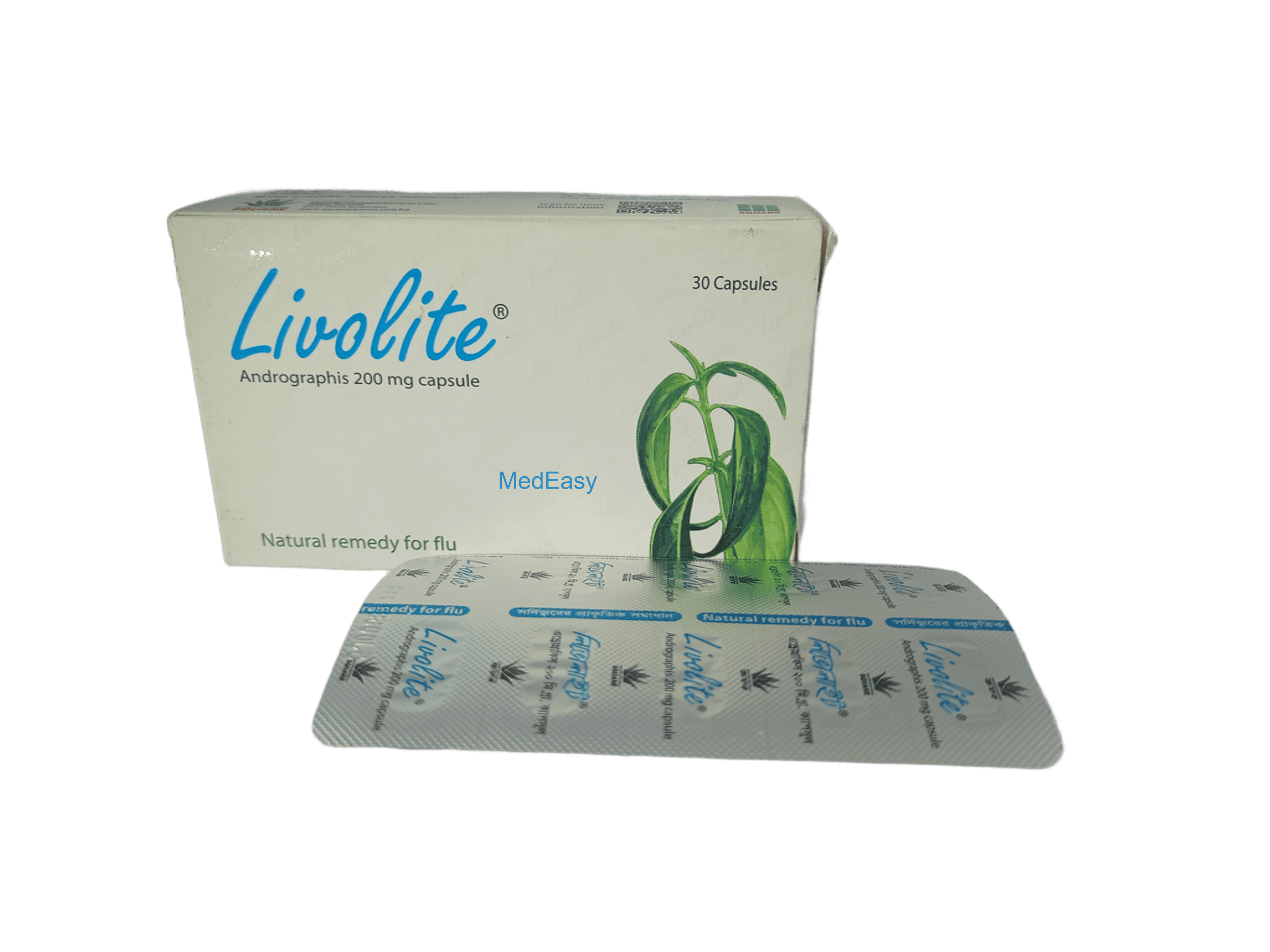
Livolite 200 mg Capsule is available on MedEasy for ৳45.00 per 10's Strip, with home delivery anywhere in Bangladesh. It is manufactured by Square Pharmaceuticals PLC. Its generic name is Andrographis paniculata.
- Brand
- Livolite
- Generic name
- Andrographis paniculata
- Manufacturer
- Square Pharmaceuticals PLC.
- Form & strength
- Capsule 200 mg
- Pack sizes
- 10's Strip, 30's pack
- Prescription
- Required. Upload a valid doctor's prescription at checkout; a MedEasy pharmacist verifies it before dispatch.
- Availability
- In stock
- Authenticity
- Sourced from licensed suppliers and the manufacturer's authorised distributors in Bangladesh.
- Delivery
- Home delivery across Bangladesh. Same-day delivery in Dhaka, Chattogram, Sylhet and Bogura city areas; 2-3 days elsewhere.
- Payment
- Cash on delivery, bKash, cards and mobile banking.

Medicine overview
Indications of Livolite
Livolite is an herbal (botanical) product, commonly known as Kalmegh or the "King of Bitters," that is traditionally used and has been studied for the following indications:
- Evidence-supported use: Symptomatic relief of upper respiratory tract infection (URTI)/common cold symptoms, including sore throat, cough, nasal congestion, and fatigue. Several randomized controlled trials support a modest reduction in symptom severity and duration when Livolite is started early in illness and used for a short (typically 5-7 day) course.
- Traditional/general-support use: General immune support and as a traditional remedy for fever, used within Ayurvedic and Unani systems of medicine.
- Off-label/adjunct use (limited evidence): Supportive adjunct use alongside standard care in mild upper respiratory viral illness. Livolite is not a substitute for prescribed antiviral, antibacterial, or antipyretic therapy when these are clinically indicated.
Livolite is not an FDA-approved pharmaceutical drug; it is marketed in Bangladesh and elsewhere as an herbal/nutraceutical preparation. It should not delay medical evaluation for high fever, difficulty breathing, or symptoms lasting beyond a typical viral illness course.
Composition
Each tablet/capsule of Andrographis paniculata preparations typically contains a dried extract of the aerial parts (leaves and stem) of the Andrographis paniculata plant, standardized to a defined andrographolide content (commonly 4-6% andrographolide, the principal bioactive diterpene lactone). Strength and standardization vary by manufacturer and brand; refer to the specific product label for exact composition and andrographolide content per unit.
Description
Livolite is an annual herbaceous plant of the Acanthaceae family, native to South and Southeast Asia, and long used in Ayurvedic, Unani, and traditional Chinese medicine. It is commonly called Kalmegh or the "King of Bitters" because of its intensely bitter taste. The primary bioactive constituents are diterpene lactones, chiefly andrographolide, together with related andrographolide derivatives and flavonoids, believed to underlie its anti-inflammatory, immunomodulatory, hepatoprotective, and antipyretic properties.
Livolite is available in Bangladesh as standardized herbal tablets or capsules and is used mainly for supportive, short-term relief of common cold and upper respiratory tract infection symptoms.
Therapeutic Class
Livolite belongs to the class of herbal/botanical medicines (phytomedicines), specifically categorized as an immunomodulatory and anti-inflammatory herbal agent used for respiratory symptom support. It is not a conventional pharmaceutical drug class member (it is neither an antibiotic, antiviral, nor an NSAID) but is grouped with other traditional medicinal herbs used for immune and respiratory support.
Pharmacology
Mechanism
The pharmacological activity of Andrographis paniculata is attributed mainly to andrographolide and related diterpene lactones. Proposed mechanisms include inhibition of pro-inflammatory signaling pathways (including NF-κB-mediated cytokine production), modulation of immune cell activity (including macrophage and T-cell function), antioxidant effects, and mild hepatoprotective activity demonstrated in preclinical studies.
Pharmacokinetics
Andrographolide from Andrographis paniculata is absorbed after oral administration, undergoes hepatic metabolism (including glucuronidation), and is eliminated mainly via the kidneys. Human pharmacokinetic data for standardized Andrographis paniculata extracts are limited compared to conventional pharmaceuticals; systemic bioavailability is variable and formulation-dependent.
Dosage & Administration of Livolite
Dosing of Livolite varies by brand, extract standardization (andrographolide content), and formulation. The following reflects commonly used regimens for standardized extracts; always follow the specific product label or a physician's advice.
| Indication | Adult dose | Notes |
|---|---|---|
| Common cold / URTI symptom relief | Typically 400 mg dried extract (standardized to andrographolide) two to three times daily, or per product-specific labeling | Usually started at symptom onset; short-term course of 5-7 days |
| General immune support (traditional use) | Per product label, often lower maintenance doses | Evidence is limited; use only as directed |
Pediatric dosing of Livolite is not well standardized; see Use in Special Populations and Pediatric Uses. Doses exceeding label recommendations should not be taken without medical advice.
Administration of Livolite
Livolite tablets/capsules are usually taken orally with water, generally with or after meals to minimize gastrointestinal upset (as Livolite has a strongly bitter taste and can cause stomach discomfort on an empty stomach). Follow the dosing schedule on the product label or as advised by a physician; do not exceed the recommended dose or duration without medical guidance.
Interaction of Livolite
Well-documented, clinically relevant interactions with Livolite include:
- Anticoagulant/antiplatelet agents (e.g., warfarin, aspirin, clopidogrel): Livolite may have mild effects on platelet function and coagulation; concurrent use may theoretically increase bleeding risk. Patients on anticoagulant or antiplatelet therapy should discuss use of Livolite with their prescriber before starting it.
- Immunosuppressant therapy (e.g., cyclosporine, other immunosuppressive agents used post-transplant or for autoimmune disease): Livolite has immune-stimulating properties that could theoretically counteract the intended effect of immunosuppressants. Concurrent use should be discussed with the prescribing physician.
- Antihypertensive agents: Some data suggest Livolite may have a mild blood-pressure-lowering effect; caution and monitoring are advised with concurrent antihypertensive medication.
Because Livolite is an herbal product, comprehensive drug-interaction data are more limited than for conventional pharmaceuticals; inform your physician or pharmacist of all medications and supplements before starting Livolite.
Contraindications
- Hypersensitivity: Known hypersensitivity/allergy to Andrographis paniculata or to other plants of the Acanthaceae family.
- Pregnancy: Andrographis paniculata is contraindicated in pregnancy; both traditional use and modern data raise concern about uterine-stimulant/abortifacient potential at higher doses (see Pregnancy and Lactation).
Side Effects of Livolite
Reported side effects of Livolite include:
- Gastrointestinal upset: nausea, diarrhea, abdominal discomfort, and taste disturbance (related to its intensely bitter taste), generally mild and dose-related.
- Rare hypersensitivity/allergic reactions, including urticaria (hives) and, very rarely, more severe allergic reactions; discontinue and seek medical care if these occur.
- Headache and fatigue have been reported infrequently.
Most reported side effects of Livolite are mild and resolve after stopping use. Seek prompt medical attention for any signs of a severe allergic reaction.
Pregnancy & Lactation
Pregnancy: Livolite should be avoided during pregnancy. Both traditional sources and modern preclinical data raise concern regarding uterine-stimulant/abortifacient potential at higher doses. Livolite should not be used during pregnancy without explicit medical guidance, and is generally best avoided altogether during pregnancy.
Lactation: Data on excretion of Livolite constituents into breast milk and safety during breastfeeding are insufficient. Use only if clearly needed and if the potential benefit justifies the potential risk to the infant; consult a physician before use while breastfeeding.
Precautions & Warnings
- Autoimmune disease: Livolite has a theoretical immune-stimulating effect; use with caution and medical guidance in patients with autoimmune conditions, as it could theoretically worsen disease activity.
- Fertility concerns: Some animal data raise theoretical concerns about fertility at high doses of Livolite; caution is advised in individuals with known infertility concerns or those actively attempting to conceive.
- Concurrent anticoagulant/antiplatelet or immunosuppressant therapy: see Interactions for details.
- Do not delay medical care: Livolite is intended for short-term symptomatic relief. It should not be used in place of medical evaluation for high fever, difficulty breathing, or symptoms lasting longer than a typical viral illness course.
- Discontinue Livolite and seek medical advice if a rash, hives, or other signs of hypersensitivity develop.
Overdose Effects of Livolite
Specific human overdose data for Livolite are limited. Taking substantially more than the recommended dose may increase the likelihood of gastrointestinal upset (nausea, vomiting, diarrhea) or hypersensitivity-type reactions. There is no specific antidote. If overdose of Livolite is suspected, or if severe symptoms (e.g., signs of a severe allergic reaction, persistent vomiting) occur, seek immediate medical attention or contact a poison control center/emergency services rather than attempting home treatment.
Storage Conditions
Store at room temperature (below 30°C), away from light and moisture. Keep out of reach of children.
Use In Special Populations
- Pregnancy: Livolite is contraindicated; see Pregnancy and Lactation.
- Lactation: Use only if clearly needed; see Pregnancy and Lactation.
- Pediatric patients: Safety and efficacy of Livolite are not well established in children; see Pediatric Uses.
- Elderly: No specific dose adjustment is well established for elderly patients using Livolite, but general caution regarding polypharmacy and interaction potential (see Interactions) applies, given the higher likelihood of concurrent anticoagulant or other chronic medication use.
- Hepatic/renal impairment: Specific dose-adjustment data for Livolite in hepatic or renal impairment are not well established; use with caution and medical guidance in these populations.
Duration Of Treatment
Livolite is generally intended for short-term use, typically 5-7 days, for relief of acute cold/upper respiratory tract infection symptoms. It is not intended for continuous long-term use without medical guidance, given limited long-term safety data. If symptoms do not improve within this period, or worsen, medical evaluation is advised.
Drug Classes
Andrographis paniculata is classified as an herbal immunomodulatory and anti-inflammatory phytomedicine (botanical/nutraceutical agent), rather than a synthetic pharmaceutical drug class.
Mode Of Action
The principal active constituent of Andrographis paniculata, andrographolide, is a labdane diterpenoid lactone believed to modulate inflammatory and immune pathways, including down-regulation of pro-inflammatory cytokine production (partly via NF-κB pathway inhibition), modulation of macrophage and lymphocyte activity, and antioxidant effects. These combined actions are thought to underlie the anti-inflammatory, immune-supportive, and mild antipyretic effects observed with Andrographis paniculata use, though the complete mechanism of action has not been as fully characterized as for conventional pharmaceuticals.
Pediatric Uses
Safety and efficacy of Livolite have not been well established in children through rigorous controlled trials, and formal pediatric labeling/dosing does not exist to the same standard as for conventional pharmaceuticals. Some traditional and regional products list weight-based pediatric dosing, but such use should occur only under medical guidance. Livolite is generally not recommended for use in infants and young children without explicit medical advice, given the limited pediatric safety data.
Frequently Asked Questions
Q: What is Livolite 200 mg Capsule used for?
A: Livolite 200 mg Capsule (also known as Kalmegh) is an herbal product traditionally used and studied for short-term relief of common cold and upper respiratory tract infection symptoms such as sore throat, cough, and nasal congestion, and for general immune support.
Q: Can I take Livolite 200 mg Capsule during pregnancy?
A: No. Livolite 200 mg Capsule is contraindicated during pregnancy because both traditional and modern sources raise concern about uterine-stimulant/abortifacient potential at higher doses. Avoid Livolite 200 mg Capsule during pregnancy unless specifically advised otherwise by your physician.
Q: Is Livolite 200 mg Capsule safe to take with blood thinners?
A: Use caution. Livolite 200 mg Capsule may have a mild effect on platelet function and coagulation, so if you are taking anticoagulant or antiplatelet medication (such as warfarin, aspirin, or clopidogrel), discuss use of Livolite 200 mg Capsule with your prescriber before starting it, due to a theoretical increased bleeding risk.
Q: What are the common side effects of Livolite 200 mg Capsule?
A: The most common side effects of Livolite 200 mg Capsule are mild gastrointestinal symptoms such as nausea, diarrhea, and taste disturbance related to its bitter taste. Rare hypersensitivity reactions, including hives, have also been reported. Stop use and seek medical care if signs of a severe allergic reaction occur.
Q: How long can I take Livolite 200 mg Capsule for a cold?
A: Livolite 200 mg Capsule is generally used for a short course of about 5-7 days for acute cold/upper respiratory symptoms. It is not intended for continuous long-term use without medical guidance, and it should not delay medical evaluation if symptoms are severe (high fever, difficulty breathing) or last longer than a typical viral illness.
Q: Can children take Livolite 200 mg Capsule?
A: Safety and efficacy of Livolite 200 mg Capsule have not been well established in children. It should generally not be given to infants or young children without explicit medical advice, as formal pediatric dosing and safety data are limited.
Disclaimer
The information provided is accurate to the best of our knowledge, but it does not replace professional medical advice. We cannot guarantee its completeness or accuracy, and the absence of specific information about a drug should not be taken as an endorsement. We are not responsible for any consequences arising from this information, so please consult a healthcare professional for any concerns or questions.
