
5% Off
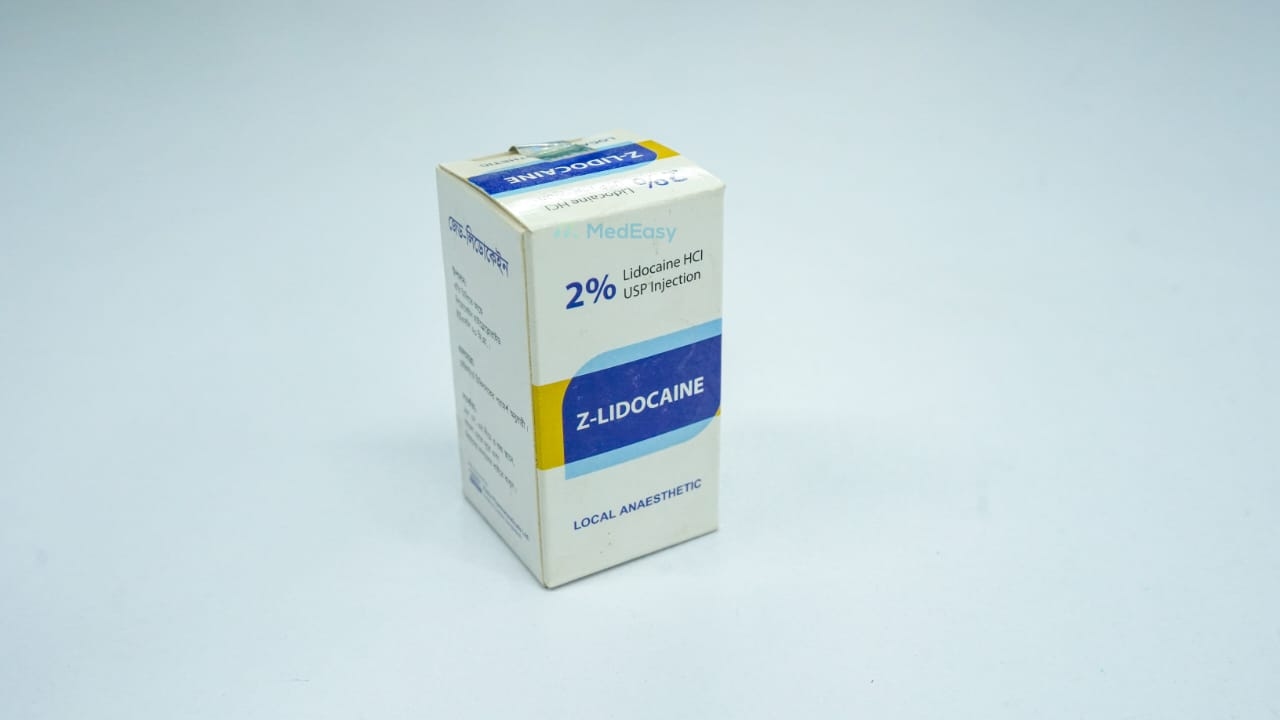
Z-Lidocaine2%
Ziska Pharmaceuticals Ltd.
৳38.00
Add to cart

Locaine 2% Injection is available on MedEasy for ৳27.30 per 50 ml vial, with home delivery anywhere in Bangladesh. It is manufactured by Aristopharma Ltd. Its generic name is Lidocaine Hydrochloride.

Locaine is an amide-type local anesthetic agent with the following approved and evidence-supported uses:
The specific formulation, strength, and route of Locaine used depend on the indication and must be selected by a qualified physician or dentist.
Each formulation contains Lidocaine Hydrochloride as the active pharmaceutical ingredient. Depending on the product, it is available as:
Excipients vary by formulation (e.g. sodium chloride, preservatives, pH-adjusting agents) and are listed on individual product labeling.
Locaine is a synthetic amino-amide compound that acts as a local anesthetic and, when given intravenously, as a Class Ib antiarrhythmic agent. It has been in clinical use for decades and is one of the most widely used local anesthetics worldwide because of its rapid onset, intermediate duration of action, and favorable safety profile when used at recommended doses.
Locaine is used to produce reversible loss of sensation in a localized area of the body (for surgical, dental, or diagnostic procedures) or, in its intravenous form, to suppress dangerous ventricular arrhythmias in emergency cardiac care.
Local Anesthetic (Amide-type); Class Ib Antiarrhythmic Agent. Locaine belongs to this therapeutic class.
Lidocaine Hydrochloride blocks voltage-gated sodium channels in neuronal cell membranes, stabilizing the membrane and reducing the influx of sodium ions required for the initiation and conduction of nerve impulses. This produces a reversible, localized loss of sensation (local anesthesia).
When given intravenously, Lidocaine Hydrochloride preferentially blocks sodium channels in depolarized or ischemic cardiac (Purkinje and ventricular) tissue, shortening the action potential duration and effective refractory period, suppressing spontaneous ventricular automaticity, and thereby reducing ventricular ectopy and arrhythmias — its Class Ib antiarrhythmic action.
The dose and route of Locaine must be individualized by a qualified physician or dentist based on the procedure, site of administration, patient's age, weight, and physical status. The lowest effective dose should always be used.
| Use | Typical concentration | Maximum dose |
|---|---|---|
| Local infiltration | 0.5%–1% | Up to 4.5 mg/kg (max ~300 mg) without epinephrine; up to 7 mg/kg (max ~500 mg) with epinephrine, per administration |
| Peripheral nerve block | 1%–1.5% | As above, per site-specific protocol |
| Epidural/caudal anesthesia | 1%–2% | Determined by anesthesiologist based on level of block required |
Applied as gel, ointment, spray, or viscous solution to the affected mucous membrane or skin area, in the minimum amount needed, generally not more often than every 3 hours and not exceeding the maximum recommended dose stated on the product label.
| Step | Dose |
|---|---|
| Loading dose | 1–1.5 mg/kg IV bolus; may repeat 0.5–0.75 mg/kg every 5–10 minutes as needed, up to a total of 3 mg/kg |
| Maintenance infusion | 1–4 mg/minute by continuous IV infusion, titrated to arrhythmia response and adjusted for hepatic impairment or heart failure |
Doses must be reduced according to age, weight, and physical condition, and should not exceed the calculated maximum safe dose (mg/kg) for local anesthesia. For IV antiarrhythmic use in pediatric emergency care (e.g. per ACLS/PALS protocols), an initial bolus of approximately 1 mg/kg IV may be used under direct physician supervision.
No dose adjustment is generally required for local anesthetic use in mild-to-moderate renal impairment. For intravenous antiarrhythmic use, dose reduction and close monitoring are required in patients with hepatic impairment or reduced hepatic blood flow (e.g. heart failure, shock), since Locaine is cleared primarily by the liver.
Locaine is administered by injection (local infiltration, nerve block, epidural/caudal, or intravenous) or applied topically to skin or mucous membranes, strictly according to product labeling and by or under the supervision of a qualified healthcare professional. Intravascular injection must be avoided during local/regional anesthesia (aspirate before injecting); intravenous use for arrhythmias requires cardiac monitoring. Do not use solutions that are discolored or contain particulate matter.
The following interactions with Locaine are clinically significant:
Inform your physician of all medicines, including over-the-counter drugs and supplements, being used before Locaine is administered.
Lidocaine Hydrochloride is contraindicated in:
Side effects of Locaine depend on the dose, route of administration, and whether absorption is local or systemic.
These systemic effects represent local anesthetic systemic toxicity (LAST) and require immediate medical attention (see Overdose Effects).
Pregnancy: Locaine should be used during pregnancy only if clearly needed and if the potential benefit justifies the potential risk to the fetus. It readily crosses the placenta; use in obstetric anesthesia should be limited to the doses required and performed by trained personnel. Consult a physician before use during pregnancy.
Lactation: Locaine is excreted in small amounts in breast milk. It is generally considered acceptable for use during breastfeeding at recommended doses, but a physician should be consulted, particularly for repeated or high-dose use.
Locaine should be administered only by, or under the supervision of, personnel trained in the diagnosis and management of dose-related toxicity and other emergencies that may arise from its use, with resuscitative equipment and drugs immediately available.
Overdose or excessive systemic absorption of Locaine (local anesthetic systemic toxicity, or LAST) is a medical emergency. Early symptoms may include perioral numbness, tinnitus, dizziness, and restlessness, progressing to seizures, loss of consciousness, respiratory depression, cardiac arrhythmias, and cardiovascular collapse.
If overdose or signs of systemic toxicity are suspected, seek immediate medical attention or contact emergency services/poison control right away. Treatment must be provided in a facility with resuscitative capability; do not attempt to manage suspected Locaine toxicity at home.
Store at room temperature (below 30°C), away from light and moisture. Do not freeze. Do not use if the solution is discolored or contains particulate matter. Keep out of reach of children.
Locaine may be used in children with doses reduced according to age, weight, and physical condition; the maximum safe dose (mg/kg) must not be exceeded. Infants and young children are at higher risk of systemic toxicity and methemoglobinemia, particularly with topical/viscous formulations; such use should be closely supervised. Locaine-containing viscous oral solutions should not be used for teething pain in infants and young children due to reports of serious harm.
Elderly patients, particularly those who are debilitated or have cardiac, hepatic, or renal impairment, generally require reduced doses and closer monitoring, as they are more susceptible to systemic toxicity.
Patients with severe hepatic disease are at increased risk of developing toxic plasma concentrations of Locaine because of reduced metabolic clearance; reduced doses and monitoring are required, especially with intravenous use.
Dose adjustment is generally not required for local anesthetic use in renal impairment, though accumulation of metabolites may occur with repeated intravenous dosing; monitor accordingly.
Patients with heart failure, bradyarrhythmias, or heart block require caution and dose reduction, as described in Precautions and Warnings.
The duration of use of Locaine depends entirely on the clinical indication: local/regional anesthesia is typically single-dose or short-duration for the length of a procedure (approximately 30–120 minutes of effect); intravenous antiarrhythmic infusions are continued only as long as needed to control acute ventricular arrhythmia, generally for a limited period (hours) under continuous cardiac monitoring, and are not intended for long-term or maintenance therapy. Topical formulations should be used only as long as directed by a physician for the specific condition being treated.
Lidocaine Hydrochloride belongs to the amide-type local anesthetic drug class and, for intravenous use, the Class Ib antiarrhythmic drug class.
Lidocaine Hydrochloride blocks voltage-gated sodium channels on neuronal cell membranes, preventing the generation and conduction of nerve impulses and thereby producing reversible local anesthesia; intravenously, it preferentially suppresses abnormal ventricular automaticity by the same sodium-channel-blocking mechanism, giving it Class Ib antiarrhythmic activity. See Pharmacology for full detail.
Category B (FDA legacy pregnancy category)
Locaine is used in pediatric patients for local/regional anesthesia and, in emergency cardiac care, for acute ventricular arrhythmias, with doses carefully calculated by weight and age. Safety and efficacy of some specific formulations (e.g. certain topical products) have not been established in neonates and very young infants, who are at increased risk of methemoglobinemia and systemic toxicity due to immature drug-metabolizing pathways; such use requires close physician supervision. Locaine viscous oral solution should not be used for teething pain in infants and young children. See Use in Special Populations for further detail.
Q: What is Locaine 2% Injection used for?
A: Locaine 2% Injection is a local anesthetic used to numb a specific area of the body for surgical, dental, or diagnostic procedures. Its intravenous form is also used in hospitals to treat certain acute, life-threatening ventricular heart rhythm problems.
Q: Is Locaine 2% Injection safe during pregnancy?
A: Locaine 2% Injection should be used during pregnancy only if clearly needed and if the potential benefit justifies the potential risk to the fetus. It crosses the placenta, so it should only be given by a qualified professional using the lowest effective dose. Always consult your physician before use during pregnancy.
Q: Can Locaine 2% Injection be used while breastfeeding?
A: Locaine 2% Injection passes into breast milk in small amounts and is generally considered acceptable during breastfeeding at recommended doses, but you should consult your physician, especially if repeated or high doses are needed.
Q: What are the serious side effects to watch for after receiving Locaine 2% Injection?
A: Seek immediate medical attention if you experience numbness around the mouth, ringing in the ears, dizziness, blurred vision, tremors, confusion, seizures, irregular heartbeat, or difficulty breathing after receiving Locaine 2% Injection, as these can be signs of systemic toxicity, which is a medical emergency.
Q: Who should not receive Locaine 2% Injection?
A: Locaine 2% Injection should not be given to anyone with a known allergy to it or to other amide-type local anesthetics. For the intravenous form used for heart rhythm problems, it should not be used in patients with certain severe heart block conditions unless they have a pacemaker, and requires specialist caution in Wolff-Parkinson-White syndrome.
Q: Can Locaine 2% Injection be used in children?
A: Yes, Locaine 2% Injection can be used in children for local anesthesia and, in emergencies, for heart rhythm problems, but only with carefully weight-adjusted doses under medical supervision. It should not be used as a viscous oral solution for teething pain in infants and young children because of the risk of serious harm.
Disclaimer
The information provided is accurate to the best of our knowledge, but it does not replace professional medical advice. We cannot guarantee its completeness or accuracy, and the absence of specific information about a drug should not be taken as an endorsement. We are not responsible for any consequences arising from this information, so please consult a healthcare professional for any concerns or questions.
