8% Off
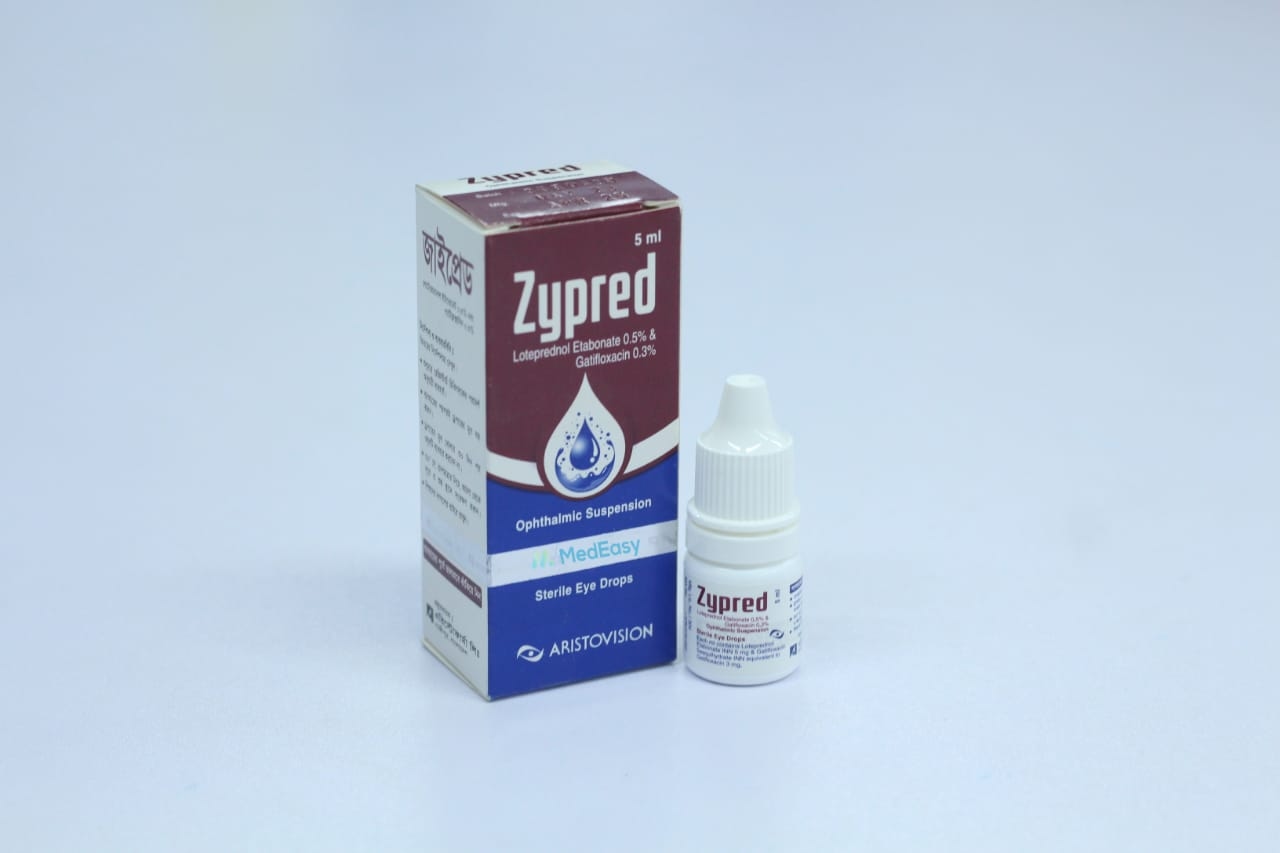
Zypred0.5%+0.3%
Aristopharma Ltd.
৳266.80
Add to cart

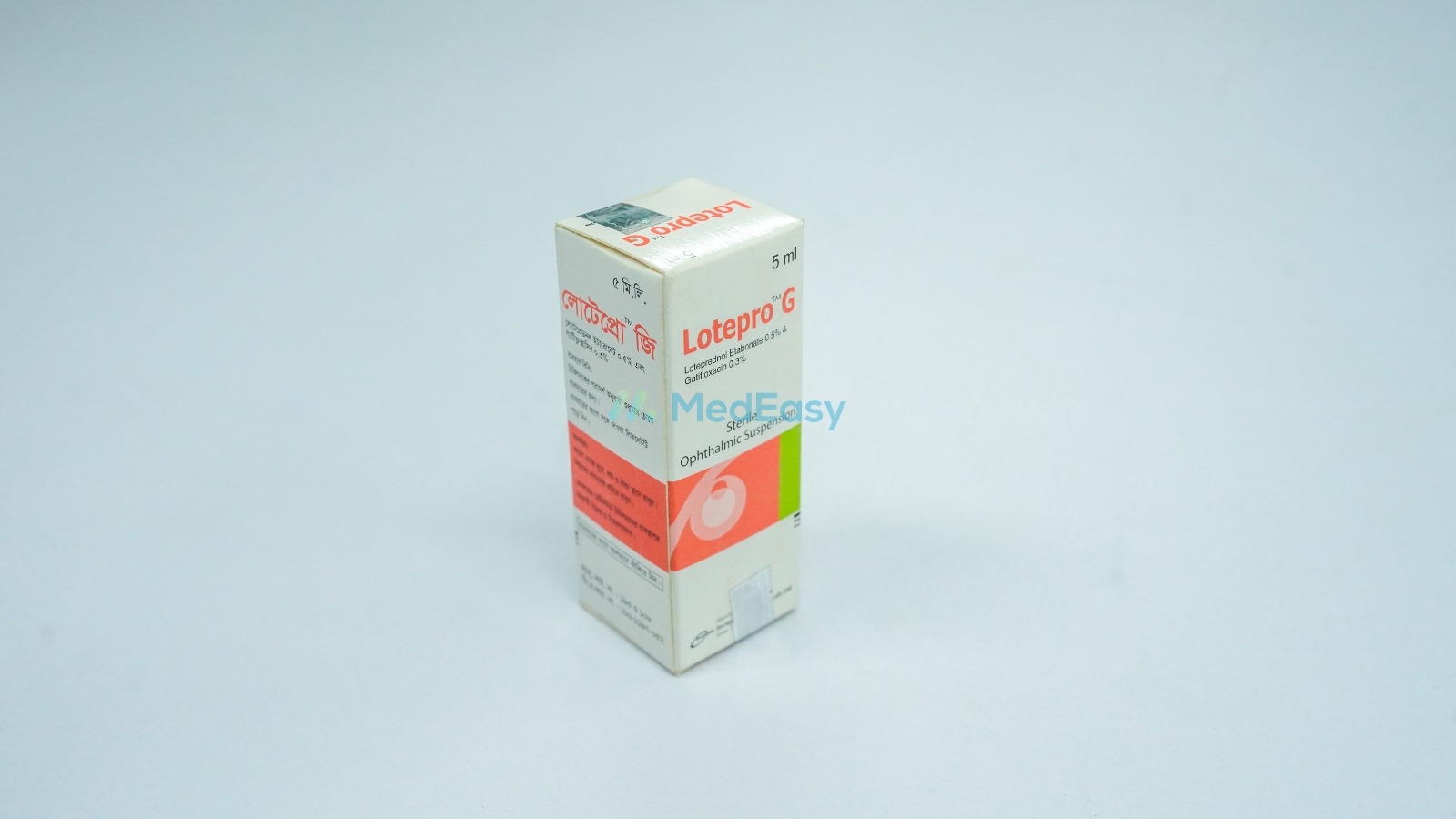
Lotrel G 0.5%+0.3% Ophthalmic Suspension is available on MedEasy for ৳225.00 per 5 ml drop, with home delivery anywhere in Bangladesh. It is manufactured by Eskayef Bangladesh Ltd. Its generic name is Loteprednol Etabonate + Gatifloxacin.

Lotrel G ophthalmic suspension is a corticosteroid-antibiotic combination indicated for:
Lotrel G is not indicated for the initial treatment of bacterial conjunctivitis alone (without a clear steroid-responsive inflammatory component), nor as an antibiotic used without concurrent need for the corticosteroid effect. It must not be used to treat infections without adequate concurrent antimicrobial therapy where the infecting organism is not susceptible.
Each mL of sterile ophthalmic suspension of Loteprednol Etabonate + Gatifloxacin typically contains:
along with pharmaceutically approved preservatives, viscosity-imparting agents, tonicity agents, and buffering excipients suitable for ophthalmic use.
Lotrel G is a fixed-dose, sterile topical ophthalmic suspension combining two active components with complementary actions:
The combination is formulated to control ocular inflammation while covering or preventing bacterial infection in appropriate clinical settings, primarily peri-operative and blepharoconjunctivitis care.
Lotrel G belongs to the therapeutic class of ophthalmic corticosteroid–antibiotic combinations, combining a topical corticosteroid (loteprednol etabonate) with a fluoroquinolone antibacterial (gatifloxacin) for combined anti-inflammatory and antimicrobial ocular therapy.
Loteprednol Etabonate + Gatifloxacin combines two agents with distinct mechanisms of action:
Loteprednol etabonate suppresses the inflammatory response to mechanical, chemical, or immunological insults by inhibiting phospholipase A2, thereby reducing the release of arachidonic acid and downstream inflammatory mediators (prostaglandins and leukotrienes). It also reduces capillary dilation, leukocyte migration, fibrin deposition, capillary proliferation, and scar formation associated with inflammation. Its ester structure allows rapid hydrolysis to inactive metabolites, limiting systemic and prolonged ocular exposure.
Gatifloxacin is a fluoroquinolone that exerts bactericidal activity by inhibiting bacterial DNA gyrase (topoisomerase II) and topoisomerase IV, enzymes required for bacterial DNA replication, transcription, repair, and recombination. It has activity against many aerobic Gram-positive organisms (e.g., Staphylococcus aureus, Streptococcus pneumoniae) and Gram-negative organisms (e.g., Haemophilus influenzae) commonly implicated in ocular surface infections.
Following topical ocular administration of Loteprednol Etabonate + Gatifloxacin, systemic absorption of both components is generally low, though measurable plasma levels of gatifloxacin can occur; loteprednol etabonate has minimal systemic absorption due to rapid ocular and systemic metabolism.
| Indication | Adult Dosage |
|---|---|
| Post-operative inflammation with risk/presence of bacterial infection | Instill 1–2 drops into the conjunctival sac of the affected eye(s) four times daily. During the first 24–48 hours in more severe cases, dosing frequency may be increased to every 1–2 hours as directed by the ophthalmologist, then tapered as inflammation subsides. |
| Blepharoconjunctivitis/blepharokeratoconjunctivitis with bacterial component | Instill 1–2 drops into the affected eye(s) 2–4 times daily, or as prescribed, for the duration directed by the physician. |
Administration technique: Shake well before use. Tilt the head back, gently pull down the lower eyelid to form a pouch, and instill the prescribed number of drops without letting the dropper tip touch the eye, eyelid, or any surface (to avoid contamination). Close the eye gently for 1–2 minutes after instillation and apply light pressure over the tear duct (punctal occlusion) to minimize systemic absorption. If more than one topical ophthalmic product is used, allow at least 5–10 minutes between applications.
Duration: Treatment courses are typically short (commonly up to 1–2 weeks); prolonged use beyond what is prescribed should be avoided due to corticosteroid-related ocular risks. Complete the full course of Lotrel G exactly as prescribed by the physician; do not stop, extend, skip doses, or share this medicine with others without medical advice.
Pediatric and renal/hepatic dosing: see Use in Special Populations.
Lotrel G is for topical ophthalmic (eye) use only — it must not be injected, ingested, or applied to any other body site. Shake the bottle well before each use, avoid touching the dropper tip to any surface (including the eye), and apply gentle punctal occlusion after instillation. Do not wear contact lenses during active infection/inflammation being treated; consult the physician about when lens wear may resume.
Formal drug-drug interaction studies with Lotrel G are limited, but the following are clinically relevant considerations:
Inform the physician of all ophthalmic and systemic medications in use before starting Lotrel G.
Loteprednol Etabonate + Gatifloxacin is contraindicated in:
These contraindications exist because the corticosteroid component may suppress the host response and mask or worsen untreated infections of these types, or because of true hypersensitivity risk.
Reported adverse effects with Lotrel G include:
Patients should report any worsening eye pain, vision changes, persistent redness, or signs of new infection promptly.
Pregnancy: There are no adequate and well-controlled studies of Lotrel G in pregnant women. Systemic absorption from topical ophthalmic use is expected to be low; nonetheless, this product should be used during pregnancy only if the potential benefit to the mother justifies the potential risk to the fetus, and only under a physician's advice.
Lactation: It is not known whether topically applied loteprednol etabonate or gatifloxacin is excreted in human milk in clinically significant amounts. Caution should be exercised, and Lotrel G should be used during breastfeeding only after consulting a physician, weighing the benefit against any potential risk to the nursing infant.
The following precautions apply to the use of Lotrel G:
Topical ocular overdose of Lotrel G is unlikely to cause acute systemic toxicity, but excessive or prolonged use may increase the risk of intraocular pressure elevation, cataract formation, and other corticosteroid-related ocular effects. If accidental oral ingestion occurs, or if excessive instillation causes marked ocular irritation, pain, or vision changes, seek immediate medical attention or contact a poison control center/emergency services. The affected eye(s) may be flushed with clean water or normal saline as a general first-aid measure while awaiting medical advice; do not attempt specific home treatment beyond this.
Store at room temperature (below 30°C), away from light and moisture. Do not freeze. Keep the bottle tightly closed when not in use, and keep out of reach of children. Discard any remaining suspension after the physician-directed treatment course or per the expiry/discard date on the label, whichever is sooner.
Safety and efficacy of Lotrel G in pediatric patients below 1 year of age have not been established. In older children in whom a steroid-responsive inflammatory ocular condition with bacterial infection risk exists, use should be under close ophthalmologic supervision, at the physician's discretion, with the same dosing principles as adults adjusted to clinical need.
No overall differences in safety or effectiveness have been reported between elderly and younger adult patients; standard adult dosing is generally applicable.
Given the low systemic absorption of both components after topical ophthalmic administration, no specific dosage adjustment is generally required in renal or hepatic impairment; however, caution and physician judgment are advised.
Contact lens use should generally be avoided during active treatment with Lotrel G unless otherwise directed by the physician.
Treatment duration with Lotrel G is individualized by the prescribing ophthalmologist based on the severity of inflammation and infection risk, typically ranging from several days up to about 1–2 weeks, with tapering of dose as inflammation resolves. Treatment should not be continued beyond the prescribed duration without re-evaluation, given the risk of corticosteroid-related ocular complications with prolonged use.
Ophthalmic corticosteroid (loteprednol etabonate) combined with a fourth-generation fluoroquinolone antibiotic (gatifloxacin); classified as an ophthalmic anti-inflammatory/anti-infective combination.
Loteprednol Etabonate + Gatifloxacin acts through two complementary mechanisms: loteprednol etabonate inhibits phospholipase A2 to suppress the arachidonic acid inflammatory cascade (reducing prostaglandin and leukotriene production, capillary permeability, and leukocyte infiltration), while gatifloxacin inhibits bacterial DNA gyrase and topoisomerase IV, blocking bacterial DNA replication and leading to bactericidal activity against susceptible ocular pathogens.
Safety and efficacy of Lotrel G have not been established in children below 1 year of age. Use in older pediatric patients should be guided and supervised by an ophthalmologist, following the same clinical principles as adult use, adjusted for the child's condition and monitored closely for intraocular pressure changes and local tolerance.
Q: What is Lotrel G 0.5%+0.3% Ophthalmic Suspension eye drops used for?
A: Lotrel G 0.5%+0.3% Ophthalmic Suspension ophthalmic suspension is used to treat inflammation of the eye (such as after eye surgery) in situations where there is also a bacterial infection or a significant risk of one, and for blepharoconjunctivitis with a bacterial component. It combines a corticosteroid to reduce inflammation with an antibiotic to treat or prevent bacterial infection.
Q: How should I use Lotrel G 0.5%+0.3% Ophthalmic Suspension eye drops?
A: Shake the bottle well, then instill the prescribed number of drops (usually 1–2 drops, up to 4 times daily, or as directed) into the affected eye(s), avoiding contact between the dropper tip and the eye or any surface. Always use Lotrel G 0.5%+0.3% Ophthalmic Suspension exactly as prescribed by your physician; do not stop, extend, skip doses, or share this medicine with others without medical advice.
Q: Can I use Lotrel G 0.5%+0.3% Ophthalmic Suspension for a long time?
A: No. Lotrel G 0.5%+0.3% Ophthalmic Suspension should only be used for the duration prescribed by your physician, typically up to 1–2 weeks. Prolonged use of the corticosteroid component can raise eye pressure, cause cataracts, delay wound healing, and increase the risk of new eye infections, so ongoing use requires ophthalmologist monitoring.
Q: Who should not use Lotrel G 0.5%+0.3% Ophthalmic Suspension?
A: Lotrel G 0.5%+0.3% Ophthalmic Suspension should not be used by people with known hypersensitivity to either component, other fluoroquinolones, or other corticosteroids, or by people with certain viral eye infections (such as herpes simplex keratitis, vaccinia, or varicella), mycobacterial eye infections, or fungal eye infections, because the steroid component can worsen these conditions.
Q: Is Lotrel G 0.5%+0.3% Ophthalmic Suspension safe during pregnancy or breastfeeding?
A: Data on the use of Lotrel G 0.5%+0.3% Ophthalmic Suspension during pregnancy and breastfeeding are limited. Although absorption into the body from eye drops is generally low, it should be used during pregnancy or breastfeeding only if your physician determines that the benefit outweighs the potential risk, so always consult your doctor first.
Q: What side effects can Lotrel G 0.5%+0.3% Ophthalmic Suspension cause?
A: Common side effects of Lotrel G 0.5%+0.3% Ophthalmic Suspension include mild stinging, burning, discomfort, blurred vision, or redness after application. Less commonly, it can raise eye pressure, cause cataracts with prolonged use, delay wound healing, or lead to a new eye infection. Contact your physician promptly if you notice worsening pain, vision changes, or persistent redness.
Disclaimer
The information provided is accurate to the best of our knowledge, but it does not replace professional medical advice. We cannot guarantee its completeness or accuracy, and the absence of specific information about a drug should not be taken as an endorsement. We are not responsible for any consequences arising from this information, so please consult a healthcare professional for any concerns or questions.