8% Off
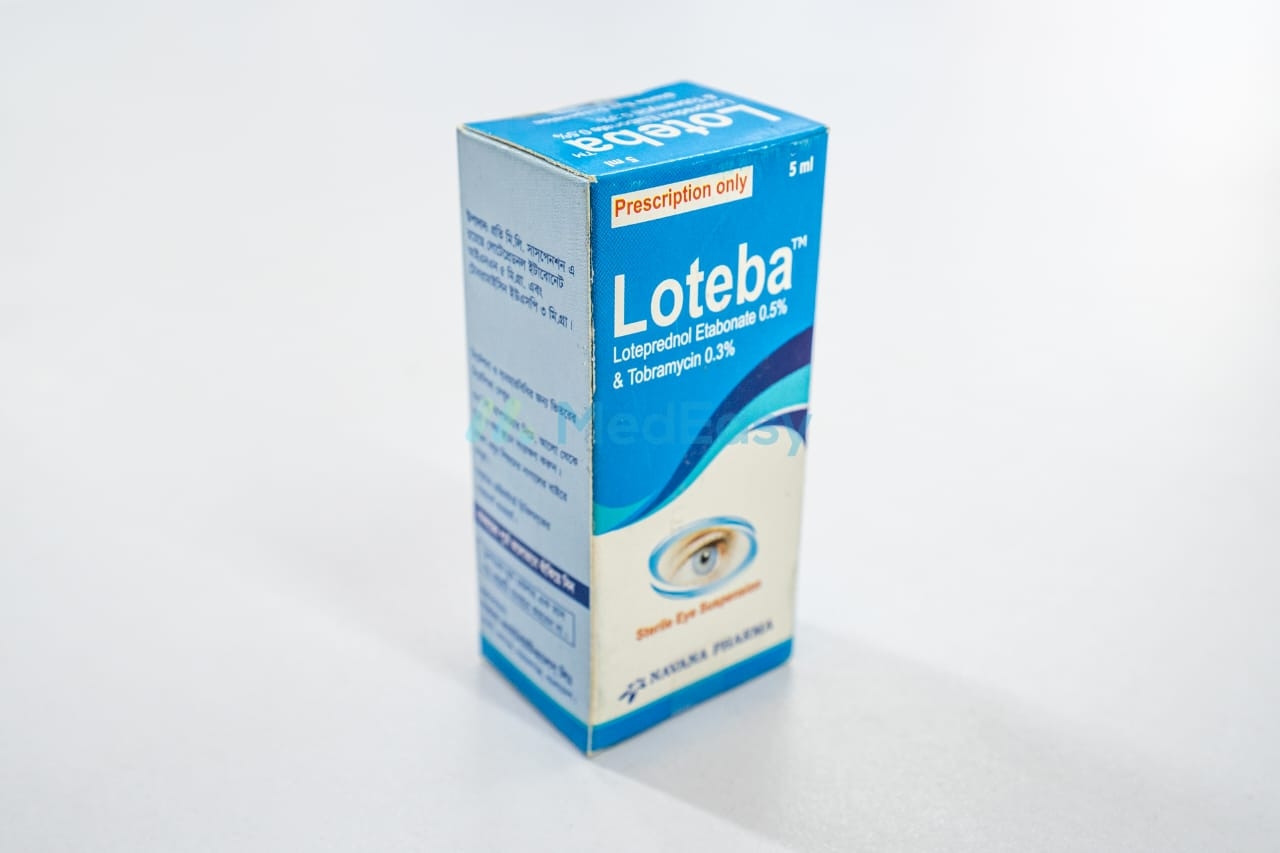
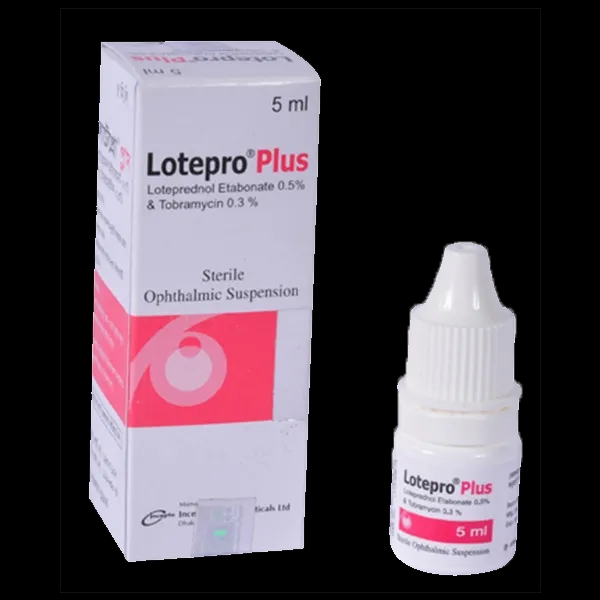
Lotepro Plus0.5%+0.3%
Incepta Pharmaceuticals Ltd.
৳184.00
Add to cart

Lotrel T 0.5%+0.3% Ophthalmic Suspension is available on MedEasy for ৳180.00 per 5 ml drop, with home delivery anywhere in Bangladesh. It is manufactured by Eskayef Bangladesh Ltd. Its generic name is Loteprednol Etabonate + Tobramycin.

Lotrel T ophthalmic suspension is indicated for steroid-responsive inflammatoryocular conditions for which a corticosteroid is indicated and where a superficial bacterialocular infection or a risk of bacterial ocular infection exists.
Lotrel T is not indicated for uncomplicated bacterial conjunctivitis without an inflammatorycomponent requiring a corticosteroid, and it should not be used for undiagnosed red eye withoutprior ophthalmologic evaluation.
Each mL of Loteprednol Etabonate + Tobramycin ophthalmic suspension typically contains loteprednol etabonate 0.5% (a topicalcorticosteroid) combined with tobramycin 0.3% (an aminoglycoside antibiotic), along withinactive/suspending ingredients. Strength and exact formulation may vary slightly by manufacturer;always check the product label of the dispensed brand.
Lotrel T is a fixed-dose combination ophthalmic (eye) suspension that pairs a corticosteroid(loteprednol etabonate) with an aminoglycoside antibiotic (tobramycin). It is formulated as asterile topical ophthalmic suspension intended to reduce ocular inflammation while covering for,or preventing, an accompanying bacterial infection.
Loteprednol etabonate is a "soft" corticosteroid designed to be metabolized rapidly to inactivemetabolites, which is intended to reduce the risk of intraocular pressure elevation compared withsome older ophthalmic steroids, although this risk is not eliminated. Tobramycin is a bactericidalaminoglycoside active against many Gram-negative and some Gram-positive ocular pathogens.
Lotrel T belongs to the therapeutic class of ophthalmic corticosteroid–antibioticcombinations, combining a corticosteroid (loteprednol etabonate) with an aminoglycosideantibiotic (tobramycin) for topical ocular use.
Loteprednol Etabonate + Tobramycin combines two active components with complementary actions:
Following topical ophthalmic administration of Loteprednol Etabonate + Tobramycin, systemic absorption of both components isgenerally low. Loteprednol etabonate is largely metabolized to inactive metabolites; tobramycinophthalmic use results in minimal systemic absorption, though it can be higher with cornealepithelial defects or prolonged/frequent dosing.
Shake Lotrel T suspension well before each use. For topical ophthalmic use only; not for injectionor oral use.
| Indication | Typical Adult Dosing |
|---|---|
| Steroid-responsive ocular inflammation with bacterial infection risk (e.g.post-operative, blepharoconjunctivitis) | Instill 1–2 drops into the affected eye(s) 4 timesdaily. During the initial 24–48 hours, the dosing frequency may be increased by the prescriber(e.g. every 1–2 hours) in more severe cases, then tapered as clinically indicated. |
Treatment duration and tapering schedule should follow the prescribing physician's instructions;prolonged use beyond what is prescribed increases the risk of steroid-related ocular adverseeffects (see Precautions and Warnings). Lotrel T should be used exactly as prescribed for the fullcourse directed by the physician; do not stop, extend, skip doses, or share this medicine withothers without medical advice.
Because Lotrel T is applied topically to the eye, systemic absorption is low and clinicallysignificant systemic drug interactions are uncommon. Established interaction considerationsinclude:
Always inform your physician or pharmacist of all other medicines, including other eye drops,being used before starting Lotrel T.
Loteprednol Etabonate + Tobramycin is contraindicated in patients with:
Adverse effects reported with Lotrel T relate to both the corticosteroid and antibiotic components:
Patients should notify their physician promptly if vision changes, eye pain, or persistentredness/irritation develop.
Pregnancy: There are no adequate and well-controlled studies of Lotrel T inpregnant women. As with other topical ophthalmic corticosteroid-antibiotic combinations, Lotrel Tshould be used during pregnancy only if the potential benefit justifies the potential risk to thefetus, and only under medical supervision.
Lactation: It is not known whether topical ophthalmic administration of Lotrel Tcould result in sufficient systemic absorption to be detected in human milk. Caution should beexercised, and Lotrel T should be used during breastfeeding only on a physician's advice, weighing thebenefit to the mother against any potential risk to the nursing infant.
Topical ophthalmic overdose of Lotrel T is unlikely to cause acute systemic toxicity, but excessiveor prolonged use increases the risk of local adverse effects (elevated intraocular pressure,cataract, secondary infection — see Precautions and Warnings). If Lotrel T is accidentally swallowed,or if excessive instillation occurs, or if severe irritation, vision changes, or an allergicreaction develops, seek immediate medical attention or contact a poison control center/emergencyservices. Do not attempt unsupervised home treatment for a suspected overdose.
Store at room temperature (below 30°C), away from light and moisture. Shake the suspension well before each use. Keep the bottle tightly closed and out of reach of children. Discard any unused portion after the period recommended on the label once opened.
Safety and effectiveness of Lotrel T in pediatric patients below 2 years of age have not beenestablished. Use in children should be under close ophthalmologic supervision, with dosing andduration determined by the treating physician.
No overall differences in safety or effectiveness have been established between elderly andyounger adult patients; standard adult dosing generally applies, with appropriate monitoring.
Because systemic absorption of Lotrel T following ophthalmic administration is low, specific renalor hepatic dose adjustments are not well established and are generally not required; use withroutine caution in patients with significant hepatic or renal impairment.
The duration of treatment with Lotrel T should be determined by the prescribing physician based onthe severity of inflammation and clinical response, and is typically limited to the shortesteffective course. Treatment beyond the prescribed duration is not recommended withoutre-evaluation, and use of Lotrel T for 10 days or longer requires monitoring of intraocular pressureby an ophthalmologist.
Ophthalmic corticosteroid (loteprednol etabonate) combined with an aminoglycoside antibiotic (tobramycin); classified as an ophthalmic anti-inflammatory/anti-infective combination.
Loteprednol Etabonate + Tobramycin works through two complementary mechanisms: loteprednol etabonate, a corticosteroid,suppresses ocular inflammation by inhibiting inflammatory mediator release, capillary dilation,leukocyte migration, and fibrin deposition, while tobramycin, an aminoglycoside antibiotic, bindsirreversibly to the bacterial 30S ribosomal subunit to inhibit protein synthesis, producing abactericidal effect against susceptible ocular pathogens. Together, these actions reduceinflammation while treating or preventing an accompanying bacterial infection.
C
Lotrel T may be used in children under the direction and supervision of an ophthalmologist orphysician, but safety and effectiveness in pediatric patients below 2 years of age have not beenestablished. Because prolonged corticosteroid use carries a risk of elevated intraocular pressureand other steroid-related effects, pediatric use should be closely monitored, and treatmentlimited to the shortest effective duration prescribed by the physician.
Q: What is Lotrel T 0.5%+0.3% Ophthalmic Suspension used for?
A: Lotrel T 0.5%+0.3% Ophthalmic Suspension is an ophthalmic (eye) suspension used to treat steroid-responsive inflammatory conditions of the eye — such as inflammation after eye surgery or blepharoconjunctivitis — when there is also a bacterial infection or a risk of bacterial infection. It combines a corticosteroid to reduce inflammation with an antibiotic to treat or prevent bacterial infection.
Q: How should I use Lotrel T 0.5%+0.3% Ophthalmic Suspension eye drops?
A: Shake Lotrel T 0.5%+0.3% Ophthalmic Suspension well before each use. Wash your hands, tilt your head back, gently pull down the lower eyelid, and instill the number of drops prescribed by your physician (typically 1–2 drops, 4 times daily, though your doctor may direct more frequent use initially). Avoid letting the dropper tip touch your eye or any surface. Use Lotrel T 0.5%+0.3% Ophthalmic Suspension exactly as prescribed for the full duration directed; do not stop, extend, skip doses, or share this medicine with others without medical advice.
Q: Can I use Lotrel T 0.5%+0.3% Ophthalmic Suspension if I have a viral or fungal eye infection?
A: No. Lotrel T 0.5%+0.3% Ophthalmic Suspension is contraindicated in most viral diseases of the cornea and conjunctiva (including herpes simplex keratitis, vaccinia, and varicella), mycobacterial eye infections, and fungal diseases of the eye, because the corticosteroid component can worsen these conditions. Only use Lotrel T 0.5%+0.3% Ophthalmic Suspension for a condition diagnosed and prescribed by your physician.
Q: What are the main risks of using Lotrel T 0.5%+0.3% Ophthalmic Suspension for a long time?
A: Prolonged use of Lotrel T 0.5%+0.3% Ophthalmic Suspension can raise intraocular pressure (a risk factor for glaucoma), cause cataract formation, delay wound healing, and increase the risk of a new (secondary) eye infection due to the corticosteroid suppressing local immune defenses. If you use Lotrel T 0.5%+0.3% Ophthalmic Suspension for 10 days or longer, your eye doctor should monitor your intraocular pressure.
Q: Is Lotrel T 0.5%+0.3% Ophthalmic Suspension safe to use during pregnancy or breastfeeding?
A: There isn't enough data to confirm the safety of Lotrel T 0.5%+0.3% Ophthalmic Suspension in pregnancy or breastfeeding. Because it is applied to the eye, systemic absorption is generally low, but it should still be used during pregnancy or breastfeeding only if your physician determines the benefit outweighs the potential risk. Always consult your physician before using Lotrel T 0.5%+0.3% Ophthalmic Suspension if you are pregnant, trying to conceive, or breastfeeding.
Q: Can children use Lotrel T 0.5%+0.3% Ophthalmic Suspension?
A: Lotrel T 0.5%+0.3% Ophthalmic Suspension may be prescribed for children under an ophthalmologist's supervision, but its safety and effectiveness in children below 2 years of age have not been formally established. Follow your child's physician's specific dosing instructions and monitoring plan closely.
Disclaimer
The information provided is accurate to the best of our knowledge, but it does not replace professional medical advice. We cannot guarantee its completeness or accuracy, and the absence of specific information about a drug should not be taken as an endorsement. We are not responsible for any consequences arising from this information, so please consult a healthcare professional for any concerns or questions.