8% Off
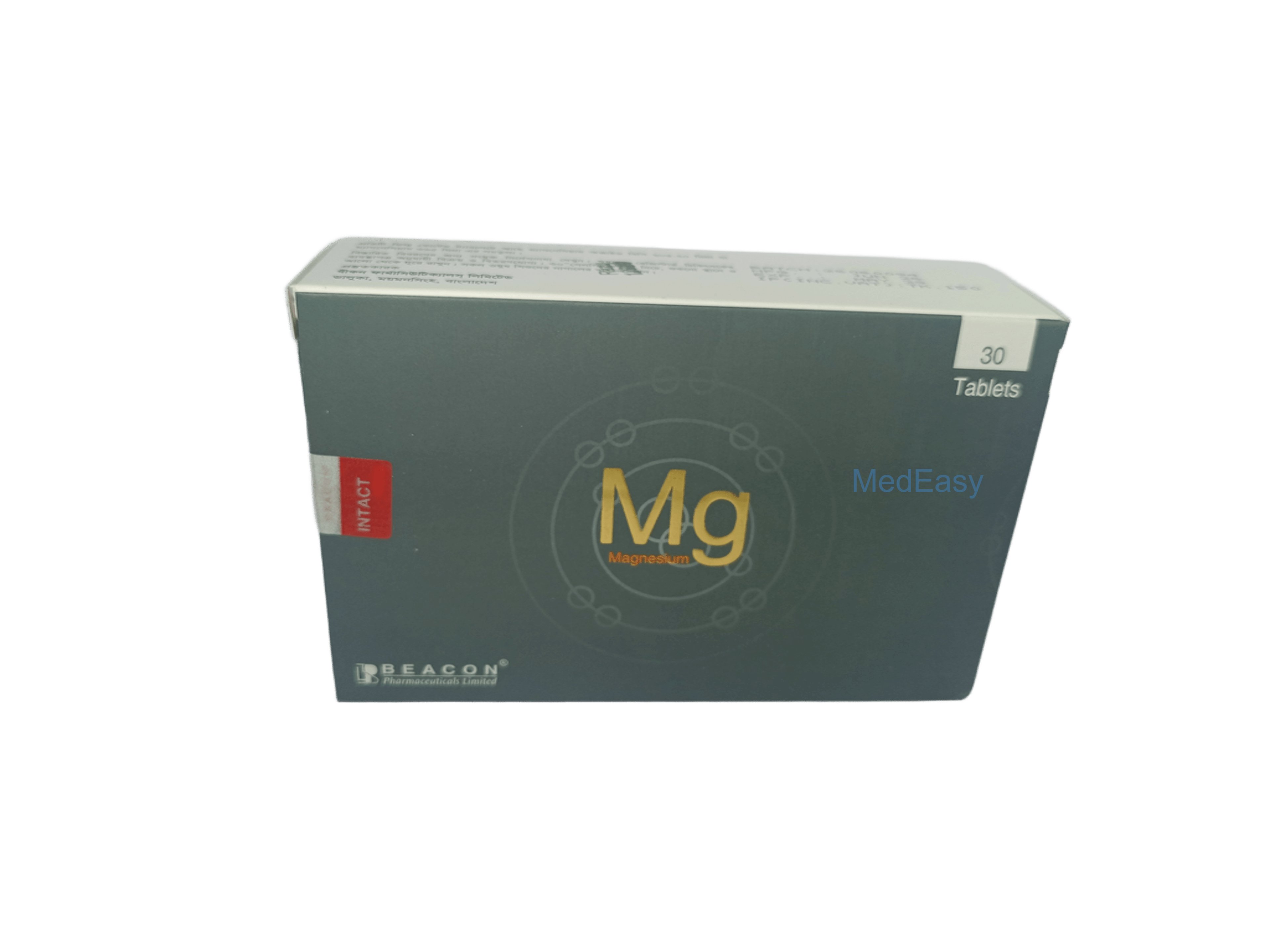
Magnox365 mg
Nuvista Pharma Ltd.
৳46.00
Add to cart


Magnesium Oxide is a mineral supplement, antacid, and osmotic laxative used for several distinct, evidence-based purposes:
Magnesium Oxide is not intended for self-treatment of chronic constipation, chronic dyspepsia, or long-term magnesium repletion without medical supervision.
Magnesium Oxide is the inorganic magnesium salt of magnesium oxide (chemical formula MgO), containing approximately 60% elemental magnesium by weight, making it one of the more magnesium-dense oral supplement salts available.
Oral formulations of Magnesium Oxide are commonly available as tablets or capsules, typically supplying between roughly 130 mg and 500 mg of elemental magnesium per unit dose depending on the product strength; local Bangladeshi formulations are commonly marketed as 365 mg tablets. Chewable and liquid/suspension forms are also available in some markets for antacid or laxative use.
Magnesium Oxide is an inorganic compound formed from magnesium and oxygen. When taken orally, it reacts with gastric acid and body fluids to release magnesium ions, which are absorbed in the small intestine and used in numerous physiological processes.
Depending on the dose and clinical context, Magnesium Oxide is used as a dietary magnesium supplement, as an antacid for symptomatic relief of heartburn and acid indigestion, and as a short-term osmotic laxative for occasional constipation. It is widely available as an over-the-counter product both internationally and in Bangladesh.
Magnesium Oxide belongs to the following therapeutic classes:
Magnesium, released from Magnesium Oxide after dissolution in gastric acid, is an essential cofactor for several hundred enzymatic reactions in the body, including those involved in energy metabolism, protein synthesis, neuromuscular transmission, and regulation of vascular tone and cardiac rhythm.
Antacid action: magnesium oxide reacts chemically with hydrochloric acid in the stomach, neutralizing gastric acid and raising gastric pH, which relieves symptoms of acid indigestion and heartburn.
Laxative action: unabsorbed magnesium in the intestinal lumen exerts an osmotic effect, drawing water into the bowel, which increases stool water content and stimulates peristalsis, producing a laxative effect at higher doses.
Absorption and elimination: oral magnesium absorption from the small and large intestine is variable (roughly 20–40% under normal conditions, higher when body stores are low). Absorbed magnesium is excreted primarily by the kidneys, so renal function is the main determinant of whole-body magnesium balance.
Dosing of Magnesium Oxide depends on the indication being treated. The following is general guidance; patients should follow their physician's or pharmacist's specific instructions or the product label.
| Indication | Typical Adult Dosing | Notes |
|---|---|---|
| Magnesium supplementation (deficiency/low intake) | About 250–500 mg elemental magnesium (roughly 1–2 tablets of a typical strength) once daily, or as directed by a physician | Adjust dose based on serum magnesium and clinical response; do not exceed the recommended dose without medical advice |
| Antacid (heartburn/acid indigestion) | 1 tablet, one to two times daily as needed, not to exceed the maximum labeled daily dose | Do not use continuously for more than 2 weeks without consulting a physician |
| Occasional constipation (laxative use) | A single higher dose (as directed on the product label) taken with a full glass of water, generally in the evening or as directed | Do not use for more than 1 week without consulting a physician; not for chronic/daily use |
Renal impairment: in patients with reduced kidney function, magnesium is cleared more slowly and can accumulate; doses should be reduced and used only under medical supervision, with monitoring of serum magnesium (see Contraindications for severe renal impairment).
Pediatric dosing: see Use in Special Populations / Pediatric Use.
Magnesium Oxide should be taken with a full glass of water. Supplement doses are best taken with food to reduce stomach upset; antacid doses are usually taken after meals and at bedtime as needed.
Magnesium Oxide can interact with several other medications, mainly by binding to them in the gastrointestinal tract (forming poorly absorbed complexes) or by altering gastric pH:
Patients on multiple medications should inform their physician or pharmacist that they are taking Magnesium Oxide so that timing can be adjusted appropriately.
Magnesium Oxide is contraindicated in:
The most common side effects of Magnesium Oxide are gastrointestinal and are generally dose-related:
Less commonly, especially with excessive or prolonged use, symptoms of elevated magnesium levels can occur (e.g., lethargy, muscle weakness, low blood pressure) — see Overdose Effects and Precautions and Warnings for details. Patients who develop rash, itching, hives, or signs of an allergic reaction should stop use and seek medical attention.
Pregnancy: Magnesium Oxide should be used during pregnancy only if clearly needed and after consulting a physician, as with any medication or supplement. Magnesium is an essential nutrient and standard dietary supplementation is generally considered acceptable, but doses beyond typical dietary/supplemental amounts, or use as an antacid/laxative, should only be undertaken with medical guidance, since data on higher-dose use in pregnancy are limited.
Lactation: magnesium is a normal constituent of breast milk, and typical supplemental use of Magnesium Oxide is generally considered compatible with breastfeeding; however, breastfeeding mothers should consult a physician before regular use, particularly at antacid or laxative doses, as specific safety data are limited.
Renal impairment: even in moderate kidney disease, Magnesium Oxide should be used with caution and under medical supervision, as reduced renal clearance can lead to magnesium accumulation with regular or prolonged use (see Contraindications for severe renal impairment).
Drug absorption interference: Magnesium Oxide can reduce the absorption of certain oral medications (e.g., tetracyclines, fluoroquinolones, bisphosphonates) if taken together; separate dosing by several hours (see Interactions).
Duration of use: Magnesium Oxide should not be used as an antacid for more than 2 weeks, or as a laxative for more than 1 week, without consulting a physician. Prolonged or excessive laxative use can cause electrolyte imbalance, dehydration, and a reliance on laxatives for normal bowel function; it should be reserved for occasional constipation relief rather than chronic daily use.
Elderly patients: older adults, who more often have reduced renal function, are at increased risk of magnesium accumulation and should use Magnesium Oxide cautiously.
Underlying bowel conditions: avoid laxative use of Magnesium Oxide in patients with signs of appendicitis, bowel obstruction, or undiagnosed abdominal pain, nausea, or vomiting, and seek medical advice if constipation persists despite use, or if rectal bleeding occurs.
Excessive intake of Magnesium Oxide, particularly in patients with impaired kidney function, can lead to hypermagnesemia (magnesium toxicity). Symptoms may include nausea, vomiting, flushing, low blood pressure, lethargy, confusion, muscle weakness, difficulty breathing, irregular heartbeat, and, in severe cases, cardiac arrest or coma.
If overdose is suspected, seek immediate medical attention or contact a poison control center/emergency services right away. Do not attempt to manage a suspected overdose at home; treatment (which may include intravenous calcium, fluids, and, in severe renal cases, dialysis) should only be provided by medical professionals.
Store at room temperature (below 30°C), away from light and moisture. Keep out of reach of children.
Renal impairment: Magnesium Oxide should be used with caution and reduced dosing in mild-to-moderate renal impairment, and is contraindicated in severe renal impairment due to the risk of magnesium accumulation (see Contraindications).
Hepatic impairment: no specific dose adjustment of Magnesium Oxide is generally required for hepatic impairment, as magnesium elimination is primarily renal, not hepatic.
Elderly: use with caution, as age-related decline in renal function increases the risk of magnesium accumulation; start with the lowest effective dose.
Pregnancy and lactation: see Pregnancy and Lactation section.
Pediatric patients: see Pediatric Use section.
Duration of Magnesium Oxide use depends on the indication: as a magnesium supplement, it may be used long-term under medical/dietary guidance with periodic monitoring; as an antacid, it should not be used continuously for more than 2 weeks without consulting a physician; as a laxative, it should not be used for more than 1 week, or repeatedly, without medical advice, since prolonged use can cause electrolyte disturbances and laxative dependence.
Magnesium Oxide is classified under the following drug classes: mineral/electrolyte supplements, antacids, and osmotic (saline) laxatives.
Magnesium Oxide dissociates in gastric acid to release magnesium ions (Mg2+). As an antacid, magnesium ions neutralize hydrochloric acid in the stomach, raising gastric pH. As a laxative, unabsorbed magnesium in the intestinal lumen creates an osmotic gradient that draws water into the bowel, softening stool and stimulating bowel movement. As a nutritional supplement, absorbed magnesium serves as a cofactor for numerous enzymatic processes involved in energy production, muscle and nerve function, and cardiovascular regulation.
Use of Magnesium Oxide in children should be guided by a physician, particularly for antacid or laxative indications, where safety and efficacy in young children have not been well established and age/weight-based dosing is not standardized. For general-purpose OTC antacid or laxative products containing Magnesium Oxide, use in children under 12 years is generally not recommended without medical advice.
For magnesium supplementation to address documented deficiency or inadequate dietary intake, pediatric dosing should be individualized by a pediatrician based on age, weight, and clinical need, keeping total intake within age-appropriate upper limits.
Q: What is Magnesium Oxide used for?
A: Magnesium Oxide is used as an oral magnesium supplement for low magnesium levels, as an antacid for occasional heartburn and acid indigestion, and as a short-term laxative for occasional constipation.
Q: Can I take Magnesium Oxide every day?
A: Magnesium Oxide can be taken daily as a magnesium supplement under medical guidance, but as an antacid it should not be used continuously for more than 2 weeks, and as a laxative it should not be used for more than 1 week, without consulting a physician, since prolonged use can cause electrolyte imbalance.
Q: Who should not take Magnesium Oxide?
A: Magnesium Oxide is contraindicated in people with severe renal impairment (because reduced kidney function increases the risk of magnesium accumulation and toxicity) and in anyone with a known hypersensitivity to Magnesium Oxide. People with moderate kidney disease should use it only under medical supervision.
Q: Does Magnesium Oxide interact with other medicines?
A: Yes. Magnesium Oxide can reduce the absorption of tetracycline and fluoroquinolone antibiotics and oral bisphosphonates if taken at the same time. These medications should be separated from Magnesium Oxide by at least 2 hours (longer for some fluoroquinolones and bisphosphonates).
Q: Is Magnesium Oxide safe during pregnancy or breastfeeding?
A: Magnesium Oxide should be used during pregnancy or breastfeeding only if clearly needed and after consulting a physician. Ordinary dietary supplementation is generally considered acceptable, but higher-dose antacid or laxative use should be discussed with a doctor first, as specific safety data are limited.
Q: What should I do if I take too much Magnesium Oxide?
A: If an overdose of Magnesium Oxide is suspected, especially in someone with kidney problems, seek immediate medical attention or contact a poison control center/emergency services, as excessive magnesium can cause serious symptoms such as very low blood pressure, muscle weakness, breathing difficulty, or irregular heartbeat.
Disclaimer
The information provided is accurate to the best of our knowledge, but it does not replace professional medical advice. We cannot guarantee its completeness or accuracy, and the absence of specific information about a drug should not be taken as an endorsement. We are not responsible for any consequences arising from this information, so please consult a healthcare professional for any concerns or questions.