

10% Off
Oxecone-M400 mg
ACME Laboratories Ltd.
৳9.00
Add to cart
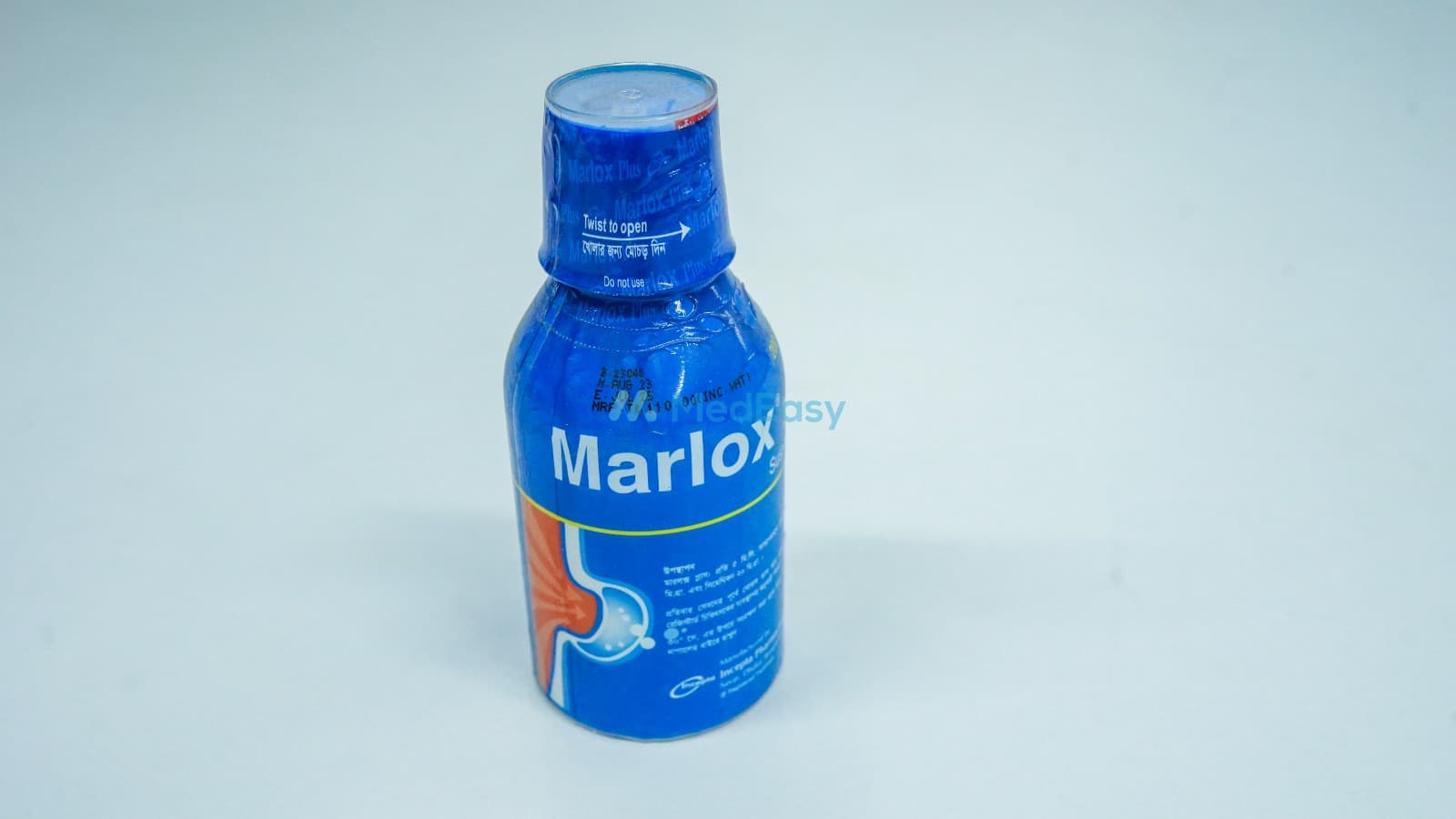
Marlox 400 mg Chewable Tablet is available on MedEasy for ৳9.00 per 10's Strip, with home delivery anywhere in Bangladesh. It is manufactured by Incepta Pharmaceuticals Ltd. Its generic name is Magaldrate.

Marlox is indicated for the symptomatic relief of hyperacidity associated with the following conditions:
Marlox is commonly used as an adjunct, short-term symptom reliever alongside definitive acid-suppressive therapy (e.g., proton pump inhibitors or H2-receptor antagonists) rather than as sole long-term therapy for peptic ulcer disease or erosive GERD.
Note: Marlox provides rapid, short-acting relief of acid-related symptoms but does not replace physician-directed treatment for underlying disease.
Each dose of Magaldrate contains magaldrate, a chemical complex of hydrated aluminum and magnesium hydroxide, as the active ingredient. It is commonly available as:
Formulation and strength may vary by manufacturer; refer to the product label for the exact composition of the specific brand of Magaldrate dispensed.
Marlox is an antacid consisting of a chemical complex of aluminum and magnesium hydroxide. Unlike simple physical mixtures of aluminum and magnesium hydroxide, Marlox is a single hydrated crystalline complex that reacts with stomach acid in a controlled, sequential manner, providing rapid onset of acid-neutralizing action with a reduced tendency for acid rebound compared with some other antacids.
Marlox is available in oral suspension and chewable tablet forms and is widely used for short-term relief of acid-related digestive discomfort.
Marlox belongs to the therapeutic class of Antacid preparations (aluminum-magnesium hydroxide complex antacids).
Magaldrate is a hydrated complex of aluminum and magnesium hydroxide. On contact with gastric hydrochloric acid, the complex dissociates in a sequential, controlled fashion into aluminum hydroxide and magnesium hydroxide, which then neutralize gastric acid, raising intragastric pH. This staged reaction is thought to reduce the acid-rebound phenomenon associated with some faster-acting antacids.
By raising gastric pH, Magaldrate reduces pepsin activity (pepsin is largely inactive above pH ~4) and provides symptomatic relief of acid-related discomfort. It has minimal systemic absorption when used at recommended doses in patients with normal renal function.
Magaldrate acts primarily locally within the gastrointestinal tract. Small amounts of aluminum and magnesium may be absorbed systemically; absorbed aluminum and magnesium are excreted primarily by the kidneys, which is the basis for caution in renal impairment (see Precautions and Warnings).
| Indication | Dose | Frequency |
|---|---|---|
| Heartburn / acid indigestion | 400-800 mg (5-10 mL suspension or 1-2 chewable tablets) | 1 hour after meals and at bedtime, or as symptoms occur; up to 4 times daily |
| Peptic ulcer disease (adjunct) | 400-800 mg | 1 and 3 hours after meals and at bedtime, as directed by physician |
Use of Marlox in children should be under medical supervision; safety and efficacy have not been well established in pediatric populations (see Pediatric Uses).
Avoid regular or high-dose use of Marlox in patients with renal impairment due to risk of aluminum and magnesium accumulation (see Precautions and Warnings).
Marlox is administered orally. Shake the suspension thoroughly before measuring a dose, or chew tablets completely before swallowing. It may be taken with or without a small amount of water, generally 1 hour after meals and at bedtime for optimal acid-neutralizing effect.
Marlox can raise gastric pH and chelate certain drugs, thereby significantly reducing the absorption and effectiveness of several oral medications, including:
Management: Separate administration of Marlox from these medications by at least 2 hours (before or after) to minimize interaction.
Magaldrate is contraindicated in patients with known hypersensitivity to magaldrate or to any component of the formulation.
Most side effects of Marlox are mild and resolve with dose adjustment or discontinuation. Seek medical advice if side effects are severe or persistent.
Marlox has not been formally assigned an FDA pregnancy category. As with most antacids, it is generally used cautiously during pregnancy and should be used only if clearly needed, with potential benefit justifying potential risk. Consult a physician before using Marlox during pregnancy, particularly for use beyond short-term, occasional relief.
It is not well established whether components of Marlox pass into breast milk in clinically significant amounts. Use during breastfeeding should be under medical guidance, weighing benefit against any potential risk to the infant.
Use Marlox with caution in patients with renal impairment. Reduced renal clearance can lead to accumulation of aluminum and magnesium, which may cause aluminum-related toxicity (e.g., encephalopathy or osteomalacia with prolonged use) or hypermagnesemia (e.g., muscle weakness, hypotension, cardiac arrhythmia, respiratory depression). Chronic, high-dose use of Marlox in patients with renal impairment should be avoided unless directed by a physician.
Symptomatic relief with Marlox may mask symptoms of more serious gastrointestinal conditions, such as gastric or duodenal ulcer complications, gastrointestinal bleeding, or appendicitis. Seek prompt medical evaluation if abdominal pain persists, worsens, or is accompanied by black/tarry stools, vomiting blood, or severe pain, and do not rely on Marlox alone for more than 2 weeks of self-treatment.
Chronic use of Marlox, especially with a low-phosphate diet, may lead to phosphate depletion; monitor patients on prolonged therapy, particularly those with poor nutritional intake or alcoholism.
Marlox can reduce the absorption of several other oral medications; see Interactions for details and spacing recommendations.
Overdose or excessive chronic use of Marlox may cause diarrhea, electrolyte disturbances, hypermagnesemia (especially in renal impairment), or aluminum accumulation with long-term high-dose use. Symptoms of hypermagnesemia can include muscle weakness, low blood pressure, irregular heartbeat, confusion, and, in severe cases, respiratory depression.
If overdose of Marlox is suspected, seek immediate medical attention or contact a poison control center. Do not attempt home treatment for a suspected overdose.
Store at room temperature (below 30°C), away from light and moisture. Keep out of reach of children. Do not freeze the oral suspension.
Use Marlox with caution; avoid regular/high-dose use due to risk of aluminum and magnesium accumulation (see Precautions and Warnings).
No specific dose adjustment is well established for hepatic impairment; Marlox acts primarily locally in the GI tract with limited systemic metabolism.
Marlox can generally be used in elderly patients but with attention to renal function, which commonly declines with age, and to overall electrolyte status.
See Pregnancy and Lactation section for guidance.
See Pediatric Uses section for guidance.
For self-treatment of occasional heartburn or acid indigestion, Marlox should generally not be used for more than 2 weeks without consulting a physician. For peptic ulcer disease or other physician-diagnosed conditions, the duration of use of Marlox as an adjunct should follow the treating physician's recommendation, alongside definitive acid-suppressive therapy.
Magaldrate is classified under: Antacids; Aluminum-Magnesium Hydroxide Complex.
Magaldrate neutralizes gastric hydrochloric acid through the sequential, controlled dissociation of its aluminum-magnesium hydroxide complex, raising gastric pH and reducing pepsin activity. See Pharmacology for full mechanistic detail.
Safety and efficacy of Marlox have not been well established in children through rigorous controlled pediatric trials. When used in children, Marlox should be given only under the direction and supervision of a physician, with dosing individualized based on age and weight. Marlox is generally not recommended for infants or young children without specific medical guidance.
Q: What is Marlox 400 mg Chewable Tablet used for?
A: Marlox 400 mg Chewable Tablet is an antacid used for fast, short-term relief of heartburn, acid indigestion, and discomfort associated with gastritis or peptic ulcer disease by neutralizing excess stomach acid.
Q: How should I take Marlox 400 mg Chewable Tablet?
A: Marlox 400 mg Chewable Tablet is usually taken by mouth 1 hour after meals and at bedtime, as a chewable tablet (chewed thoroughly) or as a well-shaken suspension. Follow the dose and frequency recommended by your physician or pharmacist, and do not use for more than 2 weeks without medical advice.
Q: Can Marlox 400 mg Chewable Tablet be taken with other medicines?
A: Marlox 400 mg Chewable Tablet can reduce the absorption of several oral medicines, including tetracycline and fluoroquinolone antibiotics, iron supplements, digoxin, and thyroid hormone. If you are taking any of these, separate their dosing from Marlox 400 mg Chewable Tablet by at least 2 hours, and inform your physician or pharmacist of all medicines you take.
Q: Is Marlox 400 mg Chewable Tablet safe during pregnancy and breastfeeding?
A: Marlox 400 mg Chewable Tablet does not have a formally established pregnancy safety category. It should be used during pregnancy or breastfeeding only if clearly needed, after consulting a physician, since potential benefit must be weighed against any possible risk to the baby.
Q: What are the common side effects of Marlox 400 mg Chewable Tablet?
A: The most common side effects of Marlox 400 mg Chewable Tablet are constipation (from its aluminum component) and diarrhea or loose stools (from its magnesium component); these are usually mild. Prolonged high-dose use may rarely cause phosphate depletion or, in patients with kidney problems, hypermagnesemia - contact your physician if you experience unusual muscle weakness, irregular heartbeat, or persistent digestive changes.
Q: Can Marlox 400 mg Chewable Tablet be used if I have kidney problems?
A: Patients with renal impairment should use Marlox 400 mg Chewable Tablet with caution and generally avoid regular or high-dose use, since reduced kidney function can cause aluminum and magnesium to accumulate in the body and lead to toxicity. Consult your physician before using Marlox 400 mg Chewable Tablet if you have kidney disease.
Disclaimer
The information provided is accurate to the best of our knowledge, but it does not replace professional medical advice. We cannot guarantee its completeness or accuracy, and the absence of specific information about a drug should not be taken as an endorsement. We are not responsible for any consequences arising from this information, so please consult a healthcare professional for any concerns or questions.
