
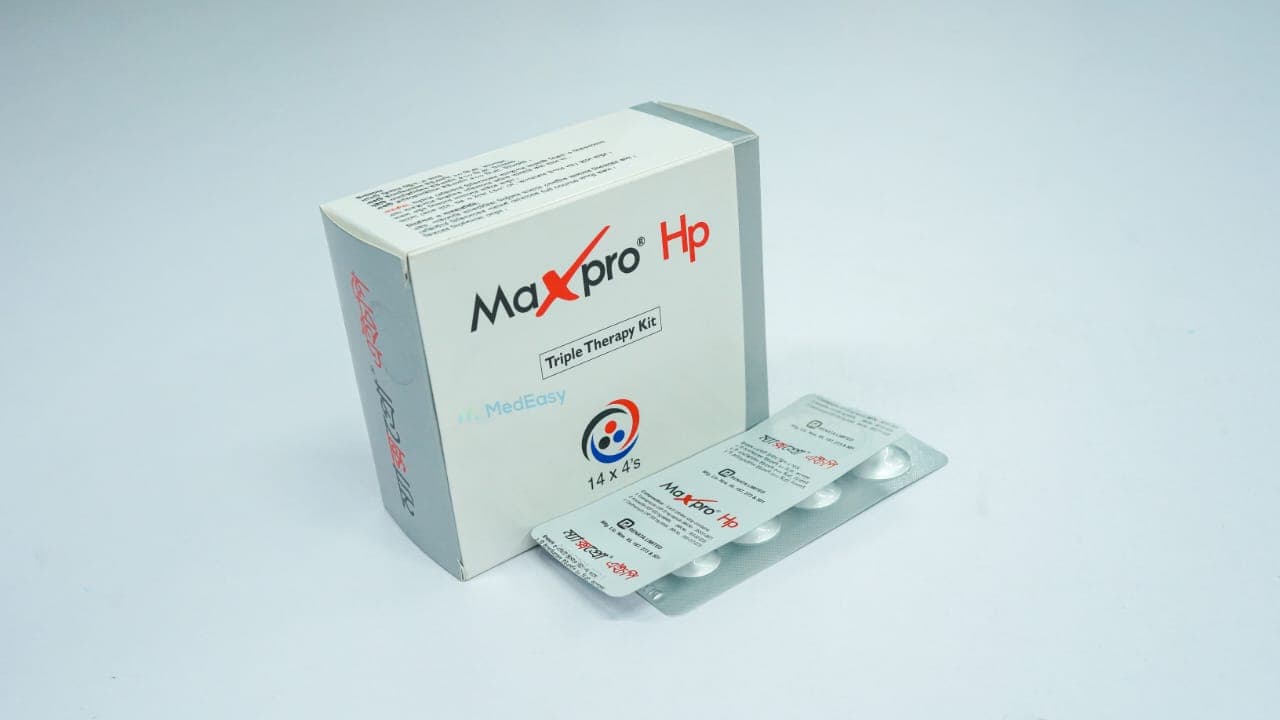

Medicine overview
Indications of Maxpro Hp
Maxpro Hp is indicated for use as part of Helicobacter pylori (H. pylori) eradication therapy, classified below by strength of evidence.
Established / Approved Use
- Eradication of H. pylori infection in patients with active duodenal ulcer disease or a documented history of duodenal ulcer within the past 5 years, to reduce the risk of duodenal ulcer recurrence.
Guideline-Supported Use
- Eradication of H. pylori in patients with active gastric ulcer disease associated with confirmed H. pylori infection, per major gastroenterology guidelines (e.g., ACG, Maastricht/Florence consensus).
- As part of management of H. pylori-associated dyspepsia or, on specialist advice, as adjunct therapy for H. pylori-associated MALT lymphoma or around resection of early gastric cancer.
Important Note on Use
This regimen should only be used once H. pylori infection is confirmed (e.g., by urea breath test, stool antigen test, or biopsy) and should not be used empirically for uninvestigated dyspepsia or acid-related symptoms alone.
Composition
A course of Esomeprazole + Amoxicillin + Clarithromycin combines three active ingredients, each dosed and packaged separately but taken together on a fixed schedule: esomeprazole (as the magnesium or strontium salt) 20 mg or 40 mg, amoxicillin (as trihydrate) 1000 mg, and clarithromycin 500 mg. The components are not combined into a single tablet.
Description
Maxpro Hp is a fixed triple-drug regimen used together for a defined course to eradicate Helicobacter pylori infection of the stomach and duodenum. It combines a proton pump inhibitor (esomeprazole) that reduces gastric acid secretion with two antibiotics (amoxicillin and clarithromycin) that act together to kill H. pylori bacteria. Raising the local gastric pH with esomeprazole improves antibiotic stability and efficacy against the organism while also promoting healing of any associated ulcer.
Therapeutic Class
Maxpro Hp belongs to a combination therapeutic class comprising a proton pump inhibitor (PPI) and two antibiotics used specifically for Helicobacter pylori eradication therapy: esomeprazole (a benzimidazole-derivative PPI), amoxicillin (an aminopenicillin/beta-lactam antibiotic), and clarithromycin (a macrolide antibiotic).
Pharmacology
Esomeprazole
Esomeprazole is the S-isomer of omeprazole, a proton pump inhibitor that irreversibly binds to and inhibits the H+/K+-ATPase enzyme system on the secretory surface of gastric parietal cells, suppressing basal and stimulated gastric acid secretion.
Amoxicillin
Amoxicillin is a beta-lactam antibiotic that inhibits bacterial cell wall synthesis by binding to penicillin-binding proteins, leading to lysis of actively dividing H. pylori organisms.
Clarithromycin
Clarithromycin is a macrolide antibiotic that binds to the 50S ribosomal subunit of susceptible bacteria, inhibiting protein synthesis and exerting bacteriostatic to bactericidal activity against H. pylori.
Combined Effect
When used together as Esomeprazole + Amoxicillin + Clarithromycin, the acid-suppressing effect of esomeprazole raises intragastric pH, which increases the stability and antibacterial activity of amoxicillin and clarithromycin and improves eradication rates compared with antibiotics alone.
Dosage & Administration of Maxpro Hp
Maxpro Hp is prescribed as a fixed-course triple regimen for confirmed H. pylori infection.
Adult Dose
| Medicine | Dose | Frequency |
|---|---|---|
| Esomeprazole | 20 mg or 40 mg | Twice daily |
| Amoxicillin | 1000 mg | Twice daily |
| Clarithromycin | 500 mg | Twice daily |
Administration
Take all three medicines at approximately the same two times each day, swallowing tablets/capsules whole with a full glass of water; do not crush or chew delayed-release esomeprazole capsules unless specifically directed.
Duration
Typically 7 to 14 days depending on the specific protocol and local antibiotic-resistance patterns; many current guidelines favor 14 days where clarithromycin resistance is a concern (see Duration of Treatment).
Antibiotic Stewardship
Take Maxpro Hp exactly as prescribed by your physician; do not stop, extend, skip doses, or share this medicine with others without medical advice. Stopping early can lead to treatment failure and antibiotic resistance.
Administration of Maxpro Hp
Take all three medicines of Maxpro Hp at approximately the same two times each day (e.g., morning and evening). Esomeprazole is best taken before a meal; amoxicillin and clarithromycin may be taken with food if stomach upset occurs. Swallow tablets/capsules whole with a full glass of water; do not crush or chew delayed-release esomeprazole capsules unless specifically directed. Complete the full prescribed course even if symptoms improve early.
Interaction of Maxpro Hp
Clinically Significant Interactions
- CYP3A4 substrates (via clarithromycin): co-administration with pimozide, ergotamine/dihydroergotamine, cisapride, or certain statins (simvastatin, lovastatin) can raise plasma levels of these drugs to dangerous levels, risking serious arrhythmia, ergotism, or rhabdomyolysis; concurrent use is contraindicated (see Contraindications).
- Warfarin and other oral anticoagulants: both esomeprazole and clarithromycin can increase INR and bleeding risk; monitor INR closely if co-administered.
- Clopidogrel: esomeprazole inhibits CYP2C19-mediated activation of clopidogrel, potentially reducing its antiplatelet effect; avoid concurrent use when possible.
- Digoxin: clarithromycin can increase digoxin levels; monitor for toxicity.
- Methotrexate: esomeprazole may delay methotrexate clearance, increasing toxicity risk, particularly with high-dose methotrexate.
- Drugs requiring gastric acid for absorption (e.g., ketoconazole, atazanavir, iron salts): esomeprazole can reduce their absorption and effectiveness.
- Other CYP3A4-metabolized drugs (e.g., carbamazepine, triazolam, midazolam, theophylline): clarithromycin can raise their levels; dose adjustment or monitoring may be needed.
This is not an exhaustive list; inform your physician of all medicines, supplements, and herbal products you are taking before starting Maxpro Hp.
Contraindications
- Known hypersensitivity to esomeprazole, other proton pump inhibitors (substituted benzimidazoles), amoxicillin, other penicillins, or clarithromycin/other macrolide antibiotics.
- History of QT-interval prolongation or ventricular cardiac arrhythmia (including torsades de pointes) associated with prior clarithromycin use.
- Concurrent use of clarithromycin with pimozide, cisapride, ergotamine/dihydroergotamine, astemizole, or terfenadine, due to risk of serious, life-threatening cardiac or ergot-toxicity interactions.
- Concurrent use of clarithromycin with lovastatin or simvastatin, due to risk of myopathy/rhabdomyolysis.
- Concurrent use with colchicine in patients with renal or hepatic impairment.
Patients with a true penicillin allergy cannot receive Esomeprazole + Amoxicillin + Clarithromycin in its standard form and require an alternative, penicillin-free H. pylori eradication regimen from their physician.
Side Effects of Maxpro Hp
The most commonly reported side effects of Maxpro Hp include:
- Diarrhea (most common)
- Altered or metallic taste (dysgeusia), especially from clarithromycin
- Nausea and abdominal pain
- Headache
- Vaginal candidiasis (yeast infection)
- Abnormal or loose stools
Less Common but Important
- Antibiotic-associated (including Clostridioides difficile) diarrhea or colitis, which can occur during or up to several weeks after treatment
- Skin rash or hypersensitivity reactions
- Reversible tongue or teeth discoloration
- Liver enzyme elevations
Seek prompt medical attention for signs of a severe allergic reaction (swelling of face/throat, difficulty breathing, severe rash), severe or persistent diarrhea, or an irregular heartbeat.
Pregnancy & Lactation
Maxpro Hp should be used in pregnancy only if clearly needed and if the potential benefit justifies the potential risk to the fetus; always consult a physician before use. Clarithromycin has been associated with adverse pregnancy outcomes in some studies and is generally avoided during pregnancy unless no suitable alternative exists, particularly in the first trimester. A physician should weigh the necessity of using the full combination in pregnancy.
All three components pass into breast milk in small amounts. Breastfeeding infants should be monitored for diarrhea, thrush, or skin rash if the mother uses this regimen; consult a physician about whether to continue breastfeeding during treatment.
Precautions & Warnings
Antibiotic Stewardship
Take Maxpro Hp exactly as prescribed by your physician; do not stop, extend, skip doses, or share this medicine with others without medical advice.
QT Prolongation
Clarithromycin can prolong the QT interval; use with caution in patients with electrolyte disturbances (hypokalemia, hypomagnesemia), significant bradycardia, concurrent use of other QT-prolonging drugs, or in elderly patients with cardiac disease.
Clostridioides difficile-Associated Diarrhea
Both antibiotic components can cause diarrhea ranging from mild to life-threatening colitis; seek medical attention if severe or persistent diarrhea develops during or after treatment.
Hepatic Effects
Rare cases of hepatotoxicity have been reported with clarithromycin and beta-lactam antibiotics; use caution in patients with pre-existing liver disease.
Renal Impairment
Dose adjustment of amoxicillin and clarithromycin may be needed in patients with significant renal impairment; consult a physician.
Masking of Gastric Malignancy
Symptomatic response to esomeprazole does not exclude gastric malignancy; appropriate diagnostic evaluation should be considered as needed.
Clarithromycin Resistance
Local H. pylori clarithromycin-resistance rates affect the likely success of this regimen; a physician may choose an alternative regimen where resistance is high or after treatment failure.
Overdose Effects of Maxpro Hp
Overdose of Maxpro Hp may cause symptoms such as confusion, drowsiness, blurred vision, rapid heartbeat, nausea, vomiting, diarrhea, or, rarely, crystalluria from amoxicillin. If an overdose is suspected, seek immediate medical attention or contact a poison control center; do not attempt home treatment. Supportive and symptomatic care should be provided under medical supervision; there is no specific antidote.
Storage Conditions
Store at room temperature (below 30°C), away from light and moisture. Keep out of reach of children.
Use In Special Populations
Elderly
No overall dose adjustment is generally required based on age alone, but elderly patients may be more susceptible to the QT-prolonging effects of clarithromycin and should be monitored, especially with other cardiac risk factors.
Renal Impairment
Dose adjustment of amoxicillin and clarithromycin may be required in patients with moderate-to-severe renal impairment; consult a physician.
Hepatic Impairment
Use with caution; clarithromycin should generally be avoided in patients with combined hepatic and renal impairment.
Pregnant and Breastfeeding Women
See Pregnancy and Lactation.
Children
See Pediatric Uses.
All special-population considerations apply to the full Maxpro Hp regimen taken together.
Duration Of Treatment
The standard course of Maxpro Hp lasts 7 to 14 days, depending on the specific product protocol, regional H. pylori clarithromycin-resistance rates, and physician judgment. Many current treatment guidelines now favor a 14-day course over a 7-day course to improve eradication rates in areas with higher clarithromycin resistance. The full course must be completed exactly as prescribed even if symptoms resolve sooner.
Drug Classes
Esomeprazole + Amoxicillin + Clarithromycin is composed of three drug classes: a Proton Pump Inhibitor (PPI) - esomeprazole; an Aminopenicillin (beta-lactam antibiotic) - amoxicillin; and a Macrolide antibiotic - clarithromycin.
Mode Of Action
Esomeprazole + Amoxicillin + Clarithromycin works through three complementary mechanisms: esomeprazole blocks acid production by inhibiting the gastric proton pump (H+/K+-ATPase); amoxicillin disrupts bacterial cell wall synthesis; and clarithromycin blocks bacterial protein synthesis at the 50S ribosome. Together, acid suppression combined with dual antibiotic action eradicates H. pylori more effectively than any single agent alone.
Pediatric Uses
Safety and efficacy of the fixed Maxpro Hp regimen for H. pylori eradication have not been well established in children, and this combination is primarily intended for adult use. Pediatric H. pylori eradication, where indicated, generally uses individually weight-based dosing of a PPI, amoxicillin, and clarithromycin under specialist (pediatric gastroenterology) supervision rather than this adult fixed regimen; consult a pediatrician for pediatric-specific dosing.
Frequently Asked Questions
Q: What is Maxpro Hp 20 mg+500 mg+500 mg Tablet used for?
A: Maxpro Hp 20 mg+500 mg+500 mg Tablet is used together as a fixed-course triple therapy to eradicate Helicobacter pylori (H. pylori) infection, most established in patients with active duodenal ulcer disease or a history of duodenal ulcer within the past 5 years, and also used per guideline recommendations for H. pylori-associated gastric ulcer disease.
Q: How long do I need to take this combination?
A: The typical course of Maxpro Hp 20 mg+500 mg+500 mg Tablet lasts 7 to 14 days as prescribed by your physician. It is important to complete the entire course exactly as directed, even if you start feeling better earlier, to avoid treatment failure and antibiotic resistance.
Q: Can I take Maxpro Hp 20 mg+500 mg+500 mg Tablet if I am allergic to penicillin?
A: No. A true penicillin allergy is an absolute contraindication to the amoxicillin component of Maxpro Hp 20 mg+500 mg+500 mg Tablet. Tell your physician about any penicillin allergy so an alternative, penicillin-free H. pylori eradication regimen can be prescribed instead.
Q: What are the most common side effects?
A: The most common side effects of Maxpro Hp 20 mg+500 mg+500 mg Tablet are diarrhea, altered or metallic taste, nausea, abdominal pain, headache, and vaginal yeast infection. Seek medical attention promptly for severe or persistent diarrhea, signs of a severe allergic reaction, or an irregular heartbeat.
Q: Is it safe to take Maxpro Hp 20 mg+500 mg+500 mg Tablet during pregnancy?
A: Maxpro Hp 20 mg+500 mg+500 mg Tablet should be used in pregnancy only if clearly needed and the potential benefit outweighs the potential risk to the fetus, since the clarithromycin component in particular is generally avoided during pregnancy unless there is no suitable alternative. Always consult your physician before using this regimen if you are pregnant or planning pregnancy.
Q: What should I do if I miss a dose?
A: If you miss a dose of Maxpro Hp 20 mg+500 mg+500 mg Tablet, take it as soon as you remember unless it is almost time for your next dose, in which case skip the missed dose and continue your regular schedule. Do not double the dose, and do not extend or shorten the total course without consulting your physician.
Disclaimer
The information provided is accurate to the best of our knowledge, but it does not replace professional medical advice. We cannot guarantee its completeness or accuracy, and the absence of specific information about a drug should not be taken as an endorsement. We are not responsible for any consequences arising from this information, so please consult a healthcare professional for any concerns or questions.
