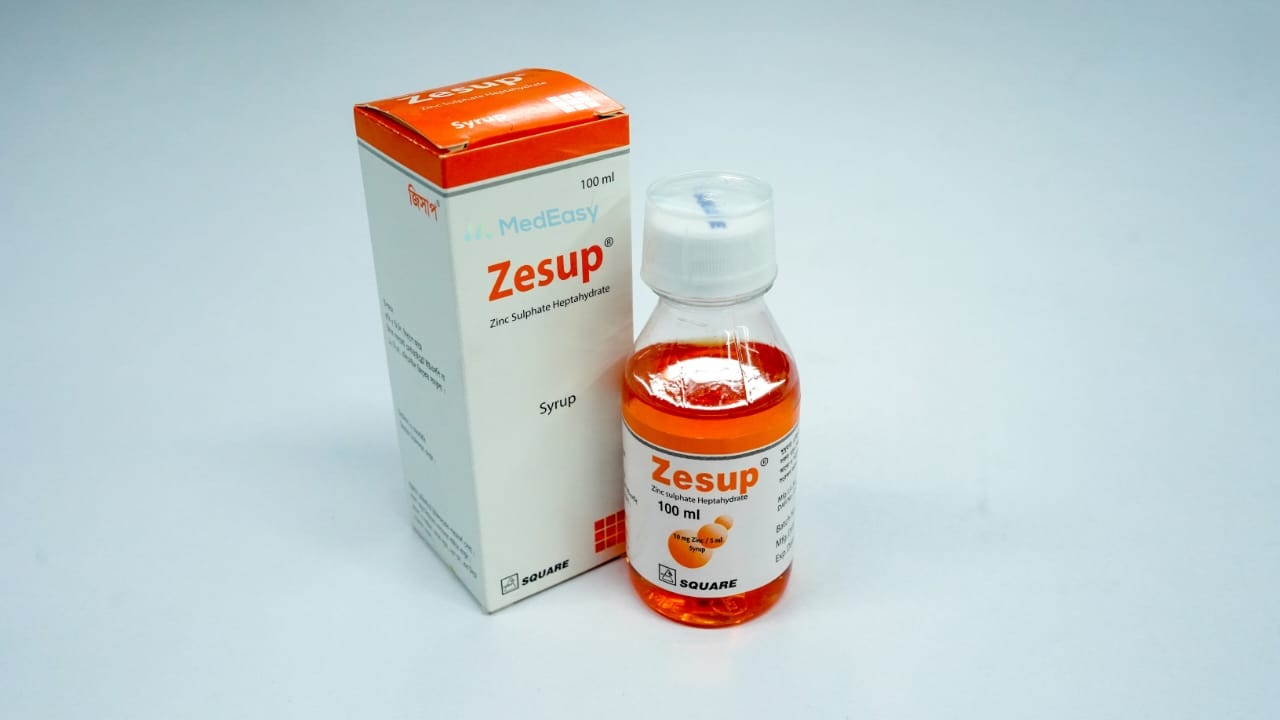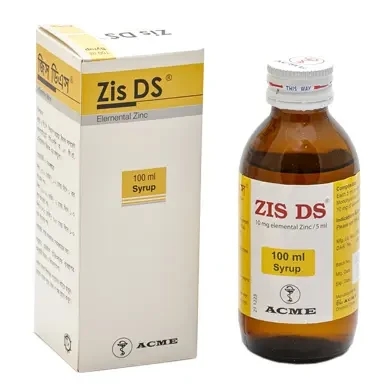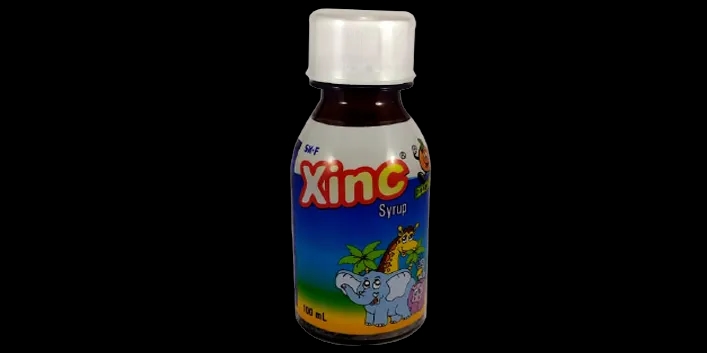
7% Off
Xinc100 ml
Eskayef Bangladesh Ltd.
৳46.50
Add to cart

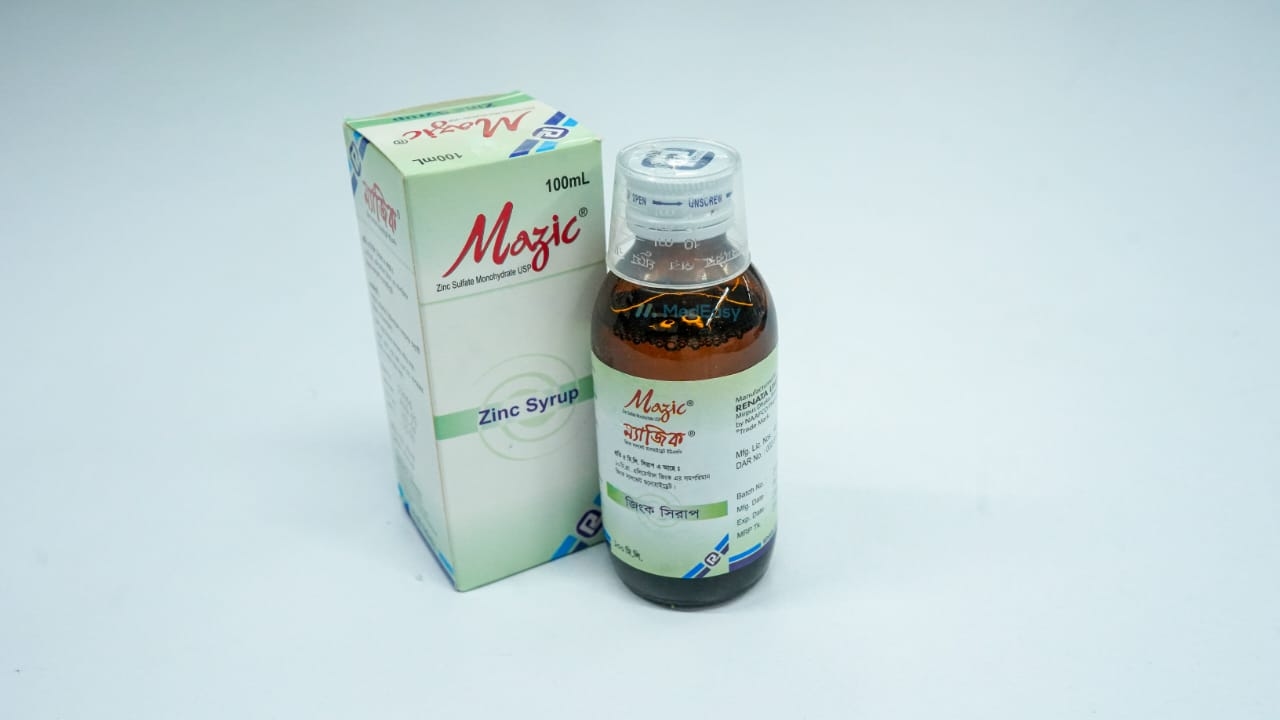
Mazic DS 100 ml Syrup is available on MedEasy for ৳49.50 per 100 ml bottle, with home delivery anywhere in Bangladesh. It is manufactured by Renata Limited. Its generic name is Zinc Sulfate Monohydrate.

Mazic DS is a mineral salt supplement that supplies elemental zinc. Its uses are classified below by strength of supporting evidence.
Zinc Sulfate Monohydrate is the monohydrate form of zinc sulfate (ZnSO4·H2O), a water-soluble inorganic zinc salt used to supply elemental zinc. In Bangladesh it is available as tablets, dispersible tablets, capsules, and oral liquid/syrup preparations, sometimes combined with folic acid or other minerals. Strength is usually expressed both as the salt weight and its equivalent elemental zinc content (for example, a common dispersible tablet strength provides roughly 20 mg of elemental zinc per dose).
Mazic DS is a source of the essential trace mineral zinc. Zinc functions as a catalytic and structural cofactor for several hundred enzymes and is required for normal immune function, protein and nucleic acid synthesis, wound healing, growth and development, and taste and smell perception. Mazic DS is used to correct or prevent zinc deficiency and, together with oral rehydration therapy, to shorten the duration and reduce the severity of acute diarrheal illness in children.
Trace element / mineral (nutritional) supplement — zinc salts
Zinc Sulfate Monohydrate dissociates in the gastrointestinal tract to release zinc ions, which are absorbed mainly in the small intestine via both carrier-mediated and passive processes; absorption efficiency decreases as intake increases and is reduced by phytates and by concurrent iron or calcium in high amounts. Zinc is a cofactor for enzymes such as carbonic anhydrase, alkaline phosphatase, RNA and DNA polymerases, and superoxide dismutase, and it stabilizes cell membranes and supports normal T-lymphocyte and neutrophil function. In diarrheal illness, zinc supplementation is believed to support enterocyte regeneration, restore mucosal barrier integrity, and improve intestinal water and electrolyte absorption, which together with oral rehydration therapy shortens illness duration.
Dosing of Mazic DS is expressed in terms of elemental zinc and should be individualized by indication, age, and body weight, under medical supervision.
| Indication | Population | Typical dose |
|---|---|---|
| Zinc deficiency treatment | Adults and children >30 kg | Approximately 20–40 mg elemental zinc per day, in 1–3 divided doses, after food, for the duration advised by the physician |
| Zinc deficiency treatment | Children 10–30 kg | Approximately 10–20 mg elemental zinc per day, in 1–3 divided doses, after food |
| Zinc deficiency treatment | Children <10 kg | Approximately 5–10 mg elemental zinc per day, in divided doses, after food, only under medical guidance |
| Adjunct in acute diarrhea (with ORT) | Infants <6 months | 10 mg elemental zinc once daily for 10–14 days |
| Adjunct in acute diarrhea (with ORT) | Children ≥6 months to 5 years | 20 mg elemental zinc once daily for 10–14 days |
For dispersible tablets, the tablet may be placed in a teaspoon, dissolved completely in a small amount of water or breast milk/ORS, and the entire spoonful given to the child immediately. Mazic DS is best absorbed on an empty stomach (1 hour before or 2 hours after meals), but may be taken with food if gastric upset occurs. See Interactions for spacing from certain antibiotics, and Precautions and Warnings regarding prolonged high-dose use.
Mazic DS is for oral use. Tablets/capsules should be swallowed with water; dispersible tablets should be dissolved completely in a small amount of water before administration. Syrup/liquid forms should be measured with the calibrated spoon or cup provided. For best absorption, take on an empty stomach (1 hour before or 2 hours after meals); if gastric upset occurs, it may be taken with a small amount of food. Do not take at the same time as tetracycline or fluoroquinolone antibiotics (see Interactions).
Mazic DS can form insoluble complexes with certain drugs in the gastrointestinal tract, reducing absorption of both agents. Clinically significant interactions include:
Chronic high-dose zinc supplementation can also cause copper deficiency over time (see Precautions and Warnings).
Zinc Sulfate Monohydrate is contraindicated in patients with known hypersensitivity to zinc sulfate or any component of the formulation. No other well-established absolute contraindications exist for standard therapeutic doses.
The most common adverse effects of Mazic DS are gastrointestinal and are more likely when it is taken on an empty stomach:
These effects are usually dose-related and often improve by taking Mazic DS with a small amount of food. Prolonged high-dose use can lead to copper deficiency and its associated effects (see Precautions and Warnings and Overdose Effects). Serious allergic reactions are rare.
Zinc is an essential nutrient in pregnancy and lactation, and standard supplemental doses of Mazic DS at or near recommended dietary levels are generally considered acceptable and are often included as part of prenatal nutritional supplementation. However, doses above the recommended dietary allowance should be used only if clearly needed and if the potential benefit justifies the potential risk, and only under medical supervision, as data on high-dose supplementation in human pregnancy are limited. Zinc crosses the placenta and is excreted in breast milk; a physician should be consulted before using Mazic DS at doses above standard nutritional supplementation during pregnancy or breastfeeding.
Use Mazic DS with the following precautions:
Acute overdose of Mazic DS can cause nausea, vomiting, abdominal cramps, diarrhea, headache, and, in severe cases, lethargy and dizziness. Chronic excessive intake can cause copper deficiency, sideroblastic anemia, neutropenia, and impaired immune function. There is no specific home antidote; if overdose is suspected, seek immediate medical attention or contact a poison control center/emergency services. Management is supportive and should be carried out by trained medical personnel; do not attempt specific home treatment beyond seeking prompt medical care.
Store at room temperature (below 30°C), away from light and moisture. Keep out of reach of children.
Renal impairment: zinc is eliminated mainly via the gastrointestinal tract with a renal component; patients with significant renal impairment should use Mazic DS only under medical supervision, with dose adjustment as advised by a physician.
Hepatic impairment: no well-established specific dose adjustment is required, but use should be guided by a physician in significant hepatic disease.
Elderly: no specific dose adjustment is generally required; monitor for gastrointestinal tolerability.
Pediatric and pregnant/lactating populations: see Pediatric Uses and Pregnancy and Lactation for detailed guidance.
Duration of Mazic DS therapy depends on indication: for acute diarrhea in children, the WHO-recommended course is 10-14 days alongside oral rehydration therapy. For treatment of confirmed zinc deficiency, therapy is typically continued for 2-3 months or until deficiency is corrected, as guided by a physician and, where available, laboratory monitoring. For general nutritional supplementation, duration should follow the prescriber's advice.
Trace elements; mineral/nutritional supplements; antidiarrheal adjuncts (zinc salts)
Zinc Sulfate Monohydrate supplies zinc ions that act as an essential cofactor for numerous metalloenzymes and zinc-finger transcription factors involved in cell division, protein synthesis, and immune cell function. In diarrheal illness, zinc supports regeneration of intestinal epithelium and normalizes mucosal transport of water and electrolytes, complementing the fluid-replacing action of oral rehydration therapy.
Mazic DS is used in children for two main purposes:
Safety and efficacy of doses above these established ranges have not been established in children, and long-term high-dose use should be avoided outside of physician guidance due to the risk of copper deficiency (see Precautions and Warnings).
Q: What is Mazic DS 100 ml Syrup used for?
A: Mazic DS 100 ml Syrup is used to treat and prevent zinc deficiency and, together with oral rehydration therapy, to reduce the duration and severity of acute diarrhea in children. It is also used as a general nutritional supplement when zinc intake is inadequate.
Q: Can Mazic DS 100 ml Syrup replace oral rehydration salts (ORS) in diarrhea?
A: No. Mazic DS 100 ml Syrup is a proven adjunct to oral rehydration therapy in acute diarrhea, but it does not replace fluid and electrolyte replacement with ORS. Both should be used together as advised by a physician.
Q: What are the common side effects of Mazic DS 100 ml Syrup?
A: The most common side effects are gastrointestinal, including nausea, vomiting, stomach upset, heartburn, and abdominal cramps, particularly when taken on an empty stomach. Taking Mazic DS 100 ml Syrup with a small amount of food can reduce these effects.
Q: Is Mazic DS 100 ml Syrup safe during pregnancy and breastfeeding?
A: Standard nutritional doses of Mazic DS 100 ml Syrup are generally considered acceptable and are often part of prenatal supplementation, since zinc is an essential nutrient in pregnancy. However, doses above the standard recommended amount should be used only if clearly needed, as advised by a physician, since Mazic DS 100 ml Syrup crosses the placenta and is present in breast milk.
Q: Can Mazic DS 100 ml Syrup be taken with antibiotics?
A: Mazic DS 100 ml Syrup can reduce the absorption of tetracycline and fluoroquinolone antibiotics (and vice versa) if taken together. It is recommended to separate dosing by at least 2 hours before or 4-6 hours after these antibiotics. Always confirm timing with your physician or pharmacist.
Q: What happens if I take too much Mazic DS 100 ml Syrup?
A: Taking more Mazic DS 100 ml Syrup than recommended can cause nausea, vomiting, abdominal cramps, and diarrhea, and long-term excessive use can cause copper deficiency and anemia. If an overdose is suspected, seek immediate medical attention or contact a poison control center rather than attempting home treatment.
Disclaimer
The information provided is accurate to the best of our knowledge, but it does not replace professional medical advice. We cannot guarantee its completeness or accuracy, and the absence of specific information about a drug should not be taken as an endorsement. We are not responsible for any consequences arising from this information, so please consult a healthcare professional for any concerns or questions.