
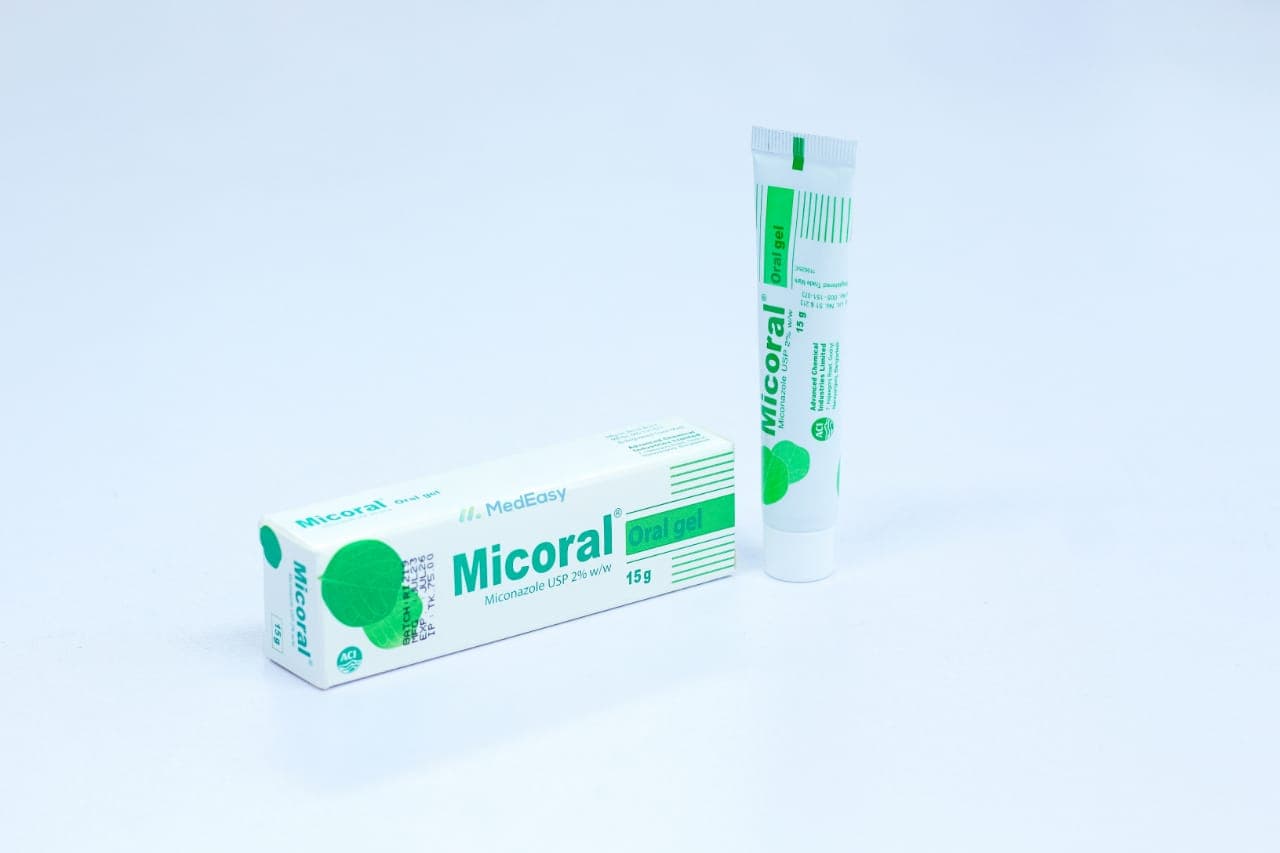

Medicine overview
Indications of Micoral
Micoral is an imidazole antifungal used to treat a range of superficial fungal infections. Indications vary by dosage form.
Established (approved) uses
- Vulvovaginal candidiasis (vaginal yeast infection) — vaginal cream/suppository formulations of Micoral are approved to treat vaginal yeast infections and relieve associated external itching and irritation.
- Cutaneous fungal infections — topical (skin) formulations of Micoral are approved for tinea pedis (athlete's foot), tinea cruris (jock itch), tinea corporis (ringworm), and tinea versicolor, as well as cutaneous candidiasis (including diaper dermatitis with candidal infection).
- Oropharyngeal candidiasis (oral thrush) — oral gel formulations of Micoral are used for local treatment of thrush of the mouth and throat in infants, children, and adults.
Adjunct / combination use
- In some products, Micoral is combined with a topical corticosteroid (e.g. hydrocortisone) for fungal skin infections with significant inflammation, or with an antibacterial agent (e.g. metronidazole, as a vaginal combination product) for mixed vaginal infections. These combination uses require the specific combination product, not Micoral alone.
Your physician will confirm the diagnosis and select the appropriate formulation and duration for your specific infection.
Composition
Each formulation contains Miconazole Nitrate as the active pharmaceutical ingredient, most commonly at a strength of 2% w/w, in a base appropriate to the route of administration (cream, vaginal cream/suppository/pessary, oral gel, or powder). Inactive ingredients (bases, preservatives, thickening agents) vary by manufacturer and formulation — refer to the specific product label for the complete excipient list.
Description
Micoral is a synthetic imidazole-derivative antifungal agent. It is the nitrate salt of miconazole and is formulated for topical, vaginal, and oral (local, non-systemic) use rather than systemic administration. It is active against a broad range of dermatophytes and yeasts, most notably Candida species, and also has activity against some gram-positive bacteria.
Micoral is available in Bangladesh and internationally as topical creams, vaginal creams/pessaries, and oral gel, marketed under various local brand names.
Therapeutic Class
Micoral belongs to the imidazole class of antifungal agents, used topically, vaginally, or orally (locally) for the treatment of dermatophyte and candidal infections.
Pharmacology
Mechanism of action
Miconazole Nitrate inhibits the fungal cytochrome P450-dependent enzyme 14-alpha-demethylase, which is required to convert lanosterol to ergosterol, the principal sterol of the fungal cell membrane. Depletion of ergosterol and accumulation of toxic sterol intermediates disrupt the structure and function of the fungal cell membrane, leading to increased membrane permeability, leakage of cellular contents, and fungal cell death (fungicidal at higher concentrations, fungistatic at lower concentrations).
Spectrum of activity
Miconazole Nitrate is active against dermatophytes (Trichophyton, Microsporum, Epidermophyton species), yeasts (particularly Candida albicans and other Candida species), and Malassezia furfur (the organism responsible for tinea versicolor). It also has some activity against certain gram-positive bacteria.
Pharmacokinetics
Topical, vaginal, and oral-gel forms of Miconazole Nitrate are designed for local action with minimal systemic absorption. However, some systemic absorption does occur — particularly with vaginal and oral mucosal use — and this small absorbed fraction is sufficient to inhibit hepatic CYP3A4 and CYP2C9 enzymes, which is the basis for clinically significant drug interactions (see Drug Interactions).
Dosage & Administration of Micoral
Dosage and administration of Micoral depend on the formulation and the infection being treated. Always follow the product label and your physician's or pharmacist's instructions.
| Indication / Formulation | Typical adult dosing | Duration |
|---|---|---|
| Vulvovaginal candidiasis (vaginal cream 2%) | One applicatorful (approx. 5 g) inserted intravaginally once daily at bedtime | 7 consecutive nights (shorter courses of higher-strength products may exist per specific product labeling) |
| Vulvovaginal candidiasis (vaginal suppository/pessary) | One suppository inserted intravaginally at bedtime, per product strength | 3–7 nights depending on product strength |
| External vulvar itching/irritation (cream) | Apply a small amount to the affected external skin twice daily | Up to 7 days, as needed |
| Cutaneous fungal infections (tinea pedis, cruris, corporis; cutaneous candidiasis) (cream 2%) | Apply a thin layer to the affected area and surrounding skin twice daily (morning and evening) | 2–4 weeks; continue for at least 1 week after symptoms clear |
| Tinea versicolor (cream 2%) | Apply a thin layer to the affected area once daily | 2 weeks |
| Oropharyngeal candidiasis (oral gel 2%) | Apply to the oral mucosa 4 times daily after meals, spreading in small amounts and retaining in the mouth as long as possible before swallowing | Continue for at least 1 week after symptoms resolve; typically 1–2 weeks |
For topical and vaginal use, wash and dry hands before and after application. For oral gel, avoid swallowing large amounts quickly and do not use immediately before lying down in very young infants (risk of choking) — apply small amounts and ensure it is spread away from the back of the throat.
Administration of Micoral
Topical cream: Clean and dry the affected area, then apply a thin layer and gently rub in.
Vaginal cream/suppository: Insert using the applicator provided, preferably at bedtime while lying down, as far into the vagina as comfortably possible.
Oral gel: Apply small amounts to the affected areas of the mouth using a clean finger, after meals; allow the gel to remain in contact with the oral mucosa as long as possible before swallowing. For infants, apply in small amounts across the inside of the cheeks to avoid the risk of choking, and avoid contact with the back of the throat.
Do not use Micoral in the eyes. Complete the full prescribed course even if symptoms improve early, to reduce the risk of recurrence.
Interaction of Micoral
Although Micoral is applied topically, vaginally, or orally for local effect, a small amount can be absorbed systemically and is sufficient to inhibit the hepatic enzymes CYP3A4 and CYP2C9, producing clinically significant interactions:
- Warfarin and other oral anticoagulants: Micoral can significantly potentiate anticoagulant effect, increasing the risk of bleeding or bruising — this interaction has been reported even with topical and vaginal use. Patients on warfarin should have their INR monitored closely if Micoral is used, and should report any unusual bleeding or bruising promptly.
- Phenytoin: concurrent use may increase phenytoin levels, risking toxicity; phenytoin levels should be monitored.
- Cyclosporine and tacrolimus: Micoral may increase blood levels of these immunosuppressants, risking nephrotoxicity; monitoring is advised with significant systemic exposure (e.g. extensive oral or vaginal use).
- Terfenadine, astemizole, cisapride (largely historical/withdrawn agents): concurrent use with Micoral is contraindicated due to the risk of serious cardiac arrhythmias from elevated levels of these agents.
- Latex products: vaginal formulations of Micoral may weaken latex condoms and diaphragms, reducing their effectiveness in preventing pregnancy and sexually transmitted infections, for several days after use.
Inform your physician or pharmacist about all medicines you are taking, especially oral anticoagulants, before using Micoral.
Contraindications
Miconazole Nitrate is contraindicated in:
- Patients with known hypersensitivity to miconazole, other imidazole antifungals, or any component of the specific formulation.
Additional caution (not absolute contraindication) applies to concurrent use with certain historical agents (terfenadine, astemizole, cisapride) due to serious interaction risk — see Drug Interactions.
Side Effects of Micoral
Side effects of Micoral depend on the route of administration and are generally mild and local.
Common
- Local burning, stinging, itching, or irritation at the application site (skin, vaginal, or oral mucosa)
- Vaginal formulations: increased vaginal discharge, mild pelvic or abdominal cramping
- Oral gel: unpleasant taste, mild nausea
Less common
- Nausea, vomiting, or diarrhea (more often with prolonged oral gel use)
- Skin rash, contact dermatitis
Rare but serious
- Allergic reactions, including hives, swelling of the face/lips/tongue, and, rarely, severe allergic reactions requiring immediate medical attention
Stop use and consult a physician if severe irritation, rash, or signs of an allergic reaction occur.
Pregnancy & Lactation
Pregnancy: Data on Micoral in human pregnancy are limited, particularly for oral and extensive vaginal/topical use. Micoral should be used during pregnancy only if clearly needed and if the potential benefit justifies the potential risk to the fetus; vaginal applicators may not be recommended in the first trimester without medical guidance, as insertion technique may need to be adapted. Always consult a physician before use during pregnancy.
Lactation: It is not well established whether topically or vaginally applied Micoral is excreted in human breast milk in clinically significant amounts. As a precaution, breastfeeding mothers should consult a physician before use, and avoid applying Micoral directly to the breast/nipple area if breastfeeding.
Precautions & Warnings
- For external, vaginal, or oral mucosal use only — avoid contact with the eyes; if accidental eye contact occurs, rinse thoroughly with water.
- If this is the first time you have experienced symptoms of a suspected vaginal yeast infection, consult a physician for diagnosis before self-treating with Micoral, as similar symptoms can be caused by other conditions.
- Seek medical advice if vaginal/abdominal symptoms are accompanied by fever, foul-smelling discharge, or lower abdominal/back/shoulder pain, as these may indicate a more serious condition.
- Patients on warfarin or other oral anticoagulants require close monitoring — see Drug Interactions.
- Vaginal formulations of Micoral may damage latex condoms and diaphragms.
- Discontinue and consult a physician if irritation, sensitization, or an allergic reaction develops.
- Use the full prescribed duration even if symptoms resolve early, to reduce recurrence risk.
- Patients with recurrent or persistent infections despite treatment with Micoral should be evaluated for underlying conditions such as diabetes mellitus or immunosuppression (including HIV).
Overdose Effects of Micoral
Significant systemic toxicity from topical, vaginal, or oral-gel use of Micoral is unlikely given minimal systemic absorption; however, accidental large oral ingestion (especially by children) may occur.
If accidental ingestion of a large amount of Micoral occurs, or if symptoms such as nausea, vomiting, or unusual drowsiness develop, seek immediate medical attention or contact a poison control center / emergency services. Do not attempt home treatment for suspected overdose; bring the product packaging when seeking care.
Storage Conditions
Store at room temperature (below 30°C), away from light and moisture. Keep out of reach of children. Do not freeze. Keep the container tightly closed.
Use In Special Populations
Renal impairment
No dosage adjustment is generally required for topical, vaginal, or oral-gel Micoral given its minimal systemic absorption; specific renal-dosing studies are limited as this is a topically/locally acting agent.
Hepatic impairment
No specific dosage adjustment is established for topical, vaginal, or oral-gel Micoral; however, since Micoral inhibits hepatic CYP enzymes, caution is advised with extensive use in patients with significant hepatic impairment, and physician guidance should be sought.
Elderly
No specific dose adjustment is required for elderly patients using Micoral; use as directed, with the same precautions regarding drug interactions (particularly anticoagulants) that are common in this age group.
Pediatric
See Pediatric Use.
Duration Of Treatment
Duration of treatment with Micoral depends on the indication and formulation: typically 3–7 nights for vaginal formulations, 2–4 weeks for cutaneous fungal infections (continuing for at least one week after symptoms disappear), 2 weeks for tinea versicolor, and 1–2 weeks for oral thrush (continuing for at least one week after symptoms resolve). Do not stop treatment early even if symptoms improve, and consult a physician if there is no improvement within the expected timeframe or if symptoms recur.
Drug Classes
Miconazole Nitrate is classified as an imidazole antifungal (azole antifungal), within the broader group of topical/local antifungal agents.
Mode Of Action
Miconazole Nitrate inhibits fungal 14-alpha-demethylase (a cytochrome P450-dependent enzyme), blocking conversion of lanosterol to ergosterol. This depletes ergosterol in the fungal cell membrane and allows accumulation of toxic methylated sterol precursors, disrupting membrane integrity and function, which is fungistatic at low concentrations and fungicidal at higher concentrations.
Pregnancy
C
Pediatric Uses
Use of Micoral in children should follow age-appropriate formulations and dosing:
- Oral gel (oropharyngeal candidiasis): may be used in infants and children; infants are typically given 1.25 mL four times daily and children 2 years and older 2.5 mL four times daily, applied after meals. In infants, apply small amounts carefully to the inside of the cheeks to reduce the risk of choking, and avoid placing gel at the back of the throat.
- Topical cream (skin infections, including candidal diaper dermatitis): may be used in children as directed by a physician, applied sparingly to the affected area.
- Safety and efficacy of vaginal formulations of Micoral have not been established in prepubertal children, and these formulations are not intended for pediatric vaginal use.
- Use in neonates and very young infants should be under direct medical supervision.
Frequently Asked Questions
Q: What is Micoral 2% Oral Gel used for?
A: Micoral 2% Oral Gel is an antifungal medicine used to treat fungal skin infections (such as athlete's foot, ringworm, and jock itch), vaginal yeast infections, and oral thrush, depending on the formulation (cream, vaginal cream/suppository, or oral gel).
Q: Can I use Micoral 2% Oral Gel while taking warfarin (blood thinners)?
A: Use with caution and only under medical supervision. Micoral 2% Oral Gel, even when applied topically or vaginally, can increase the effect of warfarin and other oral anticoagulants, raising the risk of bleeding or bruising. Tell your physician if you are on anticoagulant therapy before using Micoral 2% Oral Gel, and monitor for unusual bleeding or bruising.
Q: Is Micoral 2% Oral Gel safe to use during pregnancy?
A: Micoral 2% Oral Gel should be used during pregnancy only if clearly needed and if your physician determines the potential benefit outweighs the potential risk to the fetus. Always consult a physician before using Micoral 2% Oral Gel if you are pregnant or think you may be pregnant.
Q: Will Micoral 2% Oral Gel vaginal cream affect my condoms or diaphragm?
A: Yes. Vaginal formulations of Micoral 2% Oral Gel can weaken latex condoms and diaphragms, making them less effective at preventing pregnancy and sexually transmitted infections, for several days after use. Use alternative or additional contraception during and shortly after treatment.
Q: How long should I use Micoral 2% Oral Gel for a vaginal yeast infection?
A: This depends on the specific product strength, typically 3 to 7 consecutive nights. Complete the full course as directed even if symptoms improve early, and consult a physician if this is your first suspected yeast infection or if symptoms do not resolve.
Q: What should I do if I accidentally swallow a large amount of Micoral 2% Oral Gel oral gel?
A: Seek immediate medical attention or contact a poison control center or emergency services, especially in young children. Do not attempt home treatment; bring the product packaging with you when seeking care.
Disclaimer
The information provided is accurate to the best of our knowledge, but it does not replace professional medical advice. We cannot guarantee its completeness or accuracy, and the absence of specific information about a drug should not be taken as an endorsement. We are not responsible for any consequences arising from this information, so please consult a healthcare professional for any concerns or questions.
