
Key facts
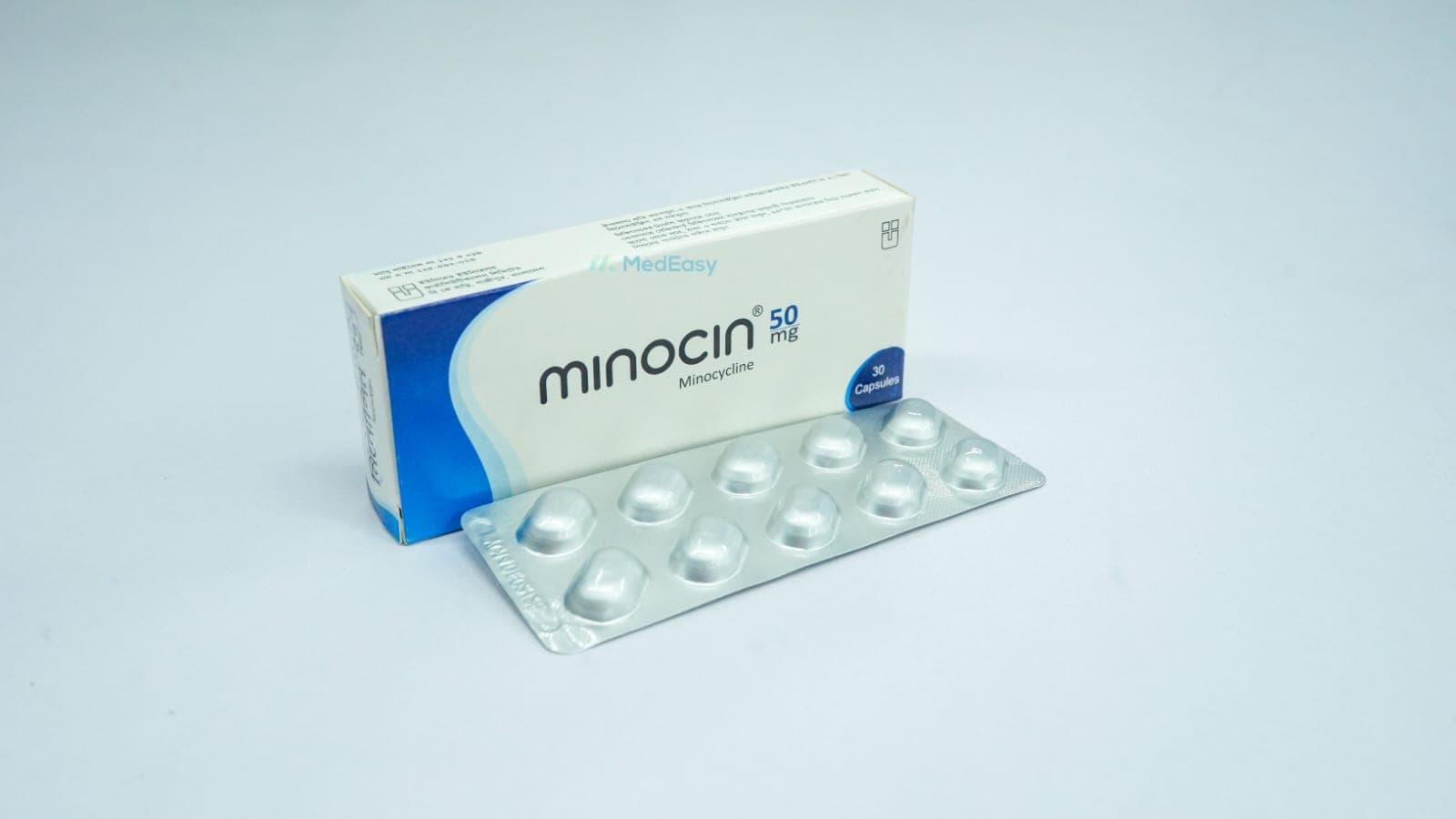
Minocin 50 mg tablet is available on MedEasy for ৳230.00 per 10's Strip, with home delivery anywhere in Bangladesh. It is manufactured by Unimed Unihealth MFG. Ltd. Its generic name is Minocycline Hydrochloride.
- Pack sizes
- 10's Strip, 30's pack
- Prescription
- Required. Upload a valid doctor's prescription at checkout; a MedEasy pharmacist verifies it before dispatch.
- Delivery
- Home delivery across Bangladesh. Same-day delivery in Dhaka, Chattogram, Sylhet and Bogura city areas; 2-3 days elsewhere.
- Payment
- Cash on delivery, bKash, cards and mobile banking.
- Brand
- Minocin
- Generic name
- Minocycline Hydrochloride
- Manufacturer
- Unimed Unihealth MFG. Ltd.
- Form & strength
- tablet 50 mg
- Availability
- In stock
- Authenticity
- Sourced from licensed suppliers and the manufacturer's authorised distributors in Bangladesh.

Medicine overview
Indications of Minocin
Acne Vulgaris
Minocin is an established, FDA-approved adjunctive treatment for moderate to severe inflammatory acne vulgaris in patients 12 years of age and older. Minocin is typically used as part of a limited, defined-duration regimen alongside topical acne therapy rather than as long-term monotherapy, consistent with current antibiotic stewardship practice.
Susceptible Bacterial Infections
Minocin is established therapy for a range of infections caused by susceptible organisms, including infections due to Rickettsia species (Rocky Mountain spotted fever, typhus fever and typhus group infections, Q fever, rickettsialpox, and tick fevers), respiratory tract infections caused by Streptococcus pneumoniae, and skin and soft-tissue infections caused by susceptible staphylococci and streptococci. Minocin is also indicated for uncomplicated urethral, endocervical, or rectal infections caused by Chlamydia trachomatis, for lymphogranuloma venereum, and for psittacosis (Chlamydophila psittaci).
Other Established Infections
Minocin is indicated for relapsing fever due to Borrelia, plague (Yersinia pestis), tularemia, cholera, brucellosis (usually combined with an aminoglycoside or rifampin — combination therapy is required for optimal cure, not Minocin alone), bartonellosis, and granuloma inguinale. As an alternative in patients with penicillin hypersensitivity, Minocin may be used for syphilis, Listeria monocytogenes infections, and uncomplicated gonococcal infections when penicillin cannot be used.
Adjunct and Off-Label Uses
Minocin is used off-label, generally as an adjunct to disease-modifying antirheumatic drug (DMARD) therapy and not as a standalone treatment, in some cases of early rheumatoid arthritis. Minocin has also been used off-label as adjunctive therapy in periodontal disease and, historically, for eradication of nasopharyngeal meningococcal carriage in adults, although this specific use has declined due to resistance concerns and the vestibular side effects of Minocin. These off-label uses should only be undertaken on the advice of a qualified physician.
Composition
Each capsule or tablet contains Minocycline Hydrochloride equivalent to Minocycline base, commonly available as 50 mg, 75 mg, or 100 mg immediate-release strengths; extended-release tablets of Minocycline Hydrochloride (weight-based strengths) are also available for acne in some markets.
Description
Minocin is a semisynthetic, broad-spectrum antibiotic belonging to the tetracycline class of medicines. Minocin is more lipid-soluble than older tetracyclines, giving Minocin broader tissue penetration, including into the central nervous system. Minocin works by stopping susceptible bacteria from producing the proteins they need to grow and multiply. Minocin is commonly prescribed for moderate to severe acne, certain respiratory and skin infections, tick-borne and rickettsial diseases, and several other bacterial infections. Minocin does not treat viral infections such as the common cold or flu, and Minocin should be taken exactly as prescribed by a qualified healthcare professional.
Therapeutic Class
Antibiotic (Tetracycline-class, semisynthetic)
Pharmacology
Minocycline Hydrochloride is well absorbed after oral administration; absorption of Minocycline Hydrochloride is somewhat less affected by dairy products, antacids, and iron/calcium/magnesium-containing preparations than older tetracyclines, although co-administration can still reduce absorption of Minocycline Hydrochloride through chelation and is generally avoided. Minocycline Hydrochloride is highly lipid-soluble, giving it wide distribution into body tissues and fluids, including sebum, saliva, and the central nervous system, which accounts for both its efficacy in acne and its distinctive vestibular side effects (dizziness, vertigo). Minocycline Hydrochloride is partly metabolized in the liver and eliminated through a combination of biliary/fecal and renal excretion. The elimination half-life of Minocycline Hydrochloride (approximately 11–26 hours) is longer than that of tetracycline, allowing twice-daily or once-daily dosing.
Dosage & Administration of Minocin
The dose, frequency, and duration of Minocin vary considerably by indication, patient age and weight, and clinical severity, and must be determined by a qualified healthcare professional; the regimen used for one infection is not necessarily appropriate for another. The general regimens below reflect commonly cited dosing ranges and are not a substitute for individualized medical advice.
Administration of Minocin
- Swallow Minocin capsules/tablets whole with a full glass of water; do not crush or chew unless the tablet is scored for that purpose.
- Remain sitting or standing (do not lie down) for at least 30–60 minutes after taking Minocin to reduce the risk of esophageal irritation.
- Minocin may be taken with food (but preferably not dairy products) if stomach upset occurs.
- Avoid taking Minocin at the same time as antacids, iron supplements, calcium, or dairy products; separate dosing by at least 2 hours, since these can reduce absorption of Minocin.
- Use effective sun protection and limit prolonged sun/UV exposure, as Minocin can increase sensitivity to sunlight.
- Take Minocin exactly as prescribed by your physician; do not stop, extend, skip doses, or share Minocin with others without medical advice, even if symptoms improve early.
Interaction of Minocin
- Antacids, calcium, magnesium, iron, and dairy products: these can form insoluble complexes with Minocin in the gut, reducing its absorption; separate dosing by at least 2 hours.
- Isotretinoin: concurrent use of isotretinoin with Minocin significantly increases the risk of intracranial hypertension (pseudotumor cerebri); this combination should be avoided.
- Oral (hormonal) contraceptives: Minocin may reduce contraceptive efficacy; an additional or backup contraceptive method should be considered while taking Minocin.
- Warfarin and other anticoagulants: Minocin may potentiate anticoagulant effect; closer INR monitoring and possible dose adjustment may be needed.
- Penicillin-class antibiotics: the bacteriostatic action of Minocin may interfere with the bactericidal action of penicillins; concurrent use is generally avoided.
- Methoxyflurane: concurrent use with Minocin and other tetracyclines has been associated with fatal renal toxicity and should be avoided.
- Enzyme-inducing anticonvulsants (phenytoin, carbamazepine, barbiturates): may reduce the effectiveness of Minocin by increasing its metabolism.
Contraindications
Minocycline Hydrochloride is contraindicated in patients with known hypersensitivity to Minocycline Hydrochloride or to any other tetracycline-class antibiotic, in pregnant women, and in children under 8 years of age, because of the risk of permanent tooth discoloration and inhibition of bone growth associated with this drug class.
Side Effects of Minocin
Common Side Effects
- Nausea, vomiting, and diarrhea
- Dizziness, vertigo, and unsteadiness (vestibular effects), more common with Minocin than with other tetracyclines
- Headache
- Photosensitivity (increased sunburn-type skin reaction)
- Skin rash
- Blue-gray discoloration of skin, nails, mucous membranes, teeth, or scars with long-term use of Minocin
Serious Side Effects (Seek Medical Attention)
- Yellowing of the skin or eyes, dark urine, or unusual tiredness, which may indicate liver injury (hepatotoxicity) associated with Minocin
- Joint pain, fever, or a lupus-like rash, which may indicate drug-induced lupus erythematosus or autoimmune hepatitis with long-term use of Minocin — see Precautions and Warnings
- Severe headache, blurred or double vision, or vision loss, which may indicate intracranial hypertension (pseudotumor cerebri) — see Precautions and Warnings
- Severe or persistent watery/bloody diarrhea, which may indicate Clostridioides difficile-associated diarrhea or colitis
- Signs of a severe allergic reaction, such as swelling of the face/throat, difficulty breathing, or widespread rash with fever (possible DRESS syndrome)
- Severe chest pain or pain/difficulty swallowing, which may indicate esophageal irritation or ulceration
Pregnancy & Lactation
Pregnancy
Minocin is contraindicated during pregnancy. Tetracycline-class drugs, including Minocin, cross the placenta and, when used during the second and third trimesters, can cause permanent discoloration of the fetus's developing teeth and reversible inhibition of bone growth. Minocin should not be used in pregnant women unless a physician determines there is no suitable alternative and the potential benefit clearly justifies the potential risk to the fetus, and such use should only occur under direct physician guidance.
Breastfeeding
Minocin passes into breast milk. Because of the potential for effects on an infant's developing teeth and bones, Minocin should be used during breastfeeding only if clearly needed and no suitable alternative exists, and only after consulting a physician; the infant should be monitored for adverse effects.
Precautions & Warnings
- Vestibular effects: Minocin is more likely than other tetracyclines to cause dizziness, vertigo, unsteadiness, and tinnitus; patients should be cautious with driving or operating machinery until they know how Minocin affects them.
- Hepatotoxicity: liver injury, including rare cases of severe hepatotoxicity, has been reported with Minocin; use with caution in patients with pre-existing liver disease and seek medical attention for signs of liver injury.
- Drug-induced lupus-like syndrome and autoimmune hepatitis: long-term use of Minocin has been associated with a lupus-like syndrome (joint pain, fever, rash) and autoimmune hepatitis; symptoms usually resolve after stopping Minocin, but a physician should be consulted promptly if they occur.
- Intracranial hypertension (pseudotumor cerebri): Minocin and other tetracyclines have been associated with raised intracranial pressure, presenting as severe headache and visual disturbance; concurrent use of Minocin with isotretinoin markedly increases this risk and should be avoided.
- Photosensitivity: Minocin can cause an exaggerated sunburn-like skin reaction; limit sun/UV exposure and use sun protection.
- Skin, nail, and tooth hyperpigmentation: prolonged use of Minocin can cause blue-gray discoloration of skin, nails, teeth, or scar tissue, which may only partially resolve after stopping Minocin.
- Clostridioides difficile-associated diarrhea and superinfection: as with other antibiotics, Minocin can disturb normal gut flora, causing diarrhea/colitis or overgrowth of non-susceptible organisms including fungi.
- Antibiotic stewardship: take Minocin exactly as prescribed by your physician; do not stop, extend, skip doses, or share this medicine with others without medical advice, and use it for appropriate indications only, for acne as part of a limited-duration regimen rather than indefinite therapy.
Overdose Effects of Minocin
Reported effects of Minocin overdose are generally an extension of its common side effects, particularly nausea, vomiting, dizziness, and vertigo. There is no specific antidote for Minocin overdose. If an overdose of Minocin is suspected, seek immediate medical attention or contact a poison control center right away; do not attempt to manage a suspected overdose at home. Management is generally supportive and symptomatic, and Minocin is not significantly removed by hemodialysis.
Storage Conditions
Store Minocin at room temperature (below 30°C), away from light and moisture. Keep Minocin out of the reach and sight of children, and do not use beyond its expiry date.
Use In Special Populations
Children
Minocin is contraindicated in children under 8 years of age because of the risk of permanent tooth discoloration and inhibition of bone growth. In children 8 years and older, Minocin may be used with the same caution regarding tooth staining that applies to adolescents, and weight-based dosing is used for those under approximately 45 kg. Minocin is approved for acne in patients 12 years of age and older.
Elderly
No specific dose adjustment of Minocin is established for older adults based on age alone; standard adult dosing is generally used, with attention to renal and hepatic function and to fall risk from vestibular side effects.
Renal Impairment
Minocin should be used with caution in renal impairment; because of its prolonged half-life in this setting, the dosing frequency (rather than the individual dose) should be reduced, and patients should be monitored for accumulation and adverse effects.
Hepatic Impairment
Minocin should be used with caution in patients with hepatic impairment because of its association with hepatotoxicity; dose reduction and monitoring of liver function may be required.
Pregnant and Breastfeeding Women
See the Pregnancy and Lactation section above for detailed guidance on the use of Minocin in this population.
Duration Of Treatment
The duration of treatment with Minocin is set by the prescriber and depends on the indication: acute bacterial infections are typically treated for 7–14 days depending on clinical response, while courses of Minocin for acne are longer (often 6–12 weeks) but are periodically reassessed and limited in duration rather than continued indefinitely, consistent with antibiotic stewardship practice. Patients should take Minocin for exactly as long as prescribed and should not stop, extend, or repeat a course without medical advice.
Drug Classes
Tetracycline-class antibiotic (semisynthetic)
Mode Of Action
Minocycline Hydrochloride is a bacteriostatic antibiotic. Minocycline Hydrochloride binds reversibly to the 30S ribosomal subunit of susceptible bacteria, blocking the binding of aminoacyl-tRNA to the mRNA-ribosome complex and thereby preventing addition of amino acids to the growing peptide chain. This inhibits bacterial protein synthesis and stops bacterial growth and multiplication without directly killing the organism. Minocycline Hydrochloride is more lipophilic than older tetracyclines, allowing greater penetration into tissues, sebum, and the central nervous system.
Pregnancy
D
Pediatric Uses
Minocin is contraindicated in children under 8 years of age because tetracycline-class drugs, including Minocin, can cause permanent discoloration of developing teeth and reversible inhibition of bone growth in this age group. In children 8 years and older, Minocin may be used for appropriate indications with dosing based on body weight for those under approximately 45 kg, using regimens similar to adults for those at or above this weight. Minocin is specifically approved for moderate to severe acne vulgaris in patients 12 years of age and older. Safety and efficacy of Minocin for indications other than acne have not been separately established in all pediatric age groups, and any pediatric use should be guided by a qualified physician.
Frequently Asked Questions
Q: What is Minocin 50 mg tablet used for?
A: Minocin 50 mg tablet is a tetracycline-class antibiotic used mainly for moderate to severe acne vulgaris and for a range of bacterial infections, including certain respiratory and skin infections, tick-borne and rickettsial diseases such as Rocky Mountain spotted fever, and some sexually transmitted infections. Minocin 50 mg tablet does not treat viral infections such as colds or flu.
Q: What is the usual dose of Minocin 50 mg tablet?
A: There is no single dose of Minocin 50 mg tablet that applies to every condition. Common adult regimens range from 50 mg once or twice daily for acne to 100 mg twice daily for many bacterial infections, with the exact dose, frequency, and duration depending on the specific indication; see the dosage table above. Only a qualified healthcare professional can determine the correct dose of Minocin 50 mg tablet for a given patient.
Q: Can Minocin 50 mg tablet be taken with milk or antacids?
A: It is best to avoid taking Minocin 50 mg tablet at the same time as milk, other dairy products, calcium, iron, or antacids, since these can bind to Minocin 50 mg tablet in the gut and reduce how much is absorbed. Separate these by at least 2 hours from your dose of Minocin 50 mg tablet.
Q: Is Minocin 50 mg tablet safe during pregnancy?
A: No. Minocin 50 mg tablet is contraindicated during pregnancy because tetracycline-class drugs can cause permanent discoloration of the developing fetus's teeth and can affect bone growth. Minocin 50 mg tablet should not be used in pregnant women unless a physician determines there is no suitable alternative and the potential benefit clearly outweighs the risk.
Q: Can children take Minocin 50 mg tablet?
A: Minocin 50 mg tablet is contraindicated in children under 8 years of age because it can cause permanent tooth discoloration and affect bone growth. In children 8 years and older, Minocin 50 mg tablet may be used for appropriate indications under medical supervision, and it is specifically approved for acne in patients 12 years of age and older.
Q: Why do I feel dizzy after taking Minocin 50 mg tablet?
A: Dizziness, vertigo, and unsteadiness are known side effects of Minocin 50 mg tablet and occur more often with Minocin 50 mg tablet than with other tetracyclines, because Minocin 50 mg tablet penetrates the inner ear and central nervous system more readily. If dizziness is severe or persistent, contact your physician, and avoid driving or operating machinery until you know how Minocin 50 mg tablet affects you.
Q: What are the common side effects of Minocin 50 mg tablet?
A: The most common side effects of Minocin 50 mg tablet include nausea, vomiting, diarrhea, dizziness or vertigo, headache, skin rash, and increased sensitivity to sunlight. With long-term use, Minocin 50 mg tablet can cause blue-gray discoloration of the skin, nails, or teeth. Serious but less common effects can include liver problems, a lupus-like syndrome, and raised pressure around the brain; see the Side Effects section above for full details.
Disclaimer
The information provided is accurate to the best of our knowledge, but it does not replace professional medical advice. We cannot guarantee its completeness or accuracy, and the absence of specific information about a drug should not be taken as an endorsement. We are not responsible for any consequences arising from this information, so please consult a healthcare professional for any concerns or questions.
