7% Off
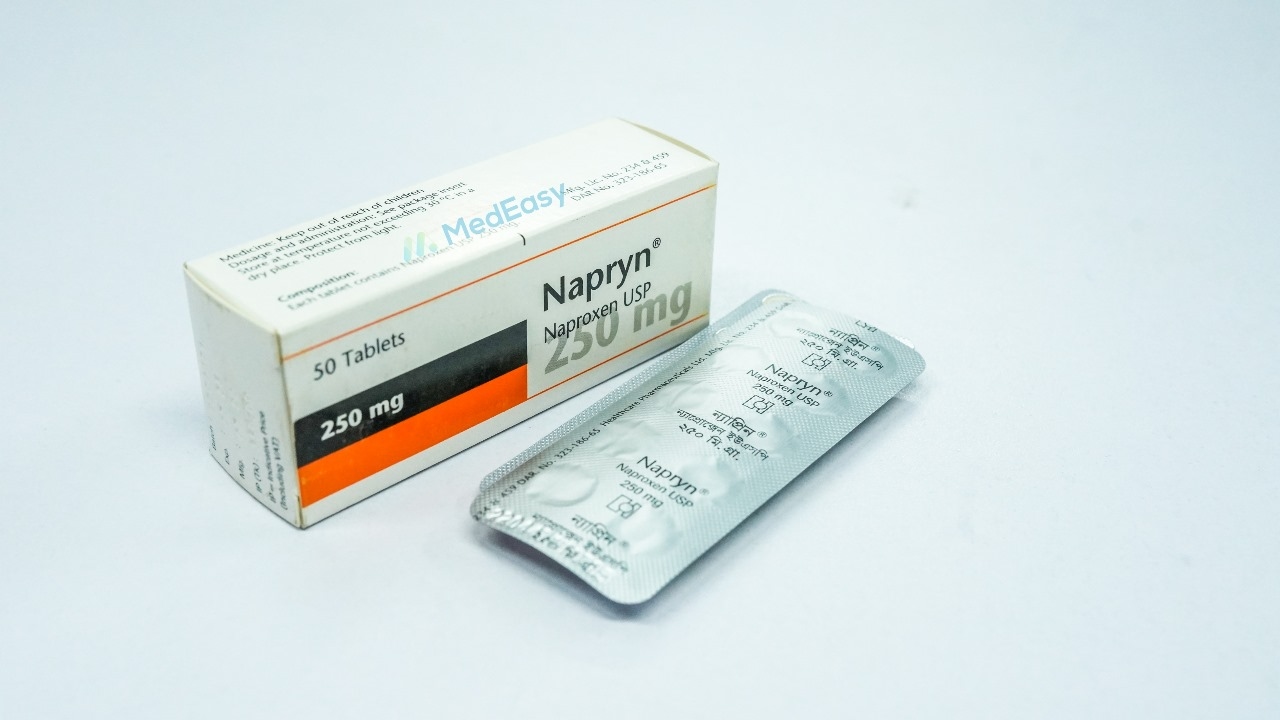
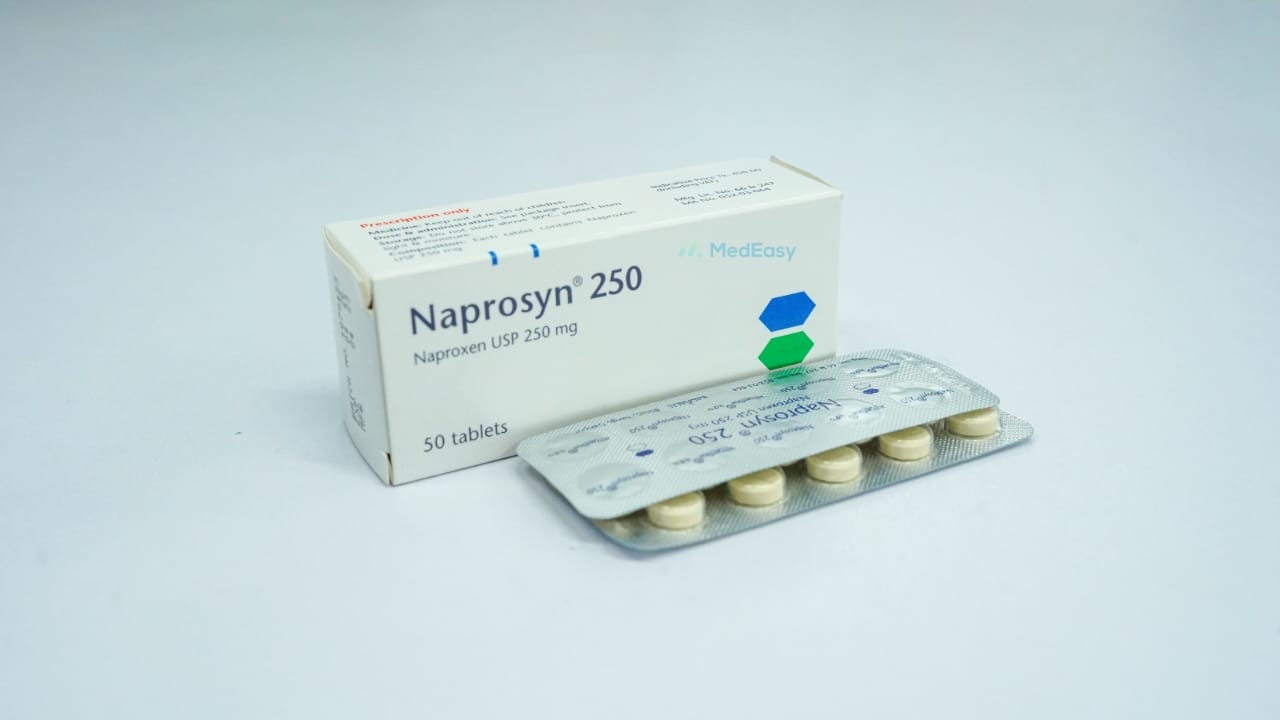
Naprosyn250 mg
Radiant Pharmaceuticals Ltd.
৳83.70
Add to cart

Naxo 250 mg Tablet is available on MedEasy for ৳3.62 per piece, with home delivery anywhere in Bangladesh. It is manufactured by Navana Pharmaceuticals Ltd. Its generic name is Naproxen Sodium.

Naxo is a nonsteroidal anti-inflammatory drug (NSAID) used to relieve pain, reduce fever, and control inflammation. Indications are classified below by strength of evidence.
Naxo is not an antibiotic and has no role in treating infections.
Each tablet contains Naproxen Sodium INN as the active ingredient, commonly available in strengths of 250 mg, 275 mg, 500 mg, and 550 mg. Sustained-release/controlled-release tablets (typically 500 mg) and an oral suspension (125 mg/5 mL, expressed as naproxen equivalent) are also marketed. Excipients vary by manufacturer.
Naxo is the sodium salt of naproxen, a propionic acid derivative NSAID. The sodium salt form dissolves and is absorbed more rapidly than naproxen base, giving faster onset of pain relief while retaining naproxen's comparatively long duration of action, which allows less frequent dosing than many other NSAIDs.
It is widely used for short-term relief of acute pain and fever, and for longer-term management of chronic inflammatory joint conditions, under medical supervision.
Naxo belongs to the Non-Steroidal Anti-Inflammatory Drug (NSAID) class, specifically the propionic acid derivative group. It is a non-selective cyclooxygenase (COX-1 and COX-2) inhibitor.
Naproxen Sodium works by non-selectively inhibiting cyclooxygenase (COX-1 and COX-2) enzymes, reducing the synthesis of prostaglandins that mediate pain, inflammation, and fever. Inhibition of COX-1 also accounts for its gastrointestinal and antiplatelet effects.
After oral administration, the sodium salt is absorbed rapidly, producing peak plasma concentrations sooner than naproxen base. Naproxen is highly protein-bound (>99%), has a relatively long elimination half-life of approximately 12-17 hours (which supports twice-daily dosing), and is metabolized in the liver with excretion mainly in urine.
| Indication | Typical adult dose |
|---|---|
| Osteoarthritis, rheumatoid arthritis, ankylosing spondylitis | 275-550 mg twice daily; maintenance up to 1,100 mg/day in divided doses if needed |
| Acute musculoskeletal pain, mild-to-moderate pain, primary dysmenorrhea | 550 mg initially, then 275 mg every 6-8 hours or 550 mg every 12 hours; total not to exceed 1,375 mg on the first day, then 1,100 mg/day thereafter |
| Acute gout | 825 mg initially, then 275 mg every 8 hours until the attack subsides |
| Juvenile idiopathic arthritis (pediatric) | Approximately 10 mg/kg/day naproxen equivalent in two divided doses (using the oral suspension); tablets are generally not suitable for children weighing under 50 kg |
The lowest effective dose should be used for the shortest duration consistent with the treatment goal, because of cardiovascular and gastrointestinal risks (see Precautions and Warnings). Renal or hepatic impairment: use the lowest effective dose and monitor closely; avoid in severe impairment (see Use in Special Populations).
Naxo tablets should be swallowed whole with a full glass of water, preferably taken with food, milk, or an antacid to reduce gastrointestinal upset. Sustained/controlled-release tablets must not be crushed, split, or chewed. The oral suspension should be shaken well before measuring each dose with an appropriate measuring device. Do not lie down for at least 10 minutes after taking a dose.
Clinically significant interactions with Naxo include:
Naproxen Sodium is contraindicated in:
Common side effects of Naxo include dyspepsia, heartburn, abdominal pain, nausea, constipation or diarrhea, headache, dizziness, drowsiness, tinnitus, and fluid retention/edema.
Serious but less common effects include gastrointestinal bleeding/ulceration/perforation, cardiovascular thrombotic events (myocardial infarction, stroke), renal impairment, elevated liver enzymes/hepatotoxicity, hypertension, hyperkalemia, aseptic meningitis, and severe skin reactions (Stevens-Johnson syndrome, toxic epidermal necrolysis) or anaphylactoid reactions. Seek urgent medical care for signs such as black/bloody stools, chest pain, sudden weakness, jaundice, or severe rash.
Pregnancy: Naxo should be avoided starting at approximately 20 weeks of gestation, as NSAIDs at this stage can cause fetal renal dysfunction leading to oligohydramnios. Use at or after about 30 weeks (third trimester) is contraindicated due to risk of premature closure of the fetal ductus arteriosus and other fetal/neonatal complications. Earlier in pregnancy, Naxo should be used only if clearly needed, at the lowest effective dose for the shortest duration, and only after consulting a physician, as safety has not been definitively established.
Lactation: Naproxen passes into breast milk in small amounts (roughly 1% of maternal plasma levels). Because of the potential for adverse effects in a nursing infant, Naxo should be used during breastfeeding only if a physician determines the benefit outweighs the risk; a shorter-acting NSAID is often preferred by clinicians for breastfeeding mothers.
Cardiovascular risk: Naxo, like other NSAIDs, carries a boxed-warning-level risk of serious cardiovascular thrombotic events, including myocardial infarction and stroke, which can be fatal; this risk may increase with duration of use and in patients with existing cardiovascular disease or risk factors.
Gastrointestinal risk: Increased risk of serious GI adverse events including bleeding, ulceration, and perforation of the stomach or intestines, which can occur at any time and without warning symptoms, particularly in elderly patients or those with prior peptic ulcer disease/GI bleeding.
Renal effects: May cause renal papillary necrosis or other renal injury, especially in patients with pre-existing renal impairment, heart failure, liver dysfunction, volume depletion, or in the elderly; monitor renal function.
Hepatic effects: Rare but potentially severe hepatotoxicity (elevated transaminases, hepatitis) has been reported; discontinue if signs of liver dysfunction develop.
Other: May cause fluid retention, edema, and hypertension or worsen existing hypertension/heart failure; use with caution in asthma (risk of bronchospasm); avoid use for perioperative pain in the setting of CABG surgery (see Contraindications).
Symptoms of Naxo overdose may include drowsiness, dizziness, nausea, vomiting, epigastric pain, gastrointestinal bleeding, and, in severe cases, hypotension, respiratory depression, acute kidney injury, coma, or seizures.
Overdose is a medical emergency. Seek immediate medical attention or contact emergency services/a poison control center. Treatment is supportive and symptomatic; there is no specific antidote. Do not attempt home treatment beyond seeking urgent professional care.
Store at room temperature (below 30°C), away from light and moisture. Keep out of reach of children.
Use Naxo with caution and at the lowest effective dose in mild-to-moderate renal impairment; avoid in advanced/severe renal disease unless no alternative exists, and monitor renal function closely.
Use the lowest effective dose in mild-to-moderate hepatic impairment; avoid in severe hepatic impairment.
Elderly patients are at greater risk of serious GI, cardiovascular, and renal adverse effects with Naxo; use the lowest effective dose for the shortest duration and monitor closely.
See Pediatric Uses below.
Naxo should be used at the lowest effective dose for the shortest duration consistent with the treatment goal, due to dose- and duration-related cardiovascular and gastrointestinal risks. For acute pain, fever, or dysmenorrhea, use is typically limited to a few days; for chronic conditions such as osteoarthritis or rheumatoid arthritis, longer-term use requires periodic medical review of continued need, effectiveness, and tolerability.
Nonsteroidal Anti-Inflammatory Drug (NSAID); propionic acid derivative; non-selective COX-1/COX-2 inhibitor.
Naproxen Sodium exerts its analgesic, antipyretic, and anti-inflammatory effects primarily through reversible, non-selective inhibition of cyclooxygenase (COX-1 and COX-2), thereby decreasing the peripheral synthesis of prostaglandins involved in pain, fever, and the inflammatory response.
C (Category D if used at approximately 30 weeks gestation or later)
Naxo (as the oral suspension, dosed by body weight) is approved for the treatment of polyarticular juvenile idiopathic arthritis in children, typically dosed at approximately 10 mg/kg/day in two divided doses. Tablet formulations are generally not recommended for children weighing less than 50 kg because appropriate dose reduction is not possible.
Safety and efficacy of Naxo for indications other than juvenile idiopathic arthritis, and for children under 2 years of age, have not been established. Use in children should be under close medical supervision, with attention to growth, renal function, and GI tolerability given long-term use in this population.
Q: What is Naxo 250 mg Tablet used for?
A: Naxo 250 mg Tablet is an NSAID used to relieve pain, fever, and inflammation in conditions such as osteoarthritis, rheumatoid arthritis, ankylosing spondylitis, acute gout, muscle/joint injuries, menstrual cramps (dysmenorrhea), and headache.
Q: How should I take Naxo 250 mg Tablet?
A: Take Naxo 250 mg Tablet tablets whole with a full glass of water, preferably with food or milk to reduce stomach upset, exactly as directed by your physician. Do not crush or chew sustained-release tablets, and do not exceed the recommended dose or duration.
Q: Can I take Naxo 250 mg Tablet during pregnancy?
A: Naxo 250 mg Tablet should be avoided from about 20 weeks of pregnancy onward, and is contraindicated in the third trimester (about 30 weeks and later) because it can cause serious harm to the baby, including premature closure of a fetal blood vessel. Earlier in pregnancy, use only if your physician determines it is clearly needed, at the lowest dose for the shortest time.
Q: Is Naxo 250 mg Tablet safe while breastfeeding?
A: Small amounts of naproxen pass into breast milk. Naxo 250 mg Tablet should be used during breastfeeding only if your physician judges the benefit outweighs the potential risk to the infant.
Q: What are the serious side effects of Naxo 250 mg Tablet I should watch for?
A: Stop Naxo 250 mg Tablet and seek urgent medical attention if you notice black or bloody stools, vomiting blood, severe stomach pain, chest pain, sudden weakness or slurred speech, unusual swelling, yellowing of the skin/eyes, or a severe skin rash, as these can signal serious gastrointestinal, cardiovascular, hepatic, or allergic reactions.
Q: What should I do if I take too much Naxo 250 mg Tablet?
A: An overdose of Naxo 250 mg Tablet is a medical emergency. Seek immediate medical attention or contact emergency services/poison control right away; do not try to treat an overdose at home.
Disclaimer
The information provided is accurate to the best of our knowledge, but it does not replace professional medical advice. We cannot guarantee its completeness or accuracy, and the absence of specific information about a drug should not be taken as an endorsement. We are not responsible for any consequences arising from this information, so please consult a healthcare professional for any concerns or questions.