8% Off
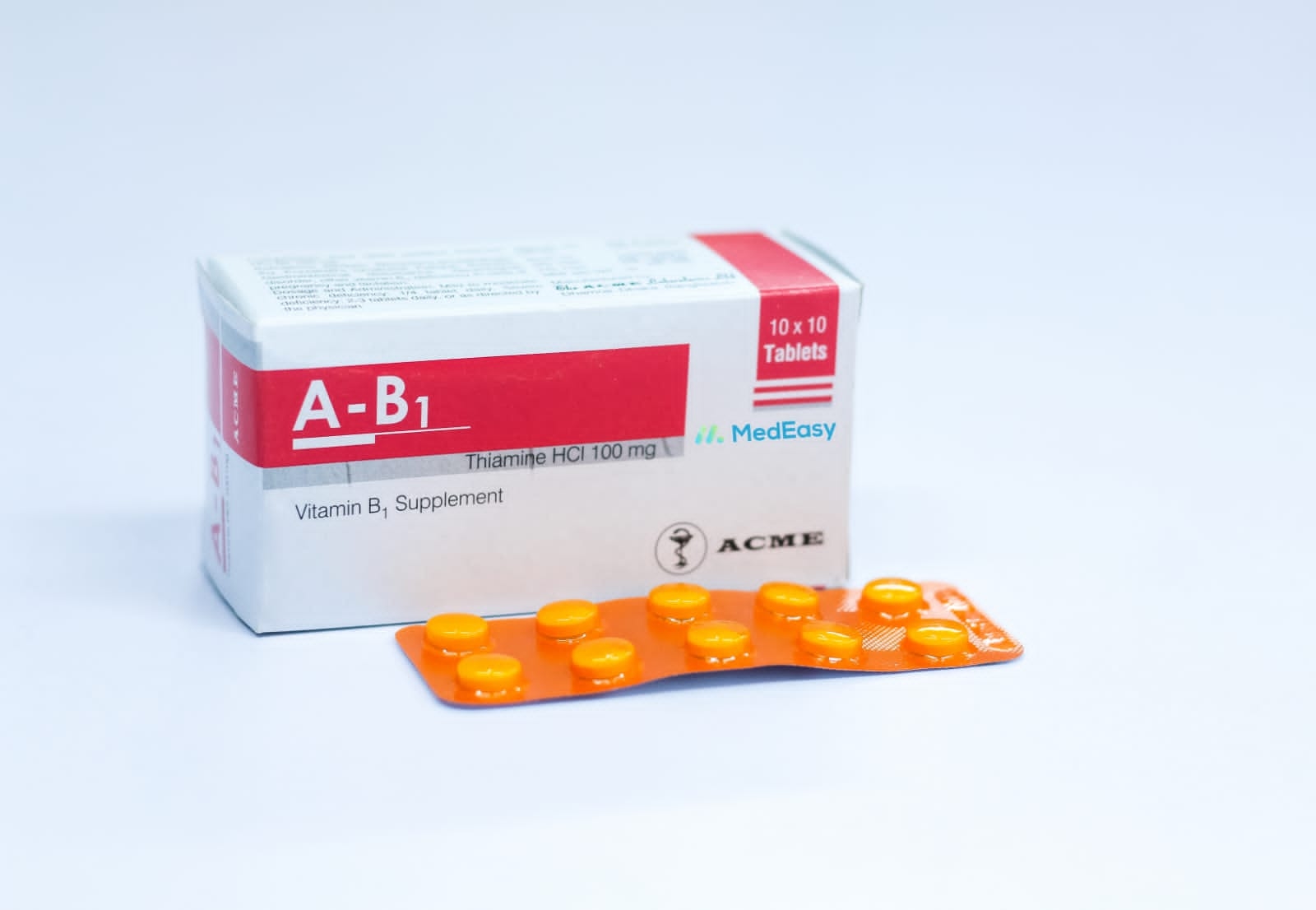
A-B1100 mg
ACME Laboratories Ltd.
৳7.91
Add to cart

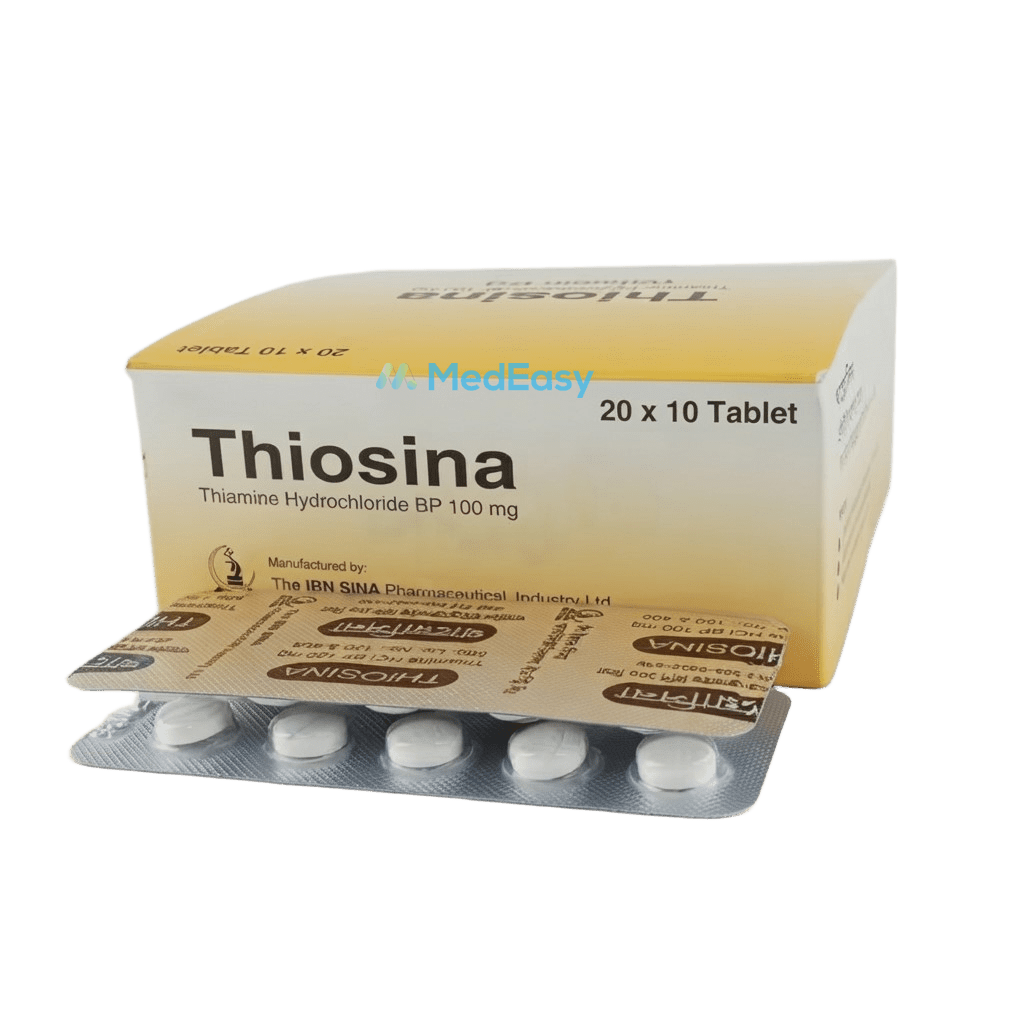
Neurovit 100 mg Tablet is available on MedEasy for ৳0.67 per piece, with home delivery anywhere in Bangladesh. It is manufactured by Medimet Pharmaceuticals Ltd. Its generic name is Thiamine Hydrochloride.

Neurovit (Vitamin B1) is indicated for the following:
Neurovit is not indicated as a general-purpose analgesic, sedative, or treatment for conditions unrelated to thiamine deficiency, and unsupported claims (e.g. for unrelated neuropathies without documented deficiency) are not established indications.
Each dosage form contains Thiamine Hydrochloride (Vitamin B1) as the active ingredient.
Tablets and injections may also contain standard pharmaceutical excipients (e.g. binders, fillers for tablets; water for injection, pH-adjusting agents, and preservatives for parenteral forms), which vary by manufacturer.
Neurovit is the hydrochloride salt of thiamine, the synthetic form of Vitamin B1, a water-soluble essential vitamin that the body cannot synthesize and must obtain from diet or supplementation.
Neurovit is converted in the body to thiamine pyrophosphate (TPP), the biologically active coenzyme form required for carbohydrate metabolism, energy production, and normal nerve, muscle, and heart function. Deficiency of thiamine leads to disorders such as beriberi and Wernicke-Korsakoff syndrome.
Neurovit is available as oral tablets for routine deficiency prevention and mild-to-moderate deficiency, and as injectable solution for severe deficiency, malabsorption, or emergency situations such as Wernicke's encephalopathy.
Neurovit belongs to the therapeutic class of Vitamin B-complex preparations, specifically classified as a water-soluble vitamin (Vitamin B1) supplement used for nutritional deficiency prevention and treatment.
Thiamine Hydrochloride provides thiamine, which is phosphorylated in the liver and other tissues to form thiamine pyrophosphate (TPP), its active coenzyme form.
Mechanism: TPP is an essential cofactor for several key enzymes in carbohydrate and energy metabolism, including pyruvate dehydrogenase, alpha-ketoglutarate dehydrogenase, and transketolase. These enzymes are central to the Krebs cycle and the pentose phosphate pathway, which generate cellular energy (ATP) and support nerve conduction, muscle function, and myocardial contractility.
Deficiency effects: Thiamine deficiency impairs cellular energy metabolism, particularly in tissues with high metabolic demand such as the nervous system and heart, leading to beriberi (peripheral neuropathy, cardiac failure) and, in severe cases, Wernicke's encephalopathy (confusion, ataxia, ophthalmoplegia) or Korsakoff psychosis.
Pharmacokinetics: Oral thiamine is absorbed in the small intestine, mainly via an active, saturable carrier-mediated process at low doses and passive diffusion at higher doses; absorption is impaired in chronic alcohol use disorder and malabsorptive states. Thiamine is widely distributed, with limited body stores, and is metabolized in the liver, with excess amounts excreted unchanged in the urine. Parenteral administration bypasses intestinal absorption and is preferred when rapid repletion or malabsorption is a concern.
Clinical note: In patients with chronic alcohol use disorder or malnutrition, Thiamine Hydrochloride should generally be administered before or together with intravenous glucose/dextrose, as glucose administration in a thiamine-deficient patient can precipitate or worsen acute Wernicke's encephalopathy.
| Indication | Typical Adult Dosage |
|---|---|
| Dietary thiamine deficiency (mild, oral) | 5–30 mg orally per day (single or divided doses), for 1 month, depending on severity |
| Beriberi | 10–20 mg intramuscularly, three times daily, for up to 2 weeks, followed by an oral maintenance dose |
| Wernicke's encephalopathy / Wernicke-Korsakoff syndrome | An initial dose of 100 mg intravenously or intramuscularly, followed by 50–100 mg daily (IM or IV) until the patient resumes a normal diet; higher doses are used in some hospital protocols under specialist supervision |
| Prophylaxis with IV dextrose in at-risk patients | 100 mg administered before or with the first liter of intravenous dextrose-containing fluid |
| Neuritis of pregnancy with severe vomiting | 5–10 mg intramuscularly per day |
| Indication | Typical Pediatric Dosage |
|---|---|
| Infantile beriberi with acute cardiovascular collapse | 25 mg intravenously as a single dose (administered cautiously), followed by 10 mg intramuscularly daily for approximately 1 week |
| Dietary deficiency (oral) | 0.5–1.5 mg per day depending on age, adjusted to clinical severity and physician guidance |
No well-established formal dose adjustment is required for renal or hepatic impairment, as Neurovit has a wide margin of safety and excess is renally excreted; however, caution and monitoring are advised in patients with significant renal impairment receiving prolonged high-dose parenteral therapy.
Oral tablets may be taken with or without food. Intramuscular injection should be given deep into a large muscle. Intravenous administration should be given slowly, as rapid IV administration of thiamine has been associated with rare but serious hypersensitivity/anaphylactoid reactions (see Precautions and Warnings).
Neurovit tablets are taken orally, with or without food, generally once daily unless otherwise directed. Injectable Neurovit is given by a healthcare professional via intramuscular or slow intravenous injection; rapid IV push should be avoided due to the risk of hypersensitivity reactions. Injection should be prepared and administered using aseptic technique.
Neurovit has no significant clinically important drug interactions at typical supplemental doses. The following points are noted:
No dose adjustment of concomitant medications is generally required due to Neurovit itself.
Thiamine Hydrochloride is contraindicated in patients with a known history of hypersensitivity to thiamine, thiamine hydrochloride, or any component of the specific formulation.
Neurovit is generally very well tolerated, particularly with oral use. Reported adverse effects include:
Neurovit is an essential vitamin and thiamine requirements increase during pregnancy and lactation. At doses within the recommended dietary allowance (RDA), Neurovit is considered safe and is often recommended for deficient or at-risk pregnant and breastfeeding women (e.g. hyperemesis gravidarum, neuritis of pregnancy). However, at doses above the RDA, safety data are more limited, and such use should occur only if clearly needed and if the potential benefit justifies the potential risk to the fetus or infant. As with any supplement used above nutritional doses in pregnancy or lactation, a physician should be consulted before use.
The following precautions apply to the use of Neurovit:
Neurovit has a wide margin of safety, as excess thiamine is generally excreted renally, and clinically significant toxicity from oral overdose is rare. Very high parenteral doses have rarely been associated with headache, irritability, and hypersensitivity-type reactions. In case of a suspected overdose, or if serious symptoms such as difficulty breathing, swelling, severe dizziness, or collapse occur, seek immediate medical attention or contact a poison control center/emergency services rather than attempting home treatment.
Store at room temperature (below 30°C), away from light and moisture. Keep out of reach of children. Injectable solution should be inspected visually for particulate matter or discoloration before use and not used if the solution is discolored or contains particles.
No specific dose adjustment of Neurovit is generally required in elderly patients, though they may be at higher risk of underlying thiamine deficiency due to poor dietary intake, chronic illness, or diuretic use, and may warrant closer monitoring.
No well-established dose adjustment is required; caution is advised with prolonged high-dose parenteral use due to potential aluminum accumulation (see Precautions and Warnings).
No well-established dose adjustment is required; patients with chronic liver disease (often related to alcohol use) frequently have increased thiamine requirements.
Patients with chronic alcohol use disorder are at particularly high risk of thiamine deficiency and Wernicke-Korsakoff syndrome and often require parenteral Neurovit supplementation, given before or with any glucose-containing fluids.
Duration of Neurovit therapy depends on the indication: nutritional supplementation for mild deficiency is often continued for several weeks (e.g. up to one month) or until dietary intake is adequate; treatment of beriberi is typically continued for about 2 weeks with intramuscular therapy before transitioning to oral maintenance; treatment of Wernicke's encephalopathy typically continues with daily parenteral dosing until clinical improvement and resumption of a normal diet, as directed by the treating physician. Ongoing use in high-risk patients (e.g. chronic alcohol use disorder) may be long-term, under medical supervision.
Thiamine Hydrochloride is classified as a water-soluble vitamin, specifically Vitamin B1 (thiamine), within the broader class of vitamin B-complex nutritional supplements.
Thiamine Hydrochloride supplies thiamine, which is converted to thiamine pyrophosphate (TPP), an essential coenzyme for pyruvate dehydrogenase, alpha-ketoglutarate dehydrogenase, and transketolase. These enzymes are critical to carbohydrate metabolism, ATP (energy) production, and the pentose phosphate pathway, which supports nucleic acid synthesis and maintenance of nerve and cardiac tissue function. By restoring these enzymatic pathways in deficient individuals, Thiamine Hydrochloride corrects the metabolic and neurological disturbances of thiamine deficiency.
A (at doses within the recommended dietary allowance); category C-equivalent caution applies at doses exceeding the RDA, as safety data are more limited.
Neurovit is used in pediatric patients for the prevention and treatment of thiamine deficiency and beriberi, including infantile beriberi with acute cardiovascular collapse, which is treated with an initial intravenous dose followed by intramuscular maintenance dosing under close medical supervision. Oral supplementation is used for dietary deficiency, with dosing individualized by age, weight, and severity of deficiency. Safety and efficacy of specific high-dose parenteral regimens have not been as extensively studied in children as in adults, and pediatric use should be guided and supervised by a physician, particularly for injectable Neurovit.
Q: What is Neurovit 100 mg Tablet used for?
A: Neurovit 100 mg Tablet (Vitamin B1) is used to prevent and treat thiamine deficiency, beriberi, and Wernicke's encephalopathy, and is often given to patients with chronic alcohol use disorder, malnutrition, or malabsorption.
Q: Can I take Neurovit 100 mg Tablet if I am pregnant or breastfeeding?
A: Neurovit 100 mg Tablet at recommended dietary allowance doses is generally considered safe in pregnancy and lactation and is often recommended for deficient women, but doses above the RDA should be used only if clearly needed, with the potential benefit justifying potential risk; consult your physician before use.
Q: Is Neurovit 100 mg Tablet safe to take every day?
A: Yes, oral Neurovit 100 mg Tablet at typical supplement doses is generally safe for daily use. Higher parenteral doses should only be given under medical supervision.
Q: What are the side effects of Neurovit 100 mg Tablet injection?
A: Injectable Neurovit 100 mg Tablet can rarely cause hypersensitivity or anaphylactoid reactions, especially with rapid intravenous administration of high doses, including itching, flushing, throat tightness, and, very rarely, severe allergic reactions; it should be given slowly by a healthcare professional.
Q: Who should not take Neurovit 100 mg Tablet?
A: Neurovit 100 mg Tablet is contraindicated in anyone with a known history of hypersensitivity to thiamine or Neurovit 100 mg Tablet.
Q: What happens if I take too much Neurovit 100 mg Tablet?
A: Neurovit 100 mg Tablet has a wide safety margin and excess is usually excreted in urine, but if you suspect an overdose or notice symptoms such as difficulty breathing, swelling, or severe dizziness, seek immediate medical attention or contact emergency/poison control services.
Disclaimer
The information provided is accurate to the best of our knowledge, but it does not replace professional medical advice. We cannot guarantee its completeness or accuracy, and the absence of specific information about a drug should not be taken as an endorsement. We are not responsible for any consequences arising from this information, so please consult a healthcare professional for any concerns or questions.