10% Off
Penvik250 mg
Square Pharmaceuticals PLC.
৳25.20
Add to cart

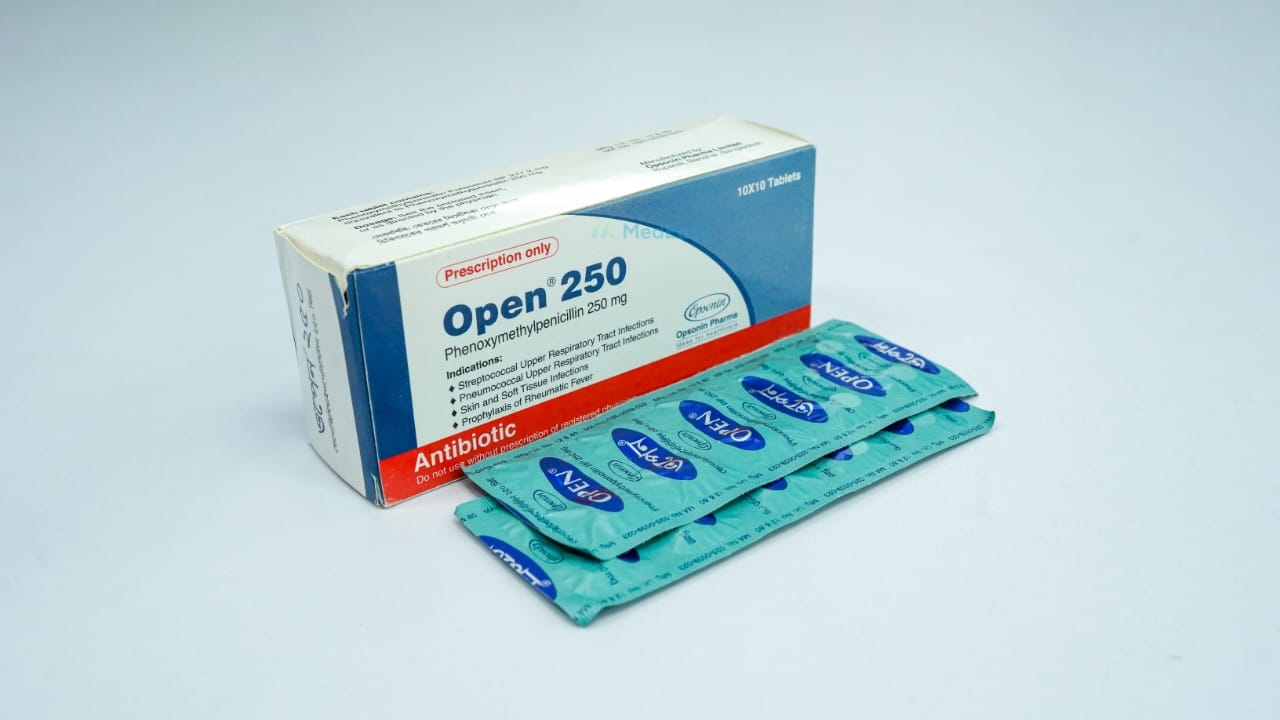
Oracyn-K 250 mg Tablet is available on MedEasy for ৳25.76 per 10's Strip, with home delivery anywhere in Bangladesh. It is manufactured by Synovia Pharma PLC. Its generic name is Phenoxymethyl Penicillin [Penicillin V].

Oracyn-K is an oral, narrow-spectrum, acid-stable penicillin antibiotic used for the treatment of mild to moderately severe infections caused by penicillin G-susceptible microorganisms.
Streptococcal infections require a treatment course of at least 10 days to reduce the risk of complications such as rheumatic fever and glomerulonephritis, even if symptoms improve earlier.
Oracyn-K is not effective against viral infections and should be reserved for infections proven or strongly suspected to be caused by susceptible bacteria.
Each tablet or reconstituted oral suspension of Phenoxymethyl Penicillin [Penicillin V] contains Phenoxymethylpenicillin (as the potassium salt) as the active ingredient. Common strengths marketed include 125 mg, 250 mg, and 500 mg tablets, and 125 mg/5 mL oral suspension. Please refer to the specific product label for the exact strength and excipients of the brand dispensed.
Oracyn-K is a semi-synthetic, orally administered penicillin antibiotic in the beta-lactam class. It is chemically related to penicillin G but is acid-stable, allowing reliable absorption from the upper small intestine after oral administration. It exerts bactericidal activity against a range of Gram-positive organisms, particularly streptococci and non-penicillinase-producing staphylococci, and is widely used for common infections of the throat, skin, and respiratory tract, as well as for long-term prevention of rheumatic fever recurrence.
Oracyn-K belongs to the natural penicillin class of beta-lactam antibiotics.
Phenoxymethyl Penicillin [Penicillin V] exerts a bactericidal effect by inhibiting bacterial cell wall synthesis. It binds to penicillin-binding proteins located inside the bacterial cell wall, interfering with the transpeptidation step of peptidoglycan synthesis, which weakens the cell wall and leads to cell lysis and death, particularly in actively dividing organisms.
Unlike penicillin G, Phenoxymethyl Penicillin [Penicillin V] is acid-stable and is well absorbed from the upper part of the small intestine after oral dosing, which is why it is preferred for oral therapy. Absorption is reduced by the presence of food, so it is best taken on an empty stomach (1 hour before or 2 hours after meals) for optimal effect, though some formulations may have less pronounced food effects; follow the specific product labeling. It is widely distributed in body tissues and fluids, partially metabolized in the liver, and eliminated mainly by renal tubular secretion, with a short elimination half-life necessitating frequent dosing.
Oracyn-K should be taken exactly as prescribed by a physician, at evenly spaced intervals, preferably on an empty stomach (1 hour before or 2 hours after meals) for optimal absorption, unless the specific product labeling indicates otherwise.
| Indication | Adult Dose | Pediatric Dose |
|---|---|---|
| Streptococcal infections (pharyngitis/tonsillitis, mild skin infections) | 125-250 mg every 6-8 hours for a full 10 days | 125-250 mg every 6-8 hours (weight/age-based) for a full 10 days |
| Pneumococcal respiratory infections | 250-500 mg every 6 hours, continued until afebrile for at least 2 days | As directed by physician, weight-based |
| Staphylococcal skin/soft tissue infections | 250-500 mg every 6-8 hours | As directed by physician |
| Vincent's infection (oropharynx) | 250-500 mg every 6-8 hours | Not typically indicated |
| Rheumatic fever prophylaxis | 125-250 mg twice daily, long-term | 125-250 mg twice daily, long-term, as advised by physician |
| Infants under 1 year | - | 62.5-125 mg every 6 hours, as directed by physician |
Antibiotic stewardship: Take exactly as prescribed by your physician; do not stop, extend, skip doses, or share this medicine with others without medical advice. Complete the full prescribed course, even if symptoms improve within a few days, to reduce the risk of relapse, complications (such as rheumatic fever), and antibiotic resistance.
Oracyn-K tablets should be swallowed whole with a full glass of water. Oral suspension should be shaken well before each use and measured with an accurate dosing device. For best absorption, take on an empty stomach, 1 hour before or 2 hours after meals, unless directed otherwise by the prescribing physician or product label.
Oracyn-K has the following clinically significant interactions:
Always inform your physician or pharmacist of all medicines you are taking before starting Oracyn-K.
Phenoxymethyl Penicillin [Penicillin V] is contraindicated in:
Patients with a history of severe hypersensitivity (e.g., anaphylaxis) to other beta-lactam antibiotics, such as cephalosporins, should use Phenoxymethyl Penicillin [Penicillin V] with caution due to possible cross-reactivity; this should be assessed by a physician.
Most patients tolerate Oracyn-K well. Reported side effects include:
Seek prompt medical attention for signs of a serious allergic reaction (difficulty breathing, swelling of face/lips/tongue, severe rash) or for severe or persistent diarrhea.
Pregnancy: Penicillins, including Oracyn-K, are generally considered among the antibiotics with a longer history of use in pregnancy; however, formal reproduction studies are limited. Oracyn-K should be used during pregnancy only if clearly needed and if the potential benefit justifies the potential risk to the fetus. Consult a physician before use during pregnancy.
Lactation: Oracyn-K passes into breast milk in small amounts. It may rarely cause diarrhea or candidal (yeast) overgrowth in the nursing infant. Use during breastfeeding only under medical advice, with the infant monitored for any signs of diarrhea, rash, or thrush.
Hypersensitivity/Anaphylaxis: Serious and occasionally fatal hypersensitivity reactions, including anaphylaxis, have been reported with penicillins, especially in patients with a history of penicillin or multiple allergies. If an allergic reaction occurs, discontinue Oracyn-K immediately and seek emergency medical care.
Cross-reactivity: Partial cross-allergenicity exists between penicillins and other beta-lactam antibiotics, including cephalosporins; use caution in patients with a history of allergy to these agents.
Clostridioides difficile-associated diarrhea (CDAD): Antibiotic use, including Oracyn-K, can alter normal gut flora and permit overgrowth of C. difficile, ranging from mild diarrhea to severe, potentially fatal colitis. Evaluate patients who develop diarrhea during or after treatment.
Antibiotic stewardship: Take exactly as prescribed by your physician; do not stop, extend, skip doses, or share this medicine with others without medical advice. Prolonged or inappropriate use may result in the overgrowth of non-susceptible organisms, including fungi.
Severe gastrointestinal illness: Use with caution in patients with severe vomiting, diarrhea, or gastrointestinal motility disorders, as oral absorption may be unreliable; alternative therapy may be needed.
Renal impairment/high-dose use: Very high doses, particularly in patients with renal impairment, have rarely been associated with neurological effects (encephalopathy); use appropriate dose adjustment and monitoring in such patients, and avoid driving or operating machinery if any neurological symptoms occur.
Cardiac patients on potassium-restricted diets: The potassium salt formulation contributes a small amount of potassium; consider this in patients requiring strict potassium restriction.
Overdose with Oracyn-K is generally associated with gastrointestinal symptoms (nausea, vomiting, diarrhea) and, in rare cases involving very high doses or renal impairment, neuromuscular hyperexcitability or seizures. There is no specific antidote. If an overdose is suspected, seek immediate medical attention or contact a poison control center/emergency services right away. Treatment is supportive; hemodialysis may be considered in severe renal impairment, under medical supervision.
Store at room temperature (below 30°C), away from light and moisture. Keep out of reach of children. If dispensed as a powder for oral suspension, reconstitute only as directed, keep tightly closed, and refer to the product label for specific storage duration and conditions (some reconstituted suspensions require refrigeration and discarding after 14 days) — check the pack insert of the dispensed brand.
Oracyn-K is used in infants and children with weight/age-based dosing as directed by a physician (see Dosage and Administration). Safety and efficacy in neonates have not been well established; use in this age group only under close medical supervision.
No specific dose adjustment is generally required based on age alone; however, elderly patients, especially those with renal impairment, should be monitored, as reduced renal function can affect drug elimination.
Since Oracyn-K is eliminated substantially via the kidneys, dose or frequency adjustment may be needed in significant renal impairment; consult a physician for individualized dosing.
No well-established dose adjustment is required for hepatic impairment, but use with routine clinical caution.
Duration of Oracyn-K therapy depends on the indication: most acute infections (e.g., streptococcal pharyngitis, skin infections) require a full 10-day course; pneumococcal infections are typically treated until the patient is afebrile for at least 2 days. Rheumatic fever prophylaxis is continued long-term (often for years or into adulthood) as advised by a physician. Always complete the prescribed duration even if symptoms resolve earlier.
For the oral suspension powder formulation of Oracyn-K, reconstitute by adding the specified amount of clean drinking water to the powder in the bottle as indicated on the label, then shake well until a uniform suspension forms. Use an accurate measuring device for dosing. Refer to the specific product's pack insert for exact reconstitution volume and shelf-life after reconstitution.
Natural Penicillin / Beta-lactam antibiotic (oral, narrow-spectrum, acid-stable).
Phenoxymethyl Penicillin [Penicillin V] acts by binding to penicillin-binding proteins in the bacterial cell wall, thereby inhibiting the transpeptidation reaction necessary for peptidoglycan cross-linking. This weakens the bacterial cell wall, causing osmotic instability, cell lysis, and death of susceptible, actively dividing bacteria.
Oracyn-K is commonly used in pediatric patients for streptococcal pharyngitis/tonsillitis, mild skin infections, and rheumatic fever prophylaxis, using age/weight-based dosing under physician guidance. Safety and efficacy in neonates and very young infants have not been well established, and use in this population should occur only under close medical supervision. Caregivers should ensure the full prescribed course is completed and should not adjust the dose without consulting a physician.
Q: What is Oracyn-K 250 mg Tablet used for?
A: Oracyn-K 250 mg Tablet is an oral antibiotic used to treat mild to moderate bacterial infections such as streptococcal throat infections, some skin infections, and mild pneumococcal respiratory infections, and to prevent recurrence of rheumatic fever.
Q: How should I take Oracyn-K 250 mg Tablet?
A: Take Oracyn-K 250 mg Tablet exactly as prescribed by your physician, generally on an empty stomach (1 hour before or 2 hours after meals) for best absorption, at evenly spaced intervals. Do not stop, extend, skip doses, or share this medicine with others without medical advice, and complete the full course even if you feel better.
Q: Can I take Oracyn-K 250 mg Tablet if I am allergic to penicillin?
A: No. Oracyn-K 250 mg Tablet is contraindicated in anyone with a known hypersensitivity (allergy) to penicillins, as it can cause serious reactions including anaphylaxis. Inform your physician of any prior penicillin or cephalosporin allergy before starting treatment.
Q: Is Oracyn-K 250 mg Tablet safe during pregnancy and breastfeeding?
A: Oracyn-K 250 mg Tablet should be used during pregnancy only if clearly needed, with the potential benefit outweighing the potential risk; consult your physician. It passes into breast milk in small amounts and may rarely cause infant diarrhea or thrush; use during breastfeeding only under medical advice.
Q: What should I do if I miss a dose or accidentally take too much?
A: If you miss a dose of Oracyn-K 250 mg Tablet, take it as soon as you remember unless it is nearly time for the next dose; do not double the dose. If an overdose is suspected, seek immediate medical attention or contact a poison control center/emergency services right away.
Q: What side effects should I watch for with Oracyn-K 250 mg Tablet?
A: Common side effects of Oracyn-K 250 mg Tablet include nausea, vomiting, and diarrhea. Seek urgent medical care for signs of a serious allergic reaction (difficulty breathing, facial or throat swelling, severe rash) or for severe or persistent diarrhea, which could indicate a serious intestinal infection.
Disclaimer
The information provided is accurate to the best of our knowledge, but it does not replace professional medical advice. We cannot guarantee its completeness or accuracy, and the absence of specific information about a drug should not be taken as an endorsement. We are not responsible for any consequences arising from this information, so please consult a healthcare professional for any concerns or questions.